Photo: Wikipedia
Political ClimatePolitical Climate in Tioga, ND
District shown is the primary district for this city’s centroid. Cities may span multiple districts.
Inherited from parent state — no local data available.
Local Political AnalysisPolitical Analysis of Tioga, ND
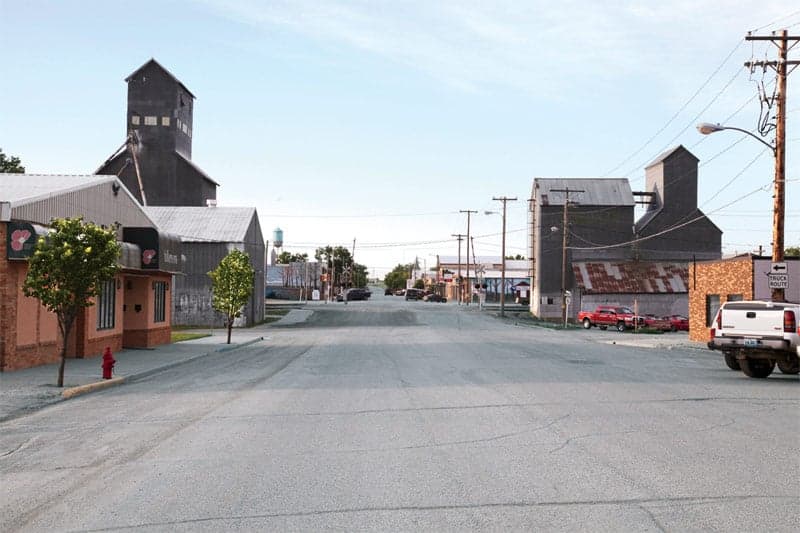
Tioga, North Dakota, sits deep in the heart of the Bakken oil patch, and its political lean is as solid as the shale beneath it. With a Cook PVI of R+18, this area votes Republican by a margin that’s nearly three times the national average, and that’s not just a number—it’s a way of life. The local sentiment has been reliably conservative for decades, and while the oil boom brought in folks from all over, the political culture here has held steady, with most residents favoring limited government, low taxes, and a hands-off approach to personal freedoms. If anything, the trajectory is toward an even deeper shade of red, as newcomers who stick around tend to be drawn to the same values that made Tioga what it is.
How it compares
Drive an hour south to Dickinson, and you’ll find a similar conservative vibe, though it’s a bit more tempered by a larger college population and some healthcare-sector influence. Head east to Minot, and the politics are still red, but you’ll notice a slightly more moderate streak, especially on local spending issues. The real contrast, though, is with places like Fargo or Grand Forks, where progressive ideas have started creeping into city council meetings and school board decisions—things like diversity initiatives or climate resolutions that feel completely foreign to Tioga. Here, the county commission and school board are overwhelmingly conservative, and there’s a healthy skepticism of any policy that smacks of government overreach, whether it’s state-level mandates on energy production or federal land-use restrictions. That R+18 rating isn’t just a statistic; it reflects a community that actively resists the kind of ideological drift you see in the eastern part of the state.
What this means for residents
For someone living in Tioga, the political climate translates directly into daily life. You’re not going to see mask mandates or vaccine passports enforced at local businesses—most folks here view those as unnecessary intrusions on personal choice. Property taxes are low compared to national averages, and there’s a strong cultural expectation that the government stays out of your business, whether that’s how you run your ranch, operate your oilfield service company, or raise your kids. The downside? If you’re hoping for progressive shifts on things like renewable energy subsidies or expanded public transit, you’ll be waiting a long time. The community prioritizes individual liberty and economic freedom, which means policies that might feel progressive elsewhere—like stricter environmental regulations or gun control—are non-starters. For residents who value that independence, it’s a relief; for anyone leaning left, it can feel stifling.
Culturally, Tioga stands apart with a strong “live and let live” ethos that’s rooted in the frontier spirit, but it’s also fiercely protective of its way of life. You’ll see more pickup trucks with gun racks than electric cars, and the local diner conversations are more likely to be about oil prices or hunting season than national politics. One policy distinction worth noting: North Dakota’s lack of a state income tax is a big deal here, and any talk of introducing one—or expanding sales taxes—gets shot down fast. Looking ahead, the long-term concern among locals is that outside money and federal pressure could slowly erode that independence, especially as the energy transition debate heats up. But for now, Tioga remains a place where conservative values aren’t just tolerated—they’re the baseline, and most folks intend to keep it that way.

State Political ClimatePolitical Climate in North Dakota
State Political AnalysisPolitical Environment in the State
North Dakota is a deeply conservative state, with a Republican lean that has only intensified over the past two decades. The state has not voted for a Democratic presidential candidate since Lyndon B. Johnson in 1964, and in 2024, Donald Trump carried it by over 20 points. The dominant political coalition is a mix of rural populists, oil-patch libertarians, and traditional social conservatives, all united by a suspicion of federal overreach and a preference for local control. Over the last 10-20 years, the state has shifted further right, driven by the oil boom in the Bakken region and a steady exodus of the state’s small but historically influential Democratic-NPL (Nonpartisan League) base. What was once a competitive two-party state in the 1980s and 1990s is now a solidly red stronghold, though internal tensions between the libertarian and evangelical wings occasionally surface.
Urban vs. rural divide
The political map of North Dakota is starkly divided between a handful of small urban centers and the vast, sparsely populated rural expanse. The largest city, Fargo, is the most politically moderate area in the state, anchored by North Dakota State University and a growing professional class. While Fargo still leans Republican in most statewide races, it is the only place where Democrats can occasionally win local seats—Cass County, which contains Fargo, voted for Trump by a narrower 12-point margin in 2024, compared to 30+ points in most rural counties. Bismarck, the state capital, is reliably conservative but more establishment-oriented, with a heavy presence of state employees and lobbyists who tend to favor pragmatic, business-friendly Republicans. The real engine of the state’s rightward shift is the oil patch in the northwest, centered on Williston and Watford City. These boomtowns are overwhelmingly libertarian-leaning, with a transient workforce that cares deeply about property rights, low taxes, and minimal regulation. In contrast, the rural farming communities in the northeast and along the Red River Valley—places like Grand Forks and Grafton—are socially conservative but economically populist, often supporting agricultural subsidies and trade protections that put them at odds with the free-market oil crowd. The divide is less about left vs. right and more about which flavor of conservatism dominates.
Policy environment
North Dakota’s policy environment is a textbook example of small-government conservatism, with a few notable exceptions. The state has no state income tax (individual or corporate), relying instead on a mix of property taxes, sales taxes, and oil extraction revenues. The regulatory posture is generally light, especially for energy and agriculture, though the oil boom led to a temporary increase in state oversight that some locals still resent. Education policy is a mixed bag: the state has a robust school choice movement, with a new Education Savings Account (ESA) program passed in 2025 that allows parents to use public funds for private or homeschool expenses. However, the state’s rural districts often resist consolidation, leading to inefficiencies. Healthcare is a flashpoint—North Dakota expanded Medicaid under the Affordable Care Act in 2013, a decision that still rankles many conservatives, though the state has since imposed work requirements. Election laws are among the most secure in the nation: voter ID is required, same-day registration is not allowed, and the state uses paper ballots. There is no early voting by mail except for absentee with an excuse, which keeps election integrity high but frustrates some. The state legislature is heavily Republican (super-majorities in both chambers), and Governor Doug Burgum, a wealthy software entrepreneur, has pushed a tech-friendly, pro-business agenda that sometimes clashes with the more agrarian, traditionalist wing of the party.
Trajectory & freedom
North Dakota is becoming more free in several key areas, but there are warning signs. On the positive side, the state passed a constitutional carry law in 2017, allowing concealed carry without a permit, and has repeatedly rejected any form of red flag legislation. Parental rights were strengthened in 2023 with a law requiring schools to notify parents of any curriculum involving sexuality or gender identity, and a 2025 law banned transgender athletes from female sports. Property rights are robust, with strong protections against eminent domain, particularly after the Dakota Access Pipeline protests highlighted the issue. However, there are concerning trends. The state’s reliance on oil revenue has led to a boom-and-bust cycle that gives the government an oversized role in the economy—when prices are high, the state spends freely, creating a dependency that libertarians dislike. Additionally, the state’s COVID-19 response was a mixed bag: while Governor Burgum never imposed a statewide mask mandate, he did issue a stay-at-home order in 2020 and allowed local health departments to impose restrictions, which led to friction in cities like Fargo. More recently, a 2025 law requiring parental consent for minors to access social media was praised by conservatives but raised free speech concerns among some. The trajectory is generally toward more personal liberty, but the state’s small population and heavy reliance on federal farm subsidies and oil revenue mean that true independence is always a work in progress.
Civil unrest & political movements
North Dakota has seen its share of political flashpoints, most notably the Dakota Access Pipeline (DAPL) protests in 2016-2017 near the Standing Rock Reservation, which drew thousands of activists from across the country. The protests, which were largely opposed by local residents and law enforcement, became a symbol of the tension between energy development and tribal sovereignty. The state’s response—mass arrests, use of National Guard, and strict enforcement of trespassing laws—was widely supported by the conservative base but criticized by progressives. Since then, the state has seen a rise in organized conservative activism, particularly around election integrity and school board races. Groups like the North Dakota Republican Party’s grassroots wing have pushed for stricter ballot access laws and opposed any expansion of mail-in voting. On the left, the state’s small Democratic-NPL party has struggled to maintain relevance, though it remains active in Fargo and on the Turtle Mountain and Spirit Lake reservations. Immigration politics are relatively quiet, as North Dakota has a very small foreign-born population (about 4%), but there have been local debates about refugee resettlement in Fargo and Grand Forks. There is no serious secession or nullification movement, though some rural counties have passed symbolic resolutions asserting local control over federal lands. Overall, the state is politically stable, but the DAPL protests left a lasting scar, and any future energy or land-use conflict could reignite tensions.
Projection
Over the next 5-10 years, North Dakota is likely to remain deeply conservative, but demographic shifts could introduce subtle changes. The state’s population is aging and slowly declining in rural areas, while the oil patch and the Fargo metro are growing. This means the political center of gravity will continue to shift toward the more moderate, professional-class conservatism of Fargo and the libertarian oil workers of Williston, rather than the traditional agrarian conservatism of the small towns. In-migration is modest but steady, with new residents coming from other conservative states like Texas and Montana, drawn by low taxes and a pro-business climate. This influx will likely reinforce the state’s rightward lean, but it could also create new tensions—for example, between long-time locals who value stability and newcomers who want even less regulation. The biggest wildcard is the state’s reliance on oil revenue: if the energy transition accelerates, North Dakota could face a fiscal crisis that forces either tax increases or deep spending cuts, which would test the state’s small-government ethos. On social issues, expect continued movement toward parental rights and school choice, but also potential fights over property taxes and local control. A new resident moving in now should expect a state that is politically stable, generally free, and likely to stay that way, but with a growing urban-rural divide that could make local politics more contentious over time.
For someone choosing North Dakota as a relocation destination, the bottom line is this: you’re moving to a state where your personal freedoms are broadly respected, your taxes are low, and your voice in local government actually matters. The trade-offs are a harsh climate, a sparse social scene outside of Fargo and Bismarck, and a political culture that can feel insular to outsiders. If you value self-reliance, minimal government interference, and a community where your neighbors share your values, North Dakota is a strong bet. Just be prepared for the cold—both the weather and the welcome, which is warm once you prove you’re here to stay.
* Values derived from national, state, county, city and local statistics and may differ in a specific area. Last updated: 2026-04-19T05:22:43.000Z
Narrative content on this page is AI-generated and may contain mistakes. Verify any details that matter before acting on them.
ReloMaps may earn a commission from affiliate links at no extra cost to you.

