
Photo by Clay Knight on Unsplash
Demographics of Togiak, AK
Affluence Level in Togiak, AK
A low-income area with significant economic hardship. Household wealth and educational attainment are well below national averages.
People of Togiak, AK
The people of Togiak, Alaska, are overwhelmingly Alaska Native, primarily Yup'ik, with a population of 993 as of the most recent estimates. The city is characterized by a tight-knit, subsistence-based community where traditional fishing and hunting remain central to daily life, and English is often a second language to Yup'ik. With a foreign-born population of just 0.2% and a White population of 9.4%, Togiak is one of the most ethnically homogeneous and culturally distinct communities in the state, a direct legacy of its indigenous roots and remote location.
How the city was settled and grew
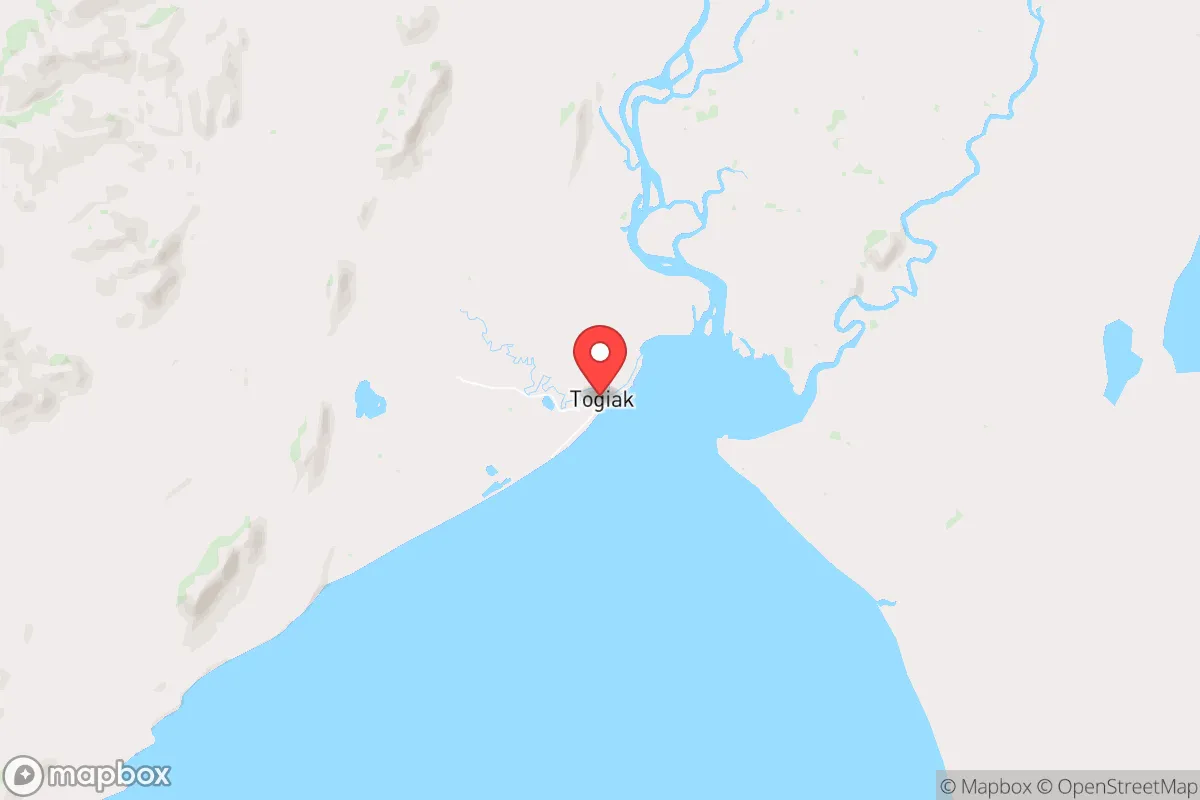
Togiak's human history begins not with a single founding event but with the seasonal and permanent settlements of Yup'ik people along the Togiak River and Bristol Bay coast for centuries. The modern village site, located on the north shore of Togiak Bay, was established as a permanent winter village in the late 19th and early 20th centuries, consolidating smaller seasonal camps. The primary draw was the abundant salmon runs and marine resources, which supported a semi-nomadic lifestyle that gradually became sedentary with the arrival of Russian Orthodox missionaries and, later, American traders and schools. The original settlement clustered around the Old Village site, near the mouth of the Togiak River, where families built traditional sod houses and later frame homes. A second wave of settlement occurred in the 1930s and 1940s when the Bureau of Indian Affairs established a school, prompting families from outlying fish camps and upriver areas like the Kanaryarmiut region to relocate to the main village for their children's education. This era saw the development of the Upper Village area, where larger, multi-generational homes were built on higher ground to avoid flooding. The commercial fishing industry, particularly the Bristol Bay salmon fishery, became the economic backbone, drawing a small number of non-Native cannery workers and teachers, but the Yup'ik population remained the overwhelming majority.
Modern era (post-1965)
After the Alaska Native Claims Settlement Act (ANCSA) of 1971, Togiak's population structure shifted from a purely subsistence-based village to a mixed cash-and-subsistence economy. The formation of the Togiak Traditional Council and the Togiak Natives Limited village corporation formalized land ownership and governance, anchoring the community's identity. The post-1965 period saw very little in-migration from outside Alaska; the foreign-born share remains negligible at 0.2%, and the White population, mostly teachers, public health workers, and a few commercial fishermen, has never exceeded 10%. The Airport Road neighborhood developed in the 1980s and 1990s as new housing was built to accommodate growing families and essential service workers, though it remains overwhelmingly Yup'ik. The Beachfront area, along the bay, became the center of commercial fishing activity, with boat sheds and processing facilities. The racial composition has remained remarkably stable: the White share has fluctuated slightly with school staffing cycles, but the Alaska Native population has consistently been above 85%. The Black (2.6%) and East/Southeast Asian (1.1%) populations are almost entirely transient professionals—healthcare workers or seasonal fish processors—who do not form permanent enclaves. There is no Indian subcontinent or Hispanic population. The community has not suburbanized in the conventional sense; rather, it has densified within its original footprint, with newer homes built on infill lots in the Central Village core.
The future
The population of Togiak is projected to remain stable or grow slowly, driven by high birth rates among the Yup'ik population rather than in-migration. The city is homogenizing further in cultural terms, as out-migration of non-Native workers (who often leave after a few years) and the return of Yup'ik college graduates to raise families reinforce the indigenous character. The 14.5% college-educated rate is low by national standards but reflects the community's focus on vocational skills and subsistence knowledge rather than four-year degrees. The next 10-20 years will likely see continued pressure on housing and infrastructure, as the population is young and family formation is high. There is no trend toward tribalization into distinct ethnic enclaves because the population is already overwhelmingly one group; instead, the division is more generational, with older residents living in the Old Village and younger families in newer subdivisions like Hilltop. The commercial fishing industry, facing climate and regulatory challenges, will determine whether the population can sustain itself without increased state or federal support.
For a conservative-leaning individual or family considering relocation, Togiak offers a stable, culturally cohesive community where traditional values, self-reliance, and family ties are paramount. It is not a place of demographic change or diversity in the conventional sense, but rather a resilient indigenous village where the population is deeply rooted and the future is tied to the land and sea. Newcomers should expect to be a small minority and to integrate into a community that values subsistence skills, local governance, and long-term residency over transient growth.

* Values derived from national, state, county, city and local statistics and may differ in a specific area. Last updated: 2026-04-19T19:38:30.000Z
Narrative content on this page is AI-generated and may contain mistakes. Verify any details that matter before acting on them.
ReloMaps may earn a commission from affiliate links at no extra cost to you.

