
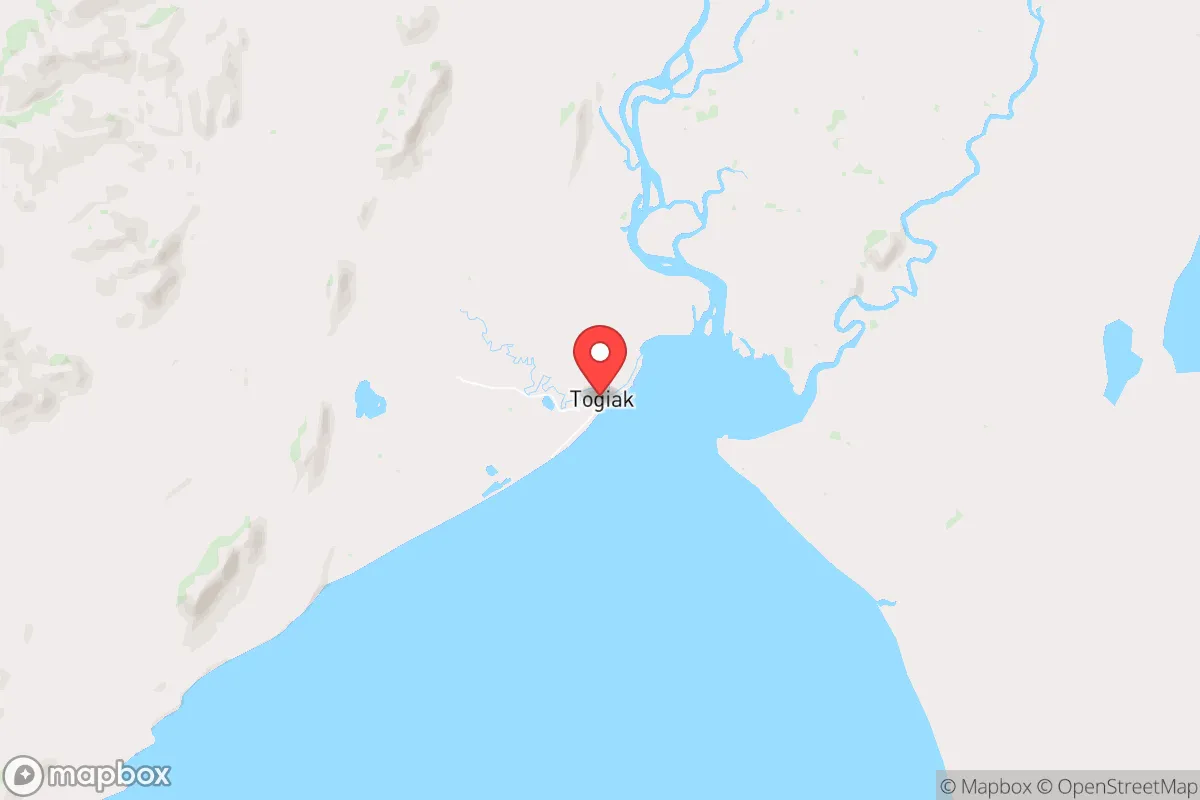
Photo by Clay Knight on Unsplash
Quality of Life in Togiak, AK
A livable area that tracks near national norms for affordability, walkability, and neighborhood health.
What does Quality of Life tell us?
Quality of Life blends cost of living, nearby amenities, socioeconomic signals, and neighborhood character. City-level scores represent the whole municipality; individual neighborhoods can differ.
What does this tell us?
Quality of Life blends cost of living, nearby amenities, socioeconomic signals, and neighborhood character. City-level scores represent the whole municipality; individual neighborhoods can differ.
Cost of Living
48% below national average
The Real Cost of Living in Togiak, AK for 2026
| Tier | Individual | Family (4) |
|---|---|---|
| Survival | $12k | $22k |
| Comfortable | $20k | $30k |
| Luxury | $88k+ | $136k+ |
| Elite (Top 5%) | $103k+ | $160k+ |
190%
The Area Signal
A metric tracking the socioeconomic signals of the area.


Limited data for this area
Limited data for this area
Hobbies
Explore the areaGroceries
1 within 10 miles
Gas
0 within 10 miles
Hospital
0 within 20 miles
Airport
Togiak Airport
Post Office
USPS — Togiak, AK
Critical Amenities
Quality-of-Life Analysis
Togiak, Alaska, presents a unique quality-of-life profile defined by its remote location, subsistence-based economy, and significantly lower cost of living compared to the national average. With a cost-of-living index of 52 (where 100 is the U.S. average), residents spend roughly half of what the typical American does on everyday expenses, though this figure reflects a trade-off in access to goods and services. The population is predominantly Yup'ik, and daily life is deeply rooted in traditional practices like fishing, hunting, and berry picking, rather than the consumer-driven lifestyle found in urban centers. This is not a community of high affluence in monetary terms, but one where wealth is measured in self-sufficiency, cultural continuity, and close-knit social bonds.
Cost of living, housing affordability, and how Togiak compares to nearby communities
Togiak's cost of living is among the lowest in Alaska, driven almost entirely by housing. The median home value is $102,500, and the median rent is $725—figures that are roughly half the state average and a fraction of Anchorage's median home value of over $380,000. Compared to nearby communities like Dillingham (the regional hub, about 40 miles east) or Bethel, Togiak is notably more affordable; Dillingham's median home value hovers around $180,000, and rents are typically 20-30% higher. However, this affordability comes with a caveat: goods that must be shipped or flown in—such as fresh produce, gasoline, and building materials—carry extreme markups. A gallon of milk can cost $8-$10, and heating fuel is expensive, meaning that while housing is cheap, the overall monthly budget for a family can still be strained by high utility and grocery costs. There is no formal rental market to speak of; most housing is owner-occupied or provided through tribal or city entities, and new construction is rare due to the high cost of importing materials.
What daily life is like for families: schools, amenities, and community rhythm
Daily life in Togiak revolves around the seasons and the Bristol Bay salmon run. The community of roughly 800 people has no road connections to the rest of Alaska—access is by air or water—so residents rely on a single general store, the Togiak Native Store, for staples. The Togiak School, part of the Southwest Region School District, serves students from pre-K through 12th grade, with an enrollment of about 150. The school is the social and recreational hub, hosting community events and the only indoor gymnasium. Healthcare is limited to a small clinic staffed by community health aides; serious medical cases require a medevac flight to Dillingham or Anchorage. There are no restaurants, movie theaters, or chain retailers. The rhythm of life is dictated by the fishing calendar: from June to August, the entire community mobilizes for the commercial and subsistence salmon harvest, which provides both income and winter food stores. Internet and cell service are available but slow and expensive, making remote work largely impractical.
Togiak is best suited for individuals and families who value cultural immersion, self-reliance, and a slower pace of life over material amenities and career diversity. People who thrive here are those with strong ties to Yup'ik traditions, or outsiders willing to learn them—such as teachers, public health workers, or fisheries biologists who commit to the community long-term. The low housing costs and subsistence lifestyle can offer a debt-free existence, but the isolation, limited healthcare, and high cost of shipped goods are significant barriers for most. For those seeking a genuine rural Alaska experience grounded in community and nature, Togiak offers a quality of life that cannot be replicated elsewhere, but it demands resilience and adaptability.

Crime in Togiak, AK
Higher crime rates than 66% of comparable U.S. locations.
Violent CrimeViolent Crime Analysis
Property CrimeProperty Crime Analysis
Crime Analysis
Togiak, a remote fishing village on the shores of Bristol Bay, presents a complex safety profile that diverges sharply from both state and national averages. With a population of roughly 850, the community faces significant public safety challenges, particularly in property crime, while violent crime rates also exceed the national norm. The data reflects a community grappling with the socioeconomic pressures common to many rural Alaska villages, including limited law enforcement resources and high rates of substance abuse.
Crime in context
Togiak’s reported violent crime rate of 726.6 per 100,000 residents is more than double the national average of roughly 380 per 100,000 and significantly higher than Alaska’s statewide rate of about 640 per 100,000. Property crime in Togiak stands at 1,909.5 per 100,000, which is notably lower than the Alaska state average of approximately 2,800 per 100,000 but still above the national property crime rate of roughly 1,950 per 100,000. These figures place Togiak in a difficult middle ground: violent offenses are a pronounced concern, while property crime, though elevated, is less severe than in many other parts of Alaska. It is important to note that in jurisdictions with progressive prosecutorial policies—where leniency toward offenders is prioritized—crime rates can be exacerbated. While Togiak’s local justice system operates under state-level frameworks, the broader trend in Alaska’s rural areas has seen inconsistent enforcement, which can leave victims with limited recourse.
What residents experience
For those living in Togiak, daily life is shaped by the reality of a small, close-knit community where most residents know one another. Violent crime, while statistically high, often stems from domestic disputes or alcohol-fueled altercations rather than random attacks by strangers. Property crimes like burglary and theft are more common, frequently targeting unoccupied seasonal homes or fishing gear. The village’s isolation—accessible only by air or water—means that the Alaska State Troopers are the primary law enforcement presence, with response times that can stretch to hours or even days depending on weather and availability. This lack of immediate police coverage places a heavy burden on community members to resolve conflicts informally, which can sometimes lead to cycles of retaliation or underreporting.
Neighborhood-level variation
Because Togiak is a compact village of fewer than 1,000 people, distinct “neighborhoods” in the traditional sense do not exist. However, safety can vary noticeably by proximity to the village’s core services. Homes near the school, clinic, and tribal office tend to see more foot traffic and informal surveillance, which may deter some property crime. In contrast, residences on the outskirts or along the waterfront—especially those left vacant during fishing seasons—are more vulnerable to break-ins. The local tribal council and village public safety officer (VPSO) program provide some additional security, but funding and staffing are often inconsistent. For prospective residents, understanding that safety in Togiak is less about geographic zones and more about community ties and seasonal rhythms is essential. Building relationships with neighbors and participating in village watch efforts are the most effective strategies for mitigating risk.
* Values derived from national, state, county, city and local statistics and may differ in a specific area. Last updated: 2026-04-19T19:38:30.000Z
Narrative content on this page is AI-generated and may contain mistakes. Verify any details that matter before acting on them.
ReloMaps may earn a commission from affiliate links at no extra cost to you.

