
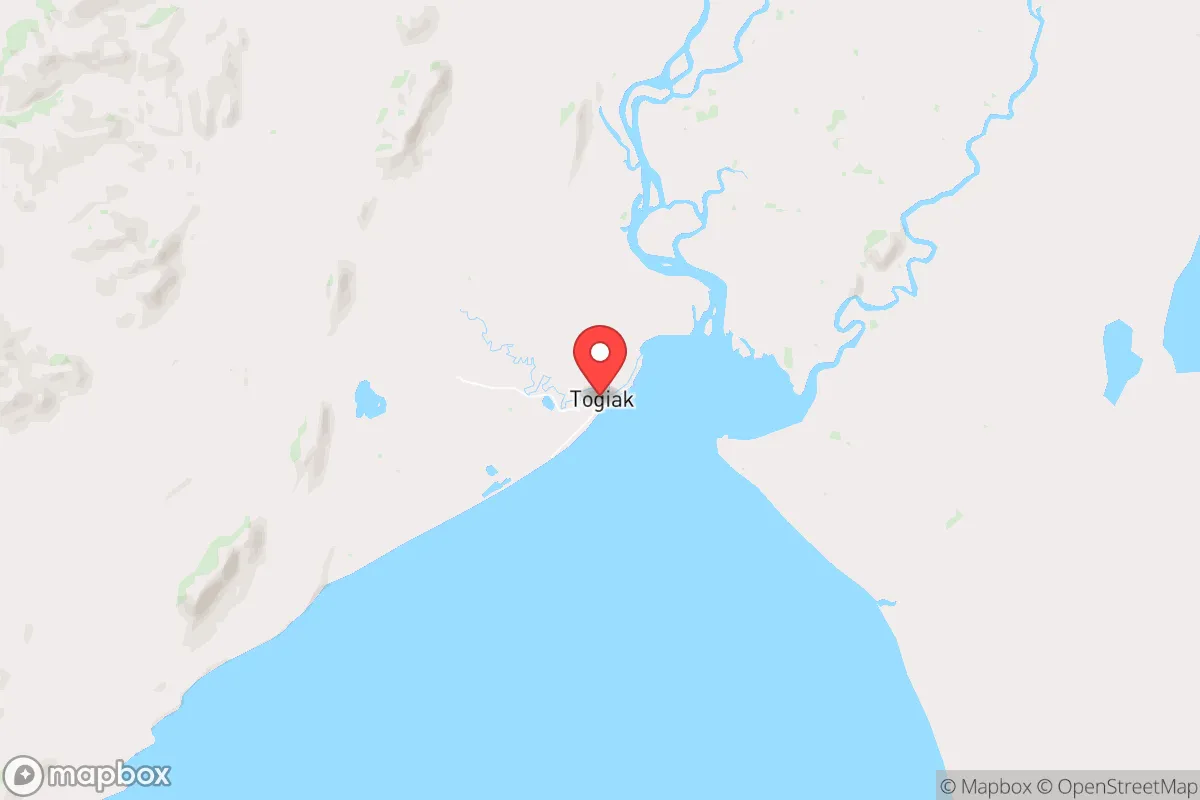
Photo by Clay Knight on Unsplash
Political ClimatePolitical Climate in Togiak, AK
District shown is the primary district for this city’s centroid. Cities may span multiple districts.
Inherited from parent state — no local data available.
Local Political AnalysisPolitical Analysis of Togiak, AK
Togiak, Alaska, has long been a place where folks value their independence and self-reliance, and that's reflected in its political leanings. The area carries a Cook PVI of R+6, meaning it's a solidly Republican district, and that's been the case for as long as most of us can remember. But like a lot of rural communities, you're starting to see some subtle shifts, especially among the younger crowd who are more plugged into the national conversation, and that's got some of us keeping a close eye on things.
How it compares
To really understand Togiak, you have to look at it against the backdrop of the state. Head south to Dillingham, and you'll find a more politically mixed bag—it's a regional hub with more government jobs and a slightly more progressive tilt, especially on social issues. Up in Bethel, the politics are even more influenced by the Alaska Native regional corporations and a stronger push for tribal sovereignty, which can sometimes align with progressive environmental and resource management policies. Togiak, by contrast, has always been more about the individual—the fisherman, the hunter, the small business owner who doesn't want a lot of outside interference. The R+6 rating isn't just a number; it's a reflection of a community that values local control and is skeptical of big government solutions, whether they come from Juneau or Washington, D.C. You don't see a lot of yard signs for progressive candidates here, and when you do, they're usually from folks who moved in from outside.
What this means for residents
For those of us who live here, the political climate means a few concrete things. First, there's a strong resistance to what many see as government overreach into personal freedoms—things like strict fishing regulations that don't account for local subsistence needs, or mandates that feel like they're written by people who've never spent a winter in a remote Alaskan village. The push for more progressive policies, especially around resource extraction and land use, is a real concern. You see it in the debates over the Pebble Mine and other development projects; the conversation is shifting from "what's best for the local economy and jobs" to "what fits a national environmental agenda," and that's a dangerous path for a place like Togiak that depends on its natural resources for survival. The long-term worry is that these outside pressures will erode the very independence that makes this community work.
There's also a cultural distinction here that's hard to overstate. Togiak is a Yup'ik community, and the traditional values of subsistence, family, and stewardship of the land are deeply intertwined with a conservative, small-government worldview. The idea that someone in a far-off office should dictate how we live, hunt, or fish is met with a lot of skepticism. You see this in local elections, where candidates who talk about "local control" and "protecting our way of life" consistently win out over those who push for broader, more progressive social policies. The trajectory, as I see it, is a slow but steady battle to keep that identity intact. The younger generation is getting more exposure to outside ideas through the internet and social media, and some are starting to question the old ways. But for now, the core of Togiak remains firmly rooted in a conservative, freedom-first mindset, and most of us are hoping it stays that way for a long time to come.

State Political ClimatePolitical Climate in Alaska
State Political AnalysisPolitical Environment in the State
Alaska has long been a unique political beast—a state where libertarian-leaning independence, resource extraction, and a fierce distrust of federal overreach have historically created a solidly Republican lean, but with a stubborn independent streak that keeps things interesting. Over the past 10-20 years, the state has shifted from a reliably red stronghold (voting for every GOP presidential candidate since 1968 except for 1964) to a more volatile battleground where the urban-rural split has widened dramatically. The 2020 presidential election saw Trump win the state by 10 points, but the 2022 Senate race saw a moderate Republican, Lisa Murkowski, win via ranked-choice voting over a Trump-backed challenger, signaling that the old party loyalty is fraying. The trajectory is one of increasing polarization, with Anchorage and the Mat-Su Valley pulling in opposite directions, while the Bush and rural areas remain deeply conservative but are losing population.
Urban vs. rural divide
The political map of Alaska is a study in contrasts. Anchorage, home to 40% of the state’s population, is the epicenter of the state’s liberal shift. The city’s Assembly is now controlled by a progressive majority, and it has passed ordinances on non-discrimination and climate action that would be unthinkable in the rest of the state. The Mat-Su Borough (Wasilla, Palmer) is the conservative counterweight—a fast-growing, family-oriented region where the GOP dominates every level of government and where the "Don't Tread on Me" ethos is a lived reality. Fairbanks is a mixed bag, with the university and military base creating a more moderate-to-liberal pocket, while the surrounding Interior is deeply red. Juneau, the capital, is a blue island in a sea of red, driven by state government employment and a strong environmentalist presence. The rural "Bush" communities—Nome, Bethel, Barrow (Utqiaġvik)—tend to vote Democratic due to heavy reliance on federal programs and tribal governance, but their turnout is low and their influence is waning. The real story is the Kenai Peninsula (Soldotna, Homer), which is a microcosm of the state: Homer is artsy and liberal, while Soldotna and the northern peninsula are solidly conservative, with a strong oil and gas industry base.
Policy environment
Alaska’s policy environment is a mixed bag for a conservative audience. On the plus side, there is no state income tax and no state sales tax—a huge draw for those fleeing high-tax states. The state’s Permanent Fund Dividend (PFD) is a unique cash payment to every resident, which has become a sacred cow and a powerful check on government spending. The regulatory posture on oil and gas is generally favorable, with the state actively promoting drilling in the Arctic National Wildlife Refuge (ANWR) and the North Slope. However, the education system is a concern: Alaska ranks near the bottom nationally in K-12 outcomes, and the teachers’ union is powerful, especially in Anchorage. Healthcare is expensive and access is limited in rural areas, but the state has not expanded Medicaid in a way that has crushed the budget. Election laws are a flashpoint: Alaska adopted ranked-choice voting in 2020 via ballot initiative, which has been a boon for moderate Republicans and Democrats but has infuriated the conservative base, who see it as a tool to dilute their power. The state also has no voter ID law, which is a concern for election integrity advocates.
Trajectory & freedom
On the freedom front, Alaska is a tale of two trends. Gun rights are robust—the state has constitutional carry, no magazine bans, and a strong preemption law that prevents local governments from passing their own restrictions. The 2022 legislative session saw a bill to allow firearms in schools with parental permission, which passed. However, parental rights have taken a hit with the state’s adoption of "comprehensive sex education" standards in some districts, particularly in Anchorage, which has sparked heated school board meetings. Medical autonomy is strong—Alaska has no vaccine mandates for adults, and the state fought federal vaccine mandates for workers. Property rights are generally respected, but the federal government owns 60% of the land, creating constant tension over land use, hunting, and resource extraction. The biggest threat to freedom is the Anchorage Assembly’s progressive agenda, which has included mask mandates, vaccine requirements for city employees, and a push for "sanctuary city" policies. The state legislature has pushed back with preemption bills, but the urban-rural divide means these fights are ongoing.
Civil unrest & political movements
Alaska has seen its share of political flashpoints. The 2020 election integrity controversy was muted compared to the Lower 48, but the ranked-choice voting system has created a permanent low-grade conflict. The Anchorage School Board meetings have become a battleground over critical race theory and LGBTQ curriculum, with parents on both sides turning out in force. The PFD fight is a perennial source of tension—when the state government tried to cut the dividend to balance the budget, it sparked protests and a recall effort against then-Governor Mike Dunleavy. The secessionist movement is small but vocal, with the Alaska Independence Party still active, though it has little real influence. Immigration politics are minimal due to the state’s remote location, but there is a growing concern about illegal immigration from Canada via the Yukon border. The most visible flashpoint is the ANWR drilling debate, which pits environmental activists (often from Outside) against local residents who see it as economic salvation. A new resident would notice the "Alaska First" bumper stickers and the general disdain for federal control, but also the growing cultural divide between Anchorage and everywhere else.
Projection
Over the next 5-10 years, Alaska is likely to become more polarized, not less. In-migration is heavily skewed toward the Mat-Su Valley and the Kenai Peninsula, where conservative families are moving for the lower cost of living and the outdoor lifestyle. Anchorage, meanwhile, is losing population to these areas, which will shift the political balance of the state legislature toward the GOP. However, the ranked-choice voting system will continue to produce moderate winners, frustrating the conservative base. The biggest wildcard is the PFD—if the state’s oil revenues decline (which they are, long-term), the dividend will shrink, and that could trigger a populist backlash against the political establishment. The federal land ownership issue will only intensify, especially if a future Democratic administration pushes for more conservation. A conservative moving to Alaska now should expect to find a state that is still freer than most, but where the battle lines are being drawn in the school boards, the Assembly chambers, and the ballot box. The rural areas will remain red, but the urban centers will continue to drift left, creating a constant tension that defines Alaskan politics.
Bottom line for a new resident: Alaska offers unmatched personal freedom in terms of taxes, guns, and lifestyle, but you will have to fight to keep it. The state is not a libertarian paradise—it’s a battleground where your vote matters more than in most states. If you move to the Mat-Su or the Kenai Peninsula, you’ll find a like-minded community. If you move to Anchorage, be prepared for progressive policies that will remind you of the states you left. The key is to get involved locally—school boards, borough assemblies, and the PFD fight are where the real action is. Alaska is still worth it, but it’s not a passive choice. It’s a commitment.
* Values derived from national, state, county, city and local statistics and may differ in a specific area. Last updated: 2026-04-19T19:38:30.000Z
Narrative content on this page is AI-generated and may contain mistakes. Verify any details that matter before acting on them.
ReloMaps may earn a commission from affiliate links at no extra cost to you.

