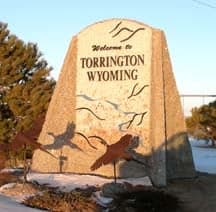
Photo: Wikipedia
Political ClimatePolitical Climate in Torrington, WY
District shown is the primary district for this city’s centroid. Cities may span multiple districts.
Inherited from parent state — no local data available.
Local Political AnalysisPolitical Analysis of Torrington, WY
Torrington, Wyoming, is about as rock-ribbed conservative as it gets, and that’s not changing anytime soon. With a Cook PVI of R+23, this town votes red by a margin that’s nearly double the national average for a safe Republican district. I’ve lived here long enough to remember when the biggest political argument was over the county fair budget, and while things have gotten a little more heated nationwide, Torrington’s core values—personal responsibility, limited government, and a healthy skepticism of federal overreach—have held steady. You won’t find many yard signs for progressive candidates here, and the local chatter is less about national trends and more about keeping Washington out of our water rights and grazing land.
How it compares
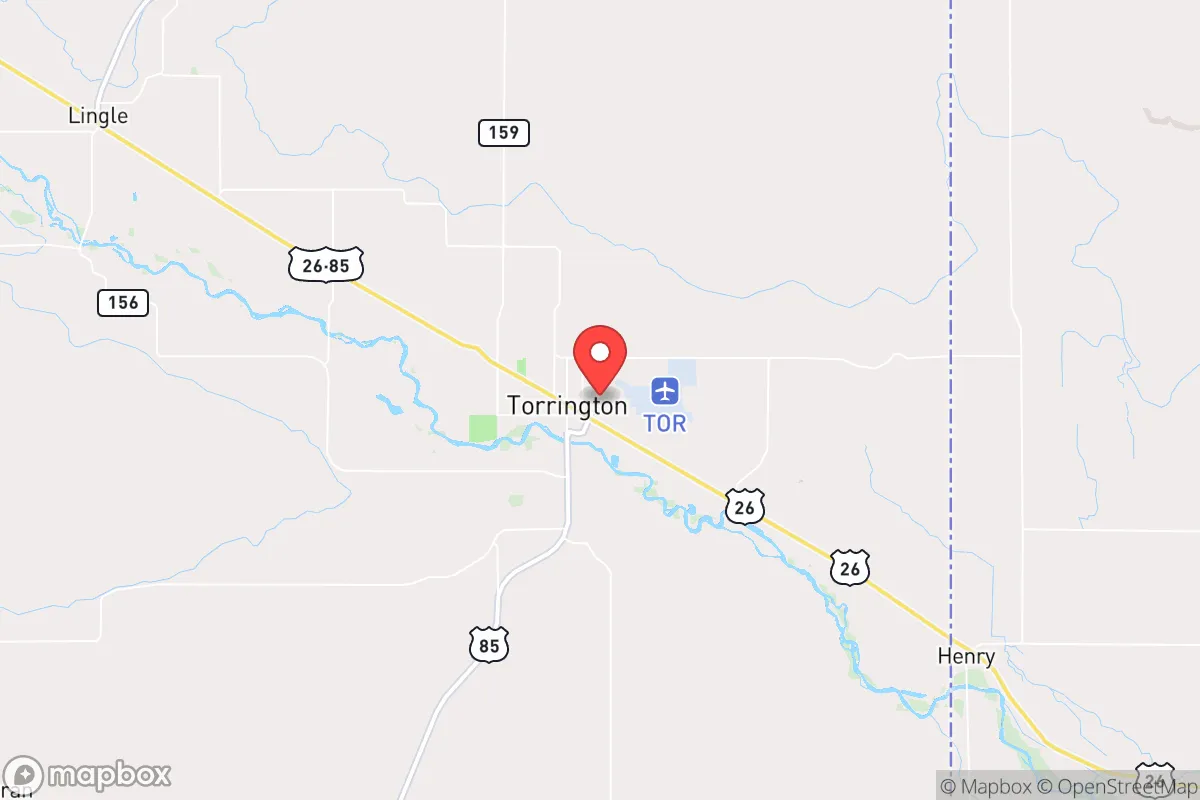
Drive an hour west to Laramie, and you’ll feel like you’ve entered a different country. Laramie’s university crowd and younger demographics give it a noticeably more liberal vibe, with city council debates over bike lanes and diversity initiatives that would never fly in Torrington. Head east toward Scottsbluff, Nebraska, and you’ll find a similar conservative bent, but it’s a bit more tempered by agricultural subsidies and a larger Hispanic population that leans moderate. Torrington sits in a sweet spot of rural, ranching, and energy-industry influence—meaning the political temperature stays consistently cool toward anything that smacks of government expansion. The nearest real contrast is Cheyenne, about 80 miles south, where state government jobs and a growing tech sector have nudged the capital toward a purple-ish tint, but even Cheyenne’s Republicans are more establishment than the grassroots conservatives you’ll find here.
What this means for residents
For folks living in Torrington, the political climate translates into a daily life that’s largely free from the kind of regulatory headaches you hear about in blue states. Property taxes stay low, zoning is minimal, and the local school board isn’t pushing critical race theory or gender ideology—they’re focused on reading, math, and ag science. The downside? If you’re hoping for progressive amenities like expanded public transit or a robust social safety net, you’ll be disappointed. But most residents see that as a feature, not a bug. The real concern here is the creeping influence of federal mandates, especially on land use and energy extraction. When the BLM or EPA starts sniffing around, the whole town tightens up. We’ve seen what happens when outside bureaucrats try to tell us how to manage our water or our cattle—it never ends well for the locals.
One thing that sets Torrington apart is its no-nonsense approach to gun rights and property rights. You can carry openly without a permit, and the county sheriff isn’t shy about saying he won’t enforce any federal gun laws he deems unconstitutional. That’s not just talk—it’s a cultural bedrock. The local economy runs on agriculture, oil, and gas, and those industries don’t have much patience for environmental regulations that kill jobs. Looking ahead, I’d say Torrington will stay red as long as the state’s energy sector holds strong, but I do worry about the long-term demographic shift. If more remote workers or retirees from California move in, we could see a slow drift toward the center. For now, though, this is still a place where your neighbor knows your name and your politics, and both are likely the same as his.

State Political ClimatePolitical Climate in Wyoming
State Political AnalysisPolitical Environment in the State
Wyoming is one of the most reliably Republican states in the nation, with a partisan lean that has only deepened over the past two decades. The state voted for Donald Trump by a margin of +43 points in 2024, and every single county has voted Republican in every presidential election since 2000. The dominant coalition is a mix of ranchers, energy-sector workers, and second-amendment advocates, with a growing contingent of remote workers and retirees fleeing blue states. Over the last 10-20 years, the state has shifted further right, driven by out-migration of liberals from its few urban centers and an influx of conservatives seeking lower taxes and fewer regulations.
Urban vs. rural divide
The political map of Wyoming is stark: the state’s few population centers—Cheyenne, Casper, and Laramie—are the only places where Democrats can muster double-digit support. In 2024, Laramie County (Cheyenne) voted +24 R, while Albany County (Laramie, home to the University of Wyoming) was the closest to a swing county at +16 R. Meanwhile, rural counties like Sublette and Niobrara routinely hit +70 to +80 point Republican margins. The divide isn’t just about population density; it’s cultural. Cheyenne’s state government and railroad economy attract a more moderate, establishment-Republican base, while the rural areas are fiercely libertarian and skeptical of any federal or state authority. The town of Jackson in Teton County is the state’s only blue outlier, voting +30 D in 2024, driven by wealthy second-home owners and tourism workers—but it’s an island in a sea of red.
Policy environment
Wyoming’s policy environment is a conservative dream, with no state income tax, a flat property tax rate, and a regulatory posture that prioritizes energy extraction and agriculture. The state has a constitutional carry law (no permit needed to carry a concealed firearm), and it was one of the first to pass a “Second Amendment Sanctuary” resolution in 2021. Education policy is locally controlled, with school choice options expanding via charter schools and a 2023 law allowing parents to use public funds for private tutoring. Healthcare is a mixed bag: the state rejected Medicaid expansion until 2024, and even then, it was a limited, work-requirement version. Election laws are among the most secure in the nation—voter ID is required, same-day registration is not allowed, and mail-in ballots are only available with an excuse. The state legislature is dominated by the Wyoming Freedom Caucus, which has pushed bills to ban transgender athletes from school sports (2023), restrict abortion to the first trimester (2022 trigger law), and prohibit vaccine mandates (2022).
Trajectory & freedom
Wyoming is becoming more free in many respects, but with caveats. The 2022 passage of SF 103 (the “Medical Freedom Act”) prohibits employers and government entities from requiring COVID-19 vaccines, a direct response to federal overreach. In 2023, the legislature passed HB 152, which bans the enforcement of any federal gun control law passed after 2021—a nullification-style move that signals deep distrust of Washington. Property rights were strengthened with the 2023 “Private Property Protection Act,” which requires the state to compensate landowners if a regulation reduces property value by more than 50%. However, the state’s heavy reliance on federal mineral royalties (about 40% of the budget) means it’s not as independent as it seems. On the downside, the state has seen a push for “critical race theory” bans in schools (HB 0109, 2022), which some conservatives see as necessary to protect parental rights, but others worry is government overreach into curriculum. The trajectory is toward more individual liberty on guns, taxes, and medical choice, but with a growing tension between libertarian ideals and the need for federal money to keep roads and schools running.
Civil unrest & political movements
Wyoming has seen remarkably little civil unrest compared to coastal states. The most visible flashpoint in recent years was the 2020 “Freedom Convoy” in Cheyenne, where hundreds of trucks circled the state capitol to protest COVID-19 restrictions—a largely peaceful, conservative-led movement. The Wyoming Liberty Group and the Wyoming Republican Party’s “Election Integrity” task force have been active, pushing for hand-count audits and paper ballots, though no major fraud has been found. Immigration politics are muted; the state has a small foreign-born population (about 3%), and there are no sanctuary cities. The “Teton County secession” movement—where some Jackson residents floated leaving Wyoming to join Idaho—fizzled out after 2022, but it highlighted the cultural divide between the wealthy, liberal enclave and the rest of the state. On the left, the Wyoming Democratic Party is nearly nonexistent, with no statewide elected officials and only a handful of county commissioners. The biggest political movement is the “Free Wyoming” coalition, which pushes for nullification of federal laws on guns, land use, and energy—a sign that the state’s conservative base is becoming more assertive, not less.
Projection
Over the next 5-10 years, Wyoming will likely become even more conservative, but with a twist. In-migration from blue states—especially to Laramie, Sheridan, and Gillette—is bringing younger, tech-savvy conservatives who are less tied to the old energy economy. This could shift the state’s politics from “extraction-first” to a more diversified, libertarian-leaning model. The Wyoming Freedom Caucus is expected to grow its majority, pushing for a flat income tax (currently zero, but they want to lock it in the constitution), further gun rights expansions, and a ban on any state enforcement of federal environmental regulations. The wildcard is the federal budget: if the U.S. cuts mineral royalties, Wyoming’s tax-free model could crack, forcing a debate on sales or income taxes. For now, the state is on a trajectory toward more personal freedom, but with a growing tension between the old-guard ranchers and the new-wave remote workers. A new resident moving in now should expect a state that is fiercely independent, increasingly hostile to federal authority, and deeply skeptical of any government—state or local—that tries to tell you how to live.
Bottom line for a new resident: Wyoming offers a level of personal freedom—on guns, taxes, and medical choice—that is rare in the U.S. You’ll find a community that values self-reliance and distrusts government overreach, but you’ll also need to accept that the state’s economy is tied to federal dollars and energy markets. If you’re looking for a place where your rights are respected and your taxes are low, Wyoming is a solid bet—just don’t expect the government to solve your problems. That’s your job.
* Values derived from national, state, county, city and local statistics and may differ in a specific area. Last updated: 2026-04-21T19:46:50.000Z
Narrative content on this page is AI-generated and may contain mistakes. Verify any details that matter before acting on them.
ReloMaps may earn a commission from affiliate links at no extra cost to you.

