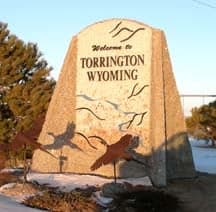
Photo: Wikipedia
Strategic Assessment of Torrington, WY
Strong survivability profile. Good buffer from population centers, with manageable environmental and tactical risks.
What does the Strategic Assessment tell us?
Our Strategic Assessment grades tactical survivability of an area. Major population centers, military targets, fallout zones, natural disasters, and border exposure all drive risk — lower exposure means a more defensible position in a crisis.
This is heavily inspired by Joel Skousen's Strategic Relocation book. Highly recommended you checkout the book ($)What does this tell us?
Our Strategic Assessment grades tactical survivability of an area. Major population centers, military targets, fallout zones, natural disasters, and border exposure all drive risk — lower exposure means a more defensible position in a crisis.
This is heavily inspired by Joel Skousen's Strategic Relocation book. Highly recommended you checkout the book ($)Strategic Pillars

Key Distances
Regional Safe Places
Below is our recommended "safe zones" in Wyoming and the surrounding area based on our strategic heuristics. For most people, it's unrealistic to live in a “safe zone” full-time due to work, family or other personal reasons. They tend to be more rural. However, many of these areas are perfect for second homes and retreat properties that double as a vacation home or even a short-term rental.
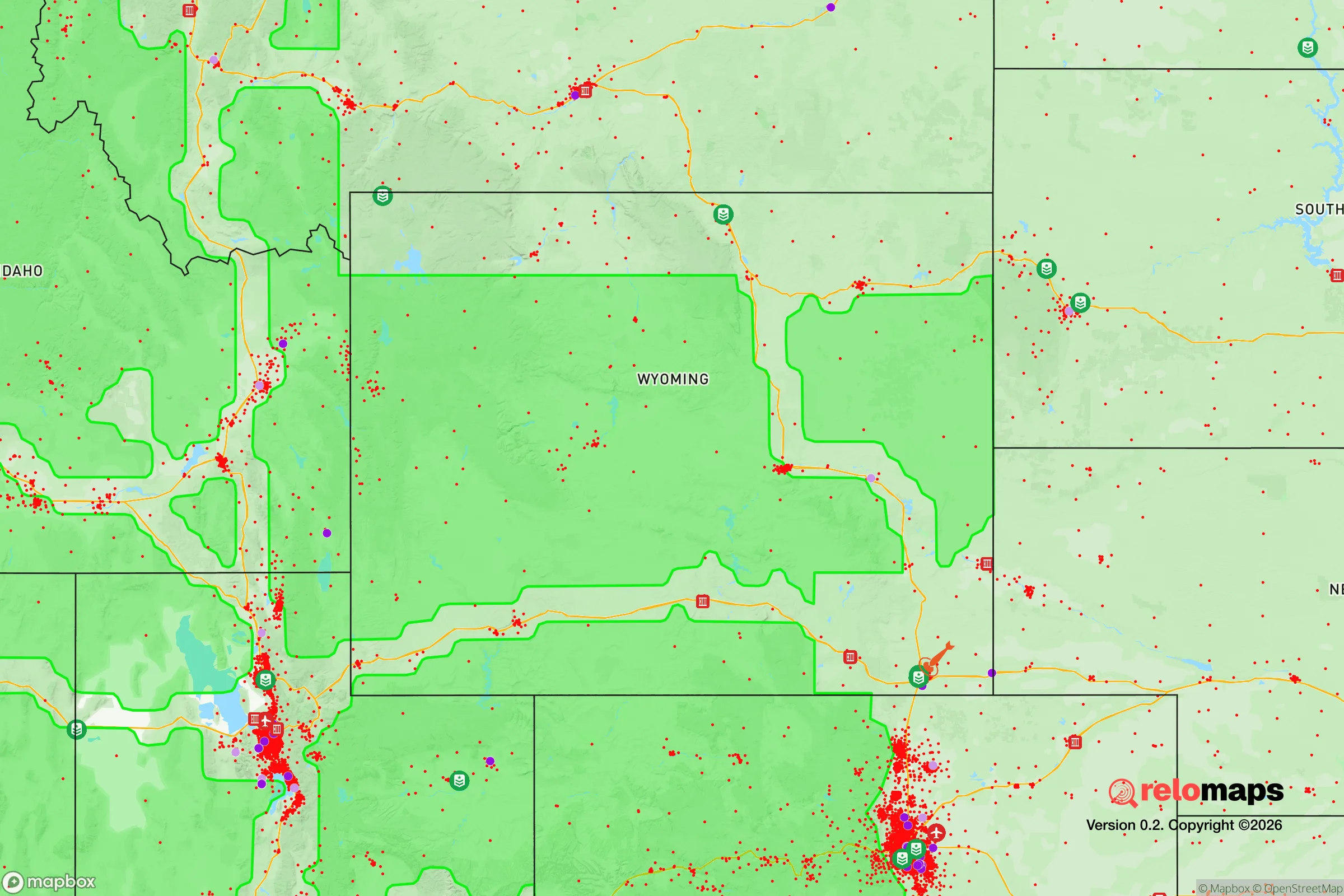
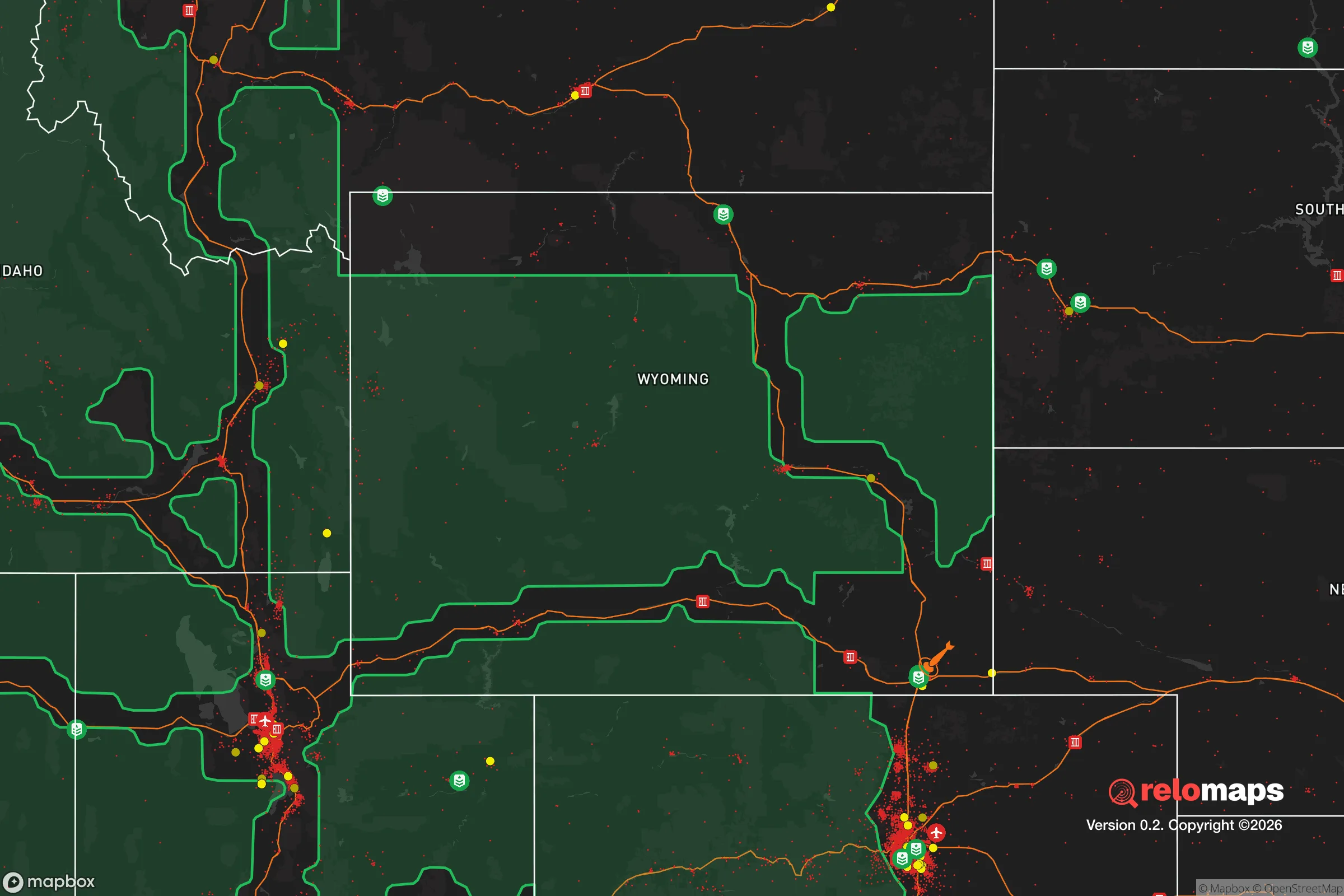


Important Note: For informational purposes only. This does not mean nothing bad ever happens in the green zones. Please use common sense. This is based on public data and modeled with AI. We tried to take a conservative approach but mistakes happen. We update this regularly as new information becomes available.
Solar Generator Recommendations
Backup power matters more here than in safer locations. We've picked three solar generators across budgets and capacity tiers — start with the budget unit if you only need a few essentials, or step up if you want to run a fridge and HVAC for days at a time.

Jackery Portable Power Station Explorer 300
Budget OptionPower on the Go: Weighing only 11 lbs, it's convenient to set up and store with book-sized foldable solar panels

BLUETTI Portable Power Station AC180
Designed for both indoor and outdoor scenarios, AC180 is highly capable as it has a robost capacity and continuous output power.

EF ECOFLOW DELTA Pro Ultra Power Station
Upgraded PickEcoFlow DELTA Pro Ultra is a whole-home energy system designed to grow with your family. Integrated with the Smart Home Panel 2, it scales to meet your evolving energy needs — keeping your home powered, intelligent, and secure through every stage of life.
We earn a commission, at no additional cost to you.
Strategic Assessment Analysis
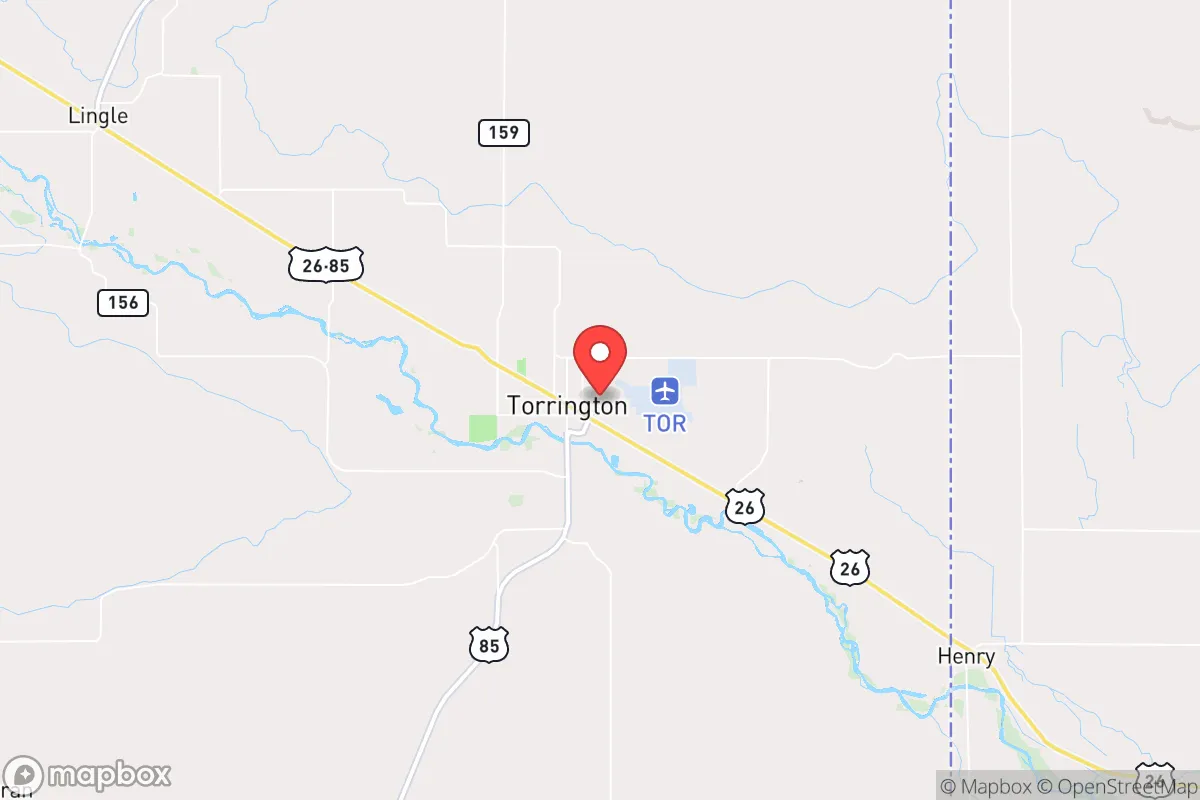
Torrington, Wyoming, offers a compelling strategic position for those prioritizing resilience and self-sufficiency, sitting roughly 80 miles northeast of Cheyenne and 40 miles from the Nebraska border. Its location in the North Platte River Valley provides a natural buffer from major population centers while maintaining access to essential supply routes, making it a viable base for weathering societal disruptions. The town's agricultural foundation and low population density—around 6,500 residents—create a built-in advantage for long-term sustainability, though its proximity to the Nebraska Panhandle and I-80 corridor introduces specific trade-offs for a prepper or survivalist mindset.
Geographic position and natural advantages for long-term survival
Torrington sits at the confluence of the North Platte River and Horse Creek, offering a reliable water source that is critical for any extended crisis scenario. The surrounding Goshen County is dominated by irrigated farmland and ranches, meaning local food production is not just possible but already operational—a key factor when supply chains falter. The area's semi-arid climate, with low humidity and around 300 sunny days per year, reduces mold and rot issues for stored supplies and supports off-grid solar energy generation. The terrain is mostly flat to gently rolling, which limits natural defensive chokepoints but also makes the region less prone to the wildfire risks that plague mountainous areas. For a relocator, the absence of major military installations, nuclear power plants, or large-scale industrial targets within a 100-mile radius significantly lowers the risk of fallout or secondary disaster effects from a mass casualty event. The nearest significant population center, Cheyenne, is far enough to avoid direct spillover from urban unrest, yet close enough to access medical or supply runs if conditions permit.
Risks, exposures, and proximity to fallout-relevant landmarks
The primary strategic vulnerability for Torrington is its location along the Union Pacific rail line and U.S. Highway 26, which connects to the I-80 corridor—a major east-west artery. In a national emergency, these routes could become chokepoints for refugee flow or military movement, potentially drawing unwanted attention. The town sits about 120 miles from F.E. Warren Air Force Base near Cheyenne, which houses intercontinental ballistic missile silos; while not a direct blast risk, this proximity could make the region a secondary target or evacuation zone during a conflict with a nuclear-armed adversary. Additionally, the North Platte River, while a water asset, is also a flood risk during heavy snowmelt years, with low-lying areas near the river experiencing periodic inundation. For a survivalist, the lack of significant topographic barriers means that a determined group could approach from multiple directions, though the surrounding agricultural community tends to be armed and self-reliant, which acts as a deterrent. The nearest major medical facility is in Scottsbluff, Nebraska, about 30 miles east, which is a moderate drive but could be compromised in a mass casualty event; Torrington itself has a small hospital (Community Hospital) with limited trauma capacity, so serious injuries would require evacuation.
Practical resilience for a relocator: food, water, energy, and defensibility
Torrington's agricultural base makes it one of the few places in the region where a relocator can realistically secure local food sources without relying on national supply chains. The area is a major producer of sugar beets, corn, and alfalfa, and there are active farmers' markets and local meat processors. For water, the North Platte River provides a surface source that can be filtered or treated, and the local aquifer is generally reliable, though well drilling costs vary. Energy resilience is moderate: the town is served by Rocky Mountain Power, which draws from coal and natural gas plants, but grid failures during winter storms are not uncommon. Solar panels are a viable supplement given the high sun hours, but wind speeds average 12-15 mph, which can damage poorly mounted systems. Defensibility is a mixed bag—the flat terrain offers long sightlines, which is good for early warning, but also means a property with a clear field of fire is essential. The community itself is tight-knit and conservative, with a strong hunting and firearms culture; most locals are armed and familiar with self-reliance. For a single individual or family, buying a small acreage with a well and septic system within 10 miles of town is feasible at prices well below national averages—think $200,000-$400,000 for a modest setup. The biggest practical gap is the lack of a robust local manufacturing base; most hardware, ammunition, and medical supplies come from outside the region, so pre-stocking is non-negotiable.
The overall strategic picture for Torrington is one of a solid, if unglamorous, redoubt for those seeking to ride out national-level disruptions. It lacks the dramatic defensive terrain of mountain redoubts like the Idaho panhandle, but it compensates with a functional agricultural economy, a like-minded population, and a low profile that keeps it off most target lists. The key trade-off is between isolation and access: you are far enough from major cities to avoid the initial chaos, but close enough to the I-80 corridor that you cannot ignore the possibility of transient threats. For a conservative-leaning relocator who values community, self-sufficiency, and a slower pace, Torrington represents a pragmatic choice—not a fortress, but a farmstead with a fighting chance. The prudent move is to establish a presence here before a crisis, build relationships with local ranchers and suppliers, and treat the town as a base of operations rather than a final redoubt. If the country holds together, you have a quiet, affordable life in a conservative stronghold; if it doesn't, you have water, food, and neighbors who know how to use a rifle. That's about as honest a strategic assessment as you'll get for the High Plains.

* Values derived from national, state, county, city and local statistics and may differ in a specific area. Last updated: 2026-04-21T19:46:50.000Z
Narrative content on this page is AI-generated and may contain mistakes. Verify any details that matter before acting on them.
ReloMaps may earn a commission from affiliate links at no extra cost to you.

