Photo: Wikipedia
Demographics of Troutdale, OR
Affluence Level in Troutdale, OR
A middle-class area roughly in line with national averages across income, home values, education, and employment.
People of Troutdale, OR
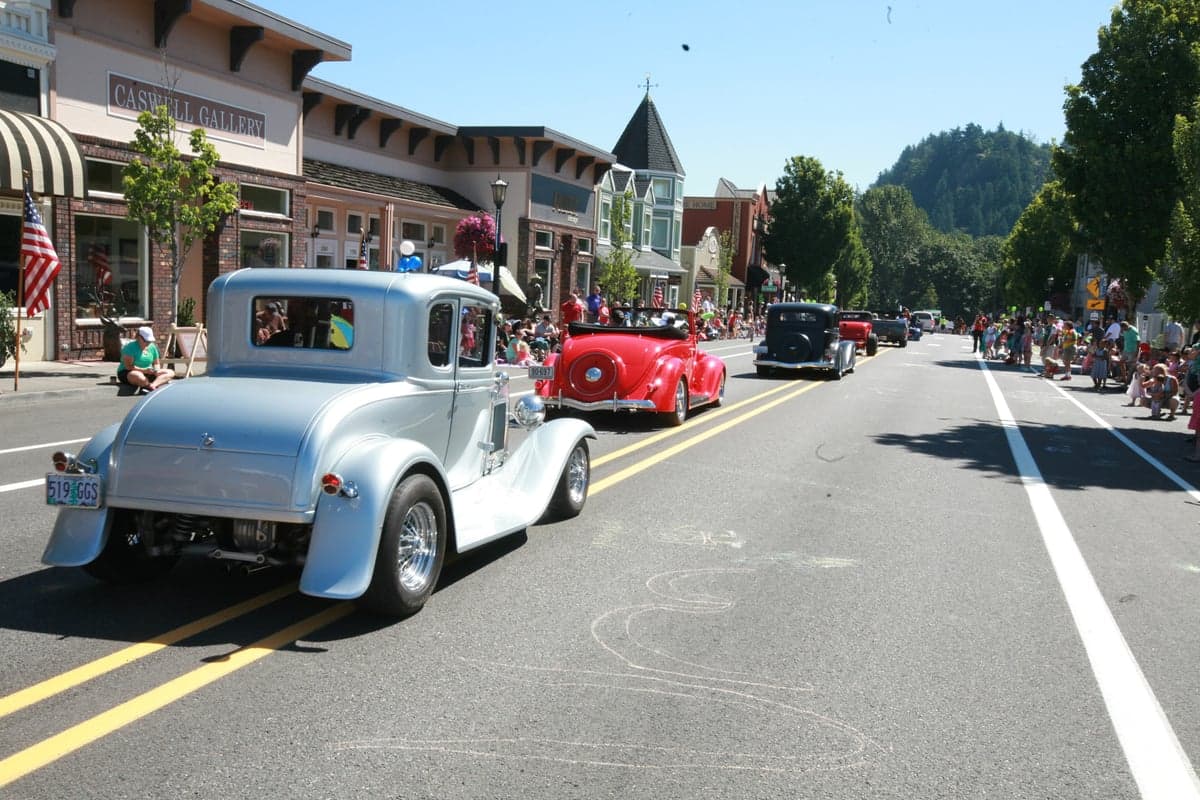
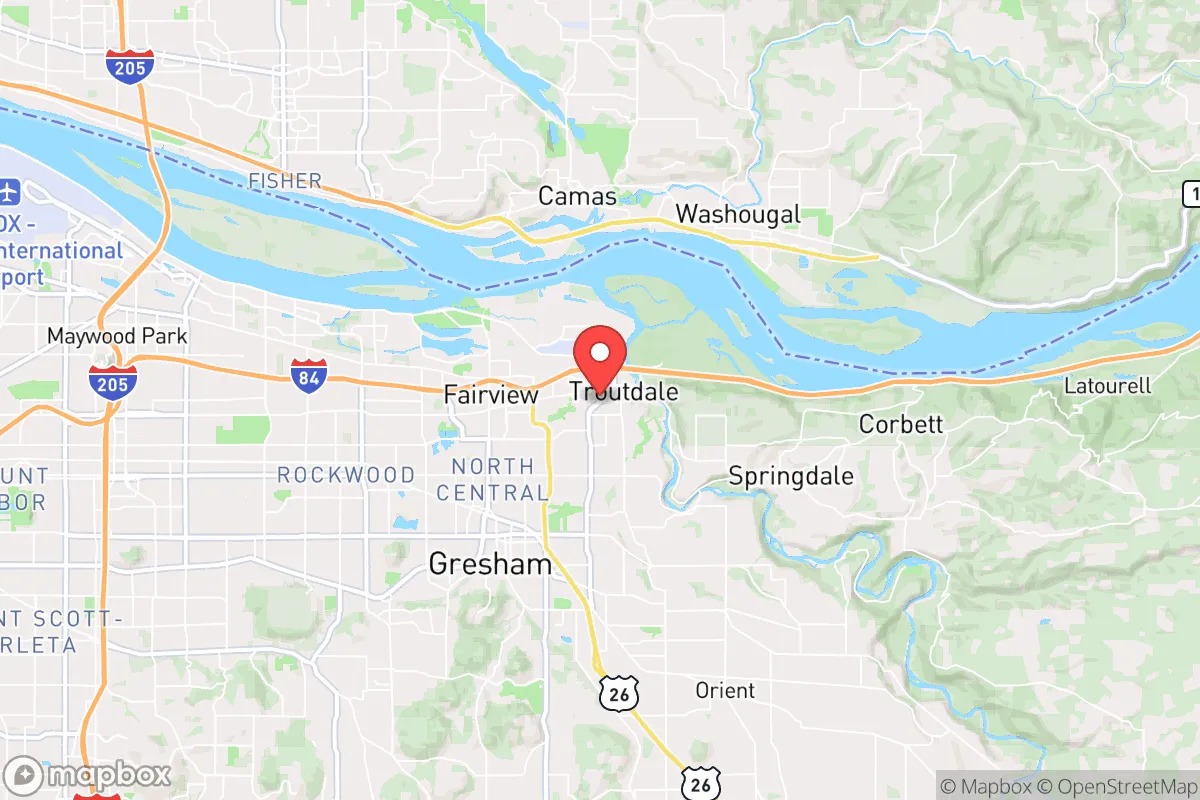
Today, Troutdale's 16,000 residents are predominantly white (67.9%) with a significant Hispanic minority (15.5%) and a small East/Southeast Asian community (4.6%). The city retains a blue-collar, family-oriented character rooted in its lumber and railroad past, with a lower college attainment rate (27.3%) than the Portland metro average. Foreign-born residents make up just 5.9% of the population, reflecting a largely native-born, domestic migration history. The city's identity is shaped by its position along the Sandy River and its role as a quieter, more affordable alternative to Portland.
How the city was settled and grew
Troutdale was founded in the 1850s as a farming and lumber community along the Sandy River. The arrival of the railroad in the 1880s spurred growth, attracting Scandinavian and German immigrants who built homes in the Historic Downtown Troutdale district and along the riverfront. Early 20th-century saw a lumber boom, with mill workers settling in East Troutdale near the mills and the Sandy River Delta. Post-World War II, returning veterans and their families moved into new subdivisions like Troutdale Heights, expanding the city's footprint. The city's population remained overwhelmingly white through the mid-20th century, with small numbers of Japanese and Filipino workers in the lumber industry.
Modern era (post-1965)
The 1965 Hart-Cellar Act had limited impact on Troutdale; the city's foreign-born share remains low at 5.9%. Instead, domestic migration from other parts of Oregon and the Pacific Northwest drove growth. Hispanic families began arriving in the 1970s and 1980s, many working in agriculture and construction, settling in Sundial Estates and the Sandy River area. East/Southeast Asian residents, primarily Vietnamese and Filipino, arrived later, concentrated in Troutdale Heights and newer subdivisions like Crown Point area. The city's white population declined from over 90% in 1990 to 67.9% today, while Hispanic share rose to 15.5%. Black residents remain a small fraction at 1.9%, and Indian subcontinent residents are statistically absent at 0.0%. The college-educated share (27.3%) is below the Oregon average, reflecting the city's working-class roots.
The future
Troutdale's population is slowly diversifying, but the foreign-born share remains below the national average and is not expected to rise sharply. Hispanic growth is likely to continue, but the city may not see large immigrant enclaves due to limited housing stock and proximity to Portland's more diverse suburbs. The East/Southeast Asian community is small and stable, with no major new influx anticipated. The city is homogenizing in terms of income and education, with a growing number of families seeking affordable housing relative to Portland. Over the next 10–20 years, Troutdale will likely remain a predominantly white, middle-class suburb with a growing Hispanic minority, but without the ethnic enclaves seen in larger cities. New residential development in East Troutdale and near the Sandy River may attract younger families, but the overall demographic profile will shift slowly.
For a conservative-leaning mover, Troutdale offers a stable, family-oriented community with a strong sense of local history and a slower pace of demographic change than Portland proper. The city's population is becoming slightly more diverse but remains overwhelmingly native-born and English-speaking, with a blue-collar ethos that appeals to those seeking a traditional suburban lifestyle. The low foreign-born share and modest college attainment rate reinforce a community where local ties and practical trades still dominate.

* Values derived from national, state, county, city and local statistics and may differ in a specific area. Last updated: 2026-05-18T16:03:22.000Z
Narrative content on this page is AI-generated and may contain mistakes. Verify any details that matter before acting on them.
ReloMaps may earn a commission from affiliate links at no extra cost to you.

