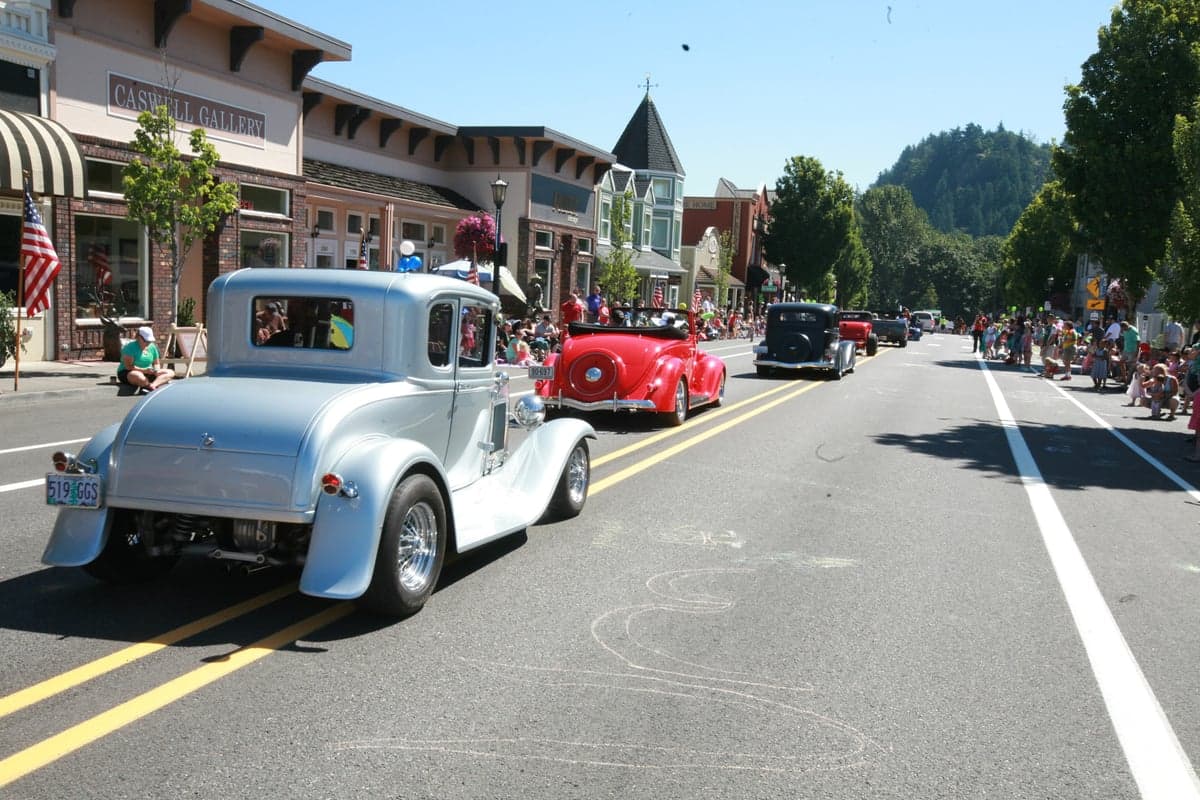
Photo: Wikipedia
Strategic Assessment of Troutdale, OR
Multiple tactical vulnerabilities. Population density, target proximity, or disaster risk are likely compounding. A retreat property and exit planning is required.
What does the Strategic Assessment tell us?
Our Strategic Assessment grades tactical survivability of an area. Major population centers, military targets, fallout zones, natural disasters, and border exposure all drive risk — lower exposure means a more defensible position in a crisis.
This is heavily inspired by Joel Skousen's Strategic Relocation book. Highly recommended you checkout the book ($)What does this tell us?
Our Strategic Assessment grades tactical survivability of an area. Major population centers, military targets, fallout zones, natural disasters, and border exposure all drive risk — lower exposure means a more defensible position in a crisis.
This is heavily inspired by Joel Skousen's Strategic Relocation book. Highly recommended you checkout the book ($)Strategic Pillars

Key Distances
Regional Safe Places
Below is our recommended "safe zones" in Oregon and the surrounding area based on our strategic heuristics. For most people, it's unrealistic to live in a “safe zone” full-time due to work, family or other personal reasons. They tend to be more rural. However, many of these areas are perfect for second homes and retreat properties that double as a vacation home or even a short-term rental.


Important Note: For informational purposes only. This does not mean nothing bad ever happens in the green zones. Please use common sense. This is based on public data and modeled with AI. We tried to take a conservative approach but mistakes happen. We update this regularly as new information becomes available.
Solar Generator Recommendations
Backup power matters more here than in safer locations. We've picked three solar generators across budgets and capacity tiers — start with the budget unit if you only need a few essentials, or step up if you want to run a fridge and HVAC for days at a time.

Jackery Portable Power Station Explorer 300
Budget OptionPower on the Go: Weighing only 11 lbs, it's convenient to set up and store with book-sized foldable solar panels

BLUETTI Portable Power Station AC180
Designed for both indoor and outdoor scenarios, AC180 is highly capable as it has a robost capacity and continuous output power.

EF ECOFLOW DELTA Pro Ultra Power Station
Upgraded PickEcoFlow DELTA Pro Ultra is a whole-home energy system designed to grow with your family. Integrated with the Smart Home Panel 2, it scales to meet your evolving energy needs — keeping your home powered, intelligent, and secure through every stage of life.
We earn a commission, at no additional cost to you.
Strategic Assessment Analysis
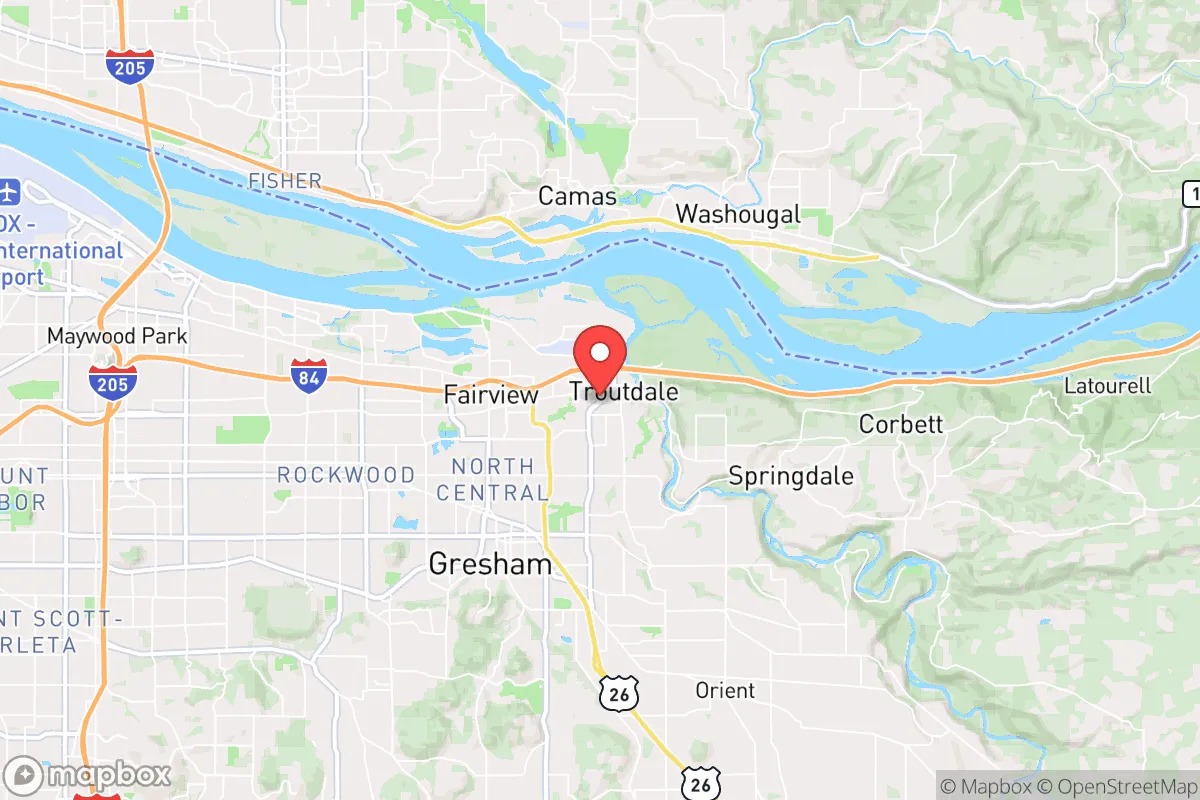
Troutdale, Oregon, sits at a strategic crossroads that offers a mixed bag for the survival-minded relocator. Its position at the mouth of the Columbia River Gorge, just 15 miles east of Portland, provides immediate access to critical natural resources and escape routes, but its proximity to a major metropolitan area introduces significant vulnerabilities. For those prioritizing resilience against civic unrest, mass casualty events, and large-scale disasters, Troutdale’s value lies in its potential as a temporary staging ground rather than a long-term redoubt, demanding a place where you can leverage the nearby wilderness while maintaining awareness of the urban threats to the west.
Geographic position and natural advantages for long-term survival
Troutdale’s primary strategic advantage is its location at the western gateway of the Columbia River Gorge, a natural corridor that provides both a water source and a potential escape route into the Cascade Range. The Sandy River and the Columbia River converge here, offering abundant fresh water—a critical resource in any prolonged crisis. The nearby Mount Hood National Forest, less than 30 miles east, provides a vast, sparsely populated wilderness for retreat, hunting, and foraging. The Columbia Gorge itself acts as a wind tunnel, which can be harnessed for renewable energy, and its steep canyon walls offer natural defensibility against large-scale movements from the west. The area’s elevation, ranging from 100 to 200 feet above sea level, reduces flood risk compared to low-lying Portland, though the rivers themselves can surge. For a relocator, this geography means you have a buffer: you can monitor Portland’s instability from a distance while maintaining a direct line to the high country.
Risks, exposures, and proximity to fallout-relevant landmarks
The primary liability is Troutdale’s proximity to Portland, a city that, in a scenario of civic collapse, would become a source of mass migration, resource competition, and potential violence. The I-84 corridor, which runs directly through Troutdale, would be a primary evacuation route for Portland’s 650,000 residents, turning the town into a choke point. The Portland International Airport, just 10 miles west, is a high-value target for any coordinated attack or disruption, and its proximity means fallout from a major incident—whether a dirty bomb, EMP, or conventional strike—could affect Troutdale’s air and water. The nearby Troutdale Airport (a general aviation field) is a secondary concern but could attract unwanted attention. Additionally, the Columbia River’s industrial traffic, including barge transport of hazardous materials, introduces a chemical spill risk. The area’s seismic vulnerability is real: the Cascadia Subduction Zone could produce a magnitude 9.0 earthquake, triggering liquefaction along the riverbanks and potentially isolating Troutdale if bridges fail. For the prepper, these exposures mean you cannot rely on Troutdale as a final destination; it is a waypoint, not a fortress.
Practical resilience for a relocator: food, water, energy, and defensibility
On the practical side, Troutdale offers some immediate advantages for a relocator willing to invest in self-sufficiency. The Sandy River and Columbia River provide year-round water is plentiful but requires filtration and treatment—boiling or a high-quality ceramic filter is non-negotiable due to agricultural runoff and potential upstream contamination. Local soil in the Sandy River delta is fertile, supporting small-scale gardening, but the growing season is short (roughly April to October), so a greenhouse or cold frames are essential for year-round food production. The area’s timber resources are abundant for fuel and construction, but harvesting requires tools and knowledge. Energy resilience is moderate: the Pacific Northwest’s cloudy climate limits solar efficiency, but micro-hydro from the Sandy River or wind turbines in-stream turbines could provide consistent power if you have water rights. Defensibility is a concern—Troutdale is a flat, open valley with few natural chokepoints. The best defensive posture is to establish a retreat in the nearby foothills (e.g., around Corbett or Larch Mountain), using Troutdale as a supply hub. The local population is roughly 16,000, which is small enough to know your neighbors but large enough that a crisis could overwhelm local law enforcement. The Troutdale Police Department has about 20 officers, so community self-defense networks would be critical. For a single individual or family, the key is to build relationships with like-minded locals before a crisis—join the local gun club, attend community emergency response team (CERT) training, and stockpile at least three months of supplies, as the nearest major distribution centers are in Portland and would be compromised.
The overall strategic picture for Troutdale is one of cautious utility. It is not a fortress, nor is it a remote sanctuary. Its value lies in its position as a buffer zone between the urban chaos of Portland and the relative safety of the Cascades. For the survival-minded relocator, Troutdale can serve as a forward operating base—a place to gather intelligence, cache supplies, and maintain access to the river and forest while you prepare for a deeper retreat. The risks are real: proximity to a major city, seismic hazards, and a vulnerable transportation corridor. But for those who understand that the best survival strategy is mobility and situational awareness, Troutdale offers a practical, if imperfect, foothold in the Pacific Northwest. The bottom line: do not plan to stay here long-term. Use it as a launch point, keep your bug-out bag packed, and have a route east mapped out before the lights go out.

* Values derived from national, state, county, city and local statistics and may differ in a specific area. Last updated: 2026-05-18T16:03:22.000Z
Narrative content on this page is AI-generated and may contain mistakes. Verify any details that matter before acting on them.
ReloMaps may earn a commission from affiliate links at no extra cost to you.

