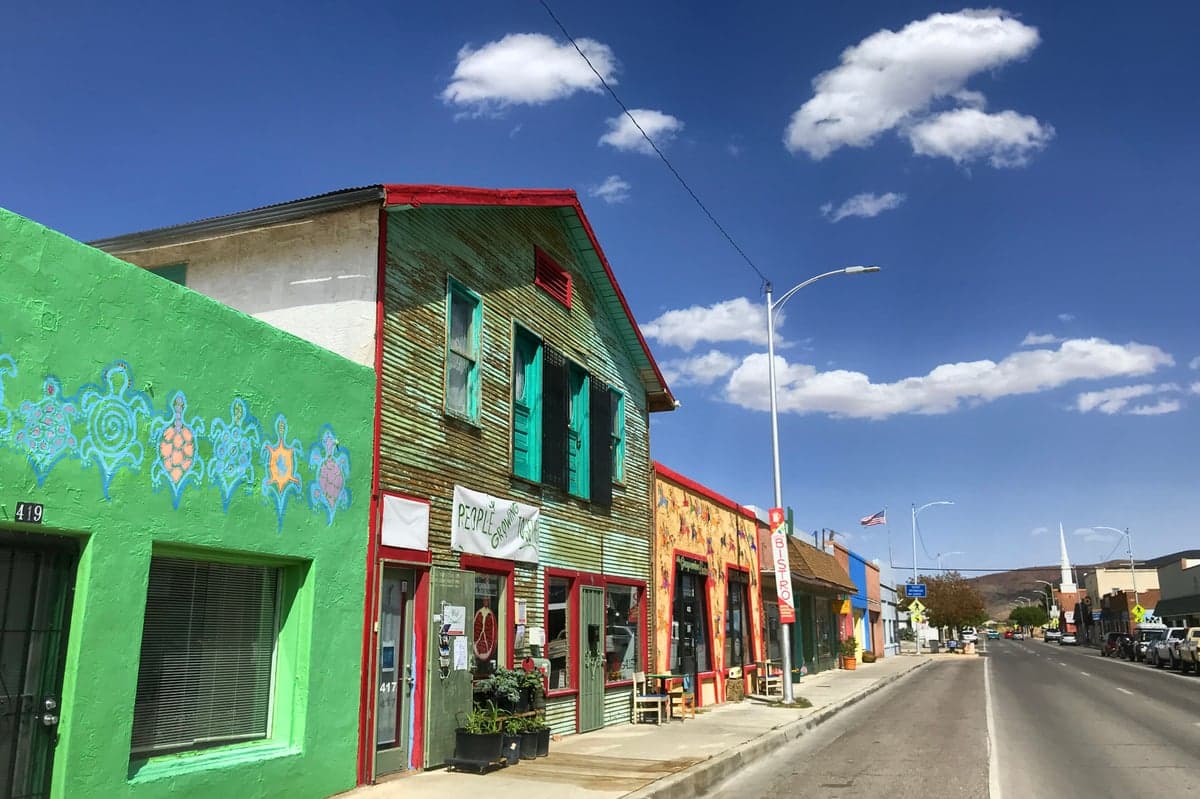
Photo: Wikipedia
Political ClimatePolitical Climate in Truth Or Consequences, NM
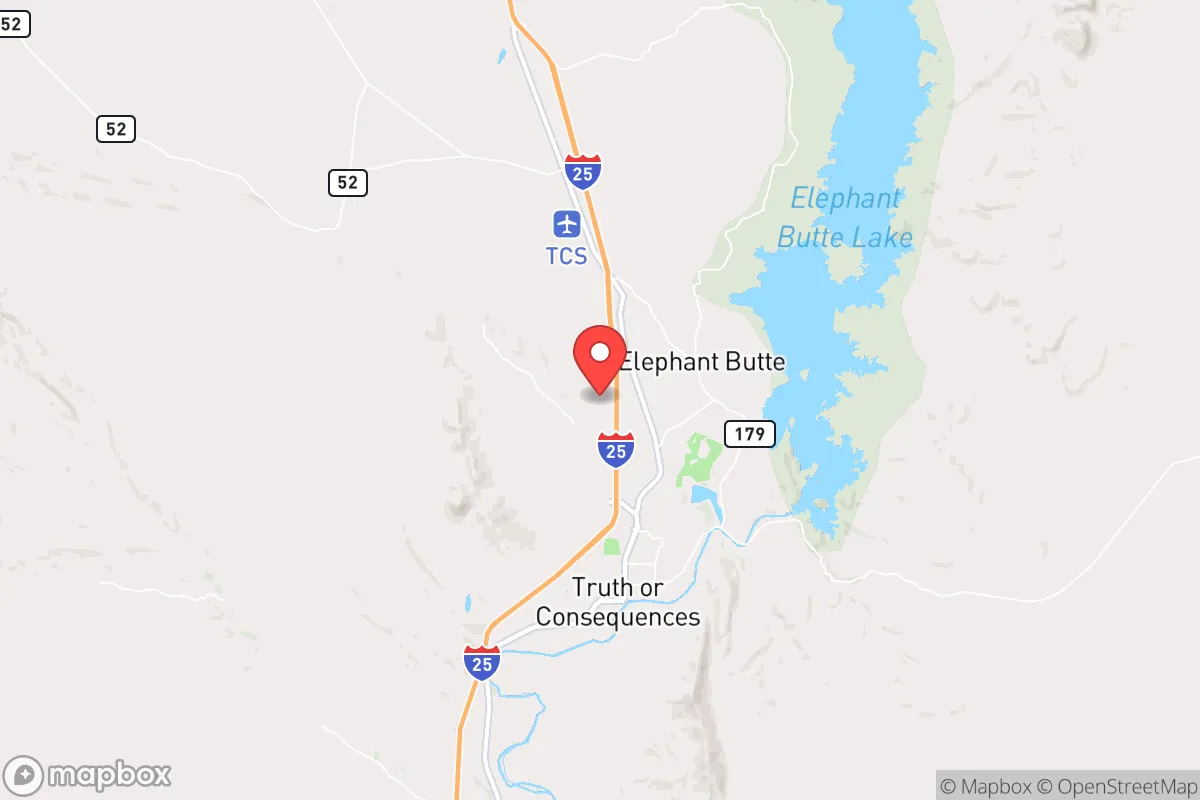
District shown is the primary district for this city’s centroid. Cities may span multiple districts.
Local Political AnalysisPolitical Analysis of Truth Or Consequences, NM
Truth or Consequences sits in a unique political pocket of New Mexico. For a long time, this town was reliably conservative, a place where folks minded their own business and the government stayed out of the way. But the political landscape has gotten a lot more complicated. The Cook PVI rating of EVEN tells you everything you need to know: this is a true swing area, and the trajectory over the last decade has been a slow, steady drift leftward, which has a lot of long-time residents worried about what's coming next.
How it compares
To really understand T or C, you have to look at the map around it. Drive an hour north to Socorro, and you'll find a town that's been trending bluer for years, thanks in large part to the influence of New Mexico Tech and a younger, more transient population. Head south to Las Cruces, and you're in a solidly Democratic stronghold. The real contrast is to the east, in places like Carrizozo or Ruidoso, where the rural, independent spirit is still the dominant force. Truth or Consequences used to be more like those towns—a place where the Second Amendment was a given, not a debate. Now, you see more out-of-state plates, more people moving in from California and Colorado, and with them, a push for the kind of progressive policies that have choked those states. The local county commission has seen some close races, and the quiet, common-sense majority is having to fight harder than ever to keep the local government from overreaching into things like land use and business regulations.
What this means for residents
For those of us who've been here a while, the biggest red flag is the slow creep of government overreach. It starts small—a new zoning ordinance that sounds reasonable on paper but gives the county more say over what you can do on your own property. Then it's a push for "sustainability" initiatives that end up raising utility costs for everyone. The hot springs are the lifeblood of this town, and there's a real fear that the push for more regulation and "eco-tourism" will price out the very people who made this place special. The practical effect is that you have to be more vigilant now. You can't just assume the local government has your back. You have to show up to meetings, you have to speak up, and you have to vote. The freedom to live your life without a bunch of bureaucratic hassle is no longer a given here; it's something you have to protect.
On the cultural side, the town still has a strong libertarian streak. People are friendly, but they don't want you in their business. That's the spirit that made T or C a haven for artists, veterans, and folks who just wanted to be left alone. The worry is that the new wave of politics is trying to replace that live-and-let-live attitude with a one-size-fits-all progressive agenda. If you're considering a move here, just know that the political climate is a battleground. It's not the deeply conservative town it was twenty years ago, but it's also not a lost cause. The fight for the soul of this place is real, and it's happening right now. If you value personal freedom and a government that stays small, you'll find plenty of allies here—but you'll also need to be ready to stand your ground.

State Political ClimatePolitical Climate in New Mexico
State Political AnalysisPolitical Environment in the State
New Mexico has long been a reliably blue state in presidential elections, voting Democratic by margins of 10-11 points in the last three cycles, but its internal politics are far more complex than that top-line number suggests. The state’s political engine is driven by a coalition of Hispanic and Native American voters in the central corridor and northern counties, combined with a growing progressive base in Albuquerque and Santa Fe. Over the past two decades, the state has shifted leftward on cultural and economic issues, though rural, oil-rich counties in the southeast and conservative pockets in the southwest still provide a Republican counterweight that keeps the legislature from being a total rubber stamp.
Urban vs. rural divide
The political map of New Mexico is a study in stark contrasts. The Albuquerque metro area (Bernalillo County) alone accounts for roughly a third of the state’s population and votes reliably Democratic, typically by 15-20 points. Santa Fe County is the state’s most liberal stronghold, routinely delivering 70-75% of its vote to Democrats, driven by a mix of government workers, artists, and wealthy retirees. Las Cruces (Doña Ana County) leans blue but is more moderate, often splitting tickets in local races. The real Republican firepower comes from the southeastern corner—Lea, Eddy, and Chaves counties, where oil and gas jobs fuel a conservative, pro-business electorate. Lea County, anchored by Hobbs, voted +50 points for Trump in 2024. The rural north (Taos, Rio Arriba, Mora) is culturally conservative on some issues but votes Democratic due to union ties and federal land dependency. The state’s Native American pueblos and the Navajo Nation in the northwest (San Juan, McKinley counties) lean Democratic, though turnout is inconsistent. A newcomer moving to the Albuquerque suburbs—places like Rio Rancho or Corrales—will find a more purple environment, while anyone settling in Artesia or Carlsbad will be deep in red territory.
Policy environment
New Mexico’s policy environment has shifted decisively left since 2019, when Democrats gained full control of the legislature and governorship. The state has a progressive income tax with rates up to 5.9%, and a gross receipts tax (essentially a sales tax on services) that can push 8-9% in some cities. Property taxes are relatively low, which is a plus, but the state’s regulatory posture on energy has become increasingly hostile to new oil and gas development, with Governor Michelle Lujan Grisham’s administration pushing methane rules and a clean fuel standard that industry groups warn will raise costs. Education policy is a mixed bag: the state passed a free college tuition program (the Opportunity Scholarship) in 2022, but K-12 outcomes remain near the bottom nationally, and the state has resisted school choice expansion. Healthcare is dominated by the state’s Medicaid expansion, which covers nearly half the population, and the legislature has moved toward a government-run option. Election laws are among the most permissive in the country—same-day registration, no-excuse absentee voting, and automatic voter registration are all in place. For a conservative, the policy environment feels like a slow but steady march toward a California-style regulatory state, with the notable exception of gun laws, which remain relatively permissive compared to coastal blue states.
Trajectory & freedom
The trajectory of personal freedom in New Mexico is a mixed bag, and the direction is concerning for those who value limited government. On the positive side, the state has not followed Colorado or Washington down the path of strict gun control—permitless carry was signed into law in 2021, and there are no magazine capacity bans or assault weapon restrictions. However, the state has aggressively expanded government power in other areas. The 2021 Energy Transition Act effectively mandates a 100% carbon-free electricity grid by 2045, which will drive up energy costs and reduce reliability. In 2023, the legislature passed a bill banning conversion therapy for minors and expanded protections for transgender individuals in housing and employment—moves that many conservatives see as government overreach into family and medical decisions. The state also created a public health order in 2023 that allowed the governor to ban firearms in public parks and playgrounds, which was quickly blocked by courts but signaled an appetite for more restrictions. Parental rights took a hit with the 2023 law requiring schools to adopt policies that affirm a student’s gender identity without parental notification—a flashpoint that has driven some families to consider leaving. Property rights are under pressure from the state’s aggressive land use planning and a 2024 law that restricts new development in areas with water scarcity. The overall trend is toward more government control over energy, education, and family life, with the gun rights exception being the only major bright spot for liberty-minded residents.
Civil unrest & political movements
New Mexico has seen its share of political flashpoints, though they tend to be more localized than the massive protests seen in Portland or Seattle. The most visible movement in recent years has been the push for abortion access—the state passed a law in 2021 repealing a pre-Roe ban, and in 2023, the legislature passed a bill protecting abortion providers from out-of-state lawsuits, making New Mexico a destination for women from Texas and Oklahoma. This has sparked periodic protests outside the state capitol in Santa Fe, with both pro-life and pro-choice activists clashing. Immigration politics are a constant undercurrent, given the state’s 180-mile border with Mexico. The governor has declared a state of emergency in border counties like Doña Ana and Luna, citing cartel activity and human trafficking, but has resisted calls for more aggressive enforcement. The “Sanctuary State” designation, formalized in 2019, prohibits state and local law enforcement from cooperating with federal immigration authorities, which has led to tensions with border communities like Las Cruces and Deming. On the right, the “New Mexico Patriots” and local county-level GOP groups have organized around election integrity, with some counties passing resolutions calling for hand-count audits. The 2020 election saw a minor controversy when a Republican candidate for Congress alleged irregularities in a close race, but no major fraud was proven. A newcomer would notice that political activism is less about street protests and more about county commission meetings and school board fights, where the culture war is being waged over curriculum and library books.
Projection
Looking ahead five to ten years, New Mexico’s political trajectory is likely to continue its slow leftward drift, but with significant caveats. The state’s population growth is anemic—less than 1% per year—and the people moving in tend to be retirees from blue states (California, Colorado) seeking lower housing costs, which reinforces the progressive tilt. The oil and gas industry, which funds a huge chunk of the state budget, is facing long-term headwinds from federal regulations and the global energy transition, which could shrink the tax base and force the state to raise taxes on residents. The Hispanic electorate, which has historically been more moderate on social issues, is slowly shifting left on cultural matters, especially among younger voters. However, there are countervailing forces: the rural southeast is growing due to oil jobs, and some exurban areas around Albuquerque are trending red as families flee the city’s crime and failing schools. The most likely scenario is that New Mexico remains a blue state but becomes more internally polarized, with the Albuquerque-Santa Fe axis pulling left while the southeast and southwest become more conservative. For a conservative moving in now, the state will feel increasingly like an island of progressive governance surrounded by red Texas and Arizona, with the policy environment becoming less friendly to traditional values over time.
For a conservative individual or family considering relocation, New Mexico offers a few genuine advantages—low property taxes, relatively permissive gun laws, and stunning natural beauty—but the political headwinds are real. The state’s education system is struggling, the tax burden is creeping upward, and the cultural environment in the major population centers is increasingly hostile to traditional values. If you’re looking for a place where your vote will make a difference, the rural southeast (Hobbs, Carlsbad, Artesia) or the southwest (Silver City, Deming) are your best bets, but even there you’ll be subject to state-level policies you may not agree with. The bottom line: New Mexico is a beautiful state with serious governance problems, and the trend lines suggest those problems will get worse before they get better. Come for the landscape and the low property taxes, but be prepared to fight for your values at the ballot box and in your local school board meetings.
* Values derived from national, state, county, city and local statistics and may differ in a specific area. Last updated: 2026-05-01T09:20:23.000Z
Narrative content on this page is AI-generated and may contain mistakes. Verify any details that matter before acting on them.
ReloMaps may earn a commission from affiliate links at no extra cost to you.

