Photo: Wikipedia
Demographics of Tucumcari, NM
Affluence Level in Tucumcari, NM
A below-average socioeconomic profile. Incomes, home values, and educational attainment trail the U.S., with higher poverty and unemployment.
People of Tucumcari, NM
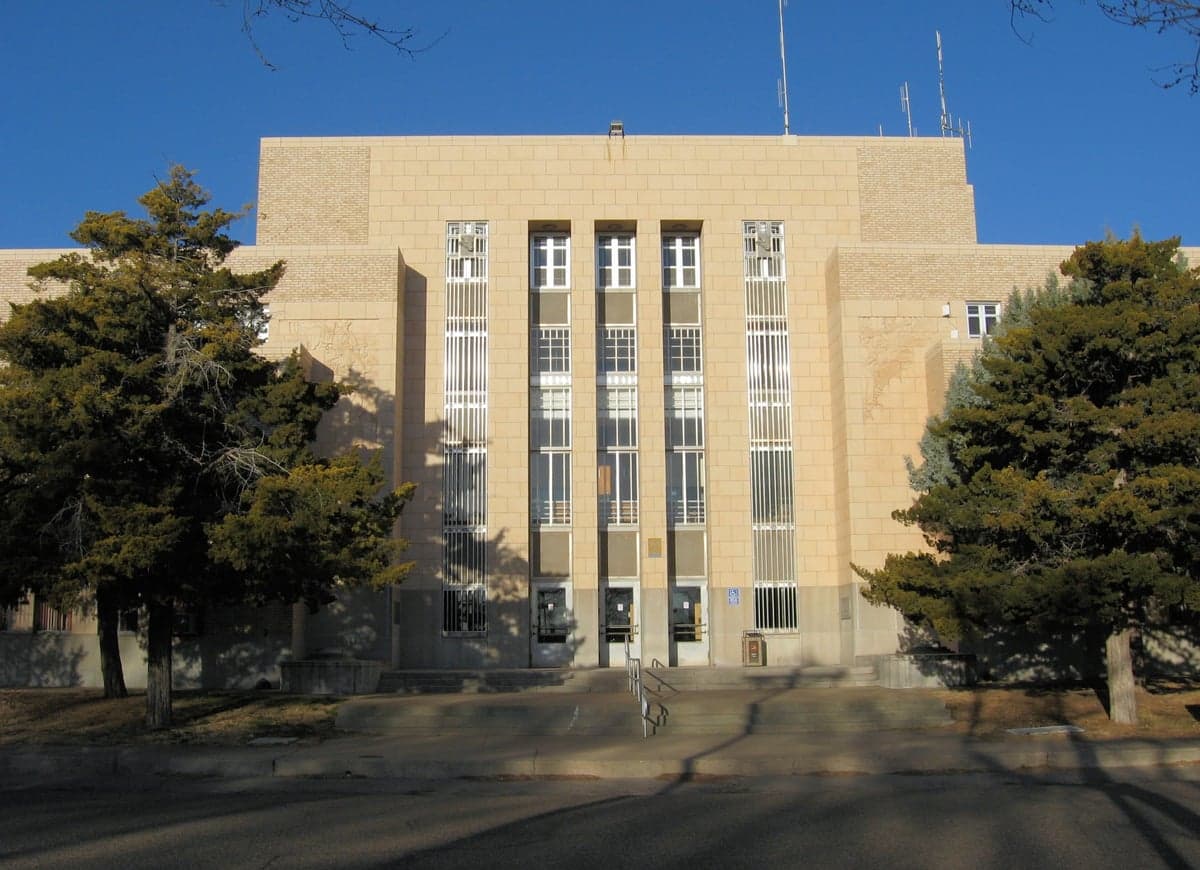
The people of Tucumcari, New Mexico, today number roughly 5,200, forming a predominantly Hispanic (63.7%) and white (30.4%) community with a very small foreign-born population of just 1.3%. The city’s identity is rooted in its history as a railroad and Route 66 hub, giving it a working-class, independent character that leans conservative, though local politics are often more pragmatic than partisan. With only 19.7% of adults holding a college degree, the population is heavily blue-collar, employed in transportation, healthcare, and local services. The city feels older and slower than the state average, with a density that clusters around the historic downtown corridor and spreads into modest residential blocks.
How the city was settled and grew
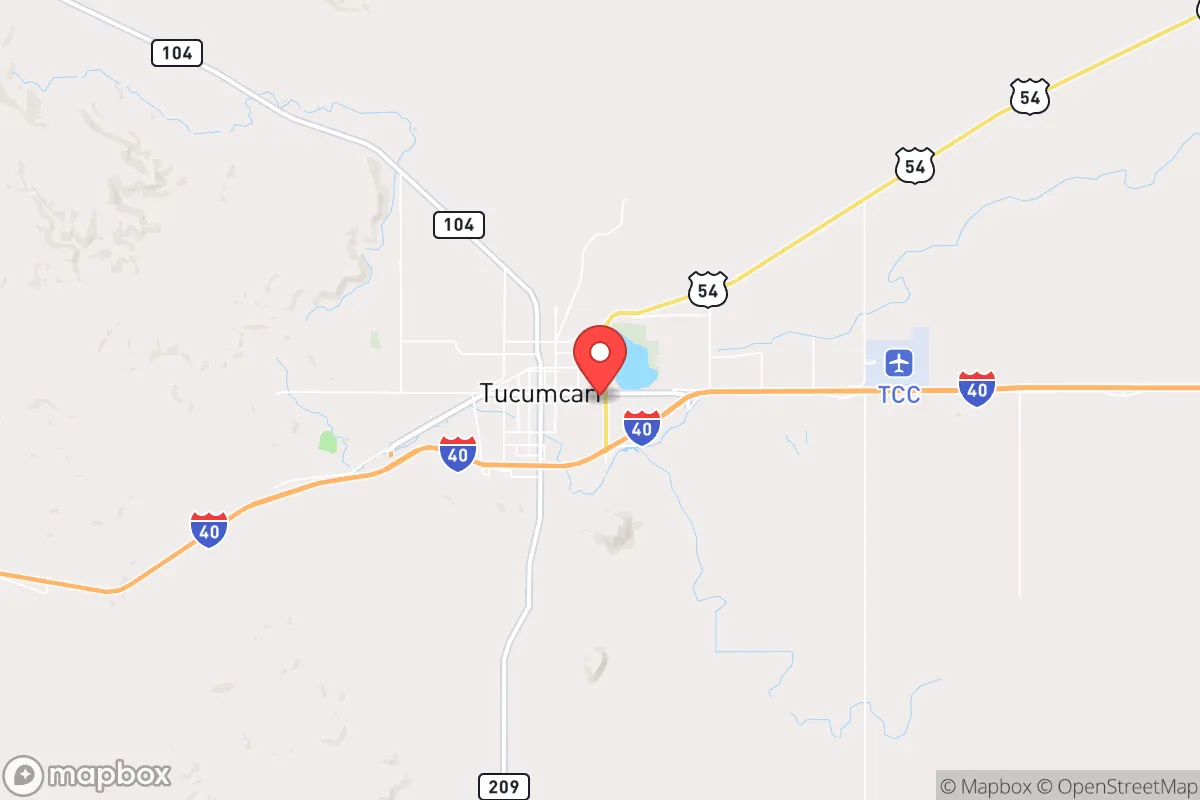
Tucumcari was born from the railroad, not from Spanish or Mexican land grants. The Chicago, Rock Island and Pacific Railroad arrived in 1901, establishing a depot and repair yard that drew a first wave of Anglo railroad workers and merchants. The town was formally platted in 1903, and the original core—now called Old Town Tucumcari around the railroad tracks and First Street—was built by these early Anglo settlers, many from the Midwest and Texas. A second wave came with the completion of U.S. Route 66 in the 1920s and 1930s, which turned Tucumcari into a classic motor-court and gas-station stop. Hispanic families, many from rural eastern New Mexico and the Texas Panhandle, arrived during this period to work in the motels, cafes, and service stations along the highway. They settled in what became known as the South Side neighborhood, south of the railroad tracks, where modest adobe and frame houses still stand. By 1950, the population had peaked near 8,000, supported by the railroad, trucking, and agriculture. The North Heights area, on the bluffs overlooking the city, developed later as a more middle-class Anglo neighborhood, with larger homes and better views.
Modern era (post-1965)
After the 1965 Hart-Cellar Act, Tucumcari saw almost no new immigration—its foreign-born share remains negligible at 1.3%. The city’s demographic shift since the 1970s has been driven by domestic out-migration and natural increase. As the railroad downsized and Route 66 traffic was bypassed by Interstate 40 in the 1970s, many Anglo families left for larger cities like Albuquerque or Amarillo. Their departure accelerated the Hispanic share of the population from roughly 40% in 1970 to over 63% today. The East Side neighborhood, east of the downtown core along Route 66, absorbed many of the Hispanic families moving into vacated Anglo homes, while the West End near the Tucumcari Municipal Airport remained more mixed but still predominantly white. The Black population has always been tiny (1.8%), concentrated historically near the railroad yards in Old Town. There are no measurable East/Southeast Asian or Indian-subcontinent communities. The college-educated share (19.7%) is low, reflecting the limited white-collar job base and the departure of younger residents for college or work elsewhere.
The future
Tucumcari’s population is aging and slowly declining—down from 5,363 in 2010 to 5,197 today. The Hispanic share will likely continue to grow through natural increase, while the white share will shrink further as older Anglo residents pass away or leave. The city is not tribalizing into distinct ethnic enclaves; rather, it is homogenizing into a majority-Hispanic, working-class community with a small Anglo minority. The South Side and East Side are becoming more uniformly Hispanic, while North Heights remains the most Anglo area but is also aging. No significant immigrant groups are arriving to change the mix. The next 10-20 years will likely see further population decline, with the city becoming older and more Hispanic. New residents will mostly be retirees or remote workers seeking cheap housing, not job-seekers.
For someone moving in now, Tucumcari is a quiet, low-cost place where the population is stable but shrinking, and the culture is deeply Hispanic and working-class. It is not a growing or diversifying community—it is a small town holding steady, with a conservative, self-reliant ethos shaped by its railroad and highway past. New arrivals should expect a close-knit, slow-paced environment where most social life revolves around family, church, and local events like the annual Tucumcari Railroad Days.

* Values derived from national, state, county, city and local statistics and may differ in a specific area. Last updated: 2026-05-01T09:57:57.000Z
Narrative content on this page is AI-generated and may contain mistakes. Verify any details that matter before acting on them.
ReloMaps may earn a commission from affiliate links at no extra cost to you.

