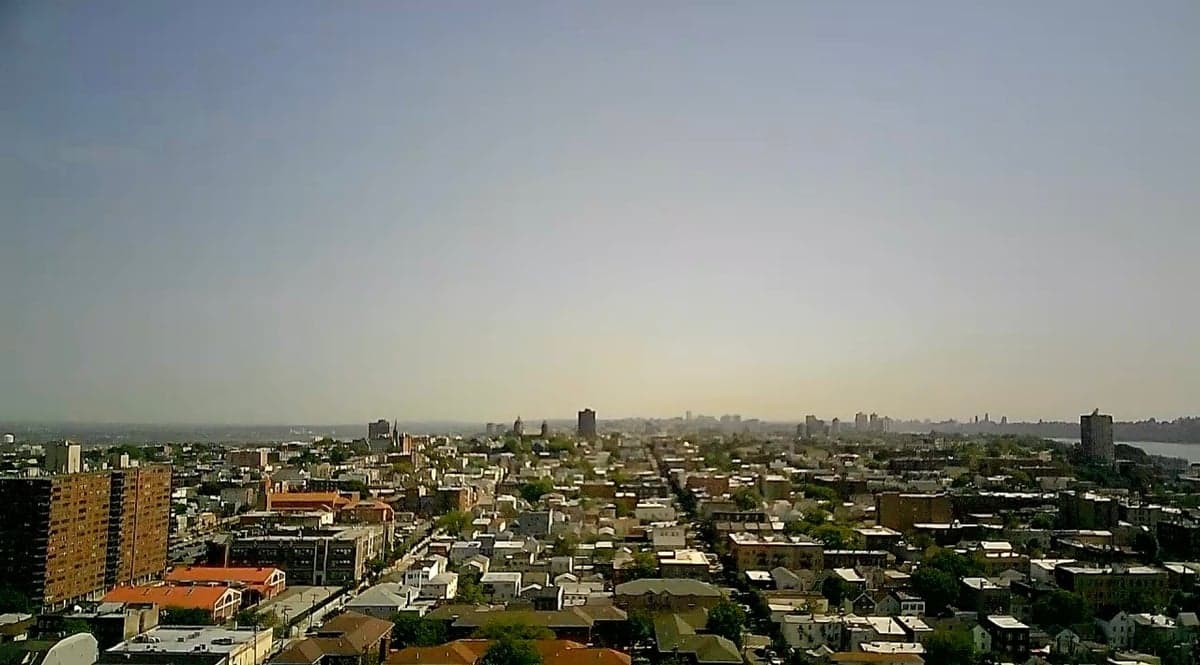
Photo: Wikipedia
Quality of Life in Union City, NJ
A livable area that tracks near national norms for affordability, walkability, and neighborhood health.
What does Quality of Life tell us?
Quality of Life blends cost of living, nearby amenities, socioeconomic signals, and neighborhood character. City-level scores represent the whole municipality; individual neighborhoods can differ.
What does this tell us?
Quality of Life blends cost of living, nearby amenities, socioeconomic signals, and neighborhood character. City-level scores represent the whole municipality; individual neighborhoods can differ.
Cost of Living
40% above national average
The Real Cost of Living in Union City, NJ for 2026
| Tier | Individual | Family (4) |
|---|---|---|
| Survival | $24k | $45k |
| Comfortable | $86k | $126k |
| Luxury | $118k+ | $183k+ |
| Elite (Top 5%) | $148k+ | $229k+ |
52%
The Area Signal
A metric tracking the socioeconomic signals of the area.
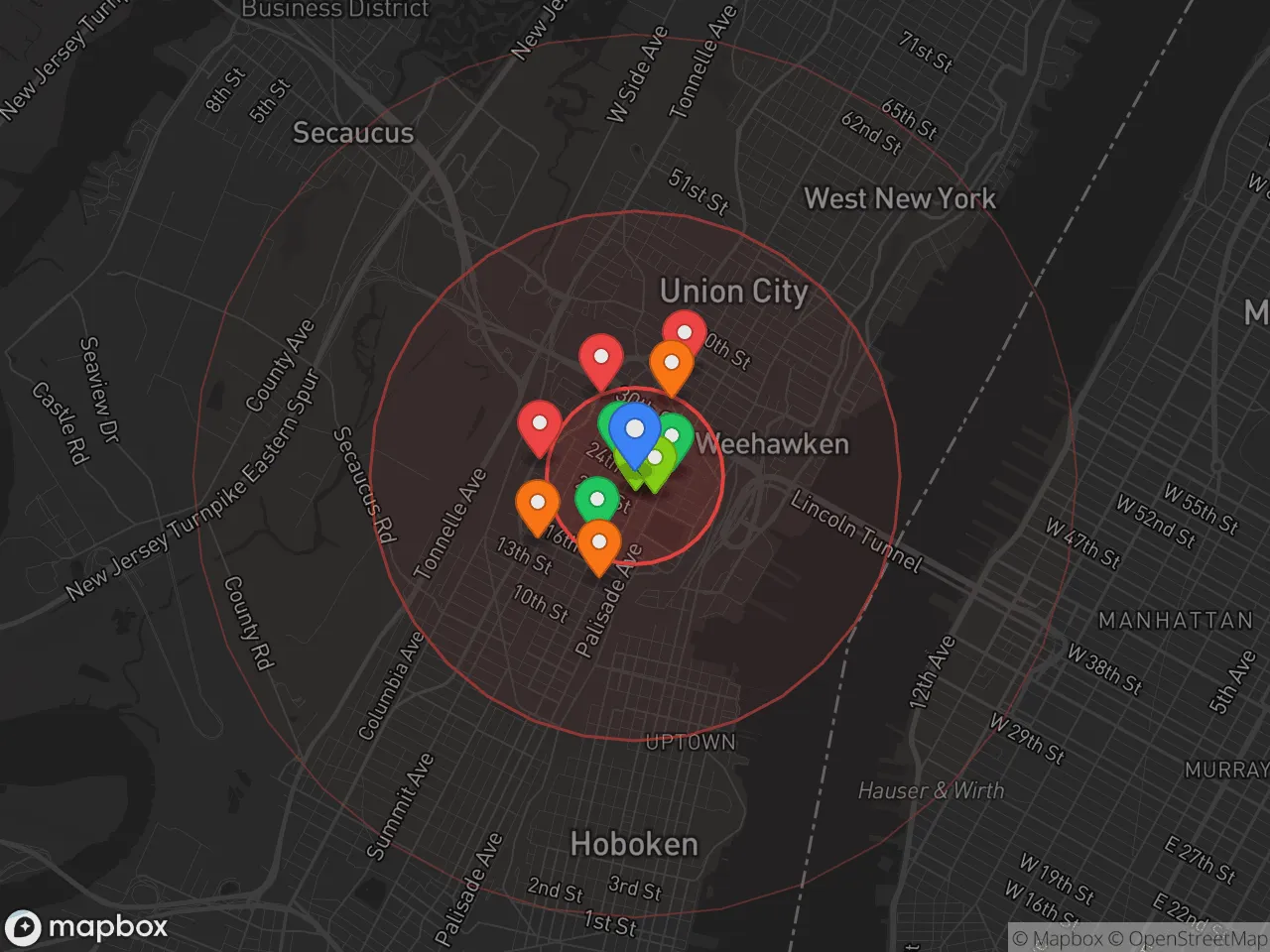
Hobbies
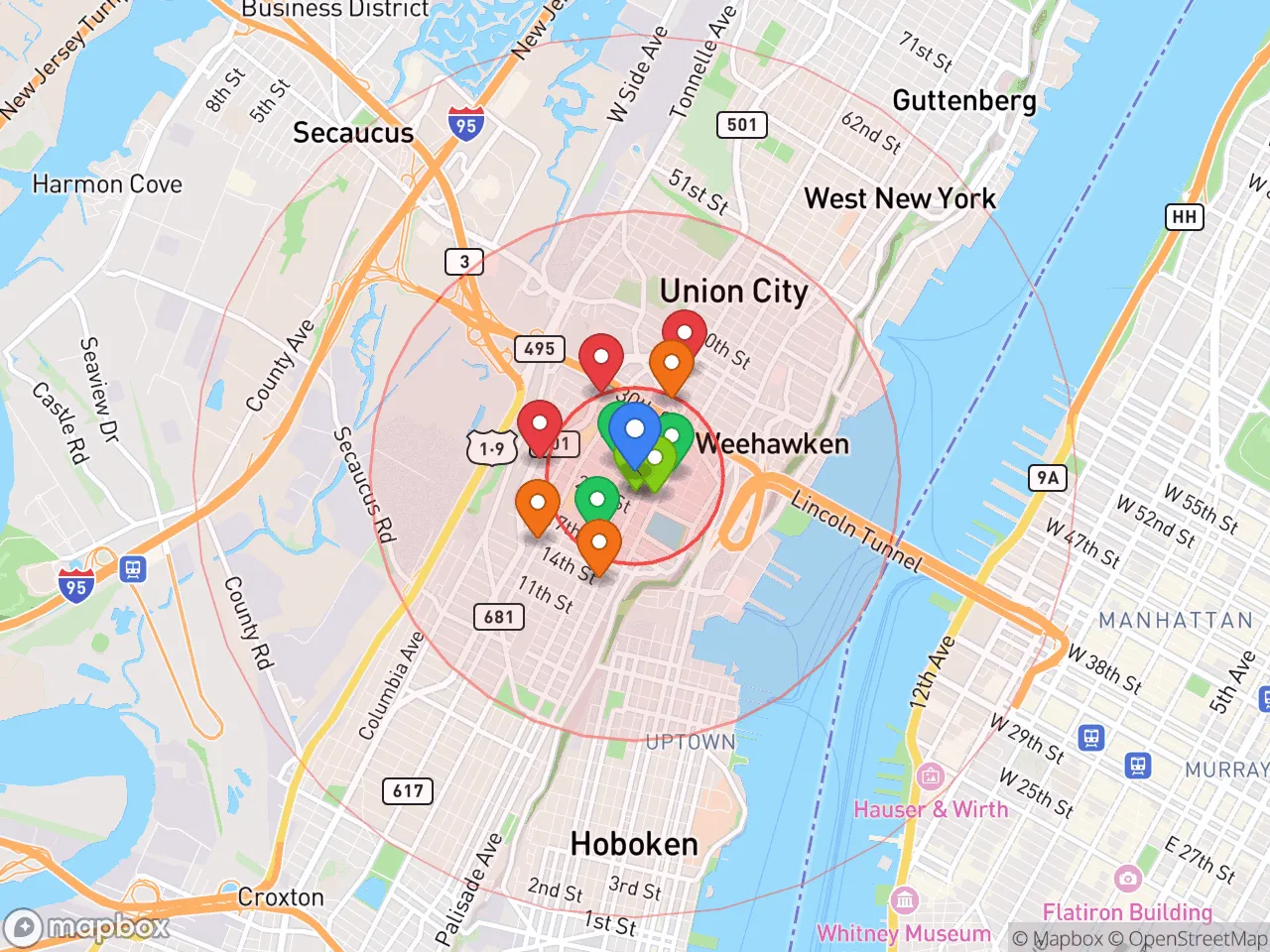
Explore the areaGroceries
8 within 10 miles
Gas
20 within 10 miles
Hospital
20 within 20 miles
Airport
EWR — Newark Liberty International
Post Office
USPS — Union City, NJ
Critical Amenities
Quality-of-Life Analysis
Union City, New Jersey, presents a distinctive quality-of-life profile shaped by its status as one of the most densely populated cities in the United States, where a predominantly Hispanic and immigrant population creates a vibrant, walkable urban environment. Affluence here is relative: while the city itself has a median household income around $50,000—below the national average—its location directly across the Hudson River from Midtown Manhattan means residents enjoy proximity to one of the world’s wealthiest job markets. The population skews young and family-oriented, with a high proportion of renters and multi-generational households, reflecting a community that prioritizes access to New York City over suburban space.
Cost of living, housing, and how Union City compares to nearby areas
Union City’s cost of living index stands at 140 (100 is the U.S. average), making it significantly more expensive than the national norm but notably cheaper than its immediate neighbors. The median home value of $446,800 is roughly half that of Hoboken or Jersey City, yet still steep for a city where the median household income is about $50,000. Renting is the dominant housing mode, with a median rent of $1,489—far below the $2,500+ averages in Hoboken and Weehawken, but still a heavy burden for local wages. The average commute of 32.9 minutes is slightly above the national average, driven by the 20-minute bus or light-rail trip to the Port Authority Bus Terminal or the NY Waterway ferry from nearby Weehawken. For comparison, a one-bedroom in Manhattan averages $4,000+ per month, making Union City a pragmatic trade-off: lower rent in exchange for a denser, less amenity-rich environment.
What daily life is like: amenities, schools, and neighborhood rhythm
Daily life in Union City revolves around Bergenline Avenue, a bustling commercial corridor lined with Latin American bakeries, bodegas, and discount stores that stays active late into the evening. The city’s 1.3 square miles make it one of the most walkable in the U.S., with a Walk Score of 94, meaning most errands can be done on foot. Public schools are a mixed bag: Union City High School has a graduation rate around 85%, but the district is chronically underfunded and class sizes are large. For families, the nearby Hoboken Public Library and Lincoln Park (in Jersey City) provide green space, while the city itself has only a handful of small parks like Washington Park. The rhythm is fast-paced and communal—sidewalks are crowded, street parking is nearly impossible, and the sound of Spanish and English mixes with the PATH train rumble. Nightlife is limited to a few sports bars and Latin music clubs, with most entertainment options requiring a 15-minute bus ride into Hoboken or Manhattan.
Union City is best suited for young professionals, recent immigrants, and budget-conscious commuters who prioritize short transit times to Manhattan over suburban amenities like yards, quiet streets, or top-tier schools. Families with children may find the school system adequate but not exceptional, while retirees or those seeking space will likely feel cramped. The city’s affordability relative to Hudson County peers—combined with its 24/7 energy and direct bus access to New York—makes it a practical choice for those who value urban density, cultural diversity, and a lower rent above all else.

Crime in Union City, NJ
Generally safer than 69% of comparable U.S. locations.
Violent CrimeViolent Crime Analysis
Property CrimeProperty Crime Analysis
Crime Analysis
Union City, New Jersey, reports a violent crime rate of 248 incidents per 100,000 residents and a property crime rate of 1,402.2 per 100,000, placing it in a moderate-risk category for a densely populated Hudson County city. While these figures are lower than some nearby urban centers, the city's proximity to New York City and its status as a transit hub introduce specific safety dynamics that prospective residents should weigh carefully. The overall safety picture is mixed, with property crime being a more frequent concern than violent offenses, though local justice policies may influence long-term trends.
Crime in context
Union City's violent crime rate of 248 per 100,000 is roughly 30% below the national average of 380 per 100,000, but its property crime rate of 1,402.2 per 100,000 sits about 10% above the national average of 1,280 per 100,000. Compared to New Jersey's statewide violent crime rate of approximately 200 per 100,000, Union City is elevated, though it remains safer than neighboring Jersey City (which reports violent crime rates near 400 per 100,000). The city's high population density—over 68,000 people packed into 1.3 square miles—creates conditions where property crimes like theft and burglary are more common. Readers should note that Hudson County's progressive district attorney, Esther Suarez, has emphasized diversion programs and reduced incarceration for nonviolent offenders, a policy approach that critics argue can lead to higher recidivism and embolden property criminals. This ideological stance, while intended to reduce mass incarceration, may contribute to the elevated property crime rate by keeping more offenders on the street.
What residents experience
Daily life in Union City involves heightened vigilance around personal property, particularly in high-traffic areas like Bergenline Avenue and near the Port Authority bus terminal. Residents frequently report car break-ins, package thefts, and bicycle thefts as routine nuisances. Violent crime, while less common, is concentrated in late-night hours and near bars or bodegas, with incidents often involving disputes among acquaintances rather than random attacks. The city's police department has implemented community policing initiatives and increased patrols along commercial corridors, but the sheer density means that response times can lag during peak hours. For families, the presence of progressive judges in Hudson County who favor plea deals and reduced sentences for repeat offenders is a legitimate concern—this judicial leniency can result in criminals cycling through the system quickly, undermining deterrence and public confidence in safety.
Neighborhood-level variation is significant in Union City. The western sections near the Palisades cliffs and residential blocks off Kennedy Boulevard tend to have lower crime rates, while the eastern edge along the Hackensack River and areas near the Jersey City border see more property crime. The city's "Harsimus Cove" and "Transfer Station" districts, near the light rail, experience higher foot traffic and associated theft. Prospective renters and buyers should prioritize units with secure entry systems and off-street parking, as street-level parking is a common target. Overall, Union City offers a relatively safe environment for those who take standard urban precautions, but the combination of dense living, transit-oriented crime, and a justice system that prioritizes offender rehabilitation over public protection means that residents must remain proactive about their security.
* Values derived from national, state, county, city and local statistics and may differ in a specific area. Last updated: 2026-05-28T08:07:56.000Z
Narrative content on this page is AI-generated and may contain mistakes. Verify any details that matter before acting on them.
ReloMaps may earn a commission from affiliate links at no extra cost to you.

