Photo: Wikipedia
Find The Best Places To Live
in Jersey City
PRO TIP! You can paste a Zillow or Redfin link to get info on that property.
What It's Like Living in Jersey City, NJ
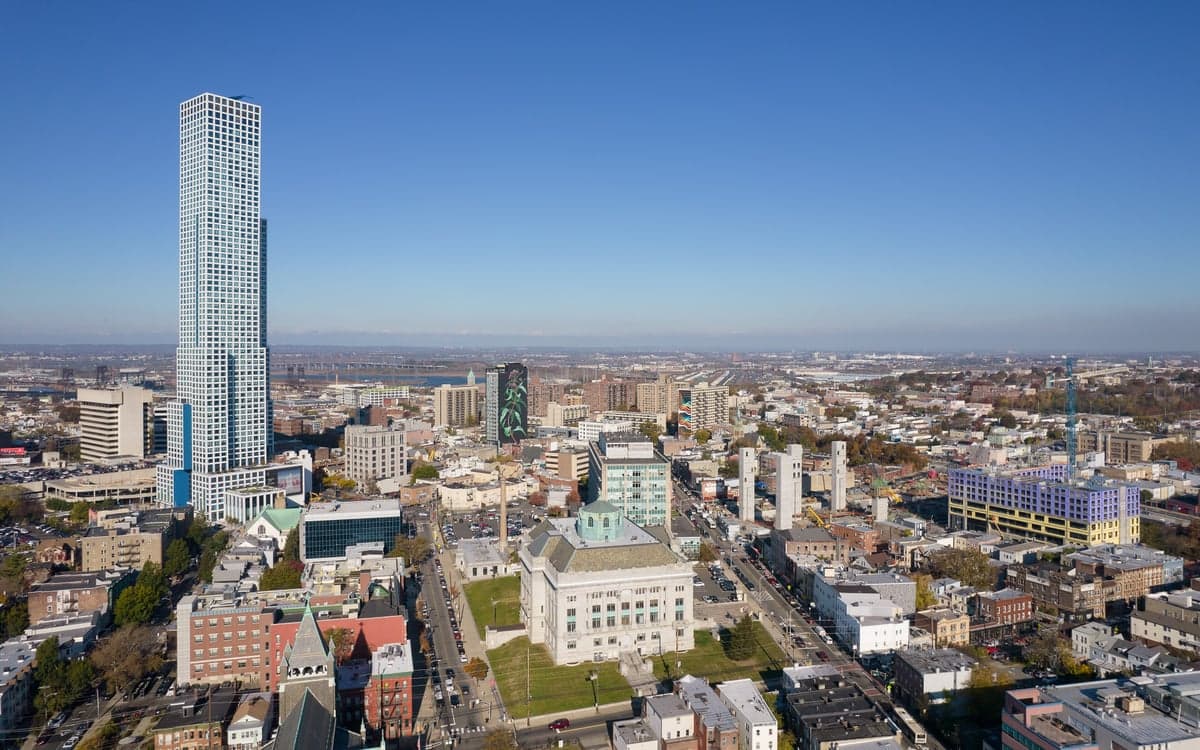
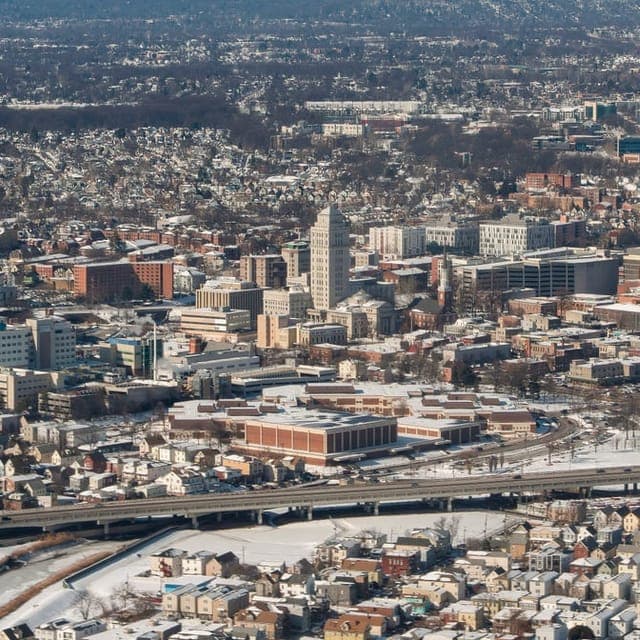
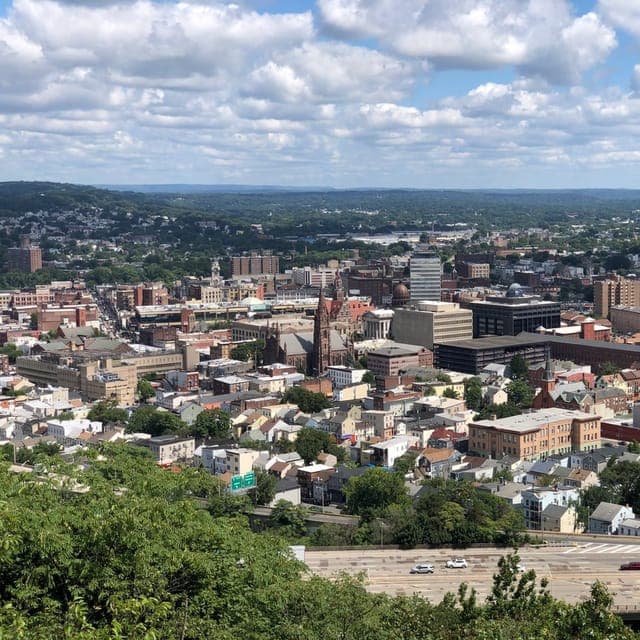
Jersey City is the scrappy, ambitious younger sibling who moved to the city, got a high-paying tech job, and still hasn’t quite shaken the old neighborhood habits. It’s a dense, vertical city of nearly 290,000 people where the median age hovers around 34.7, meaning you’re surrounded by other people in the same life stage — grinding through a career, figuring out a commute, and trying to find a decent bar that isn’t overrun with Manhattan spillover. The vibe is less polished than Brooklyn, more diverse than most of New Jersey, and honest about the trade-offs that come with living this close to New York.
The Daily Grind: Commute, Cost, and the Coffee Shop Calculus
For most residents, daily life revolves around a single question: how fast can I get to the PATH train? The average commute clocks in at just under 37 minutes, which sounds reasonable until you realize that’s a one-way figure. That 74-minute round trip is the price of admission for a median home value of $534,500 — a number that feels almost reasonable compared to Manhattan’s insanity, but still stings when you realize you’re paying it for a two-bedroom walkup in a neighborhood where the bodega cat has more seniority than you. The cost of living index sits at 174, meaning you’ll pay about 74% more for everyday stuff than the average American. That $6 latte at Modcup Coffee on Newark Avenue isn’t a splurge; it’s just Tuesday.
Weekends are where the city exhales. You’ll find people brunching at Light Horse Tavern in the Paulus Hook historic district, or grabbing tacos from the trucks near Exchange Place before walking the Liberty State Park waterfront. The park itself is the city’s great equalizer — a 1,200-acre green space with skyline views that make you forget you’re in New Jersey. On a clear Saturday, the path along the Hudson fills with joggers, dog walkers, and families pushing strollers past the empty train terminal where Ellis Island ferries dock. It’s one of those rare spots where the city feels both big and manageable.
Who Fits Here (And Who Doesn’t)
Jersey City attracts a specific type: college-educated (53.1% hold a bachelor’s or higher), career-focused, and willing to trade square footage for proximity. The median income of $94,813 tells you this isn’t a struggling artist enclave — it’s a place where finance workers, tech consultants, and healthcare professionals live because they want a shorter commute than Brooklyn but more character than the Upper East Side. Single people thrive here because the dating pool is deep and the bar scene on Grove Street is walkable. Parents? It’s more complicated. The public schools are a mixed bag — some elementary schools like Cornelia F. Bradford earn strong reviews, but the high school situation is uneven enough that many families either go private or move to the suburbs by the time kids hit middle school. The city’s 34.7 median age suggests most people are in the “renting with roommates” or “buying a starter condo” phase, not the “three kids and a minivan” phase.
Sports fandom here is split between two loyalties. You’ll see Yankees and Mets hats in equal measure, but the real local pride points to Red Bull Arena in Harrison, just across the river, where the New York Red Bulls of MLS draw a passionate, if niche, crowd. High school football at St. Peter’s Prep is a genuine event — those Friday night games in the fall pull alumni and locals who never played a down but love the pageantry. For pro sports, most residents just hop the PATH to Manhattan for Knicks or Rangers games; the city itself doesn’t host a major franchise, and nobody seems to mind.
What’s There to Do: Festivals, Music, and the Bar Crawl That Never Ends
The entertainment scene punches above its weight. White Eagle Hall on Newark Avenue is a restored 1910 theater that books mid-tier national acts — think indie rock bands, comedy tours, and the occasional DJ set that turns the balcony into a dance floor. The Jersey City Jazz Festival in June takes over multiple venues downtown, and the Jersey City Pride Festival in August is one of the largest in the state, drawing tens of thousands to Exchange Place. For something quieter, the Mana Contemporary art complex in the Marion section houses galleries and artist studios that feel a world away from the PATH station chaos.
Bars and restaurants are the city’s real social currency. The Archer on Sinatra Drive is a reliable date-night spot with a rooftop view of the Manhattan skyline. Pet Shop on Grove Street is a dive bar with a taxidermy theme that sounds gimmicky but works. And Razza in the Historic Downtown is the pizza place that locals will argue about with the fervor of a religious debate — it’s wood-fired, Neapolitan-style, and consistently ranked among the best in the country. The cultural quirk worth noting: Jersey City has a fierce independent streak. Residents bristle at being called a “suburb” of New York. It’s a city in its own right, with its own mayor (Steven Fulop, a Democrat who’s been in office since 2013), its own identity, and a chip on its shoulder about being treated as Manhattan’s overflow parking.
Pros and Cons of Living Here
What longtime residents love: The views. From almost any high-rise in Newport or Exchange Place, the Manhattan skyline looks like a screensaver. The diversity — Jersey City is one of the most ethnically mixed cities in the country, and that shows in the food, the festivals, and the faces on the PATH platform. The walkability: you can live car-free here and not miss a thing, which is rare for New Jersey. And the energy — it’s a city that’s still building, still changing, still feeling like it has something to prove.
What frustrates them: The violent crime rate of 486.2 per 100,000 is higher than the national average, and while most of that is concentrated in specific neighborhoods (Greenville, Bergen-Lafayette), it’s a number that gives parents pause. The traffic on the Pulaski Skyway and the Holland Tunnel approach is soul-crushing during rush hour — driving is not the move here. And the weather: humid summers that make the PATH platforms feel like saunas, and winters that are cold enough to remind you you’re in the Northeast, but not cold enough to justify the slush. The schools are the biggest frustration for families — inconsistent quality means you either research obsessively or budget for private tuition.
Jersey City isn’t for everyone. It’s for people who want the energy of New York without the price tag, who don’t mind a commute that eats into their morning, and who value a city that feels alive at 11 p.m. on a Tuesday. If that sounds like you, you’ll probably love it. If you’re looking for quiet tree-lined streets and a top-tier public school system, keep looking east toward the suburbs. But for the right person, this place gets under your skin — and stays there.

Similar mid-size cities to Jersey City
* Values derived from national, state, county, city and local statistics and may differ in a specific area. Last updated: 2026-04-25T03:04:57.000Z
Narrative content on this page is AI-generated and may contain mistakes. Verify any details that matter before acting on them.
ReloMaps may earn a commission from affiliate links at no extra cost to you.

