Photo: Wikipedia
Demographics of Urbandale, IA
Affluence Level in Urbandale, IA
An upper-middle-class area. Household wealth, education levels, and homeownership run ahead of national benchmarks.
People of Urbandale, IA
Today, Urbandale, Iowa is a predominantly white, highly educated suburb of Des Moines with a population of 46,026, where 79.8% of residents identify as white, 51.4% hold a college degree, and the foreign-born share sits at a modest 3.6%. The city carries a distinctly Midwestern, family-oriented character, with a density of roughly 2,500 people per square mile and a reputation for strong schools and low crime. Its identity is shaped by steady, middle-class growth rather than boom cycles, and its population is notably less diverse than the Des Moines metro average, though small but stable Hispanic, Black, and East/Southeast Asian communities are present.
How the city was settled and grew
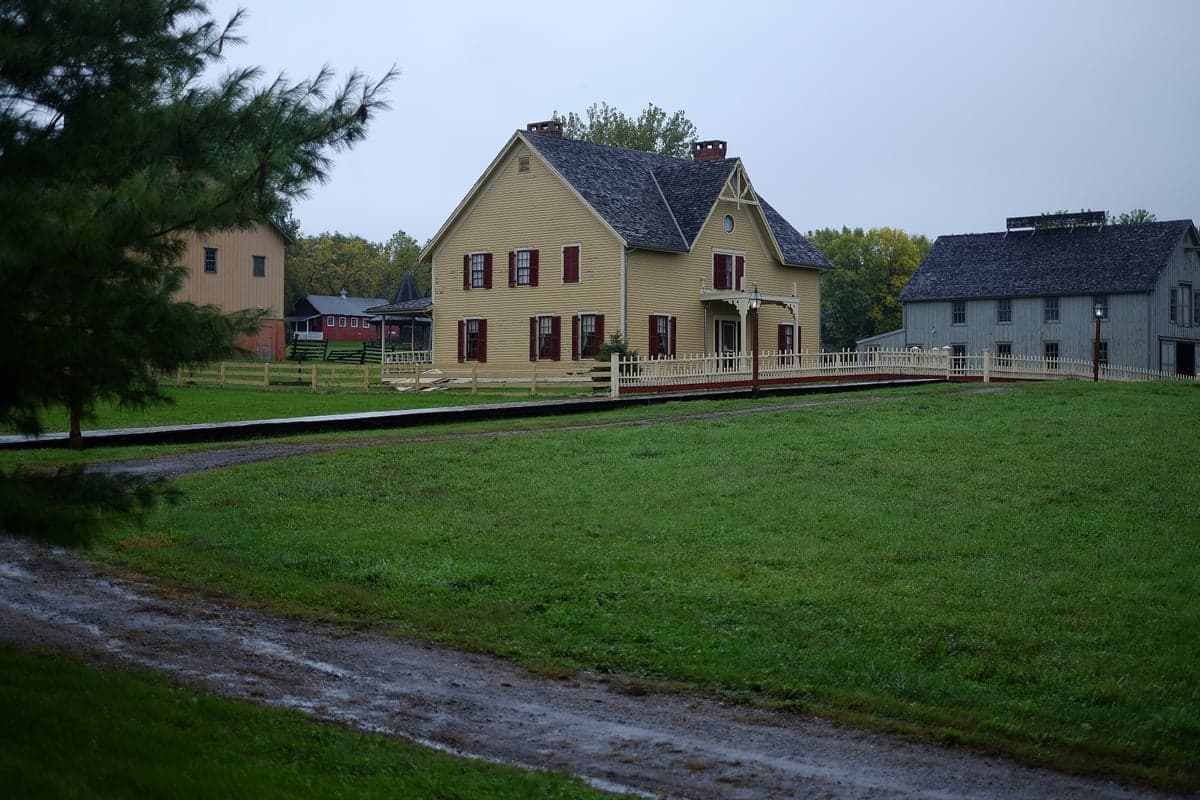
Urbandale was not a pioneer-era settlement but a planned 20th-century suburb, incorporated in 1917 on farmland northwest of Des Moines. The original population was almost entirely white, native-born, and Protestant, drawn by the promise of affordable land and a rural escape from the city. The first wave of residents built homes in the Historic Urbandale neighborhood around Aurora Avenue and 70th Street, where modest Craftsman and bungalow homes still stand. A second wave arrived after World War II, fueled by the G.I. Bill and the expansion of Des Moines’ insurance and finance sectors. These families settled in the Pioneer Park and Walnut Creek areas, where ranch-style homes on quarter-acre lots became the norm. By 1960, Urbandale’s population had reached roughly 5,000, and it remained a nearly all-white community of commuters and small business owners.
Modern era (post-1965)
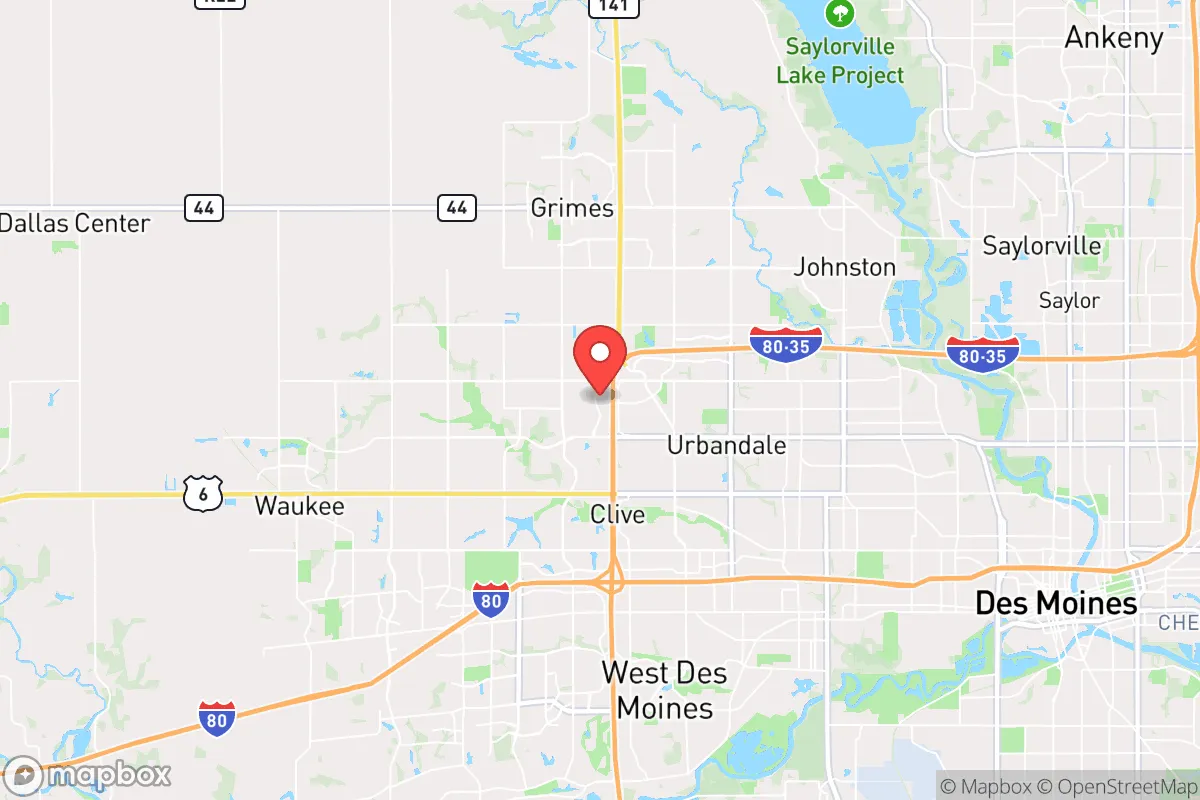
The 1965 Hart-Cellar Act had little immediate effect on Urbandale; the city remained overwhelmingly white through the 1970s and 1980s. The major demographic shift came from domestic in-migration during the 1990s and 2000s, as Des Moines’ economy diversified into agribusiness, insurance, and data centers. New subdivisions like Westfield and Stone Brooke attracted younger families and some professionals from outside Iowa, slightly increasing the share of non-white residents. Today, the Hispanic population stands at 6.4%, concentrated in the Merle Hay Road corridor and parts of the Urbandale South area, where rental housing and older starter homes are more available. The Black population (5.4%) and East/Southeast Asian population (4.7%) are dispersed but slightly more visible in the Pioneer Park and Walnut Creek neighborhoods, often drawn by school quality and proximity to Des Moines jobs. The Indian-subcontinent population is very small at 0.7%, with no distinct enclave. The foreign-born share of 3.6% is well below the national average, reflecting Urbandale’s limited role as an immigrant destination.
The future
Urbandale’s population is projected to grow slowly, likely reaching 50,000 by 2035, driven by infill development and annexation rather than immigration. The city is not homogenizing into a single demographic block, but it is also not tribalizing into distinct ethnic enclaves; instead, it is experiencing a gradual, modest diversification. The Hispanic and East/Southeast Asian communities are growing slowly through natural increase and secondary migration from other Iowa cities, while the Black population is plateauing. The white share is declining at a rate of roughly 0.5–1% per year, but will remain dominant for the foreseeable future. Newer developments like Northpark and Greenbriar are attracting a mix of young professionals and empty-nesters, but these areas remain overwhelmingly white and college-educated. The most likely scenario is a slow drift toward the demographic profile of West Des Moines or Ankeny—more diverse than today, but still a solidly middle-class, majority-white suburb.
For a conservative-leaning individual or family moving in now, Urbandale offers a stable, low-crime environment with excellent schools and a population that is slowly diversifying without rapid change. The city is becoming slightly more varied in background and culture, but it remains a place where the dominant identity is white, Midwestern, and family-focused. New arrivals will find a community that values order, property, and continuity—a suburb that is evolving, but not transforming.

* Values derived from national, state, county, city and local statistics and may differ in a specific area. Last updated: 2026-04-30T03:45:58.000Z
Narrative content on this page is AI-generated and may contain mistakes. Verify any details that matter before acting on them.
ReloMaps may earn a commission from affiliate links at no extra cost to you.

