Photo: Wikipedia
Political ClimatePolitical Climate in Urbandale, IA
District shown is the primary district for this city’s centroid. Cities may span multiple districts.
Local Political AnalysisPolitical Analysis of Urbandale, IA
Urbandale has always been a pretty solidly conservative place, but like a lot of suburbs around Des Moines, it's been drifting a bit toward the middle in recent years. The Cook PVI sits at R+2, which means the district leans Republican by a slim margin, but that number feels like it's hanging by a thread. You can still feel the old-school values in the neighborhoods—folks who believe in hard work, keeping the government out of your business, and not having every little thing regulated—but there's definitely a new energy creeping in that's a little more, well, progressive. It's not a radical shift overnight, but it's something you notice if you've been here a while.
How it compares
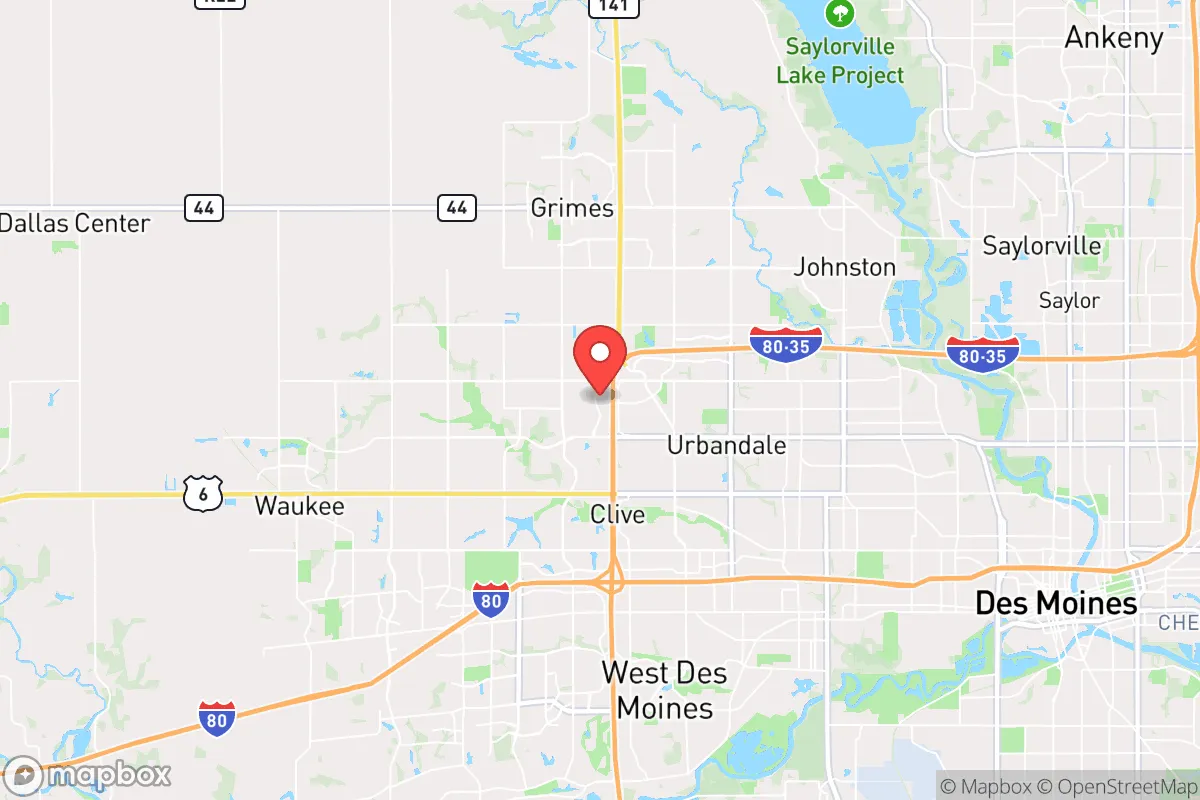
If you drive ten minutes east into Des Moines proper, you're in a whole different world politically—much more liberal, with a lot of city-level policies that feel like they're testing the limits of personal freedom. West Des Moines and Waukee, on the other hand, still lean more reliably conservative, closer to what Urbandale used to be across the board. The contrast is real: you can go from a neighborhood where people wave flags and talk about property rights to a city council meeting where someone's pushing for new zoning rules or social programs that sound nice on paper but always seem to come with more red tape. Urbandale sits right in that tension zone, and it's getting harder to predict which way the wind will blow next election cycle.
What this means for residents
For someone who values personal freedoms and wants to keep government overreach in check, the trend here is worth watching closely. The local school board and city council races have gotten more competitive, and you're starting to see candidates who talk about equity initiatives or climate goals—things that sound harmless until you realize they usually mean new mandates, higher taxes, or more bureaucracy in your daily life. The old guard still holds a lot of sway, but the margin is shrinking. If you're the kind of person who doesn't want someone telling you what you can do with your property, your business, or your kids' education, Urbandale is still a decent bet, but you can't afford to be complacent. The next few years could tip the balance if folks don't stay engaged.
Culturally, Urbandale still feels like a place where you can live your life without a lot of fuss. The city hasn't gone down the road of some of the more aggressive progressive policies you see in bigger metros—no heavy-handed mask mandates that lasted forever, no radical school curriculum changes, no over-the-top housing regulations. But there's a quiet push from certain groups to change that, and it's happening in the background of community meetings and planning sessions. The long-time residents I know are keeping an eye on it, because once those doors open, they don't close easily. For now, Urbandale is a good place to raise a family if you want common sense and a little breathing room, but you'd better be ready to speak up if you want it to stay that way.

State Political ClimatePolitical Climate in Iowa
State Political AnalysisPolitical Environment in the State
Iowa has long been a reliably Republican state in presidential elections, but its political climate is more nuanced than a simple red-state label suggests. The state voted for Donald Trump by 8 points in 2020 and 9 points in 2024, a shift from the 2010s when it was a true swing state (Obama won it twice). Over the last 10-20 years, the GOP has consolidated power at the state level, holding the governorship, both U.S. Senate seats, and a majority in the legislature since 2016. However, the state’s politics are defined by a sharp urban-rural split, with liberal strongholds in a few cities and deep-red dominance everywhere else. For a conservative considering relocation, Iowa offers a mixed bag: strong Republican governance on taxes and guns, but creeping progressive influence in its population centers and ongoing cultural battles over education and parental rights.
Urban vs. rural divide
The political map of Iowa is a textbook case of the urban-rural chasm. The state’s two largest metros—Des Moines and Iowa City—drive the Democratic vote. Polk County (Des Moines) went for Biden in 2020 by 18 points, and Johnson County (Iowa City) by a staggering 40 points. These areas are home to the state’s largest employers (Principal Financial, the University of Iowa) and a growing base of white-collar professionals and academics. In contrast, the rest of the state is overwhelmingly Republican. Rural counties like Sioux, Plymouth, and Lyon in northwest Iowa routinely vote 70-80% Republican. The suburbs around Des Moines, such as Ankeny and Waukee, are politically competitive but trending right—Ankeny voted for Trump by 4 points in 2024 after being a toss-up in 2020. Smaller cities like Cedar Rapids and Davenport are purple but lean slightly Democratic, while Council Bluffs and Sioux City are reliably red. The key takeaway: if you live outside the Des Moines-Iowa City corridor, you’re in deep-red territory. The 2022 midterms saw Republicans flip two U.S. House seats (IA-01 and IA-03) by targeting suburban voters worried about inflation and crime, cementing the rural-urban divide.
Policy environment
Iowa’s policy environment is a conservative’s dream on paper, but with some caveats. The state has a flat income tax rate of 3.8% (down from 8.98% in 2021), with a plan to drop to 3.5% by 2027. Property taxes are moderate—about 1.5% of assessed value—and there’s no estate tax. The regulatory climate is business-friendly: Iowa is a right-to-work state, and the legislature has passed tort reform to limit lawsuits. On education, Governor Kim Reynolds signed a school choice law in 2023 creating Education Savings Accounts (ESAs) worth about $7,600 per student, usable for private or homeschool expenses. This was a major win for parental rights, though it’s been challenged in court. Healthcare is a mixed bag: Iowa expanded Medicaid under the Affordable Care Act, but the state has a robust private insurance market and no state-level abortion restrictions beyond the 20-week ban (though a 6-week heartbeat bill was passed in 2023 but blocked by courts). Election laws tightened in 2021 with voter ID requirements and reduced early voting days—a move conservatives applaud for integrity, but critics call suppression. The state also has a constitutional carry law (permitless carry for handguns) since 2021, and no red flag law. Overall, the policy environment is solidly conservative, but the Medicaid expansion and ongoing court battles over abortion show that progressive influences still linger.
Trajectory & freedom
Iowa is becoming more free in several key areas, but the trajectory is not uniform. The 2021 permitless carry law (HF 756) expanded gun rights significantly, and the 2023 school choice law (SF 2369) boosted parental freedom. Property rights got a boost with a 2022 law limiting eminent domain for carbon pipelines—a populist conservative win. However, personal liberty took a hit with the 2023 ban on gender-affirming care for minors (HF 626), which conservatives see as protecting children but libertarians view as government overreach. Medical autonomy is also constrained: the state’s telehealth abortion restrictions and the 20-week ban limit reproductive choices. On speech, Iowa has no statewide hate crime law, and campus free speech is protected by a 2018 law (SF 274) that penalizes public universities for restricting expression. The biggest freedom concern for conservatives is taxation: while income tax rates are dropping, property taxes are still high relative to neighboring states like South Dakota. The state also has a sales tax on groceries (6%), though a 2024 bill to phase it out is pending. Overall, Iowa is trending more conservative on guns, education, and property rights, but the pace of tax reform is slower than many would like.
Civil unrest & political movements
Iowa has seen relatively little civil unrest compared to coastal states, but there are flashpoints. The 2020 Black Lives Matter protests in Des Moines and Iowa City were large but mostly peaceful, with some property damage. The state’s immigration politics are low-key: Iowa has no sanctuary cities, and a 2023 law (HF 648) requires local law enforcement to cooperate with ICE. The most visible political movements are on the right: the Iowa Firearms Coalition is highly active, and the state’s chapter of Moms for Liberty has been influential in school board races, particularly in suburban districts like Waukee and Ankeny. Election integrity controversies flared after 2020, with the Iowa GOP launching audits that found no widespread fraud, but the 2021 voter ID law was a direct response. There’s been no serious secession or nullification rhetoric, though some rural counties have passed resolutions opposing federal gun control. The most contentious issue currently is the carbon pipeline debate—landowners in northwest Iowa have organized against eminent domain for CO2 pipelines, creating a rare alliance of libertarians, environmentalists, and farmers. For a new resident, the political climate is stable but not sleepy: school board meetings and county commission hearings can get heated, especially over curriculum and land use.
Projection
Over the next 5-10 years, Iowa will likely become more Republican at the state level, but the urban-rural divide will deepen. In-migration is modest—the state grew only 0.3% from 2020-2024—and most newcomers are conservatives from Illinois and Minnesota fleeing high taxes and crime. This will reinforce the GOP majority in the legislature and keep the governorship red. However, Des Moines and Iowa City will continue to grow and diversify, becoming more progressive. The state’s population is aging (median age 38.5), and younger voters are more liberal, so the long-term trend could shift if urban growth outpaces rural decline. The school choice law will likely expand, and income taxes will continue to drop, making Iowa more attractive to conservatives. But watch for property tax reform—if the state doesn’t address it, it could become a liability. The biggest wildcard is the 2026 gubernatorial election: if Reynolds runs for a third term (she’s eligible), she’ll likely win, but a Democratic governor could reverse some gains. Realistically, expect Iowa to remain a solidly red state with a few blue islands, and for the culture war battles over education and guns to intensify. A new resident moving in now should expect a stable, conservative environment with occasional progressive flare-ups in the cities.
Bottom line for a new resident: Iowa offers a strong conservative policy foundation—low taxes, school choice, gun rights, and election integrity—but it’s not a libertarian paradise. You’ll find deep-red values in the countryside and purple-to-blue politics in Des Moines and Iowa City. If you’re a conservative parent or single professional, you’ll appreciate the school choice options and the lack of urban chaos, but you’ll need to be active in local politics to keep the progressives from gaining ground. The state is trending in the right direction, but it’s a slow burn—not a dramatic shift. Move here for the community, the cost of living, and the freedom to raise your family your way, but don’t expect perfection.
* Values derived from national, state, county, city and local statistics and may differ in a specific area. Last updated: 2026-04-30T03:45:58.000Z
Narrative content on this page is AI-generated and may contain mistakes. Verify any details that matter before acting on them.
ReloMaps may earn a commission from affiliate links at no extra cost to you.

