Photo: Wikipedia
Demographics of Davis County
Affluence Level in Davis County
An upper-middle-class area. Household wealth, education levels, and homeownership run ahead of national benchmarks.
People of Davis County
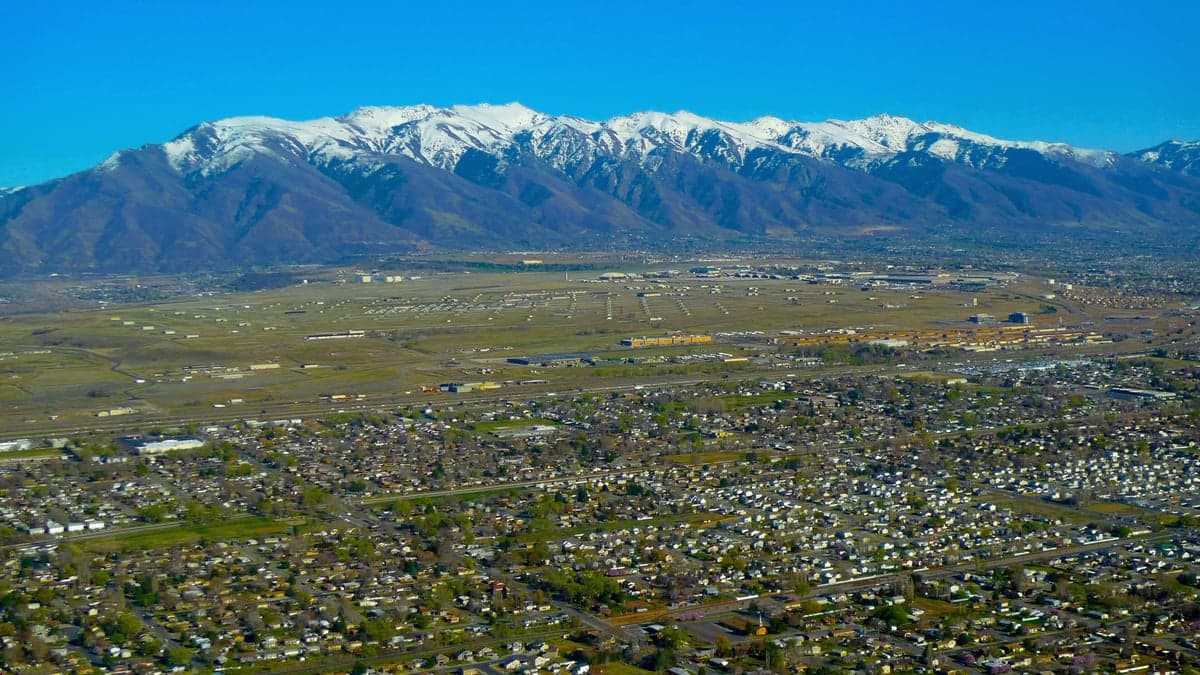
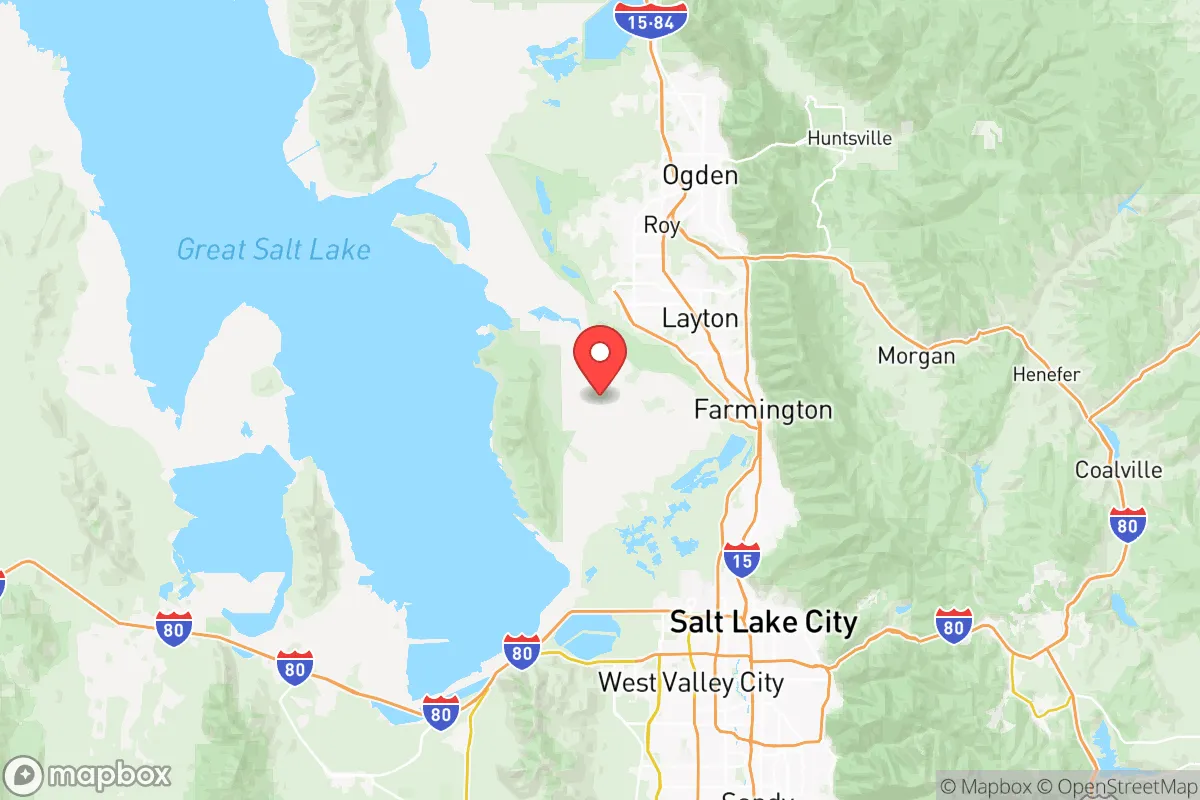
Davis County today is a densely populated, family-oriented corridor of 366,742 residents, overwhelmingly white (80.6%) and native-born (only 2.4% foreign-born), with a strong Latter-day Saint cultural foundation that shapes its conservative politics and low crime rates. The county's identity is defined by its role as a bedroom community for Salt Lake City and Hill Air Force Base, with a college-educated rate of 38.7% that exceeds the national average. Its population is concentrated along the Wasatch Front in a string of cities—Bountiful, Centerville, Farmington, Kaysville, Layton, Clearfield, Syracuse, and West Point—each retaining distinct historical roots while blending into a continuous suburban expanse.
Settlement & growth (pre-1960)
Before Mormon settlement, the area was inhabited by Shoshone and Goshute bands who seasonally hunted and fished along the shores of the Great Salt Lake and the Wasatch foothills. No permanent European or Spanish settlements existed in Davis County before 1847; the region was a resource periphery for the Ute and Shoshone territories.
The first permanent settlers were Mormon pioneers dispatched by Brigham Young in 1847–1848 to farm the fertile benchlands between the lake and the mountains. They established Bountiful in 1847 as the county's first settlement, followed by Farmington (1852), which became the county seat, and Kaysville (1850). These early communities were agrarian, organized around irrigation cooperatives and ward boundaries, and almost entirely composed of converts from the British Isles, Scandinavia, and the eastern United States. By 1860, the county had roughly 5,000 residents, nearly all LDS and of northern European descent.
The arrival of the transcontinental railroad in 1869 at Clearfield and Layton shifted the economy from subsistence farming to commercial agriculture and small-scale manufacturing. Danish and Swedish immigrants, who had converted to Mormonism in Europe, concentrated in Syracuse and West Point, where they drained marshland for dairy and grain farming. A small wave of Italian and Greek laborers arrived in the 1890s to work on railroad maintenance and in the region's smelters, but most moved on to Salt Lake City or mining towns; Davis County remained overwhelmingly northern European and LDS through 1900.
The single most transformative event for Davis County's population was the establishment of Hill Air Force Base in Clearfield in 1940. During World War II and the Cold War, the base drew thousands of non-Mormon military personnel, civilian technicians, and defense contractors from across the United States. This influx diversified the county's religious makeup and created the first significant non-LDS population clusters in Clearfield and Layton. By 1960, the county's population had grown to 64,000, with Hill AFB as the dominant employer and suburban development beginning to fill the corridor between Bountiful and Clearfield.
Modern era (post-1965)
The 1965 Hart-Cellar Act had a muted effect on Davis County compared to coastal regions, because the county's foreign-born share remains just 2.4%—one of the lowest among Utah's urban counties. However, the post-1965 period saw two major domestic shifts: the continued expansion of Hill AFB and the rise of the county as a commuter suburb for Salt Lake City's professional class.
Hispanic migration, primarily from Mexico and Central America, began in the 1970s as agricultural labor in the fruit orchards and vegetable fields of Kaysville and Syracuse. Over time, these families moved into construction, landscaping, and service industries. Today, Hispanics make up 11.3% of the county's population, with the highest concentrations in Clearfield and Layton, where affordable housing and proximity to the base created entry points. A smaller but growing Hispanic presence exists in Bountiful, where some families have moved for better schools.
East and Southeast Asian communities (1.6% of the population) arrived primarily through military and defense ties: Filipino and Korean spouses of U.S. service members, and a smaller number of Vietnamese and Chinese professionals employed at Hill AFB or in the growing aerospace sector. These families tend to be dispersed rather than forming ethnic enclaves, though Layton and Clearfield have the highest concentrations. The Indian-subcontinent population (0.3%) is even smaller and consists largely of engineers and medical professionals working at the base or commuting to Salt Lake City's tech sector.
Domestic in-migration since 1990 has been dominated by white, college-educated families from California, the Pacific Northwest, and other Western states, drawn by lower housing costs (historically), conservative values, and outdoor recreation. This wave has concentrated in newer subdivisions in Syracuse, West Point, and Farmington, where large single-family homes on quarter-acre lots remain the norm. The county's population more than doubled between 1980 and 2020, from 146,000 to 366,742, with the fastest growth in the northern cities of Syracuse and West Point.
The future
Davis County is likely to continue growing at a moderate pace, reaching roughly 450,000 by 2040, driven by natural increase (Utah's high birth rate) and continued domestic in-migration from high-cost states. The Hispanic share is projected to rise to 15–17% by 2040, as younger Hispanic families have higher birth rates and as some secondary migration from California and Nevada occurs. However, the county is unlikely to see rapid diversification: the foreign-born share will remain below 5%, and East/Southeast Asian and Indian populations will grow slowly, primarily through professional recruitment at Hill AFB and the expanding tech corridor along Legacy Parkway.
The cultural identity of Davis County is likely to remain predominantly LDS and conservative, but with a growing secular and non-LDS minority concentrated in Clearfield and Layton. The county is not tribalizing into distinct ethnic enclaves; instead, it is experiencing a slow, gradual assimilation of Hispanic families into the broader suburban culture, with English proficiency and homeownership rates rising across generations. The most significant demographic tension is not ethnic but religious and political: the influx of out-of-state conservatives who are not LDS is creating a more generic Republicanism that sometimes clashes with the church-influenced local governance of older communities like Bountiful and Farmington.
For a family or individual moving to Davis County today, the bottom line is this: you are joining one of the most demographically stable, family-centric, and culturally homogeneous suburban corridors in the United States. The county offers low crime, strong schools, and a predictable social environment, but little ethnic diversity or urban energy. The population is growing steadily but not explosively, and the cultural character—conservative, religious, outdoors-oriented—is likely to persist for at least another generation.

* Values derived from national, state, county, city and local statistics and may differ in a specific area. Last updated: 2026-05-14T17:08:18.000Z
Narrative content on this page is AI-generated and may contain mistakes. Verify any details that matter before acting on them.
ReloMaps may earn a commission from affiliate links at no extra cost to you.

