Photo: Wikipedia
Quality of Life in Davis County
A livable area that tracks near national norms for affordability, walkability, and neighborhood health.
What does Quality of Life tell us?
Quality of Life measures an area by evaluating factors like cost of living, nearby amenities, country club access, airport proximity, socioeconomic signals and neighborhood character. For large states, this is a general average — quality of life can vary dramatically between metro areas, suburbs, and rural communities within the same state.
What does this tell us?
Quality of Life measures an area by evaluating factors like cost of living, nearby amenities, country club access, airport proximity, socioeconomic signals and neighborhood character. For large states, this is a general average — quality of life can vary dramatically between metro areas, suburbs, and rural communities within the same state.
Cost of Living
45% above national average
80%
The Real Cost of Living in Davis County for 2026
| Tier | Individual | Family (4) |
|---|---|---|
| Survival | $24k | $45k |
| Comfortable | $91k | $134k |
| Luxury | $157k+ | $243k+ |
| Elite (Top 5%) | $184k+ | $286k+ |
Quality-of-Life Analysis
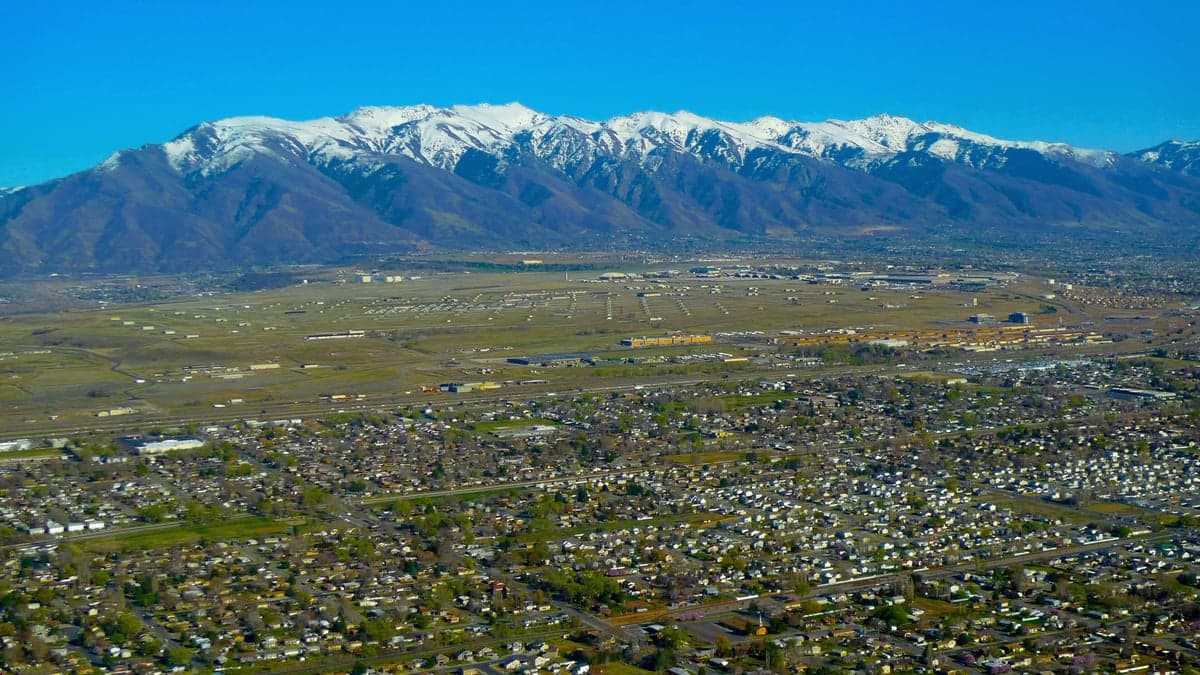
Davis County, Utah, offers a quality-of-life spectrum that ranges from dense, amenity-rich suburbs along the Wasatch Front to quiet, semi-rural pockets in the eastern foothills and western farmlands. The county’s overall cost-of-living index sits at 145 (100 = U.S. average), with a median home value of $470,500 and median rent of $1,516, placing it above the national average but below the most expensive parts of Salt Lake County. The average commute of 22.9 minutes is notably shorter than many metro-area peers, a draw for professionals who work in Salt Lake City or Ogden but want a more balanced daily routine. Different parts of the county attract distinct lifestyles: young families and commuters gravitate toward the larger towns with walkable downtowns and strong school districts, while retirees, hobby farmers, and those seeking more land are drawn to the smaller communities and unincorporated areas where housing lots are larger and development is sparser.
Largest town(s) & population centers
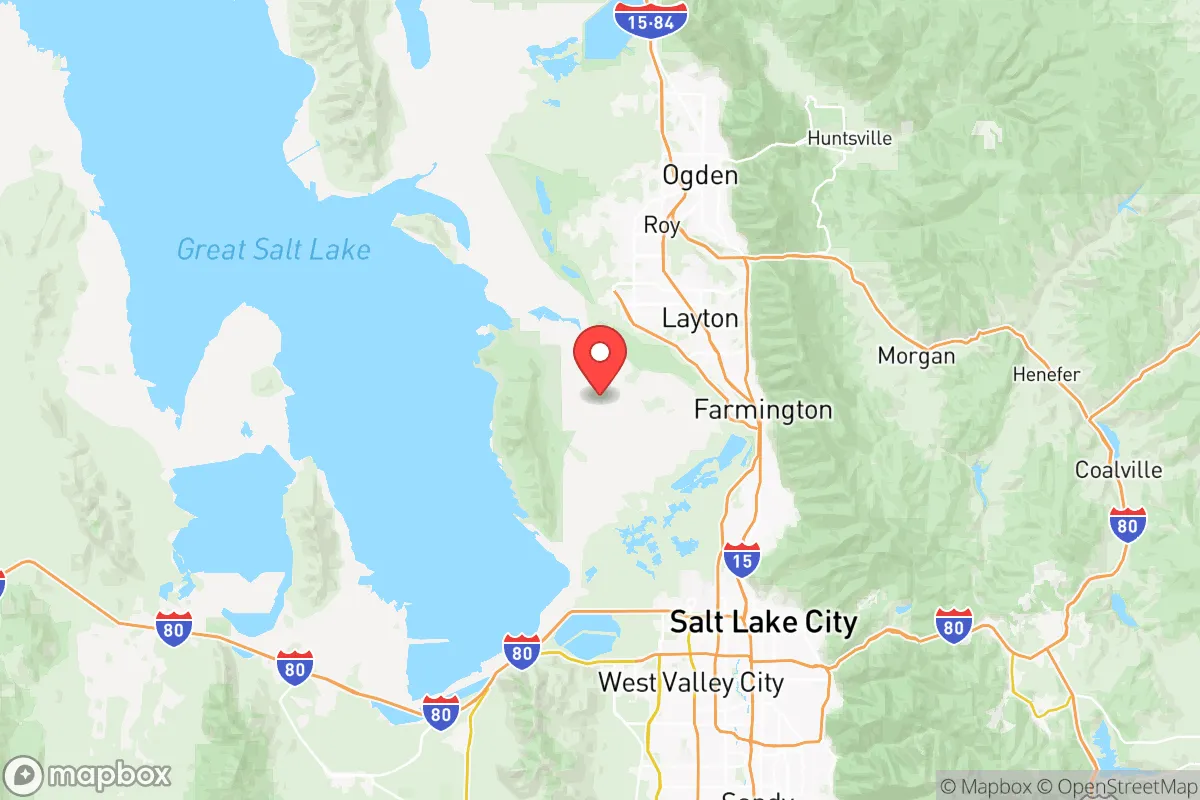
The county’s largest population centers are Layton (pop. ~82,000), Bountiful (pop. ~45,000), and Clearfield (pop. ~33,000), each offering a distinctly suburban experience. Layton is the commercial hub, anchored by the Layton Hills Mall, a wide range of big-box retailers, and easy access to Hill Air Force Base, the county’s largest employer. Daily life here is car-dependent but convenient, with most errands within a 10-minute drive. Bountiful, perched on the eastern bench of the Wasatch Front, has a more established, older feel with tree-lined streets, a historic downtown, and strong community ties; it consistently ranks among Utah’s most desirable suburbs for its schools and proximity to Salt Lake City via I-15. Clearfield, located near the base of the mountains, is more affordable and family-oriented, with a growing number of new housing developments and a revitalized downtown area. Other notable population centers include Farmington (home to the Lagoon amusement park and Station Park shopping center), Kaysville, Syracuse, and Clinton, all of which blend newer subdivisions with established neighborhoods and share access to the county’s extensive trail system and the Legacy Parkway trail.
Smaller towns & rural pockets
Beyond the main corridors, Davis County contains several smaller communities and unincorporated areas that offer a quieter pace. Fruit Heights, a small city of about 6,000 residents on the eastern bench, is known for its large lots, horse properties, and views of the Great Salt Lake; it feels more like a foothill enclave than a suburb. West Point and West Bountiful sit on the western side of the county, where agricultural land still exists alongside newer subdivisions; these areas attract residents who want a semi-rural setting with easy highway access. Sunset and Woods Cross are smaller, older towns that offer some of the county’s most affordable housing, with median home values often below the county average. Unincorporated areas such as East Layton (along the mountain front) and the Antelope Island Causeway vicinity provide true rural living, with limited services but direct access to hiking, biking, and the Great Salt Lake shoreline. These pockets are ideal for those who prioritize space and nature over walkability and retail.
Cost & lifestyle range
The cost of living and available amenities vary noticeably across Davis County. At the higher end, Bountiful and Farmington command median home values well above the county average of $470,500, often exceeding $600,000 for single-family homes in desirable neighborhoods near the mountains. These areas offer top-rated schools, boutique shopping, and easy access to hiking trails, but come with higher property taxes and a competitive housing market. At the more affordable end, Clearfield, Sunset, and Clinton have median home values closer to $400,000–$450,000, with a higher share of older homes and smaller lots. Renters find the most options in Layton and Clearfield, where apartment complexes are plentiful and median rent of $1,516 is achievable for a two-bedroom unit. Lifestyle differences are also geographic: eastern bench communities (Bountiful, Fruit Heights, Farmington) emphasize mountain recreation and quieter streets, while western towns (West Point, Syracuse) offer newer homes, larger yards, and a more family-centric, car-oriented lifestyle. The county’s short average commute of 22.9 minutes means that even residents in the most rural pockets can reach downtown Salt Lake City in under 40 minutes, a rare advantage for a metro-area county with this much land-use diversity.
Davis County is best suited for families and professionals who want a suburban or semi-rural lifestyle within a short commute of major employment centers. The mix of large towns with full-service amenities and smaller communities with more space means that buyers and renters can find a niche that matches their budget and preferred pace. Those who value strong schools, outdoor recreation, and a relatively low-stress commute will find the county’s range of options particularly appealing, while those seeking urban density or nightlife may prefer Salt Lake City proper. For anyone looking to balance affordability, convenience, and access to nature, Davis County offers one of the most versatile quality-of-life packages along the Wasatch Front.

Crime in Davis County
Generally safer than 67% of comparable U.S. locations.
Violent CrimeViolent Crime Analysis
Property CrimeProperty Crime Analysis
Crime Analysis
Davis County, Utah, is one of the safest large counties in the state, with violent crime rates significantly below the national average and property crime rates that, while higher than the state average, remain manageable for most residents. The county's overall safety profile is bolstered by a conservative legal environment and proactive community policing strategies across its cities. However, as with any growing suburban region, crime patterns vary by jurisdiction, and residents should be aware of specific local trends.
Crime in context
Davis County's violent crime rate of 215.9 per 100,000 residents is roughly half the national average of 380 per 100,000 and slightly below the Utah state average of 240 per 100,000. This places the county among the safest in the Wasatch Front corridor. Property crime, however, tells a different story: the county's rate of 1,267.7 per 100,000 exceeds the Utah state average of 1,100 per 100,000, though it remains well below the national figure of 1,954 per 100,000. The elevated property crime rate is driven largely by vehicle burglaries and package thefts in more densely populated areas like Layton and Clearfield, where proximity to Interstate 15 provides easy access for transient offenders. By contrast, Farmington and Kaysville consistently report property crime rates 20-30% lower than the county average, reflecting their more affluent, family-oriented demographics and lower population density.
What residents experience
For the average Davis County resident, the most likely crime encounter is a non-violent property offense, such as a stolen package from a porch or a vehicle break-in at a trailhead. Violent crime is rare and tends to be concentrated in specific corridors. Ogden, just north of the county line in Weber County, has a violent crime rate nearly double Davis County's, and some spillover crime occurs in southern Davis County cities like Bountiful and Woods Cross, particularly along the U.S. 89 corridor. The Davis County Attorney's Office, led by a conservative prosecutor, maintains a strong track record of prosecuting violent offenders, which contributes to the low violent crime rate. Residents in Centerville and North Salt Lake report feeling safe walking at night, though they note that property crime has ticked up since 2020, mirroring national trends. The county's 2nd District Court, which covers Davis and Morgan counties, is known for a no-nonsense approach to sentencing, with judges frequently imposing jail time for repeat property offenders—a factor that keeps recidivism lower than in more progressive jurisdictions along the Wasatch Front.
Neighborhood-level variation
Neighborhood-level safety in Davis County correlates strongly with income and housing density. The eastern bench areas of Farmington and Kaysville, where homes sit on larger lots and neighborhood watch programs are active, see virtually no violent crime and property crime rates below 800 per 100,000. In contrast, the western flatlands of Clearfield and Sunset, which include older apartment complexes and lower-income housing, report property crime rates approaching 1,500 per 100,000. The Layton Hills Mall area and the commercial strip along Main Street in Layton are hotspots for vehicle burglaries and shoplifting, driven by easy highway access. For families considering a move, the safest bets are the eastern bench neighborhoods of Farmington, Kaysville, and Fruit Heights, where crime is minimal and community policing is robust. Overall, Davis County offers a safe environment that compares favorably to the rest of Utah, but newcomers should research specific blocks and apartment complexes, as micro-level variation can be significant.
* Values derived from national, state, county, city and local statistics and may differ in a specific area. Last updated: 2026-05-14T17:08:18.000Z
Narrative content on this page is AI-generated and may contain mistakes. Verify any details that matter before acting on them.
ReloMaps may earn a commission from affiliate links at no extra cost to you.

