
Photo by Caleb Riston on Unsplash
Strategic Assessment of Utqiavik, AK
Workable tactical position. Some exposure to population density or targets, but generally defensible in a crisis.
What does the Strategic Assessment tell us?
Our Strategic Assessment grades tactical survivability of an area. Major population centers, military targets, fallout zones, natural disasters, and border exposure all drive risk — lower exposure means a more defensible position in a crisis.
This is heavily inspired by Joel Skousen's Strategic Relocation book. Highly recommended you checkout the book ($)What does this tell us?
Our Strategic Assessment grades tactical survivability of an area. Major population centers, military targets, fallout zones, natural disasters, and border exposure all drive risk — lower exposure means a more defensible position in a crisis.
This is heavily inspired by Joel Skousen's Strategic Relocation book. Highly recommended you checkout the book ($)Strategic Pillars

Key Distances
Regional Safe Places
Below is our recommended "safe zones" in Alaska and the surrounding area based on our strategic heuristics. For most people, it's unrealistic to live in a “safe zone” full-time due to work, family or other personal reasons. They tend to be more rural. However, many of these areas are perfect for second homes and retreat properties that double as a vacation home or even a short-term rental.
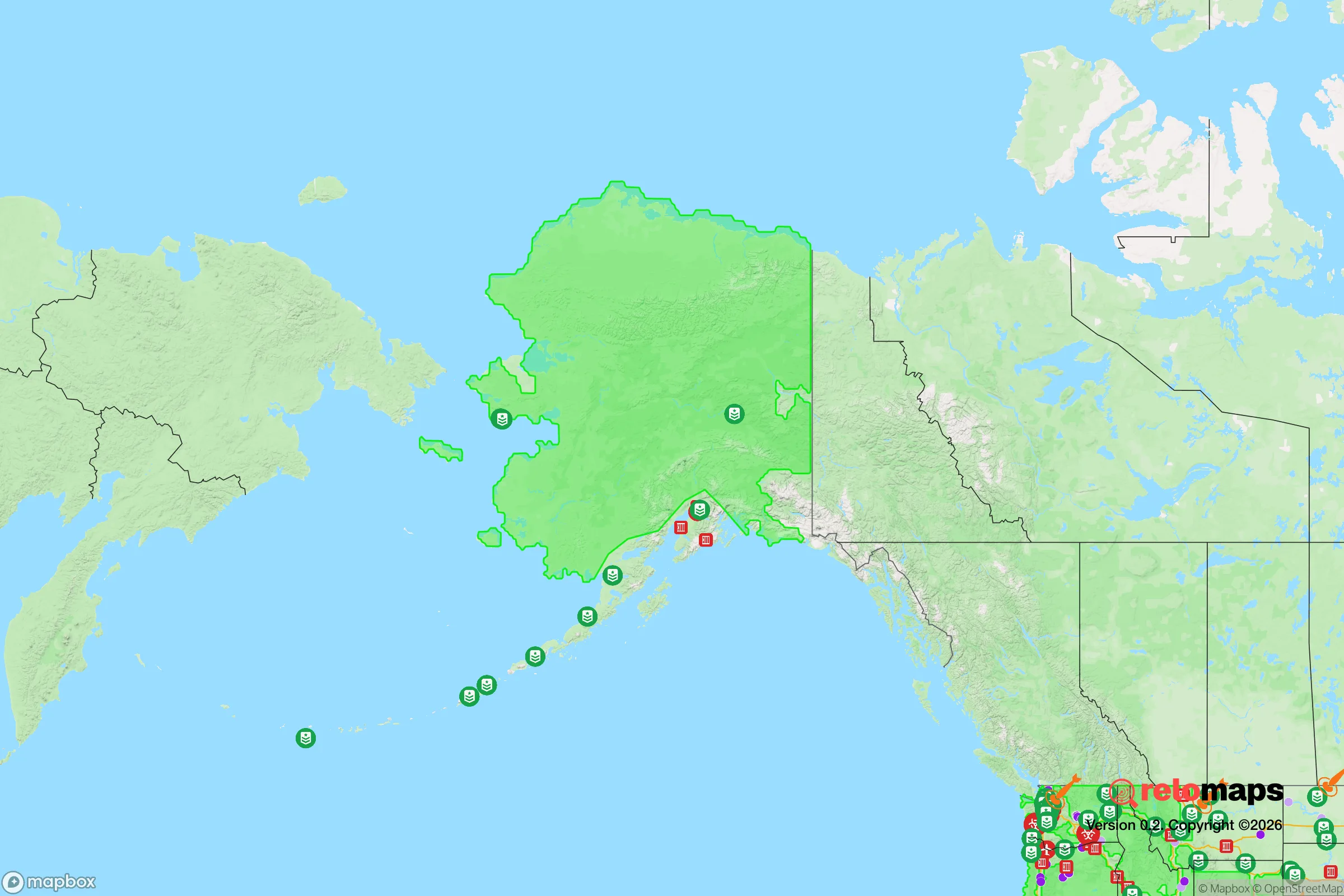


Important Note: For informational purposes only. This does not mean nothing bad ever happens in the green zones. Please use common sense. This is based on public data and modeled with AI. We tried to take a conservative approach but mistakes happen. We update this regularly as new information becomes available.
Solar Generator Recommendations
Backup power matters more here than in safer locations. We've picked three solar generators across budgets and capacity tiers — start with the budget unit if you only need a few essentials, or step up if you want to run a fridge and HVAC for days at a time.

Jackery Portable Power Station Explorer 300
Budget OptionPower on the Go: Weighing only 11 lbs, it's convenient to set up and store with book-sized foldable solar panels

BLUETTI Portable Power Station AC180
Designed for both indoor and outdoor scenarios, AC180 is highly capable as it has a robost capacity and continuous output power.

EF ECOFLOW DELTA Pro Ultra Power Station
Upgraded PickEcoFlow DELTA Pro Ultra is a whole-home energy system designed to grow with your family. Integrated with the Smart Home Panel 2, it scales to meet your evolving energy needs — keeping your home powered, intelligent, and secure through every stage of life.
We earn a commission, at no additional cost to you.
Strategic Assessment Analysis
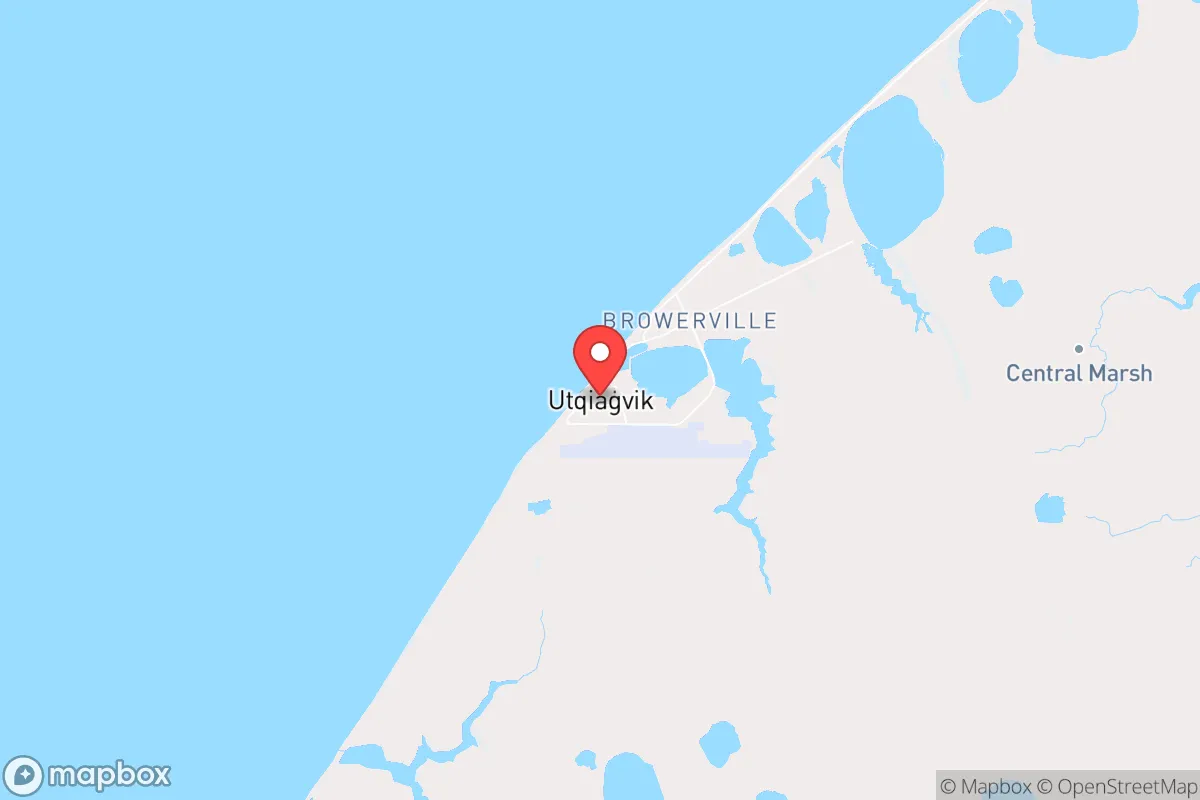
Utqiaġvik, Alaska, formerly Barrow, is the northernmost community in the United States, and its extreme isolation is its single greatest strategic asset for a prepper or survivalist. Located 330 miles north of the Arctic Circle on the Chukchi Sea coast, this town of roughly 4,500 people is accessible only by air or, for a few weeks in summer, by sea. For someone concerned with civic unrest, mass casualty events, or fallout from societal collapse, Utqiaġvik offers a hard-to-reach redoubt where the logistical challenges of modern life are already a daily reality, not a theoretical future. The community’s resilience is not a matter of preparation—it is a matter of survival, baked into the culture and infrastructure of a place that has endured for thousands of years.
Geographic isolation and natural defensive advantages
Utqiaġvik sits on a flat, treeless coastal plain, surrounded by the Arctic Ocean and the vast, empty tundra of the North Slope. The nearest major city, Fairbanks, is 500 miles away by air, and Anchorage is over 700 miles. There are no roads connecting Utqiaġvik to the rest of Alaska—the Dalton Highway ends at Deadhorse, 200 miles to the southeast, and even that is a gravel road requiring a long, dangerous journey. This geographic isolation means that any large-scale unrest, refugee flow, or military conflict in the Lower 48 or even in southern Alaska would take weeks or months to reach Utqiaġvik, if it ever did. The town’s location on a narrow spit of land between the Chukchi Sea and the Beaufort Sea means that approach by land is impossible; any threat would have to come by air or sea, both of which are easily monitored and interdicted in this harsh environment. The surrounding tundra is impassable to vehicles for most of the year, and the permafrost makes any large-scale construction or movement extremely difficult. For a relocator, this is a natural fortress—not a fortress of walls, but of distance and climate.
Risks, exposures, and proximity to fallout-relevant landmarks
The primary risk in Utqiaġvik is not from human conflict but from the environment itself. The town is located on the coast, and sea ice loss has increased the risk of storm surges and coastal erosion. The community has already begun a multi-decade relocation effort inland, but this is a slow process. For a prepper, the immediate concern is that Utqiaġvik is not near any major military or industrial targets that would attract a nuclear strike or fallout plume. The nearest strategic asset is the Distant Early Warning (DEW) Line radar sites, which are largely decommissioned, and the oil fields at Prudhoe Bay, 200 miles east. Neither is a high-value target in a major conflict. The closest potential fallout danger would be from a strike on Fairbanks or Anchorage, but prevailing winds in the Arctic blow from the east and northeast, meaning fallout from those cities would likely be carried away from Utqiaġvik. The town’s location on the coast also means that any airborne contamination would be diluted by the vast ocean. The real risk is a disruption of supply chains—Utqiaġvik relies on air cargo for nearly all food, fuel, and manufactured goods. A collapse of the national logistics network would hit this community hard, but it would hit everywhere else harder first.
Practical resilience for a relocator: food, water, energy, and defensibility
Food security in Utqiaġvik is a matter of subsistence hunting and fishing, not grocery stores. The Iñupiat people have lived here for centuries on a diet of whale, seal, walrus, fish, and caribou. For a relocator, learning these skills is non-negotiable. The town has one small grocery store, but prices are astronomical—a gallon of milk can cost $10, and fresh produce is rare. Water is a critical concern: the town’s water supply comes from a single lake, Isatkoak Lagoon, and is treated and piped to homes. In a collapse scenario, this system would fail. A prepper would need to plan for water collection from snowmelt or ice, and for filtration. Energy is provided by diesel generators, with fuel shipped in by barge in summer and stored for the year. Solar is impractical for most of the year due to the polar night (November to January), but wind is abundant and could be harnessed with small turbines. Defensibility is excellent: the town is small, everyone knows everyone, and outsiders are immediately noticed. The local police force is small, but the community is tight-knit and self-policing. There is no real crime problem to speak of—the biggest threat is a polar bear, not a home invader. For a single individual or a family, the key is to integrate into the community, learn the subsistence skills, and have a backup plan for the long, dark winter. The cold itself is a defense: temperatures can drop to -50°F, and unprepared people simply do not survive.
The overall strategic picture for a conservative relocator
Utqiaġvik is not for everyone. It is a hard, expensive, and lonely place, with a cost of living that rivals Manhattan and a climate that kills the careless. But for someone who values true independence from the crumbling systems of the Lower 48, it offers something no other location in the United States can: a complete separation from the grid, the supply chain, and the political chaos of the south. The community is overwhelmingly Alaska Native, with a culture that is conservative in the truest sense—focused on family, tradition, and self-reliance. There is no room for the kind of ideological conflict that plagues urban America; here, survival is the only ideology. The trade-offs are severe: no roads, no Amazon delivery, no medical care beyond a small clinic (serious cases are medevaced to Anchorage), and months of total darkness. But if the goal is to be as far from the fallout of societal collapse as possible, while still remaining on American soil, Utqiaġvik is the ultimate strategic relocation. It is a place where the prepper’s mindset is not a hobby—it is the only way of life.

* Values derived from national, state, county, city and local statistics and may differ in a specific area. Last updated: 2026-05-01T18:00:32.000Z
Narrative content on this page is AI-generated and may contain mistakes. Verify any details that matter before acting on them.
ReloMaps may earn a commission from affiliate links at no extra cost to you.

