Photo: Wikipedia
Demographics of Lamoille County
Affluence Level in Lamoille County
A middle-class area roughly in line with national averages across income, home values, education, and employment.
People of Lamoille County
Lamoille County, Vermont, is home to roughly 26,000 residents, making it one of the state’s least densely populated counties, yet its character is defined by a distinct blend of deep Yankee roots, a strong outdoor-recreation economy, and a recent influx of remote workers and second-home owners. The population is overwhelmingly white (91.8%) and native-born (only 2.4% foreign-born), with a notably high educational attainment rate of 43.8% holding a college degree. The county’s identity is shaped by its historic villages—Morrisville, Stowe, Hyde Park, Johnson, and Cambridge—each with a distinct settlement story, from early agrarian homesteads to a world-class ski destination.
Settlement & growth (pre-1960)
Long before European settlers arrived, the Western Abenaki people inhabited the Lamoille River valley, using its waterways for travel and fishing. Their presence is still acknowledged in place names and through the continued presence of the Abenaki community in the broader region, though no federally recognized tribe resides within the county today.
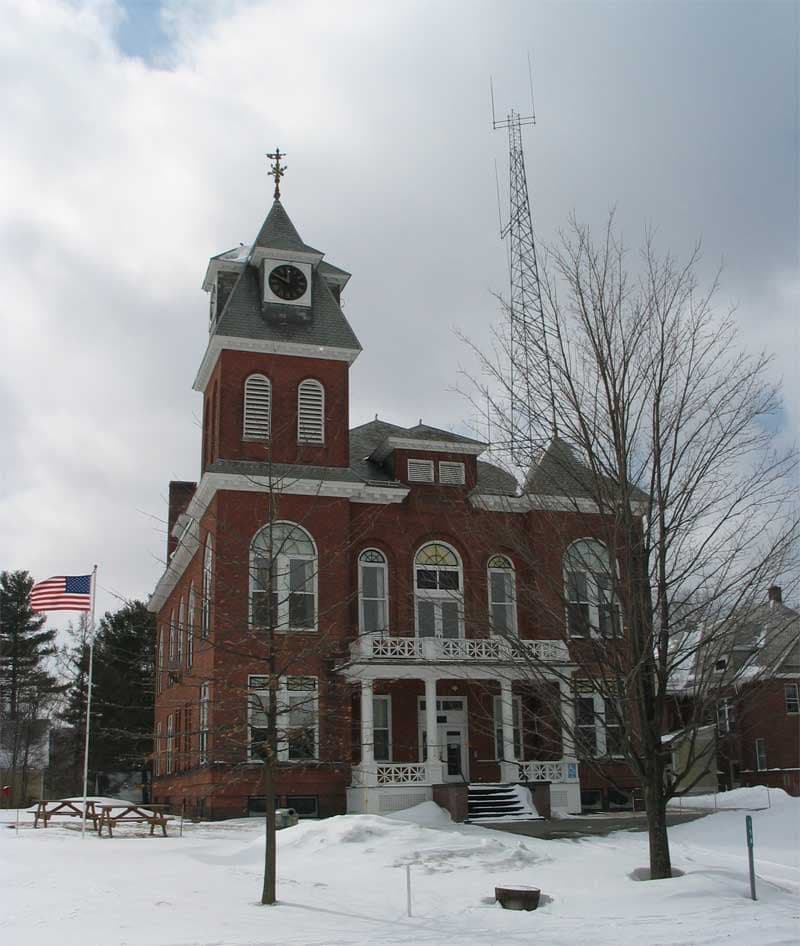
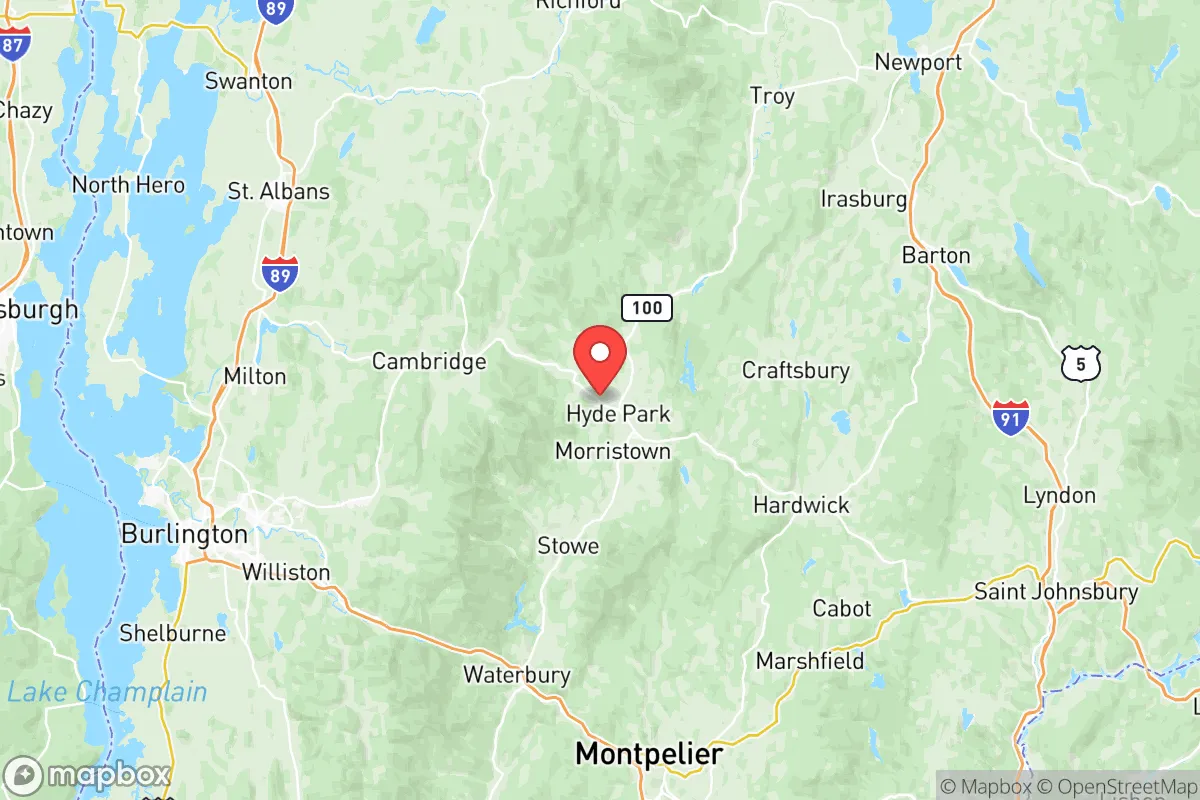
European settlement began in earnest after the American Revolution. The first wave, from roughly 1780 to 1820, consisted primarily of Yankees from southern New England—Massachusetts, Connecticut, and New Hampshire—who were granted land charters by the Vermont Republic and later the state. These families, largely of English and Scots-Irish descent, cleared forests for subsistence farming and established the county’s earliest villages. Hyde Park, designated the shire town (county seat) in 1807, grew as a milling and trading center along the Lamoille River. Johnson and Cambridge followed similar patterns, with small gristmills, sawmills, and blacksmith shops anchoring their economies.
A second, smaller wave of settlement came with the arrival of Irish immigrants in the 1840s and 1850s, drawn by railroad construction. The Vermont Central Railroad reached Morrisville in 1850, transforming it from a quiet farming hamlet into a regional commercial hub. Irish laborers laid track and later settled in Morrisville and Stowe, working in the burgeoning lumber and granite industries. A modest number of French Canadian families also crossed the border from Quebec in the late 19th century, finding work in the county’s mills and farms, particularly around Waterville and Belvidere.
The most transformative development for Lamoille County’s population came with the rise of the ski industry. Stowe, already a summer resort for wealthy East Coast families, opened the Mt. Mansfield Ski Area in 1936, one of the first commercial ski operations in the United States. This drew a new kind of migrant: not farmers or industrial workers, but ski instructors, lodge operators, and service workers from across the Northeast. The post-World War II boom, especially the 1950s and 1960s, saw Stowe transform into a destination for the affluent, attracting second-home owners from New York, Boston, and beyond. This wave was almost entirely white and native-born, reinforcing the county’s existing ethnic composition.
Modern era (post-1965)
The 1965 Hart-Cellar Act, which reshaped U.S. immigration, had a minimal direct effect on Lamoille County. The foreign-born population remains very low at 2.4%, and the county did not experience the large-scale immigration from Asia, Latin America, or Africa seen in urban areas or agricultural regions. Instead, the post-1965 demographic story of Lamoille County is one of domestic migration—specifically, the continued growth of the Stowe-area tourism economy and the broader trend of urban-to-rural relocation.
From the 1970s through the 1990s, Stowe solidified its reputation as a premier ski and summer resort, drawing seasonal workers and year-round residents from across the United States. This period also saw the rise of the "back-to-the-land" movement, with a small but culturally significant influx of counterculture migrants settling in more rural parts of the county, such as Eden and Wolcott. These newcomers, often college-educated and environmentally conscious, established organic farms, artisan businesses, and alternative schools, adding a progressive layer to the county’s traditionally conservative Yankee culture.
The most significant demographic shift of the past two decades has been the arrival of remote workers and second-home buyers, accelerated by the COVID-19 pandemic. Stowe and Morrisville have seen the most growth, with new residents coming primarily from the Boston-to-Washington corridor. This wave is overwhelmingly white, highly educated, and relatively affluent, contributing to the county’s high college attainment rate of 43.8%. The Hispanic population, at 2.5%, and the Black population, at 1.0%, remain very small, with most Hispanic residents working in the hospitality and construction sectors. The East/Southeast Asian population (0.3%) and Indian subcontinent population (0.5%) are tiny, concentrated mainly in Stowe and Morrisville, often in professional roles tied to the resort economy or the nearby University of Vermont Medical Center network.
The future
Lamoille County is likely to continue its gradual population growth, driven by the same forces that have shaped it since the 1960s: the appeal of the Stowe-area outdoor lifestyle and the increasing feasibility of remote work. The county is not expected to become significantly more diverse in the near term. The foreign-born share may rise slightly as the hospitality industry seeks workers, but the county’s high housing costs—especially in Stowe—will limit large-scale immigration from abroad. The most notable demographic trend will be the continued aging of the population, as younger residents move away for education and career opportunities, while older, wealthier newcomers arrive for retirement or second homes.
The cultural identity of Lamoille County is evolving from a quiet, agrarian Yankee stronghold into a more polarized landscape: the Stowe area is increasingly cosmopolitan and affluent, while the outlying towns of Johnson, Hyde Park, and Cambridge retain a more traditional, working-class Vermont character. This tension between old and new, local and transient, will define the county’s social and political dynamics in the coming decade.
For someone moving to Lamoille County today, the region offers a choice between two distinct experiences: the high-amenity, high-cost resort lifestyle of Stowe, or the quieter, more affordable village life of Morrisville, Hyde Park, or Johnson. The county remains one of the whitest and most native-born in New England, and while it is not hostile to diversity, it offers little of the ethnic variety found in Vermont’s Chittenden County (Burlington area). The incoming resident should expect a community that values privacy, self-reliance, and the outdoors, with a growing but still modest cosmopolitan influence centered on the ski slopes of Stowe.

* Values derived from national, state, county, city and local statistics and may differ in a specific area. Last updated: 2026-08-23T21:30:52.000Z
Narrative content on this page is AI-generated and may contain mistakes. Verify any details that matter before acting on them.
ReloMaps may earn a commission from affiliate links at no extra cost to you.

