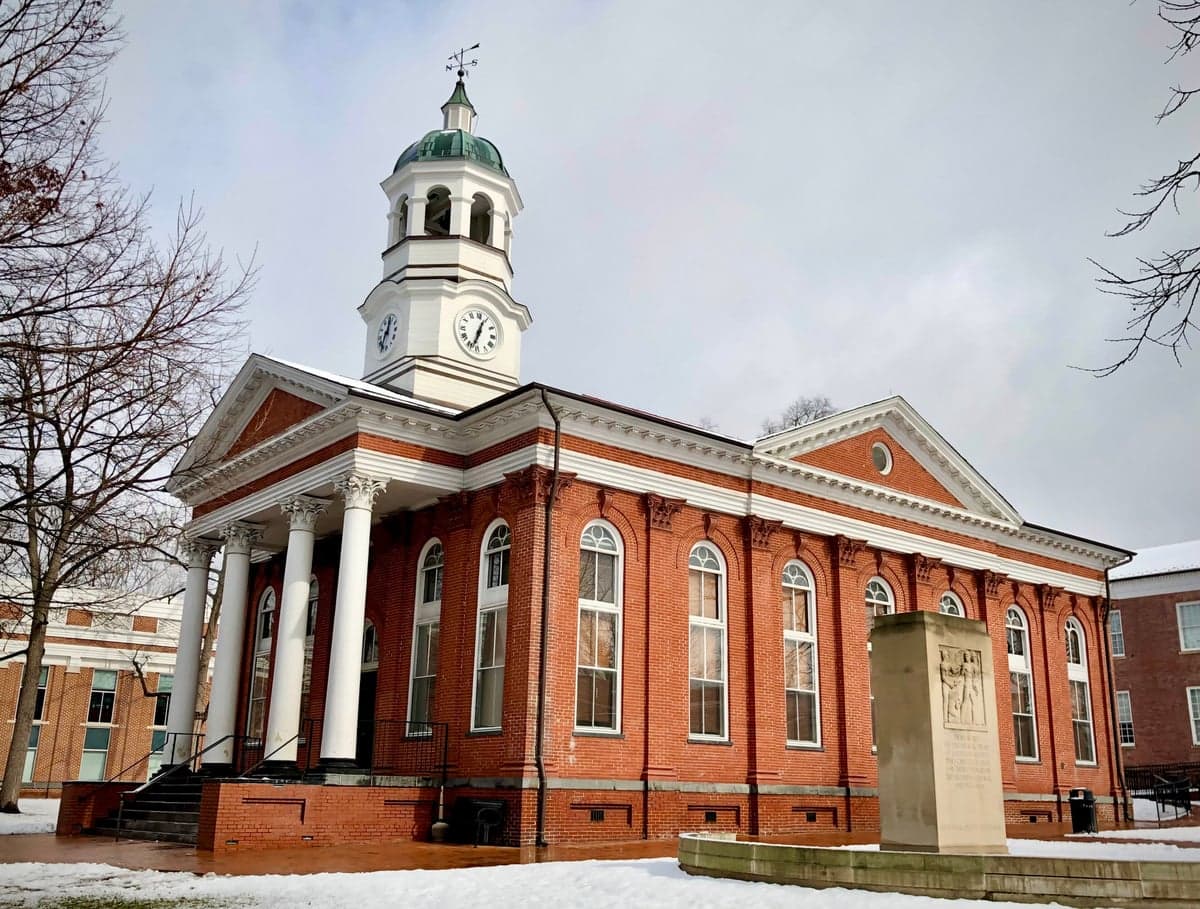
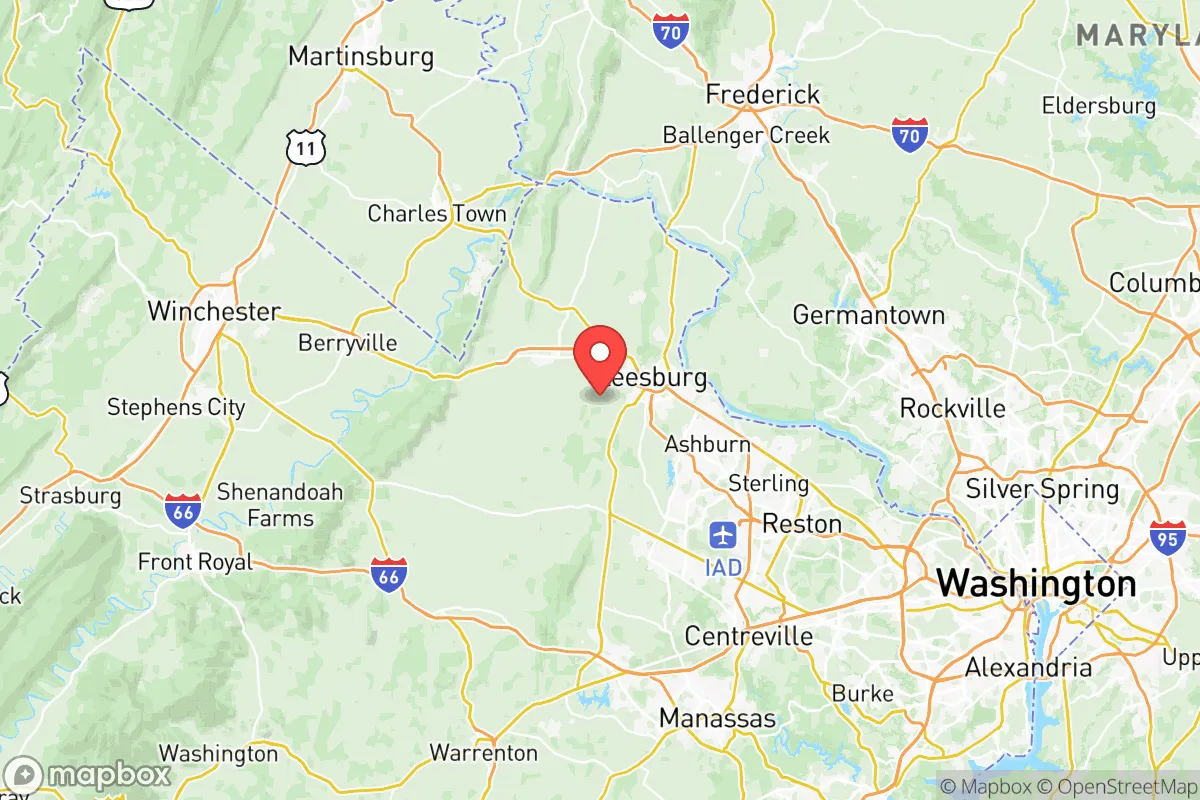
Photo: Wikipedia
Demographics of Loudoun County
Affluence Level in Loudoun County
A wealthy area with high-earning, well-educated households. Incomes, home values, and educational attainment meaningfully outpace national averages.
People of Loudoun County
Loudoun County, Virginia, is home to 427,082 residents, making it one of the fastest-growing and most affluent counties in the United States. Its population is notably diverse, with a White majority of 52.1%, a significant Indian-subcontinent community at 13.7%, a Hispanic population of 14.2%, a Black population of 7.4%, and East/Southeast Asian residents at 7.3%. The county is defined by its high educational attainment—64.0% of adults hold a college degree—and its dual identity as a historic rural landscape transformed into a high-tech suburban powerhouse, anchored by the Dulles Technology Corridor.
Settlement & growth (pre-1960)
Before European settlement, the region now known as Loudoun County was inhabited by the Siouan-speaking Manahoac and Iroquoian-speaking Susquehannock peoples, who used the Potomac River and its tributaries for trade and fishing. The first European settlers were English and Scots-Irish farmers who arrived in the early 1700s, drawn by the fertile soils of the Piedmont region and land grants from Lord Fairfax. The county was officially formed in 1757 from parts of Fairfax County, and its early economy was built on tobacco and wheat plantations worked by enslaved Africans.
The town of Leesburg, established in 1758 as the county seat, became the commercial and political hub for these early settlers. Scots-Irish and German immigrants also settled in the western part of the county, founding communities like Purcellville and Lovettsville in the mid-1700s. Lovettsville, in particular, was a distinct German-speaking enclave, with families arriving from Pennsylvania and the Rhineland. After the Civil War, the county's economy shifted to dairy farming and orchards, with towns like Middleburg and Upperville becoming centers for the equestrian and hunt country culture that persists today. The Quaker community in Waterford, founded in 1733, maintained a strong abolitionist presence and became a stop on the Underground Railroad. Through the early 20th century, Loudoun remained overwhelmingly rural and agricultural, with a population that grew slowly from about 20,000 in 1800 to just over 24,000 in 1950.
Modern era (post-1965)
The 1965 Hart-Cellar Act fundamentally reshaped Loudoun County's population, but the most transformative event was the 1962 opening of Washington Dulles International Airport in the county's eastern edge. This catalyzed the development of the Dulles Technology Corridor, attracting defense contractors, telecommunications firms, and tech companies. The completion of the Dulles Toll Road in the 1980s and the Silver Line Metro extension in the 2010s accelerated suburbanization, turning former farmland into sprawling subdivisions and office parks.
Domestic migration from the Rust Belt and coastal cities brought a wave of highly educated professionals, particularly from the 1980s onward. Towns like Ashburn and Sterling exploded in population, transforming from rural crossroads into dense suburban communities. Ashburn, once a village of a few hundred, now houses over 50,000 residents and is the epicenter of the county's tech economy, home to data centers and corporate campuses. Brambleton and Broadlands, master-planned communities built in the 2000s, attracted families seeking top-rated schools and new housing stock.
International immigration, driven by the tech sector's demand for skilled labor, brought the county's largest new ethnic groups. The Indian-subcontinent community, now 13.7% of the population, is heavily concentrated in Ashburn and Sterling, where Indian grocery stores, temples, and cultural organizations are prominent. East/Southeast Asian communities (7.3%)—including Chinese, Korean, and Vietnamese families—settled in similar areas, with Leesburg also seeing growth. The Hispanic population (14.2%) includes both long-established families in western towns like Round Hill and newer arrivals working in construction, landscaping, and service industries across the county. The Black population (7.4%) includes descendants of the county's historic African American communities, such as the freedmen's settlements in Willard and Hamilton, as well as newer arrivals from the Washington, D.C., metro area.
This demographic shift has been dramatic: in 1980, Loudoun was over 90% White; by 2024, it was 52.1% White. The county's foreign-born population stands at 9.7%, with the largest share from India, followed by El Salvador, South Korea, and China. The cultural identity has bifurcated: the western "horse country" towns of Middleburg and Upperville retain a traditional, rural, and predominantly White character, while the eastern suburbs are hyper-diverse, globally connected, and politically competitive.
The future
Loudoun County's population is projected to continue growing, potentially reaching 500,000 by 2040, driven by ongoing data center construction and the expansion of the Silver Line Metro. The county is not homogenizing but rather tribalizing into distinct enclaves: the western towns remain culturally conservative and less diverse, while the eastern suburbs are becoming more ethnically fragmented, with Indian, Hispanic, and East/Southeast Asian communities forming their own residential and commercial clusters. The Indian-subcontinent community is the fastest-growing major group, with its share likely to rise above 15% as tech hiring continues and family reunification brings new arrivals. The Hispanic population is also growing steadily, particularly in Sterling and Leesburg, where bilingual services and Catholic parishes are expanding. East/Southeast Asian communities are plateauing slightly, as many second-generation families move to other suburbs or return to coastal cities.
The county's high cost of living—median home prices exceed $700,000—is beginning to slow domestic in-migration from the Rust Belt, but international immigration remains strong. The cultural identity is absorbing these changes unevenly: the eastern suburbs are becoming a prototype of a globalized, tech-driven American suburb, while the western towns are reinforcing their historic identity as a refuge for traditional, land-based lifestyles. This tension is likely to persist, with political and cultural divisions mirroring the geographic split.
For someone moving in now, Loudoun County offers two distinct paths: the high-density, diverse, and opportunity-rich eastern suburbs, or the low-density, traditional, and homogeneous western countryside. The county is becoming less a single community and more a federation of enclaves, each with its own character and trajectory. The bottom line: Loudoun is a place of extremes—extreme wealth, extreme educational attainment, and extreme demographic segmentation—where the choice of town determines not just commute times but the entire texture of daily life.

* Values derived from national, state, county, city and local statistics and may differ in a specific area. Last updated: 2026-05-12T16:50:56.000Z
Narrative content on this page is AI-generated and may contain mistakes. Verify any details that matter before acting on them.
ReloMaps may earn a commission from affiliate links at no extra cost to you.

