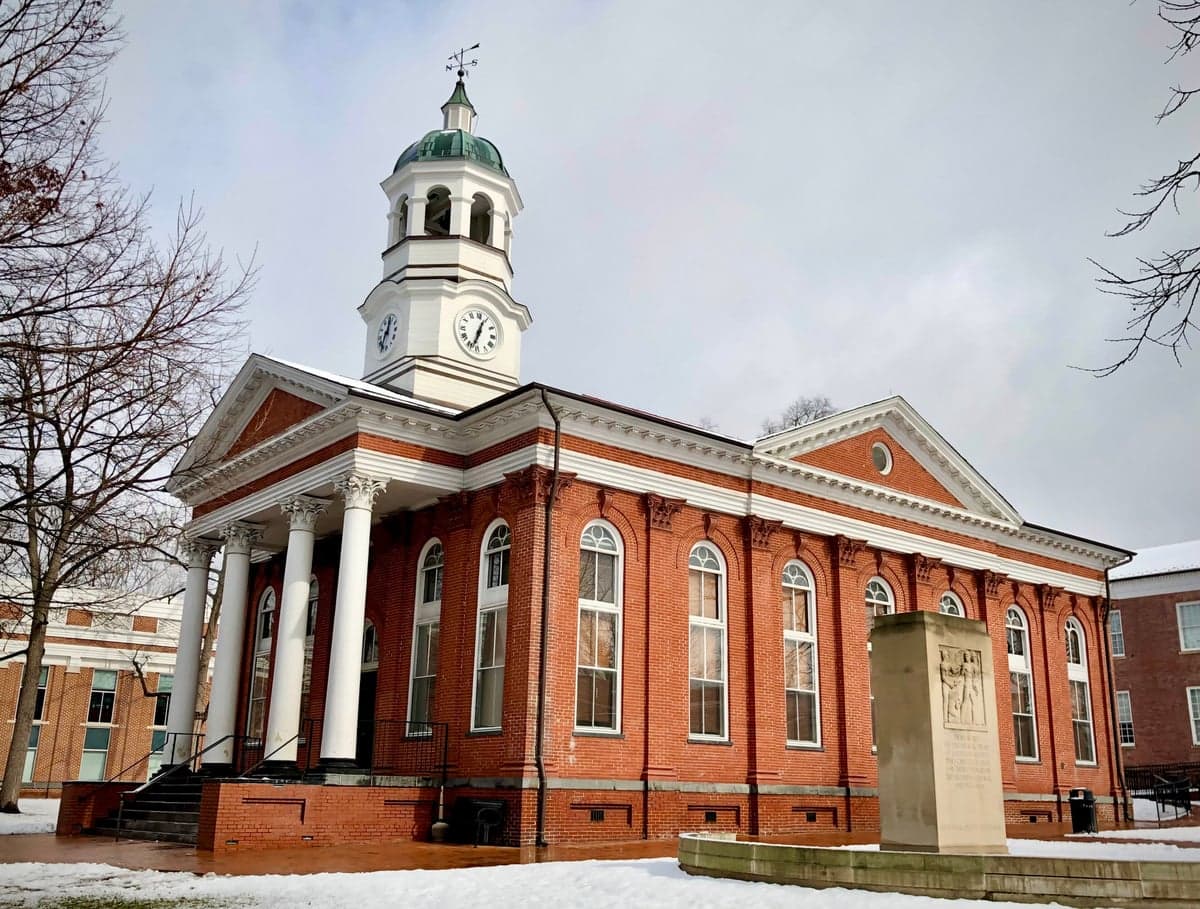

Photo: Wikipedia
Political ClimatePolitical Climate in Loudoun County
Showing district-level results — no local-only data available.
Local Political AnalysisPolitical Analysis of Loudoun County
Loudoun County, Virginia, has shifted dramatically from a reliably conservative stronghold to a solidly Democratic-leaning county, with a Cook Partisan Voting Index (PVI) of D+6. This means the county votes about six points more Democratic than the national average, a stark contrast to its reputation just a decade ago. The surrounding state of Virginia as a whole has a PVI of D+4, so Loudoun is now noticeably more progressive than the state average, which itself has trended blue in recent years. If you’re a conservative looking at this trajectory, it’s hard not to feel like the ground has shifted under your feet.
How it compares
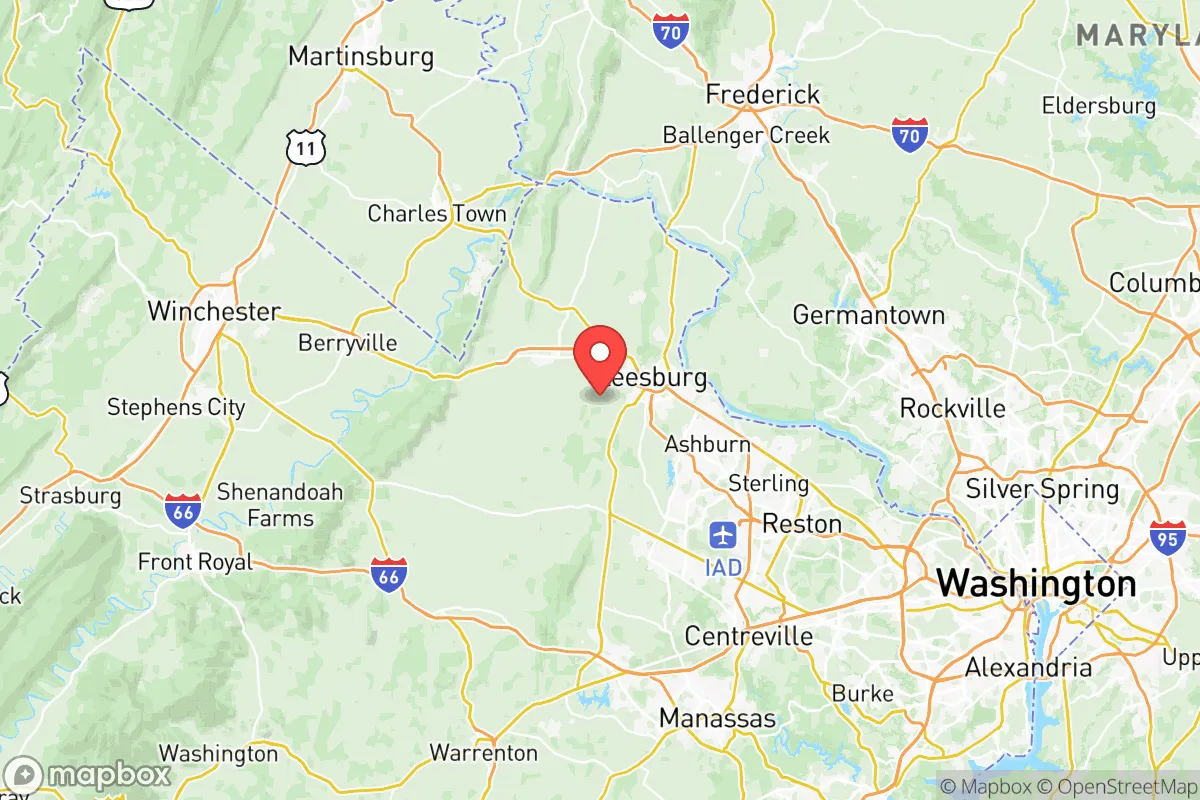
Loudoun’s D+6 PVI puts it significantly to the left of Virginia’s D+4, meaning the county is now a key driver of the state’s blue shift. But this isn’t a uniform shift across the county. The western towns like Purcellville and Round Hill still lean red, with many precincts voting Republican by double digits in recent elections. Meanwhile, the eastern suburbs—places like Ashburn, Sterling, and Leesburg—have become deep blue, fueled by an influx of tech workers and federal employees from the D.C. metro area. The swing precincts are in the middle, around Brambleton and Broadlands, where you’ll see close races, but even those have been trending left. Statewide, Virginia’s D+4 PVI is driven by the urban crescent from Northern Virginia down to Richmond, but Loudoun is now the epicenter of that shift. It’s a world away from the county I remember in the early 2000s, when it was a GOP stronghold.
What this means for residents
For conservatives living here, the practical impact is a growing sense of government overreach into daily life. The county’s progressive majority has pushed policies that many see as infringing on personal freedoms—like strict land-use regulations that limit property rights, or school board decisions that prioritize ideological agendas over parental input. The Loudoun County School Board, for example, has been a flashpoint, with controversies over critical race theory and transgender policies that many parents felt were imposed without their consent. Property taxes have also climbed steadily, as the county funds expanded social programs and infrastructure for a growing population. If you value limited government and local control, the trend is concerning: the county’s leadership seems more focused on top-down mandates than on listening to the people who’ve lived here for generations.
Culturally, the divide is palpable. In western Loudoun, you’ll still find a more traditional, rural way of life—farmers’ markets, hunting clubs, and a strong sense of community self-reliance. But in the east, the culture has become more transient and corporate, with chain stores and high-density housing replacing the old horse farms. The policy distinctions are sharp: the county has embraced sanctuary city-like policies for undocumented immigrants, expanded public transit subsidies, and pushed for net-zero energy mandates that raise costs for homeowners. For a conservative, it feels like the county is moving away from the principles of individual liberty and fiscal restraint that once made it a great place to raise a family. If you’re considering a move here, I’d recommend looking at the western towns if you want a community that still values those ideals—but even there, you’ll feel the pressure from the county’s broader progressive agenda.

State Political ClimatePolitical Climate in Virginia
State Political AnalysisPolitical Environment in the State
Virginia has shifted from a reliably purple swing state to a solidly Democratic-leaning one, with a Cook PVI of D+4, driven largely by explosive growth in the Washington, D.C. suburbs. Over the past 20 years, the state has moved leftward at the ballot box and in policy, though a strong conservative counterweight remains in the rural south and western regions. The 2021 gubernatorial election, where Republican Glenn Youngkin won by appealing to suburban parents and rural voters, showed the GOP can still compete, but the underlying demographic trends—more people moving into Northern Virginia and Hampton Roads—favor Democrats in statewide races.
Urban vs. rural divide
The political map of Virginia is a tale of two states. The urban crescent—Northern Virginia (Fairfax, Loudoun, Prince William counties), Richmond, and Hampton Roads (Norfolk, Virginia Beach)—votes overwhelmingly Democratic. Fairfax County alone, with over 1.1 million residents, delivers a net Democratic margin of roughly 200,000 votes per election, enough to offset GOP wins in most of the rest of the state. Meanwhile, rural and exurban areas—Roanoke, Lynchburg, the Shenandoah Valley, and Southside Virginia—vote heavily Republican. The divide is stark: in 2020, Joe Biden won Loudoun County by 25 points, while Donald Trump won Franklin County by 40 points. The key battlegrounds are the exurban counties like Chesterfield and Hanover near Richmond, and the growing Fredericksburg area, where suburban parents and military families can swing elections. Youngkin’s 2021 win came by flipping Virginia Beach and narrowing margins in Prince William and Loudoun.
Policy environment
Virginia’s policy environment has shifted sharply left since Democrats took full control of the legislature in 2020. The state has a progressive income tax (top rate 5.75%) and a relatively high sales tax (5.3% state, plus local add-ons). Property taxes are moderate but vary wildly by locality—Fairfax County’s rate is about $1.11 per $100 of assessed value, while rural counties like Patrick County are under $0.50. Education policy has been a flashpoint: in 2020, Democrats passed the Virginia Clean Economy Act, mandating a 100% carbon-free grid by 2050, and expanded Medicaid under the ACA. In 2021, they eliminated the state’s right-to-work law for public-sector unions and passed the Virginia Values Act, which added sexual orientation and gender identity to anti-discrimination laws. Election laws have also changed: no-excuse absentee voting and same-day registration were enacted, and the state now has a Democratic-controlled State Board of Elections. Gun laws tightened significantly in 2020 with a red-flag law, universal background checks, and a one-handgun-per-month limit. For conservatives, the policy environment is increasingly hostile to Second Amendment rights, school choice, and tax restraint.
Trajectory & freedom
Virginia is becoming less free by most conservative measures. The 2020 gun control package—SB 70 (red flag law) and HB 2 (universal background checks)—was the most aggressive in the South. In 2021, the state repealed the death penalty and legalized marijuana possession, but the regulatory framework for retail sales remains stalled. Parental rights took a hit with the 2020 Loudoun County school board scandal, where a student was sexually assaulted in a bathroom and the board initially covered it up—sparking a national backlash that helped Youngkin win. Youngkin’s 2022 executive order on “parental rights” in education was a symbolic win, but the Democratic legislature blocked most of his agenda, including a 15-week abortion ban and a school choice tax credit. Property rights are under pressure from the Virginia Housing Commission’s push for upzoning and inclusionary zoning in suburbs, which many conservatives see as government overreach. Medical freedom took a hit during COVID: Virginia had some of the longest school closures in the nation (Fairfax County schools were remote for 18 months), and vaccine mandates were enforced for state employees until 2022. The trajectory is clear: without a Republican legislature, expect more regulation on guns, energy, and education.
Civil unrest & political movements
Virginia has been a battleground for political movements on both sides. The 2017 Unite the Right rally in Charlottesville and the subsequent removal of Confederate statues sparked years of protest and counter-protest. In 2020, Richmond saw massive BLM protests that led to the toppling of the Robert E. Lee statue on Monument Avenue. On the right, the Loudoun County parent protests in 2021-2022 became a national symbol of the fight over school curriculum and transgender policies. Immigration politics are less visible than in border states, but Prince William County has a sanctuary policy limiting cooperation with ICE, and the state’s “sanctuary city” debate flares up periodically. Election integrity remains a concern for conservatives: the 2020 election saw widespread use of drop boxes and mail-in ballots, and the 2021 gubernatorial race was decided by just 2 points despite Youngkin’s win. No major secession or nullification movements exist, but the “Virginia is for Lovers” slogan has been co-opted by both sides in culture war battles. A new resident will notice the political tension most in the suburbs—yard signs, school board meetings, and local news are constantly polarized.
Projection
Over the next 5-10 years, Virginia will likely continue its leftward drift, driven by in-migration from D.C. and the Northeast. Northern Virginia’s population is projected to grow by another 10-15% by 2030, and the Richmond and Hampton Roads areas are also seeing steady growth. The Republican Party’s best hope is to hold the exurban and rural base while making inroads with Hispanic and Asian voters in Prince William and Loudoun, but the math is tough. A conservative moving in now should expect: higher taxes (the state is likely to adopt a graduated income tax or raise the top rate), continued gun control expansions, and a public school system that increasingly emphasizes DEI and CRT-style curricula. The 2025 gubernatorial election will be a bellwether—if a Republican can’t win then, the state may be out of reach for a generation. On the positive side, Virginia’s economy is strong, with a diverse base in defense, tech, and data centers (especially in Loudoun County’s “Data Center Alley”), and the state’s natural beauty and quality of life remain high.
Bottom line for a new resident: If you value low taxes, gun rights, school choice, and limited government, Virginia is a state you’ll need to fight for. The rural areas and exurbs still offer a conservative lifestyle, but the state government in Richmond will be working against you. Your best bet is to settle in a red-leaning county like Hanover, Spotsylvania, or Augusta, where local control can buffer some of the state-level overreach. But don’t expect the Virginia of 2000—the political winds are blowing left, and they’re not turning back anytime soon.
* Values derived from national, state, county, city and local statistics and may differ in a specific area. Last updated: 2026-05-12T16:50:56.000Z
Narrative content on this page is AI-generated and may contain mistakes. Verify any details that matter before acting on them.
ReloMaps may earn a commission from affiliate links at no extra cost to you.

