Strategic Assessment of Martinsville City County
Workable tactical position. Some exposure to population density or targets, but generally defensible in a crisis.
What does the Strategic Assessment tell us?
Our Strategic Assessment grades tactical survivability of an area. Major population centers, military targets, fallout zones, natural disasters, and border exposure all drive risk — lower exposure means a more defensible position in a crisis.
This is heavily inspired by Joel Skousen's Strategic Relocation book. Highly recommended you checkout the book ($)What does this tell us?
Our Strategic Assessment grades tactical survivability of an area. Major population centers, military targets, fallout zones, natural disasters, and border exposure all drive risk — lower exposure means a more defensible position in a crisis.
This is heavily inspired by Joel Skousen's Strategic Relocation book. Highly recommended you checkout the book ($)Strategic Pillars

Key Distances
Strategic Assessment Analysis
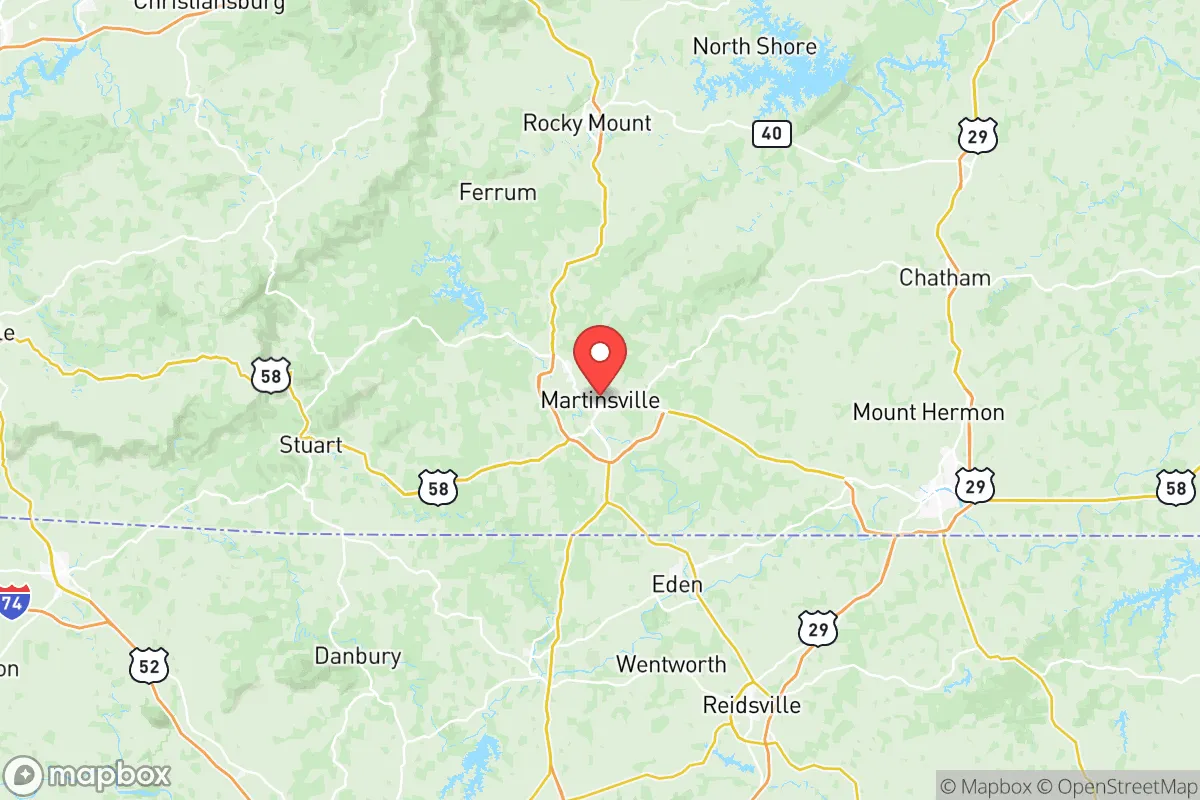
Martinsville City County, Virginia, occupies a distinctive strategic position in the Piedmont region, offering a blend of geographic isolation and practical resilience that appeals to relocation-minded individuals and families with a conservative, self-reliance-oriented outlook. The area’s historical economic challenges—stemming from the decline of the furniture and textile industries—have paradoxically left it with a lower population density, less traffic, and a slower pace of life than much of the state, which can be advantageous for those prioritizing preparedness and security. Its location roughly 50 miles north of the North Carolina border and about 45 miles south of Roanoke places it within a reasonable distance of regional medical and supply hubs while remaining far enough from major metropolitan centers to reduce exposure to the risks associated with dense urban populations. The surrounding landscape of rolling hills, hardwood forests, and the Smith River watershed provides natural resources and defensible terrain that are rare in more developed parts of Virginia.
Geographic position and natural advantages for self-reliance
Martinsville sits in a bowl-like valley surrounded by the Blue Ridge Mountains to the west and the foothills of the Piedmont to the east, creating a natural buffer that limits easy access from major corridors. The city itself is the county seat of Martinsville City County (an independent city), but the broader region includes the towns of Ridgeway, Collinsville, and Bassett, all within a 15-minute drive. This cluster of small communities means that essential services—grocery stores, hardware outlets, and medical clinics—are within reach without requiring travel through congested urban zones. The Smith River, which flows through the city, is a reliable water source, though it is not large enough to pose a significant flood risk under normal conditions. The area’s elevation, averaging around 1,000 feet, reduces the likelihood of storm surge or hurricane-related flooding, a distinct advantage over coastal Virginia. For a relocator focused on self-sufficiency, the region’s agricultural potential is notable: the surrounding county, Henry County, has a history of small-scale farming, and the growing season (roughly 180 days) supports gardens, orchards, and livestock. The proximity to the Philpott Lake and Philpott Dam, about 15 miles northwest, provides a backup water source and hydroelectric power, though the dam itself is a potential infrastructure target in a conflict scenario.
Risk exposure: natural hazards, man-made threats, and proximity to fallout-relevant landmarks
Martinsville’s resilience profile is mixed when it comes to natural and man-made risks. The area is not in a high-risk seismic zone, and tornado activity is below the national average, though severe thunderstorms and occasional ice storms can disrupt power and transportation. The most significant natural hazard is the potential for drought, as the region’s water supply depends on the Smith River and Philpott Lake, which can drop during extended dry periods. Man-made risks are more nuanced. The city is roughly 90 miles from the North Anna Nuclear Generating Station near Mineral, Virginia, which is within the 50-mile ingestion exposure zone for radioactive fallout. While this distance provides some buffer, prevailing winds from the west-northwest could carry fallout toward Martinsville in a worst-case scenario. More immediately, the area is about 70 miles from the Greensboro–Winston-Salem–High Point metropolitan area in North Carolina, a population center of over 1.6 million people that includes the Piedmont Triad International Airport and several industrial parks. In a crisis, this proximity could mean an influx of refugees from the south, straining local resources. The Martinsville Speedway, a NASCAR track that can hold over 50,000 spectators, is a potential concentration point for large crowds during events, though it is not a permanent risk. On the positive side, there are no major military bases, refineries, or ports within 50 miles, reducing the likelihood of a direct strike or industrial accident. The nearest major military installation is Fort Barfoot (formerly Fort Pickett), about 100 miles east, which is a training base but not a high-value target.
Practical resilience for a relocator: food, water, energy, and defensibility
For a family or individual serious about disaster readiness, Martinsville offers several practical advantages. Food security is supported by a network of local farms and farmers’ markets, including the Martinsville Farmers Market (seasonal) and several u-pick orchards in Henry County. The area’s soil, while not as rich as the Shenandoah Valley, is suitable for gardening, and the presence of hardware stores like Lowe’s and Tractor Supply in the city means supplies for gardening, canning, and livestock are readily available. Water security is a mixed picture: the municipal water supply comes from the Smith River and is treated at the Martinsville Water Treatment Plant, which is vulnerable to power outages and contamination. However, many homes in the surrounding county rely on private wells, which offer a more resilient water source if properly maintained. The Philpott Lake reservoir, managed by the U.S. Army Corps of Engineers, provides a backup supply, but access is not guaranteed in an emergency. Energy resilience is a concern: the grid is served by American Electric Power (AEP), and outages are common during storms, sometimes lasting several days. Solar potential is moderate, with about 200 sunny days per year, but the hilly terrain can limit panel placement. Wood heating is a viable option, as firewood is abundant and affordable from local suppliers. Defensibility is one of the area’s strongest suits: the rural character of the county means that properties with acreage are common, and the terrain—with its ridges, hollows, and forested areas—offers natural concealment and chokepoints. The low population density (about 13,000 people in the city and 50,000 in the county) means that social cohesion is higher than in urban areas, and local law enforcement, while small, is familiar with the community. The Martinsville-Henry County Emergency Services coordinates disaster response, but the area’s limited resources mean that self-reliance is essential.
Overall, Martinsville City County presents a balanced strategic picture for the relocator focused on resilience. Its geographic isolation, low population density, and access to natural resources make it a strong candidate for those seeking to reduce exposure to urban risks while maintaining access to essential services. The absence of high-value military or industrial targets within a 50-mile radius is a significant advantage, though the proximity to the North Anna nuclear plant and the Greensboro metro area introduces moderate risks that can be mitigated with proper planning. The area’s economic challenges—poverty rates around 20% and a shrinking tax base—mean that infrastructure investment is limited, but this also keeps property prices low and reduces the likelihood of rapid, uncontrolled growth. For a family willing to invest in well water, solar panels, and a wood stove, Martinsville offers a defensible, affordable, and strategically sound base of operations in the mid-Atlantic region. The key trade-off is between isolation and access: you are far enough from major cities to avoid their risks, but close enough to reach them when needed—a balance that aligns well with a conservative, preparedness-minded lifestyle.

* Values derived from national, state, county, city and local statistics and may differ in a specific area. Last updated: 2026-07-30T07:18:01.000Z
Narrative content on this page is AI-generated and may contain mistakes. Verify any details that matter before acting on them.
ReloMaps may earn a commission from affiliate links at no extra cost to you.

