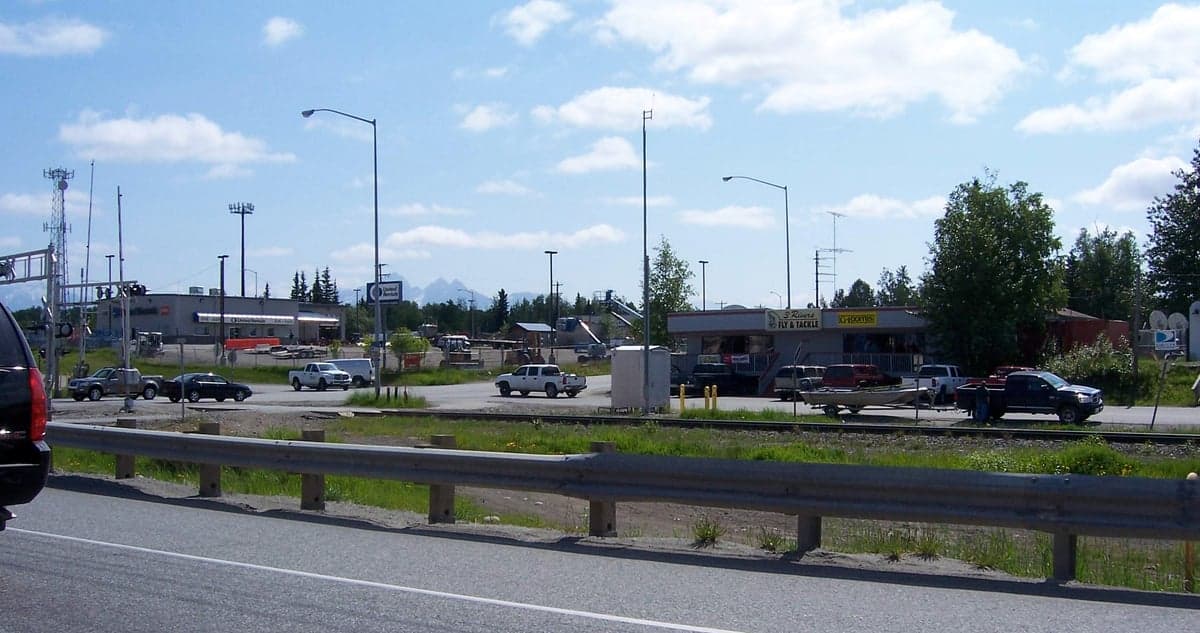
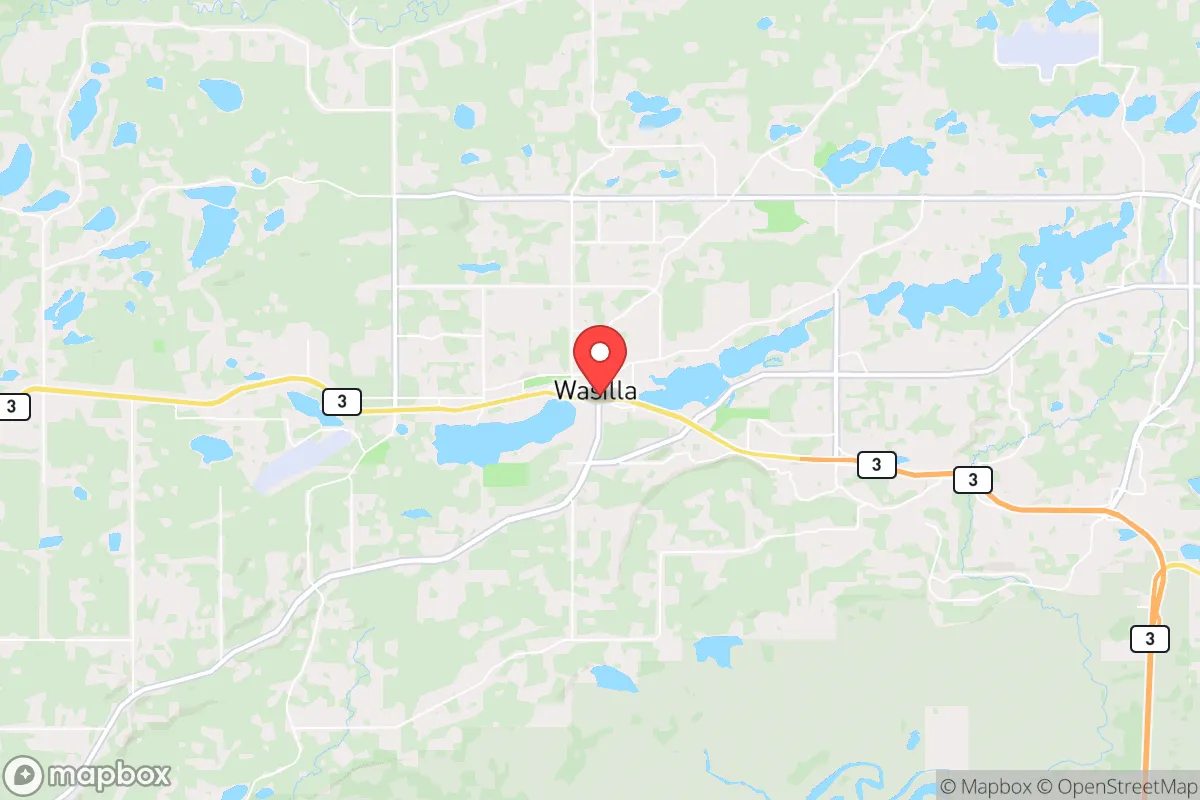
Photo: Wikipedia
Strategic Assessment of Wasilla, AK
Workable tactical position. Some exposure to population density or targets, but generally defensible in a crisis.
What does the Strategic Assessment tell us?
Our Strategic Assessment grades tactical survivability of an area. Major population centers, military targets, fallout zones, natural disasters, and border exposure all drive risk — lower exposure means a more defensible position in a crisis.
This is heavily inspired by Joel Skousen's Strategic Relocation book. Highly recommended you checkout the book ($)What does this tell us?
Our Strategic Assessment grades tactical survivability of an area. Major population centers, military targets, fallout zones, natural disasters, and border exposure all drive risk — lower exposure means a more defensible position in a crisis.
This is heavily inspired by Joel Skousen's Strategic Relocation book. Highly recommended you checkout the book ($)Strategic Pillars

Key Distances
Regional Safe Places
Below is our recommended "safe zones" in Alaska and the surrounding area based on our strategic heuristics. For most people, it's unrealistic to live in a “safe zone” full-time due to work, family or other personal reasons. They tend to be more rural. However, many of these areas are perfect for second homes and retreat properties that double as a vacation home or even a short-term rental.
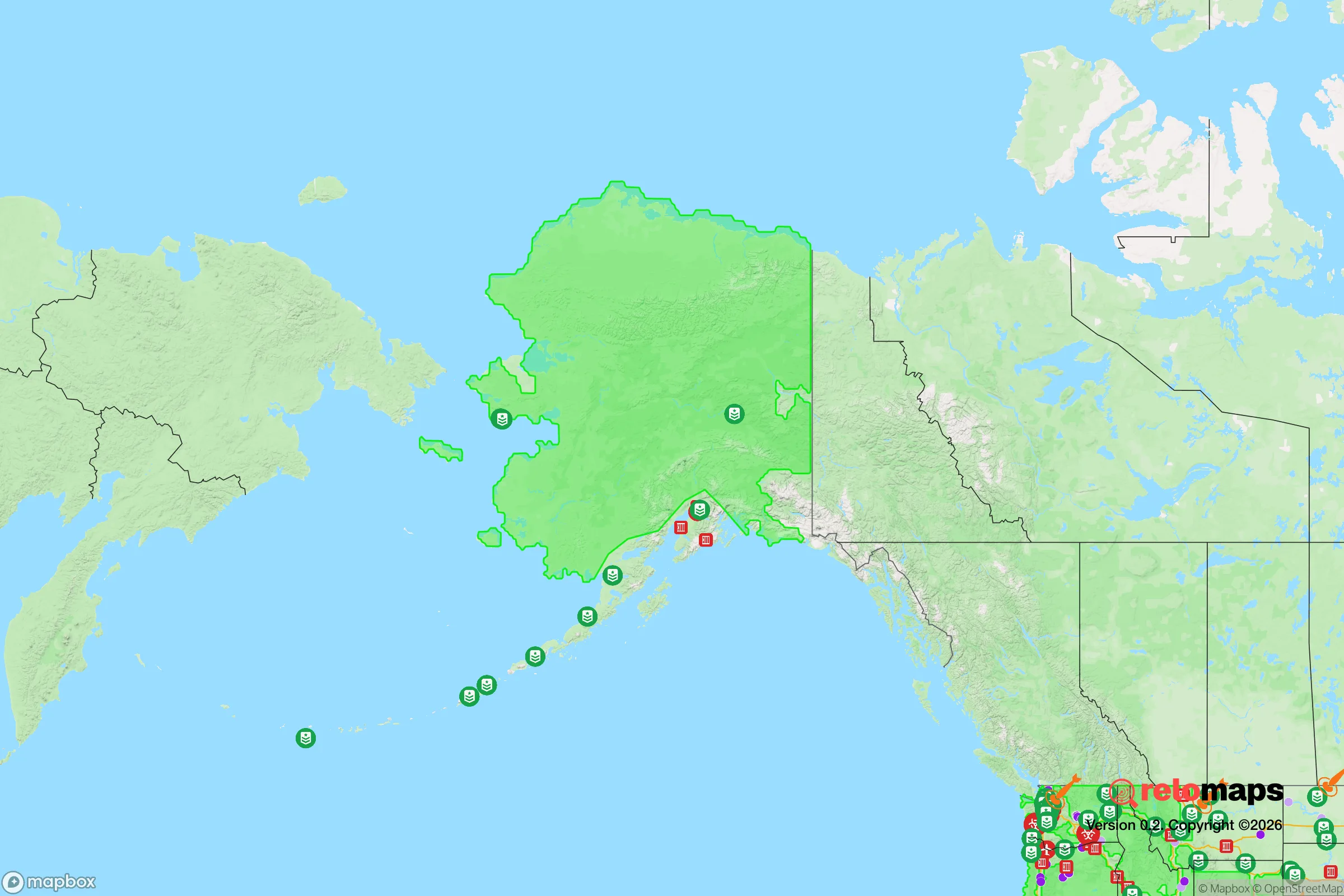
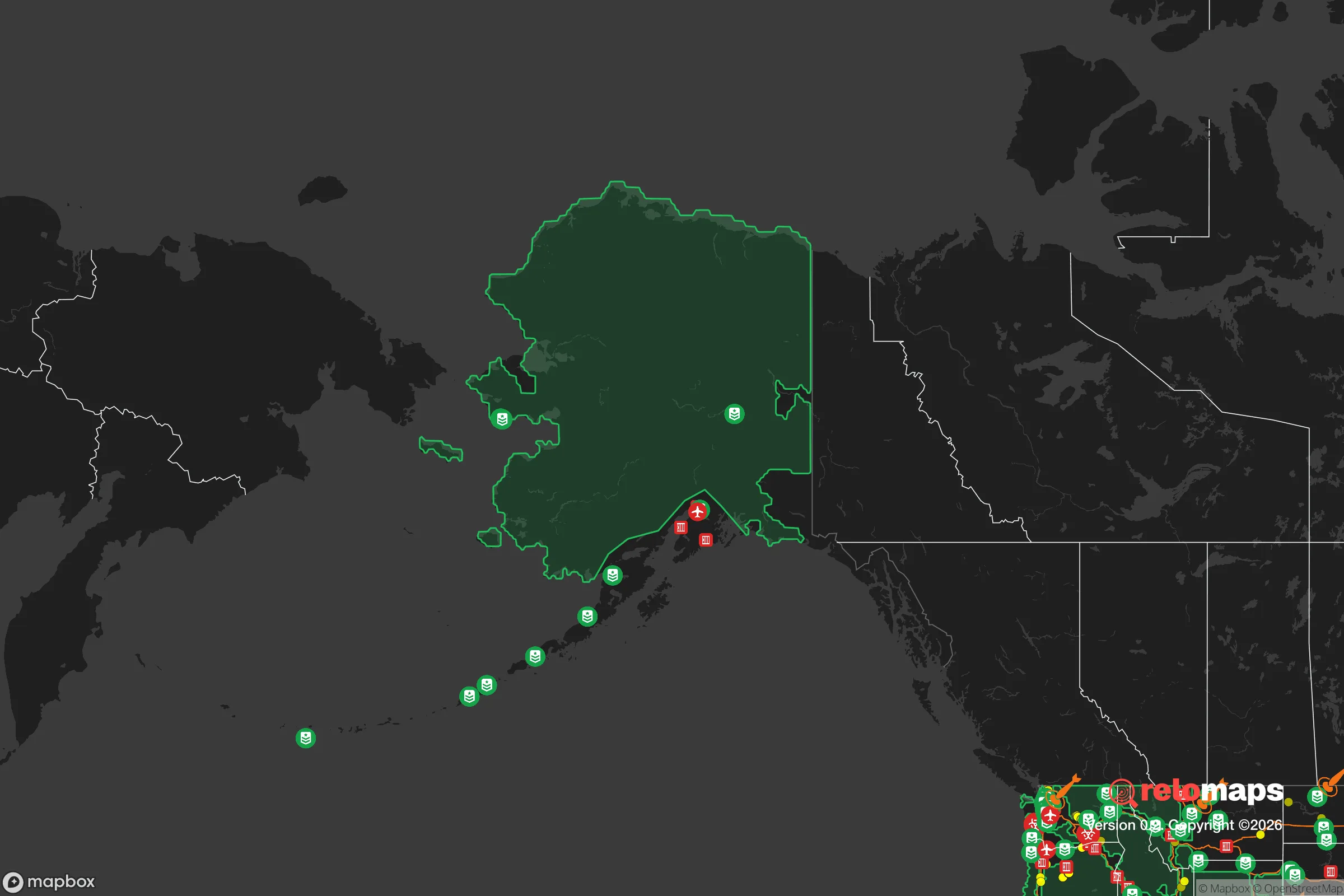


Important Note: For informational purposes only. This does not mean nothing bad ever happens in the green zones. Please use common sense. This is based on public data and modeled with AI. We tried to take a conservative approach but mistakes happen. We update this regularly as new information becomes available.
Solar Generator Recommendations
Backup power matters more here than in safer locations. We've picked three solar generators across budgets and capacity tiers — start with the budget unit if you only need a few essentials, or step up if you want to run a fridge and HVAC for days at a time.

Jackery Portable Power Station Explorer 300
Budget OptionPower on the Go: Weighing only 11 lbs, it's convenient to set up and store with book-sized foldable solar panels

BLUETTI Portable Power Station AC180
Designed for both indoor and outdoor scenarios, AC180 is highly capable as it has a robost capacity and continuous output power.

EF ECOFLOW DELTA Pro Ultra Power Station
Upgraded PickEcoFlow DELTA Pro Ultra is a whole-home energy system designed to grow with your family. Integrated with the Smart Home Panel 2, it scales to meet your evolving energy needs — keeping your home powered, intelligent, and secure through every stage of life.
We earn a commission, at no additional cost to you.
Strategic Assessment Analysis
Wasilla, Alaska, offers a strategic resilience profile that is difficult to match in the Lower 48, combining geographic isolation with a surprisingly robust local infrastructure. Its position roughly 40 miles north of Anchorage places it far enough from the primary population and military target zone to avoid the worst of a major event, yet close enough to access critical supply chains and medical evacuation routes when those systems are still functional. For a relocator operating from a survivalist and prepper mindset, Wasilla represents a rare balance: a semi-rural hub that is not a primary target, but is not so remote that self-sufficiency becomes impossible without decades of preparation.
Geographic position and natural advantages for long-term survival
Wasilla sits in the Matanuska-Susitna Valley, a broad, fertile basin ringed by the Talkeetna and Chugach mountain ranges. This geography provides natural defensibility: the town is not a choke point on a single highway, but rather a node on the Glenn Highway (AK-1) and the Parks Highway (AK-3), offering two distinct egress routes. In a scenario where Anchorage becomes compromised—whether by earthquake, tsunami, or civil collapse—the Mat-Su Valley is the natural inland retreat. The area’s microclimate is milder than interior Alaska, with longer growing seasons and more moderate winter temperatures, which directly supports subsistence agriculture and small-scale food production. The surrounding mountains also create a rain shadow effect, reducing the risk of catastrophic flooding compared to coastal zones. For a prepper, the key advantage is the ability to live off-grid with relative ease: abundant surface water from lakes like Wasilla Lake and the Little Susitna River, combined with the region’s low population density (roughly 12 people per square mile in the borough), means a determined individual can secure water, firewood, and game without competing against a dense urban population.
Risks, exposures, and proximity to fallout-relevant landmarks
The most significant risk to Wasilla is its proximity to Joint Base Elmendorf-Richardson (JBER) in Anchorage, a major military installation housing the 3rd Wing and the Alaska Command. In a conflict involving strategic strikes, JBER is a high-priority target. Wasilla lies roughly 40 miles north of JBER, which places it outside the immediate blast and thermal radius of a conventional or low-yield nuclear weapon, but well within the fallout plume zone depending on wind direction. Prevailing winds in the region are typically from the south and southeast, meaning fallout from a strike on Anchorage or JBER would likely be carried northward into the Mat-Su Valley. This is a critical vulnerability: a relocator must plan for a minimum of two weeks of sealed shelter and have a robust air filtration system. Additionally, the Port of Anchorage is the primary logistics hub for all of Alaska; its destruction would sever the state’s supply chain, making Wasilla’s local stores and fuel depots a temporary buffer at best. The Trans-Alaska Pipeline, which runs west of the valley, is another potential target. A rupture would halt fuel flow, and while Wasilla has local fuel storage, the long-term viability of heating and transportation would depend on pre-positioned reserves. The risk of civil unrest in Wasilla itself is low due to the area’s strong community bonds and high rate of firearm ownership, but a mass influx of refugees from Anchorage (population ~290,000) would overwhelm local resources within days.
Practical resilience for a relocator: food, water, energy, and defensibility
Wasilla’s practical resilience is anchored in its existing infrastructure and the mindset of its residents. The Mat-Su Borough is one of the few places in the U.S. where residential wells and septic systems are the norm, not the exception. A property with a drilled well and a backup hand pump or generator-powered pump provides a secure, independent water supply. The growing season, while short (roughly 100 frost-free days), is productive enough for cold-hardy crops like potatoes, carrots, kale, and cabbage, and the valley’s soil is among the best in Alaska. Local farmers’ markets and the Alaska State Fair in Palmer are indicators of a strong agricultural base that can be leveraged for barter and trade. For energy, the area has high solar potential during the long summer days, but winter reliance on wood or diesel heating is almost mandatory. Wood stoves are ubiquitous in Wasilla homes, and the surrounding state and borough lands offer ample firewood—though a prepper should secure a private woodlot or a long-term permit to avoid competition. Defensibility is enhanced by the area’s layout: many properties are set back from main roads, with long driveways and natural tree cover providing visual and physical barriers. The local culture is heavily armed and self-reliant, which acts as a deterrent to organized looting. However, the lack of a dense police presence means that a relocator must be prepared to handle security independently, including perimeter monitoring and community coordination with like-minded neighbors.
The overall strategic picture for Wasilla is one of high potential tempered by specific, manageable vulnerabilities. It is not a bug-out location for a short-term crisis—it is a long-term relocation for those willing to invest in infrastructure, community relationships, and a multi-year supply of critical consumables. The proximity to Anchorage is a double-edged sword: it provides access to medical care, hardware stores, and fuel in normal times, but it becomes a liability during a collapse. For a conservative-leaning individual or family seeking a place where self-reliance is still the default culture, where the government footprint is light, and where the land itself can sustain you, Wasilla is one of the most viable options in North America. The key is to arrive prepared, not to expect the town to save you. Build your well, stock your pantry, make friends with your neighbors, and understand that the same isolation that protects you also means help is not coming. That is the trade-off, and for the right person, it is a good one.

* Values derived from national, state, county, city and local statistics and may differ in a specific area. Last updated: 2026-04-19T09:55:04.000Z
Narrative content on this page is AI-generated and may contain mistakes. Verify any details that matter before acting on them.
ReloMaps may earn a commission from affiliate links at no extra cost to you.

