 Popular
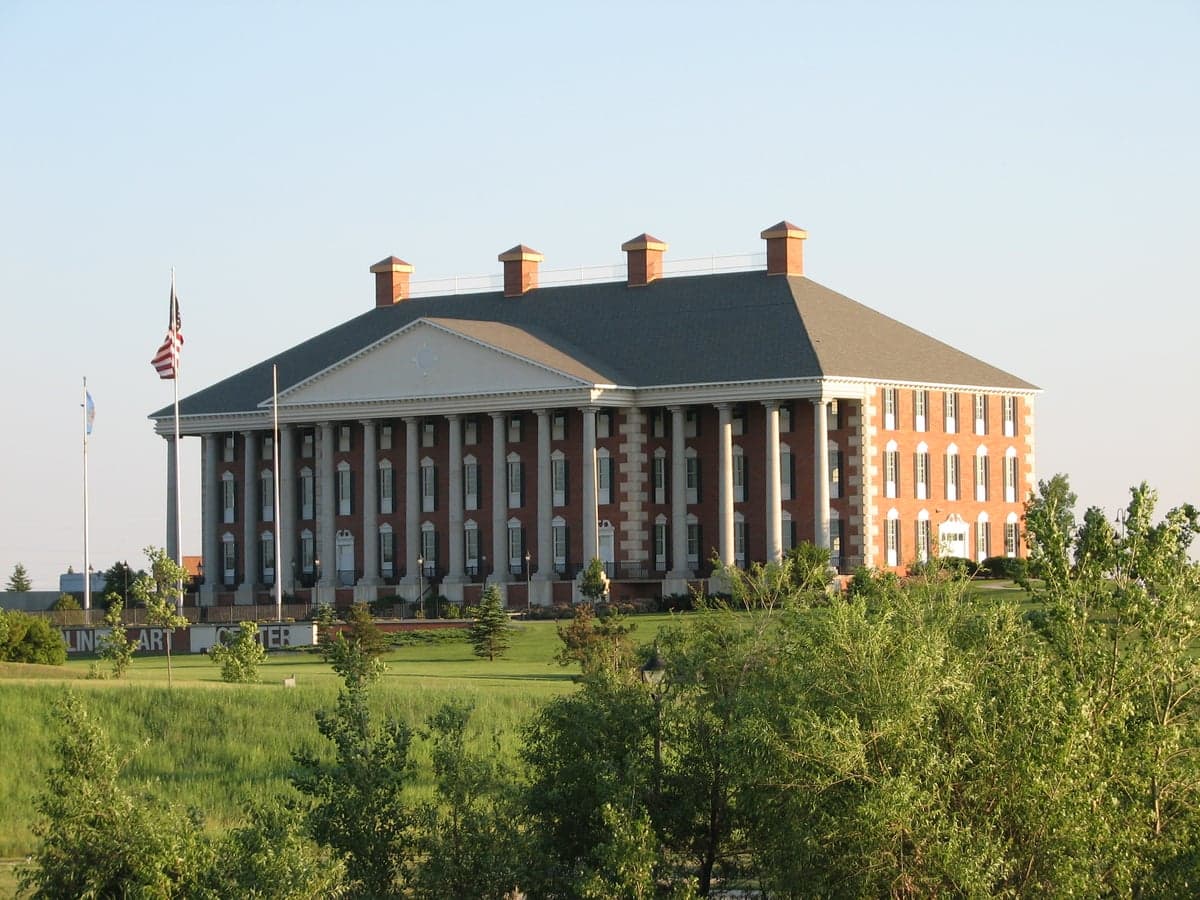
Photo: Wikipedia
Political ClimatePolitical Climate in Watertown, SD
District shown is the primary district for this city’s centroid. Cities may span multiple districts.
Inherited from parent state — no local data available.
Local Political AnalysisPolitical Analysis of Watertown, SD
Watertown, South Dakota, has long been a solidly conservative community, and that hasn't changed much. The Cook PVI of R+15 tells you the math, but it doesn't tell you the feel. Around here, folks still believe in minding their own business and keeping the government out of their wallets and their lives. That said, like a lot of smaller Midwestern towns, you can see the winds shifting a little, especially as new folks move in from places like Sioux Falls or even out-of-state, bringing different ideas about how things ought to run.
How it compares
Compared to the rest of Codington County, Watertown is the political anchor, but it's not a monolith. Drive 30 minutes south to Brookings, and you're in a completely different world—that's a college town with a much younger, more progressive vibe, and you can feel it in local elections and even just the conversations at the coffee shop. Head west to Clark or east to Milbank, and you're back in deep-red territory, where the talk is about property taxes and crop prices, not social issues. Watertown sits right in the middle: conservative enough to feel safe, but with enough diversity of thought that you'll hear both sides at the county commission meetings. The real contrast, though, is with the state's bigger cities. Sioux Falls and Rapid City are trending more moderate and even left on some cultural issues, while Watertown has largely held the line. That's a big reason why a lot of folks I know feel like the state legislature is still listening to us, not just the urban centers.
What this means for residents
For the average person living here, the political climate means a few concrete things. First, taxes stay relatively low, and there's a general distrust of new spending programs unless they're absolutely necessary. You won't see a lot of "let's create a new commission to study this" kind of stuff. Second, personal freedoms are still respected—whether that's about how you run your small business, what you teach your kids, or your stance on health mandates. The local government generally takes a hands-off approach, which is exactly how most of us want it. Third, there's a growing concern about federal overreach, especially on land use and environmental regulations that could affect farming and hunting access. People here pay attention to that stuff, and they vote accordingly. The downside? If you're looking for a lot of progressive social programs or a highly diverse cultural scene, you'll be disappointed. But for those who value stability, low interference, and a community that still says "please" and "thank you," it's a good fit.
One thing that sets Watertown apart is its practical, not ideological, conservatism. It's not the kind of place where people argue about national politics at the dinner table every night. Instead, the focus is on local issues: school board decisions, road maintenance, and keeping the hospital staffed. That said, there's a quiet but real wariness about any push toward progressive policies, especially around school curriculum and property rights. A few years back, there was a big dust-up over a proposed diversity initiative at the local school district—it was shot down pretty quickly, and the board members who pushed it were voted out. That's the Watertown way: if it feels like an overreach or a trend from somewhere else, it gets a hard look. Looking ahead, I think the town will stay conservative, but the challenge will be holding onto that identity as the state grows and changes. For now, it's still a place where you can live your life without a lot of fuss from the government, and that's worth a lot.

State Political ClimatePolitical Climate in South Dakota
State Political AnalysisPolitical Environment in the State
South Dakota has long been one of the most reliably conservative states in the nation, with a Republican trifecta controlling the governorship and both legislative chambers for decades. The state’s overall partisan lean is deep red — Donald Trump won the state by over 26 points in 2024, and no Democrat has carried it since Lyndon Johnson in 1964. Over the past 10-20 years, the dominant coalition has been a blend of rural traditionalists, libertarian-leaning ranchers, and a growing influx of out-of-state conservatives fleeing blue states. The trajectory has been a steady hardening of the Republican majority, though recent internal fractures over property taxes, education funding, and the influence of out-of-state money have introduced new dynamics that a newcomer should understand.
Urban vs. rural divide
The political map of South Dakota is starkly divided between a handful of small urban centers and the vast, deeply conservative rural expanse. Sioux Falls, the state’s largest city (pop. ~210,000), is the only real blue-leaning metro — it voted for Joe Biden in 2020 by a narrow margin and has trended slightly leftward as it attracts younger professionals and service-sector workers. Rapid City, the second-largest city, is reliably Republican but with a libertarian streak; its voters tend to favor low taxes and gun rights but are skeptical of federal land management in the nearby Black Hills. Brookings and Vermillion, home to South Dakota State University and the University of South Dakota respectively, are the most progressive pockets, with student populations that occasionally tip local elections toward Democrats. Meanwhile, counties like Harding, Perkins, and Jones regularly deliver 80-90% Republican margins. The rural-urban split is less about culture war and more about economic dependency — rural areas rely on agriculture and energy, while Sioux Falls’ growth is driven by finance, healthcare, and logistics. This divide means that state-level policy tends to reflect rural priorities, but Sioux Falls’ increasing population (now over a third of the state’s total) is slowly shifting the center of gravity.
Policy environment
South Dakota’s policy environment is a textbook example of small-government conservatism, though with some notable wrinkles. The state has no personal or corporate income tax, relying instead on sales tax (4.5% state rate, with local add-ons up to 2%) and property taxes. The regulatory posture is light — no state-level occupational licensing for dozens of professions, minimal environmental permitting, and a right-to-work law that keeps union influence weak. Education policy is a mixed bag: the state has a robust school choice program through the South Dakota Opportunity Scholarship and a growing charter school sector, but rural districts often struggle with funding and teacher shortages. Healthcare is dominated by Sanford Health and Avera Health, both headquartered in Sioux Falls, and the state has not expanded Medicaid under the ACA — a point of pride for conservatives who see it as federal overreach. Election laws are among the most secure in the nation: voter ID is required, same-day registration is not allowed, and absentee voting requires an excuse. The state also passed a constitutional amendment in 2022 requiring a three-fifths supermajority in the legislature to raise taxes, a major win for fiscal conservatives. However, property taxes have become a flashpoint — rapid appreciation in Sioux Falls and the Black Hills has led to calls for relief, with a 2024 ballot measure to cap annual increases narrowly failing.
Trajectory & freedom
South Dakota is arguably becoming more free in several key areas, but with some concerning counter-trends. On the positive side, the state has been a national leader in gun rights: it passed constitutional carry in 2019, allowing permitless concealed carry, and in 2023 enacted a Second Amendment Preservation Act that prohibits state enforcement of any future federal gun bans. Parental rights were strengthened with a 2022 law requiring school districts to notify parents of any curriculum involving sexuality or gender identity, and a 2024 law banning transgender procedures for minors. Medical autonomy has seen a mixed record — the state banned nearly all abortions in 2022 via a trigger law, but a 2024 ballot measure to restore some access failed by a wide margin. On the downside, the state has seen a troubling expansion of government power in the name of public health: Governor Kristi Noem’s emergency orders during COVID-19, while less restrictive than many states, still included business closures and a stay-at-home order that many conservatives viewed as overreach. More recently, a 2025 law creating a statewide property tax database raised privacy concerns among libertarians, who see it as a step toward surveillance. The biggest freedom concern for newcomers is the influx of out-of-state money — wealthy Californians and New Yorkers buying up ranchland and lakefront property are driving up prices, which in turn fuels pressure for higher property taxes and zoning restrictions. This is a slow erosion of the state’s traditional low-cost, low-regulation character.
Civil unrest & political movements
South Dakota is not a hotbed of civil unrest, but it has seen its share of organized political movements. The most visible flashpoint in recent years has been the Noem administration’s feud with the Oglala Sioux Tribe over checkpoints on tribal land during COVID-19, which escalated into a standoff over state jurisdiction. The Wounded Knee Memorial Ride and other Native American activist events draw attention to land rights and treaty issues, but these are largely localized to the western part of the state. On the right, the South Dakota Freedom Caucus has become a powerful force in the legislature, pushing for further tax cuts, school choice expansion, and anti-federal nullification measures. The state has seen a surge in county-level Second Amendment sanctuary resolutions, with over 40 of the state’s 66 counties passing them. Immigration politics are relatively quiet — the state has a small foreign-born population (about 4%), but a 2024 law requiring local law enforcement to cooperate with ICE passed easily. Election integrity remains a live issue: the 2022 secretary of state race featured a candidate who questioned the 2020 results, and the state has since implemented post-election audit requirements and banned private funding of election administration. A newcomer would notice that political activism here is less about street protests and more about county commission meetings, school board races, and legislative testimony — it’s a grassroots, low-key culture of engagement.
Projection
Over the next 5-10 years, South Dakota is likely to remain deeply conservative, but the character of that conservatism will shift. The biggest driver is in-migration from blue states — the state’s population grew by nearly 10% between 2020 and 2025, with most newcomers settling in Sioux Falls, Rapid City, and the Black Hills. These transplants tend to be conservative-leaning but bring expectations for amenities, services, and infrastructure that strain the state’s low-tax model. Expect continued pressure on property taxes, with a likely cap or reform within the next few years. The urban-rural divide will widen as Sioux Falls’ population approaches 250,000, potentially flipping a few legislative seats toward the center. The Freedom Caucus will likely push for school choice expansion, including education savings accounts, and for further nullification of federal gun laws. The wild card is the Native American vote — if turnout increases on reservations, it could shift a handful of western legislative districts toward Democrats, but not enough to change the overall balance. For a conservative moving in now, the state will feel familiar in a decade, but with more traffic, higher home prices, and a more assertive state government that is still far less intrusive than what they left behind.
Bottom line for a new resident: South Dakota offers a genuinely conservative policy environment with low taxes, strong gun rights, and a culture of personal responsibility. But don’t expect a libertarian paradise — the state government has grown under the Noem administration, property taxes are rising, and the influx of out-of-state wealth is changing the character of towns like Sioux Falls, Rapid City, and Spearfish. If you’re looking for a place where your vote counts, your business can thrive, and your family can live without excessive government interference, South Dakota is one of the best bets in the country — just keep an eye on the property tax bills and the school board races.
* Values derived from national, state, county, city and local statistics and may differ in a specific area. Last updated: 2026-04-30T21:12:55.000Z
Narrative content on this page is AI-generated and may contain mistakes. Verify any details that matter before acting on them.
ReloMaps may earn a commission from affiliate links at no extra cost to you.

