 Popular
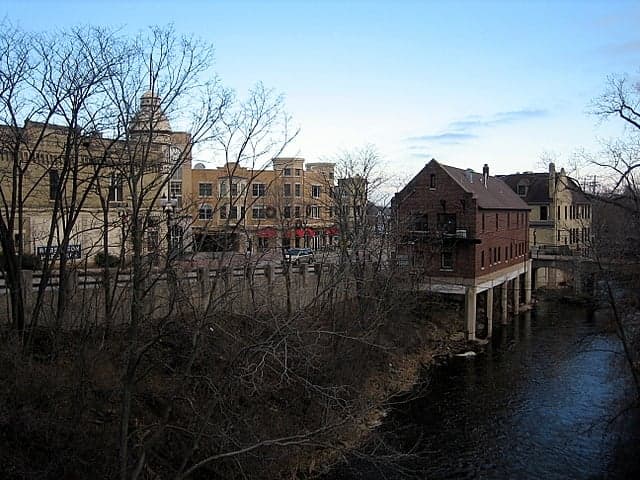
Photo: Wikipedia
Demographics of Wauwatosa, WI
Affluence Level in Wauwatosa, WI
A middle-class area roughly in line with national averages across income, home values, education, and employment.
People of Wauwatosa, WI
The people of Wauwatosa, Wisconsin, today form a densely settled, highly educated suburban community of 47,718, with a character shaped by deep European roots and a gradual, measured diversification. The city is notably homogeneous, with a 77.8% white population, a 61.5% college-educated rate, and a foreign-born share of just 2.5%—well below state and national averages. Its identity is that of a stable, family-oriented inner-ring suburb of Milwaukee, where historic village centers and early 20th-century streetcar suburbs still define daily life. For a conservative-leaning audience, Wauwatosa represents a place of established order, strong schools, and low crime, but one where demographic change is slow and incremental rather than rapid or disruptive.
How the city was settled and grew
Wauwatosa’s population history begins with the Potawatomi people, who ceded the land in the 1830s. Euro-American settlement followed quickly, driven by the area’s fertile soil and proximity to the Milwaukee River. The first permanent white settlers, primarily of Yankee and German stock, arrived in the 1840s, establishing farms and small mills. The village of Wauwatosa was formally incorporated in 1892, but its real growth came with the streetcar lines that connected it to Milwaukee after 1900. This transit link turned the village into a classic streetcar suburb, attracting a wave of German, Irish, and Polish immigrants and their descendants who worked in Milwaukee’s breweries, tanneries, and factories. These groups built the dense, walkable neighborhoods that still define the city: the East Tosa district, with its compact bungalows and duplexes near the Milwaukee border, and the Washington Highlands area, a planned 1916 development of larger homes for the professional class. By 1930, Wauwatosa’s population had surged past 20,000, overwhelmingly white and European-born or second-generation. The post-World War II era brought a second major wave: returning GIs and their families, many of Polish and German Catholic background, who filled the new single-family homes in the Honey Creek and Pistol Creek neighborhoods. These subdivisions, built on former farmland, cemented Wauwatosa’s reputation as a safe, middle-class family haven.
Modern era (post-1965)
The 1965 Hart-Celler Act and subsequent civil rights shifts had a muted effect on Wauwatosa compared to many U.S. cities. The city’s population peaked at 58,656 in 1970 and has since declined by nearly 19%, reflecting the broader trend of aging suburbs and smaller household sizes. The white share has dropped from over 98% in 1970 to 77.8% today, but this change has been gradual and driven more by domestic out-migration of younger white families to outer suburbs than by large-scale non-white in-migration. The Black population now stands at 6.9%, concentrated primarily in the North Wauwatosa neighborhoods near the Milwaukee border, particularly around North Avenue and 60th Street. This area, historically a transitional zone, has seen modest Black homeownership growth since the 1990s. The Hispanic population (5.2%) is more dispersed but has a visible presence in the Wauwatosa Heights area, where Mexican and Puerto Rican families have settled in older ranch homes. The East/Southeast Asian community (3.5%)—largely Chinese, Korean, and Vietnamese—is small but professional, with many households drawn by the city’s top-rated schools and proximity to the Medical College of Wisconsin. The Indian subcontinent population (1.2%) is similarly small and highly educated, often employed in healthcare and engineering. Notably, Wauwatosa has not experienced the rapid ethnic enclave formation seen in some Milwaukee suburbs; instead, these groups are thinly spread, assimilating into the existing fabric rather than creating distinct ethnic neighborhoods.
The future
Wauwatosa’s population is heading toward slow, continued diversification, but the pace will remain modest. The city’s foreign-born share of 2.5% is a fraction of the national average (13.7%), and there is no evidence of a surge in immigration. The white population will likely continue its gradual decline, falling toward 70-72% by 2040, as older white residents age in place and younger families of color move in. The Hispanic and Black shares are expected to grow slowly, perhaps reaching 7-8% and 8-9% respectively, driven by natural increase and modest in-migration from Milwaukee. The East/Southeast Asian and Indian populations will likely remain small but stable, sustained by the Medical College and local tech employers. The city is not tribalizing into distinct enclaves; rather, it is homogenizing into a slightly more diverse, still predominantly white, middle-to-upper-middle-class suburb. The biggest demographic challenge is not ethnic change but aging and shrinking: the median age is 40.5, and the under-18 population has declined. New apartment construction in the Village and Mayfair Mall areas is attracting some young professionals, but not enough to reverse the overall trend.
For someone moving in now, Wauwatosa is a stable, well-run community with excellent schools and low crime, but it is not a place of rapid demographic transformation. The population is becoming slightly more diverse, but the pace is slow enough that the city’s essential character—rooted in its European-American, Catholic, and professional-class heritage—will remain dominant for the foreseeable future. The bottom line: Wauwatosa is a mature, established suburb where change is measured in decades, not years, and where new residents will find a community that values order, education, and continuity.

* Values derived from national, state, county, city and local statistics and may differ in a specific area. Last updated: 2026-05-01T06:21:32.000Z
Narrative content on this page is AI-generated and may contain mistakes. Verify any details that matter before acting on them.
ReloMaps may earn a commission from affiliate links at no extra cost to you.

