 Popular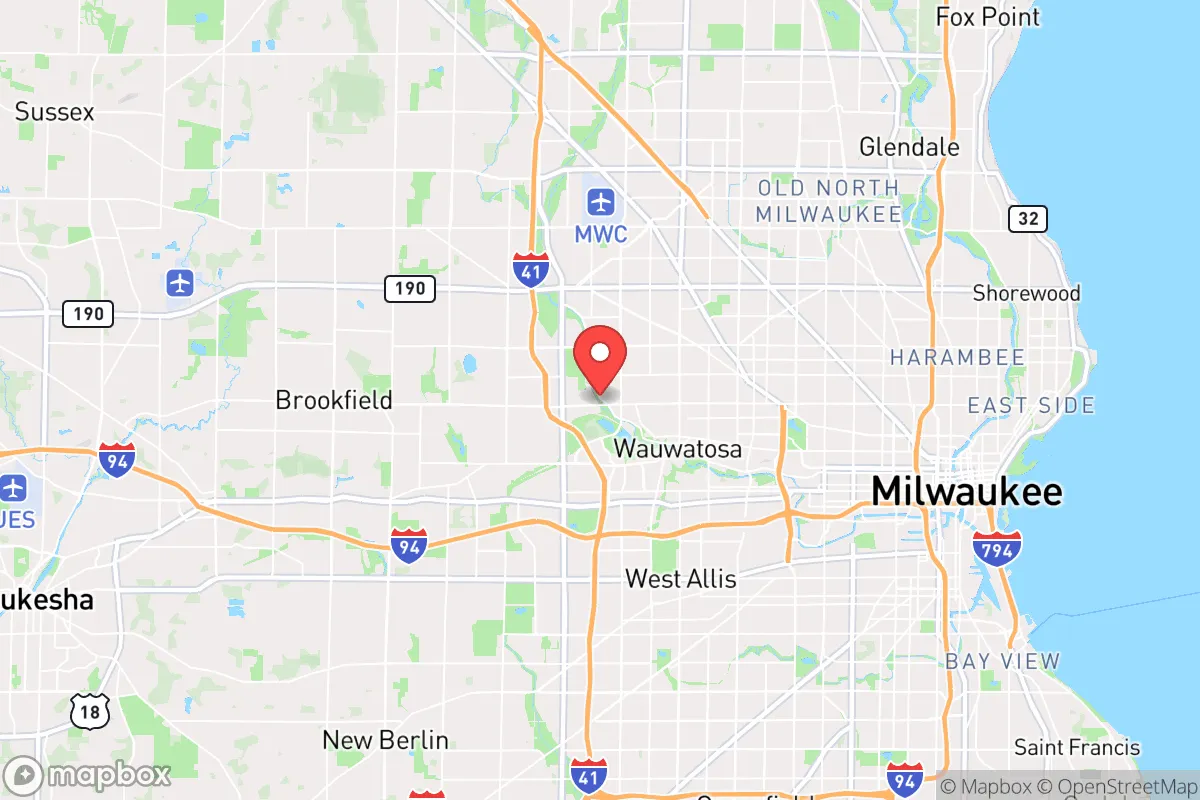
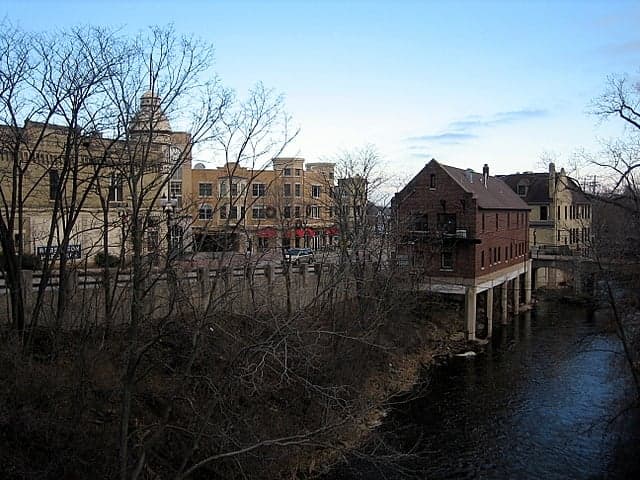
Photo: Wikipedia
Strategic Assessment of Wauwatosa, WI
Multiple tactical vulnerabilities. Population density, target proximity, or disaster risk are likely compounding. A retreat property and exit planning is required.
What does the Strategic Assessment tell us?
Our Strategic Assessment grades tactical survivability of an area. Major population centers, military targets, fallout zones, natural disasters, and border exposure all drive risk — lower exposure means a more defensible position in a crisis.
This is heavily inspired by Joel Skousen's Strategic Relocation book. Highly recommended you checkout the book ($)What does this tell us?
Our Strategic Assessment grades tactical survivability of an area. Major population centers, military targets, fallout zones, natural disasters, and border exposure all drive risk — lower exposure means a more defensible position in a crisis.
This is heavily inspired by Joel Skousen's Strategic Relocation book. Highly recommended you checkout the book ($)Strategic Pillars

Key Distances
Regional Safe Places
Below is our recommended "safe zones" in Wisconsin and the surrounding area based on our strategic heuristics. For most people, it's unrealistic to live in a “safe zone” full-time due to work, family or other personal reasons. They tend to be more rural. However, many of these areas are perfect for second homes and retreat properties that double as a vacation home or even a short-term rental.
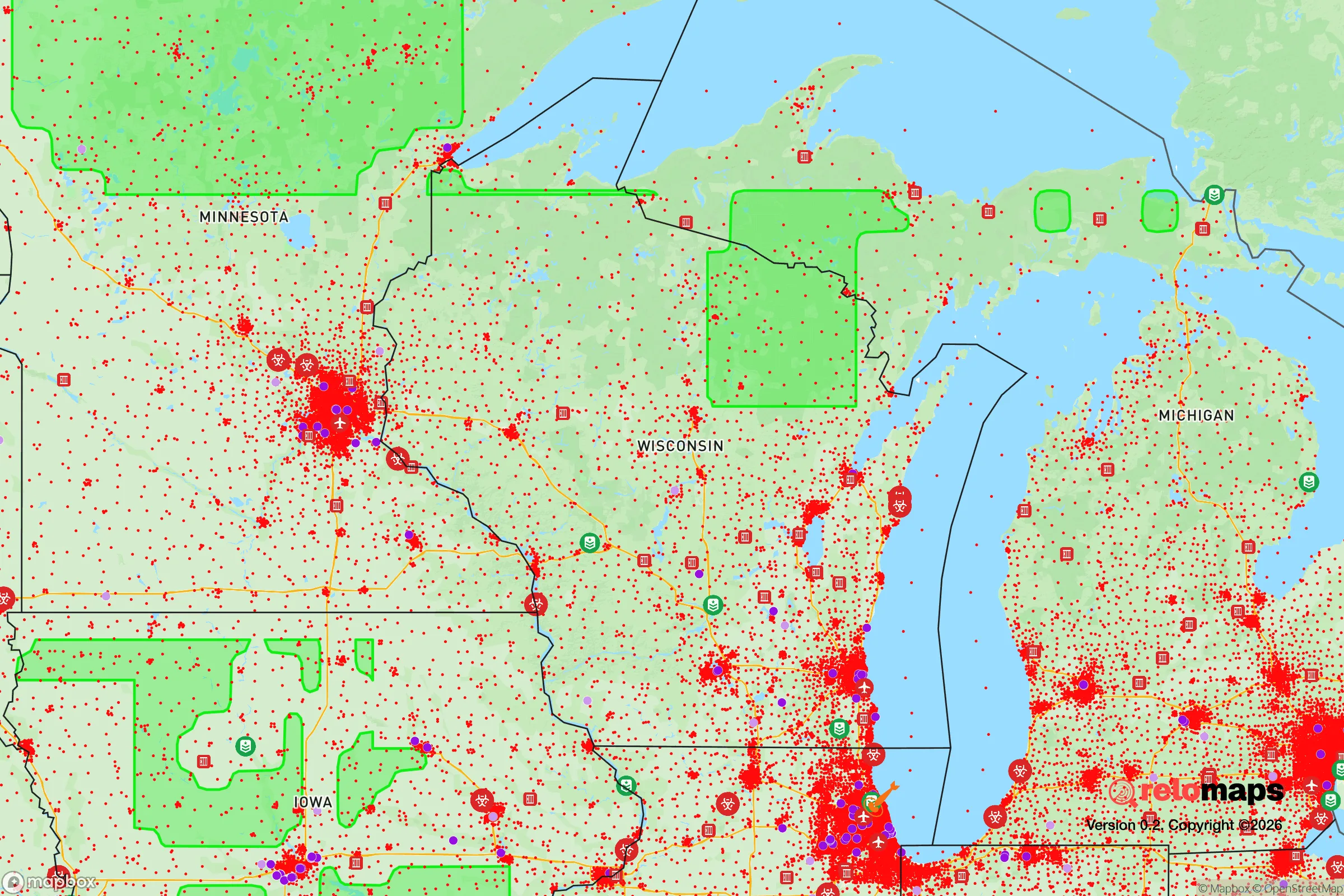
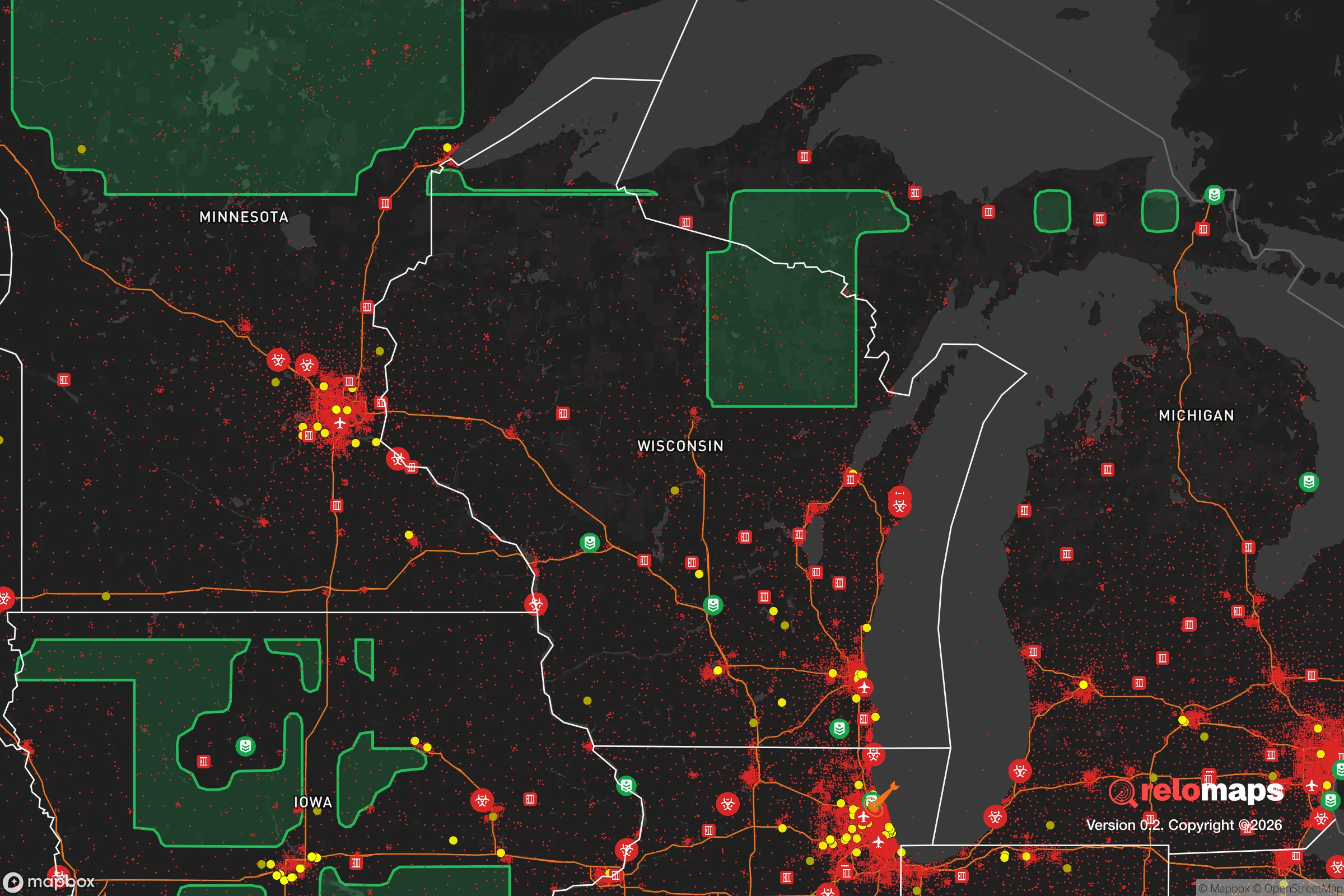


Important Note: For informational purposes only. This does not mean nothing bad ever happens in the green zones. Please use common sense. This is based on public data and modeled with AI. We tried to take a conservative approach but mistakes happen. We update this regularly as new information becomes available.
Solar Generator Recommendations
Backup power matters more here than in safer locations. We've picked three solar generators across budgets and capacity tiers — start with the budget unit if you only need a few essentials, or step up if you want to run a fridge and HVAC for days at a time.

Jackery Portable Power Station Explorer 300
Budget OptionPower on the Go: Weighing only 11 lbs, it's convenient to set up and store with book-sized foldable solar panels

BLUETTI Portable Power Station AC180
Designed for both indoor and outdoor scenarios, AC180 is highly capable as it has a robost capacity and continuous output power.

EF ECOFLOW DELTA Pro Ultra Power Station
Upgraded PickEcoFlow DELTA Pro Ultra is a whole-home energy system designed to grow with your family. Integrated with the Smart Home Panel 2, it scales to meet your evolving energy needs — keeping your home powered, intelligent, and secure through every stage of life.
We earn a commission, at no additional cost to you.
Strategic Assessment Analysis
Wauwatosa, Wisconsin, presents a mixed strategic picture for the conservative prepper or survivalist. Its location as a near-west suburb of Milwaukee offers some resilience advantages—namely, access to Lake Michigan’s freshwater and a robust local economy—but its proximity to a major urban center and key infrastructure targets introduces significant vulnerabilities. For a relocator prioritizing self-sufficiency and security in an era of potential civic unrest, mass casualty events, or natural disasters, Wauwatosa requires careful trade-off analysis. The area’s core strength is its position within a region that, while not remote, offers defensible corridors and resource buffers that many inner-ring suburbs lack.
Geographic position and natural advantages for long-term survival
Wauwatosa sits about 5 miles west of downtown Milwaukee, nestled along the Menomonee River Valley and within easy reach of Lake Michigan’s eastern shore. This dual water access is a critical asset: the lake provides an essentially unlimited freshwater source for filtration and transport, while the river system offers secondary catchment and potential for small-scale hydropower or irrigation. The area’s topography is gently rolling, with wooded ravines and bluffs along the river—terrain that can provide natural cover and defensible positions for a prepared household. The broader region is part of the Great Lakes Basin, which is less prone to drought than the western U.S. and has a temperate climate that supports four-season gardening and livestock. Wauwatosa’s tree canopy and park system (including the 190-acre Menomonee River Parkway) also offer foraging and timber resources, though these are public and would be contested in a collapse scenario. For a relocator, the key advantage is that Wauwatosa is not a floodplain or wildfire zone; the primary natural risks are lake-effect snowstorms and occasional tornadoes, both of which are manageable with proper infrastructure.
Risks, exposures, and proximity to fallout-relevant landmarks
The biggest strategic liability is Wauwatosa’s proximity to Milwaukee’s urban core and its associated fallout dangers. Milwaukee is a major Great Lakes port, a rail hub, and home to critical infrastructure like the Mitchell International Airport, the Port of Milwaukee, and several chemical storage facilities along the Kinnickinnic River. In a mass casualty event—whether from civil unrest, a terrorist attack, or a grid-down scenario—these targets would draw looting, fire, and potential secondary explosions. Wauwatosa itself hosts the Milwaukee County Grounds, which includes the Milwaukee Regional Medical Center (a Level I trauma center) and the Zablocki VA Medical Center. While these are assets for medical care, they also make the area a magnet for desperate populations fleeing the city. The interstate highways (I-94, I-41, and US-45) that ring Wauwatosa are evacuation corridors that could become chokepoints or ambush zones. Additionally, the Menomonee River Valley is a floodplain that could be contaminated by industrial runoff or sewage overflows during a disaster. For a prepper, the risk profile is moderate-high: you are close enough to Milwaukee to be affected by its collapse, but far enough to have a buffer if you secure a defensible property on the western edge of town, near the Wauwatosa/Waukesha county line.
Practical resilience for a relocator: food, water, energy, and defensibility
For a single individual or family looking to establish a resilient homestead, Wauwatosa offers a mixed bag. Water security is strong: Lake Michigan is a 10-minute drive east, and the city’s water supply comes from the lake via the Milwaukee Water Works, which has backup generators. However, a grid-down scenario would cut pumping, so a prepper should invest in a Berkey filter or similar system and store at least 55 gallons per person. Rainwater collection is legal in Wisconsin, but the city’s zoning may restrict large cisterns. Food production is feasible but limited by lot sizes. Many Wauwatosa homes sit on quarter-acre lots, which can support a substantial vegetable garden, a few fruit trees, and chickens (allowed with a permit). The city’s farmers’ markets and local food co-ops (like Outpost Natural Foods) provide supply-chain redundancy, but these would be unreliable in a crisis. Energy independence is a challenge: Wauwatosa is served by We Energies, which relies on natural gas and coal. Solar panels are permitted but face HOA restrictions in some neighborhoods; a backup generator with a buried propane tank is a more practical investment. Defensibility is the weakest link. The city is a dense suburb with grid-like streets, limited sightlines, and a high population density (about 13,000 people per square mile). A single-family home on a corner lot is vulnerable to approach from multiple directions. The best defensive properties are those on cul-de-sacs near the Menomonee River Parkway, where wooded ravines provide natural barriers. The local police department is well-funded and responsive, but in a widespread collapse, they would be overwhelmed. A prepper should prioritize a home with a basement (for shelter and storage), a fenced backyard, and a location that allows a quick retreat to more rural areas west of Waukesha County.
Overall, Wauwatosa is a moderate-risk, moderate-reward relocation option for the conservative survivalist. Its water access, medical infrastructure, and local food networks are genuine assets, but its urban proximity, population density, and target-rich environment demand a high level of preparation. For a single individual or family willing to invest in a fortified home, water storage, and a retreat plan, Wauwatosa can serve as a viable base—provided you accept that you are not bugging out to the wilderness, but rather fortifying a position within a potentially contested zone. The smartest play is to treat Wauwatosa as a staging area: secure a property on the western edge, build relationships with neighbors who share your mindset, and have a secondary bug-out location in the Driftless Region of southwestern Wisconsin. If you can manage those trade-offs, Wauwatosa offers a defensible, resource-rich foothold in a region that, for now, remains relatively stable.

* Values derived from national, state, county, city and local statistics and may differ in a specific area. Last updated: 2026-05-01T06:21:32.000Z
Narrative content on this page is AI-generated and may contain mistakes. Verify any details that matter before acting on them.
ReloMaps may earn a commission from affiliate links at no extra cost to you.

