 Popular
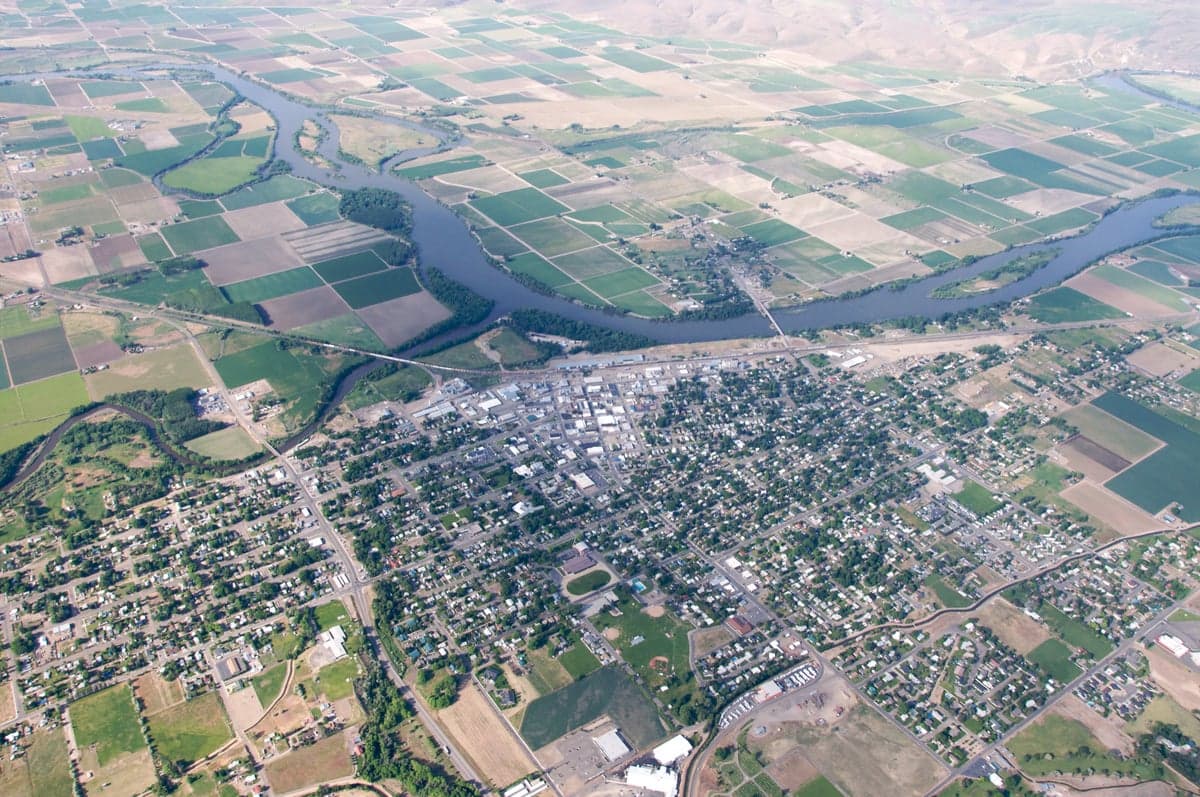
Photo: Wikipedia
Demographics of Weiser, ID
Affluence Level in Weiser, ID
A below-average socioeconomic profile. Incomes, home values, and educational attainment trail the U.S., with higher poverty and unemployment.
People of Weiser, ID
The people of Weiser, Idaho, today number 5,803, forming a small, tight-knit community with a distinct Western character. The city is notably diverse for its size, with a population that is 68.2% White and a substantial 25.8% Hispanic, while the foreign-born share stands at 6.4%. This demographic profile, combined with a low college attainment rate of 14.4%, reflects a working-class heritage deeply tied to agriculture and seasonal labor, creating a community that values practicality and local tradition over rapid change.
How the city was settled and grew
Weiser’s human history begins with the Northern Shoshone and Bannock tribes, who used the confluence of the Weiser and Snake Rivers as a seasonal fishing and trading ground. Permanent non-Native settlement began in the 1860s, driven by the discovery of gold in the nearby Idaho and Oregon mountains. The original settlers were predominantly Anglo-American prospectors and farmers, who established the town’s core around what is now Downtown Weiser, along State Street. The arrival of the Oregon Short Line Railroad in the 1880s transformed Weiser into a regional shipping hub for fruit, grain, and livestock. This era drew a wave of European immigrants, particularly German and Scandinavian families, who settled in the East Weiser neighborhood, building modest homes near the rail yards and packing sheds. By the early 1900s, the city’s population was overwhelmingly White, with a small Chinese community that had worked on the railroad but largely dispersed by the 1920s.
Modern era (post-1965)
The most significant demographic shift in Weiser began after the 1965 Immigration and Nationality Act, but its effects were felt gradually. The city’s agricultural economy—especially its orchards, onion fields, and sugar beet operations—created a steady demand for seasonal labor. Mexican and Mexican-American migrant workers began settling year-round in the 1970s and 1980s, forming the foundation of today’s Hispanic community. These families concentrated in the South Weiser area, south of the railroad tracks, and in the Westside neighborhood near the fairgrounds, where older, more affordable housing stock was available. Unlike many larger Idaho cities, Weiser did not experience a major suburbanization wave; its population has remained relatively stable, hovering between 5,000 and 6,000 since 1990. The Hispanic share has grown steadily from roughly 10% in 1990 to 25.8% today, while the White share has declined proportionally. The Black (0.1%) and East/Southeast Asian (0.3%) populations remain negligible, and there is no recorded Indian subcontinent population. This modern era has seen the city become more binational in character, with Spanish increasingly heard in public spaces and local businesses adapting to serve a bilingual clientele.
The future
Looking ahead, Weiser’s population is likely to continue its gradual diversification, though at a slower pace than in Idaho’s faster-growing cities like Boise or Caldwell. The Hispanic community is not tribalizing into a separate enclave; rather, it is integrating into the city’s existing neighborhoods, with second- and third-generation families moving into areas like North Weiser and the Hillcrest Addition, which were historically White. The foreign-born share (6.4%) suggests that immigration is plateauing, with most Hispanic growth now coming from natural increase rather than new arrivals. The White population, while still the majority, is aging, and the low college attainment rate (14.4%) means that outmigration of young adults for education and white-collar jobs is a persistent drain. The city’s future is likely to be more Hispanic, more working-class, and more rooted in agriculture and light manufacturing, with little change in the tiny Black and Asian populations. No major new immigrant group is on the horizon, and the city’s remote location in western Idaho limits its appeal to newcomers seeking urban amenities.
For someone moving in now, Weiser is becoming a stable, binational working-class town where the old Anglo-Protestant and newer Mexican-American cultures are slowly blending. The city is not homogenizing into a generic suburb, nor is it fragmenting into hostile enclaves; instead, it is evolving into a place where shared economic realities—farming, seasonal work, and a low cost of living—create a common ground. The practical implication is that newcomers, whether conservative or liberal, will find a community that prizes neighborliness and self-reliance over political posturing, but one where the demographic future is clearly trending Hispanic and where Spanish-language fluency is an increasing asset in daily life.

* Values derived from national, state, county, city and local statistics and may differ in a specific area. Last updated: 2026-05-03T20:23:15.000Z
Narrative content on this page is AI-generated and may contain mistakes. Verify any details that matter before acting on them.
ReloMaps may earn a commission from affiliate links at no extra cost to you.

