Photo: Wikipedia
Demographics of Wells, NV
Affluence Level in Wells, NV
A middle-class area roughly in line with national averages across income, home values, education, and employment.
People of Wells, NV
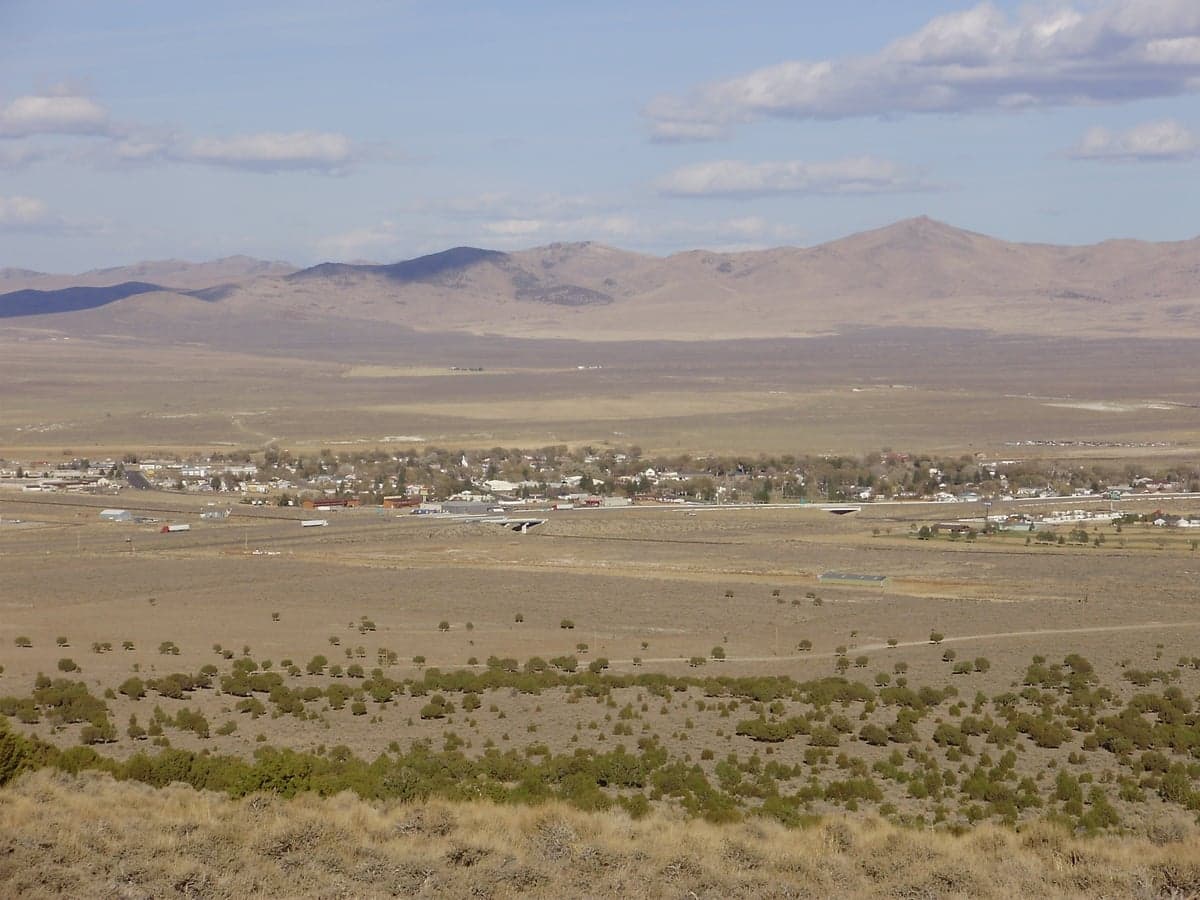
The people of Wells, Nevada, today form a small, tight-knit community of roughly 1,184 residents, characterized by a distinctive blend of a white plurality and a substantial Hispanic minority. With a foreign-born population of just 1.3%, this is a deeply rooted, native-born population where family ties and local history run deep. The city’s identity is shaped by its railroad and ranching heritage, a low college attainment rate of 10.4%, and a practical, self-reliant culture typical of rural Nevada. This is a place where neighbors know each other, and newcomers are measured by their willingness to contribute, not by their credentials.
How the city was settled and grew
Wells was born from the railroad. Founded in 1869 as a water and coaling station for the Central Pacific Railroad, the town’s original population was a mix of Irish and Chinese laborers who built the tracks. The Irish workers, many of whom stayed after the railroad’s completion, settled in what is now the Old Town district along the original rail corridor, establishing the town’s first saloons, boarding houses, and small businesses. The Chinese workers, who built and maintained the line, formed a small but vital community near the depot, though their presence faded by the early 1900s as anti-Chinese sentiment and economic shifts drove them out. A second wave arrived with the completion of the Western Pacific Railroad in the early 1900s, bringing more European immigrants—primarily Italian and Slavic families—who built homes in the West Side neighborhood, near the newer rail yards. Ranching families, drawn by the open range and the 1862 Homestead Act, settled the surrounding valleys and established the East Bench area, a cluster of homesteads on the higher ground east of town. By 1950, Wells was a classic railroad and ranching hub, with a population of roughly 800, overwhelmingly white and native-born.
Modern era (post-1965)
The post-1965 era brought significant demographic change, driven not by international immigration but by domestic migration tied to the region’s extractive industries. The 1970s mining boom in nearby Elko County drew a wave of workers from the American Southwest, including many Hispanic families from New Mexico and Colorado who had deep roots in the region’s ranching and mining traditions. These families settled primarily in the South Wells neighborhood, a newer subdivision built in the 1970s and 1980s along the highway corridor, where affordable housing and proximity to the interstate made it a natural landing point. Today, the Hispanic share of the population stands at 29.7%, concentrated in South Wells and the Mountain View Trailer Park, a mobile home community that became a hub for working-class families in the 1990s. The white population, now 50.5%, remains dominant in Old Town and the East Bench, where multi-generational ranching families still own the original homesteads. The Black population (3.4%) is a small but stable presence, largely tied to the railroad and highway construction trades, with families scattered across the city rather than concentrated in a single neighborhood. The Asian and Indian populations are effectively zero, reflecting Wells’ isolation from the urban immigration gateways that have transformed other parts of Nevada.
The future
Wells’ population is aging and slowly shrinking, with the 2020 census showing a decline from 1,292 in 2010 to 1,184. The city is not homogenizing into a single identity; rather, it is tribalizing into distinct enclaves. The white ranching and railroad families in Old Town and the East Bench are aging in place, with younger generations leaving for larger cities. The Hispanic community in South Wells and Mountain View is younger and growing through natural increase, but this growth is offset by out-migration of white families. The foreign-born population remains negligible at 1.3%, meaning the Hispanic growth is almost entirely from U.S.-born families, not new immigration. Over the next 10-20 years, Wells will likely become a majority-Hispanic town, but one where the Hispanic population itself is deeply Americanized—English-dominant, native-born, and culturally conservative. The city’s low college attainment rate (10.4%) and reliance on mining, ranching, and highway services suggest it will remain a working-class community, not a destination for remote workers or retirees.
For someone moving in now, Wells is a place where the past is still present. The railroad and ranching culture that built the town is fading, but the values of self-reliance, neighborliness, and hard work remain. The demographic shift is real, but it is a shift within a shared rural culture, not a clash of worldviews. Newcomers who respect that culture and contribute to the community will find a welcoming, if reserved, reception.

* Values derived from national, state, county, city and local statistics and may differ in a specific area. Last updated: 2026-04-30T05:57:21.000Z
Narrative content on this page is AI-generated and may contain mistakes. Verify any details that matter before acting on them.
ReloMaps may earn a commission from affiliate links at no extra cost to you.

