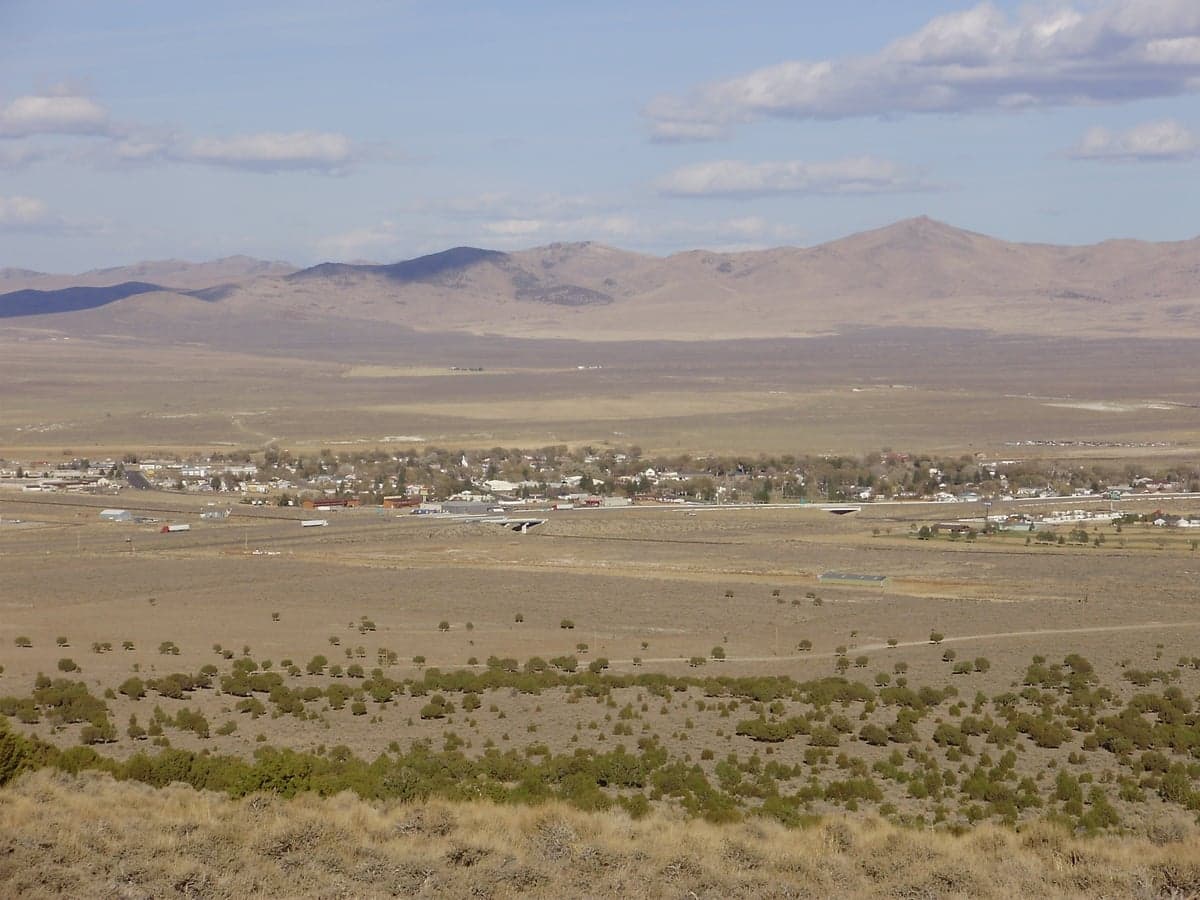
Photo: Wikipedia
Political ClimatePolitical Climate in Wells, NV
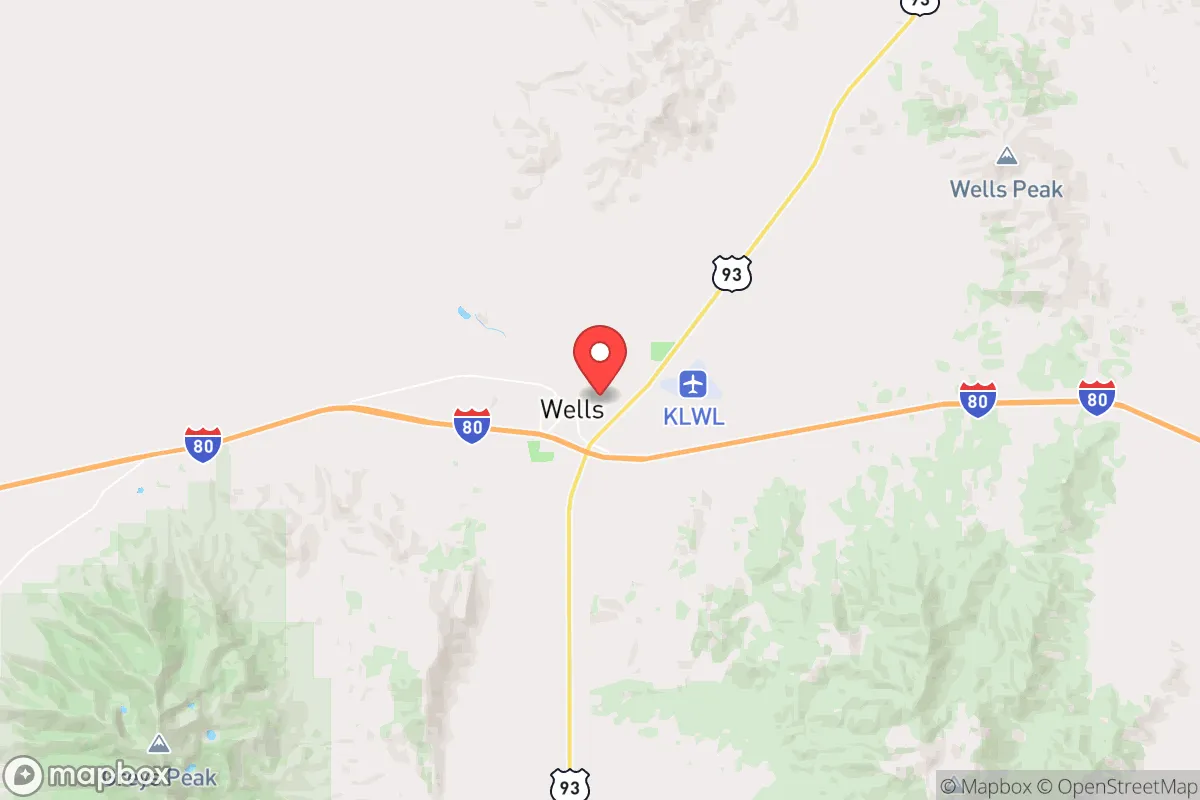
District shown is the primary district for this city’s centroid. Cities may span multiple districts.
Local Political AnalysisPolitical Analysis of Wells, NV
Wells, Nevada, leans solidly conservative, with a Cook PVI of R+7 that reflects a deep-rooted preference for limited government and personal responsibility. This isn't a place that swings with national trends; it’s a community where folks have long valued self-reliance, and the voting patterns show it. Over the last decade, the political climate has remained steady, though you can feel a growing unease as outside influences—especially from the more progressive corners of the state like Reno or Las Vegas—try to push their way into local affairs. The trajectory here is one of cautious resistance, with most residents doubling down on traditional values rather than drifting toward the left.
How it compares
Compared to Elko, about 50 miles west, Wells is noticeably more conservative. Elko has its share of mining and ranching families, but it’s also seen a bit more turnover with new folks moving in from out of state, which has nudged it slightly toward the center. Wells, by contrast, feels like a time capsule of old-school Nevada politics—fewer transplants, less chatter about progressive ideas. Head east toward Wendover, and you’ll find a similar vibe, though the casino economy there brings a different set of priorities. The real contrast is with places like Reno or Las Vegas, where the political machine runs on government spending and social experiments. Here in Wells, the talk is about keeping taxes low, protecting gun rights, and making sure the federal government stays out of our water and land decisions. That R+7 rating isn’t just a number; it’s a reflection of a community that votes its conscience, not its wallet.
What this means for residents
For someone living in Wells, the political climate means a daily life that’s largely free from the kind of government overreach you see in bigger cities. You won’t find strict mask mandates or heavy-handed business regulations here—folks tend to sort out their own problems without asking for permission. That said, there’s a growing concern about state-level policies coming out of Carson City, where the legislature has been flirting with more progressive ideas like expanded gun control and higher taxes. Locals keep a close eye on these moves, because once the state starts meddling, it’s a slippery slope. The upside is that community bonds are strong; neighbors look out for each other, and there’s a shared understanding that personal freedoms come with personal accountability. If you value a place where your voice actually matters in local elections, and where the county commission isn’t afraid to tell the state to back off, Wells fits the bill.
Culturally, Wells stands apart with a no-nonsense attitude that’s rare these days. The annual Basque festival and the local rodeo aren’t just events—they’re statements of identity. There’s a quiet pride in being a small town that doesn’t need to change for anyone. The biggest policy distinction is the fierce opposition to any federal land grabs or environmental restrictions that would limit ranching or mining. People here remember when the government tried to lock up public lands, and they fought back hard. Looking ahead, the long-term concern is that as Nevada’s population grows, the political weight will shift further south, leaving rural areas like Wells with less say. But for now, the community holds firm, and anyone moving here should expect a place where conservative values aren’t just tolerated—they’re the norm.

State Political ClimatePolitical Climate in Nevada
State Political AnalysisPolitical Environment in the State
Nevada is a classic swing state with a libertarian streak, but over the last 20 years it has shifted from a reliably red-leaning battleground to a light blue state, largely driven by the explosive growth of Clark County (Las Vegas) and the influx of out-of-state transplants. In 2024, Nevada voted for Kamala Harris by roughly 2.5 points, a far cry from the days when George W. Bush carried it twice. The state’s political soul is a tug-of-war between the heavily unionized, service-economy-dominated Las Vegas metro and the deeply conservative, rural “cow counties” like Elko, Nye, and White Pine, with Washoe County (Reno) acting as the perennial swing region. For a conservative looking to relocate, the picture is mixed: the state’s low taxes and minimal regulation are appealing, but the cultural and electoral influence of Clark County is growing, and the state legislature has been pushing a progressive agenda on social issues.
Urban vs. rural divide
The political map of Nevada is starkly divided. Clark County, home to nearly three-quarters of the state’s population, is the Democratic powerhouse. Las Vegas, North Las Vegas, and Henderson reliably deliver huge margins for Democrats, fueled by a coalition of casino and hospitality union workers (Culinary Union Local 226), a large Latino population, and a growing number of out-of-state transplants from California and the Northeast. In 2024, Clark County gave Harris a margin of over 100,000 votes, effectively deciding the state. In contrast, the rest of Nevada is deeply red. Elko County, in the northeastern corner, voted over 75% for Trump, and rural counties like Nye (Pahrump), Lander, and Eureka routinely deliver 70-80% Republican margins. Washoe County (Reno) is the bellwether: it has been trending left in recent cycles, voting for Biden in 2020 and Harris in 2024, but its margins are much closer than Clark’s. Suburbs like Summerlin (in Clark County) and Spanish Springs (in Washoe) are more conservative-leaning, but they are being diluted by the overall urban growth. The rural-urban divide here is as sharp as anywhere in the West, and a new resident moving to a place like Mesquite or Boulder City will experience a very different political reality than someone settling in downtown Las Vegas.
Policy environment
Nevada’s policy environment is a study in contrasts. On the plus side for conservatives, the state has no personal income tax, no corporate income tax, and relatively low property taxes thanks to a 2005 law capping annual increases at 3% for owner-occupied homes. The regulatory climate for business is generally light, especially for the mining and gaming industries. However, the state legislature, controlled by Democrats for most of the last decade, has enacted several policies that raise red flags. In 2023, the legislature passed a “red flag” gun law (SB 143), allowing courts to temporarily confiscate firearms from individuals deemed a threat, which many conservatives view as a violation of due process and the Second Amendment. The state also has a “sanctuary” policy for illegal immigrants, with a 2019 law (AB 392) prohibiting state and local law enforcement from cooperating with federal immigration authorities in most circumstances. On education, Nevada has a school choice program (the Education Savings Account program), but it has been underfunded and heavily litigated, and the state’s public schools consistently rank near the bottom nationally. Election laws have been loosened significantly: Nevada now has automatic voter registration, same-day registration, and universal mail-in ballots for all active voters, a system that was made permanent in 2021 (AB 321). For a conservative, the policy environment is a mixed bag: low taxes and light regulation are attractive, but the social and election policies are trending in a concerning direction.
Trajectory & freedom
Nevada’s trajectory on personal freedom is a tale of two trends. On economic freedom, the state remains a beacon: no income tax, right-to-work laws (though weakened by a 2019 law that allowed unions to collect fees from non-members for non-political activities), and a general hands-off approach to business. But on social and civil liberties, the state has been moving decisively left. The 2023 legislative session was a watershed for progressive priorities: the “red flag” gun law (SB 143) was passed, along with a law (AB 116) that expanded protections for gender identity and sexual orientation in housing and employment, effectively codifying a “bathroom bill” that allows individuals to use facilities matching their gender identity. Parental rights took a hit with the passage of AB 195, which prohibits schools from requiring parental notification if a student changes their name or pronouns. Medical freedom also suffered: Nevada was one of the first states to mandate COVID-19 vaccines for state workers and certain private employees, and while those mandates have been lifted, the precedent remains. On the plus side, the state has not imposed a statewide mask or vaccine mandate since 2021, and the legislature has resisted calls for a state-level “assault weapons” ban. The net effect is that Nevada is becoming less free for conservatives who value gun rights, parental authority, and medical autonomy, even as it remains economically free. A long-time resident would tell you that the state’s libertarian spirit is being eroded by the same urban progressivism that has transformed California.
Civil unrest & political movements
Nevada has seen its share of political flashpoints. The 2020 election was a major battleground, with allegations of irregularities in Clark County’s mail-in ballot processing leading to a contentious recount and a failed lawsuit. The “Stop the Steal” movement had a strong presence in rural counties, with rallies in Elko and Pahrump. On the left, the 2020 George Floyd protests in Las Vegas turned violent, with looting and clashes with police, and the city’s “Autonomous Zone” attempt was quickly shut down. The Culinary Union, a powerful political force, has been a key organizer for Democratic turnout, but it has also clashed with the party over issues like the “sanctuary” policy, which some members fear hurts job prospects. Immigration politics are a constant flashpoint: the state’s “sanctuary” law (AB 392) has led to tensions between local law enforcement and federal ICE agents, and the issue is a major talking point in rural areas where residents feel the federal government is ignoring the rule of law. More recently, the 2023 legislative session saw massive protests from gun rights advocates against the red flag law, and from parental rights groups against the school notification bill. A new resident moving to a place like Reno or Las Vegas will see political signs and bumper stickers reflecting these divides, but the actual civil unrest is sporadic and localized. The most visible political movement is the ongoing battle over election integrity, with Republican activists in Nye and Washoe counties pushing for hand-count audits and stricter voter ID laws.
Projection
Over the next 5-10 years, Nevada is likely to continue its slow drift leftward, driven by demographic trends. The state is growing, but the growth is overwhelmingly in Clark County, which is becoming more diverse and more Democratic. The Latino population, which now makes up nearly 30% of the state, is not monolithic, but it has been trending Democratic in recent cycles. The in-migration from California, while slowing, still brings a significant number of voters accustomed to progressive governance. However, there are countervailing forces: the rural counties are growing too, albeit slowly, and they are becoming more politically active and organized. The state’s libertarian streak, particularly on taxes and business regulation, may act as a brake on the most extreme progressive policies. But the trend lines are clear: the state legislature is likely to remain under Democratic control, and the governorship, currently held by Republican Joe Lombardo, is a toss-up in 2026. A conservative moving to Nevada now should expect to see continued expansion of mail-in voting, further gun control measures, and more protections for LGBTQ+ rights, even as the state remains a low-tax haven. The key battleground will be the state legislature, where a few seats in Washoe County and the Las Vegas suburbs could determine whether the state remains a purple swing state or becomes a solid blue state.
For a new resident, the bottom line is this: Nevada offers genuine economic freedom and a low-tax lifestyle that is hard to beat, but you will be living in a state where the cultural and political winds are blowing left. If you are moving to a rural area like Elko, Pahrump, or Mesquite, you will find a community that shares your values and votes accordingly. If you are moving to Las Vegas or Reno, you will be in a blue-leaning environment where your vote matters but your voice may be drowned out by the urban majority. The state’s trajectory is concerning for conservatives, but it is not yet a lost cause. The best advice from a long-time resident: get involved in local politics, join a gun rights or parental rights group, and be prepared to fight for the state’s libertarian soul before it is completely Californicated.
* Values derived from national, state, county, city and local statistics and may differ in a specific area. Last updated: 2026-04-30T05:57:21.000Z
Narrative content on this page is AI-generated and may contain mistakes. Verify any details that matter before acting on them.
ReloMaps may earn a commission from affiliate links at no extra cost to you.

