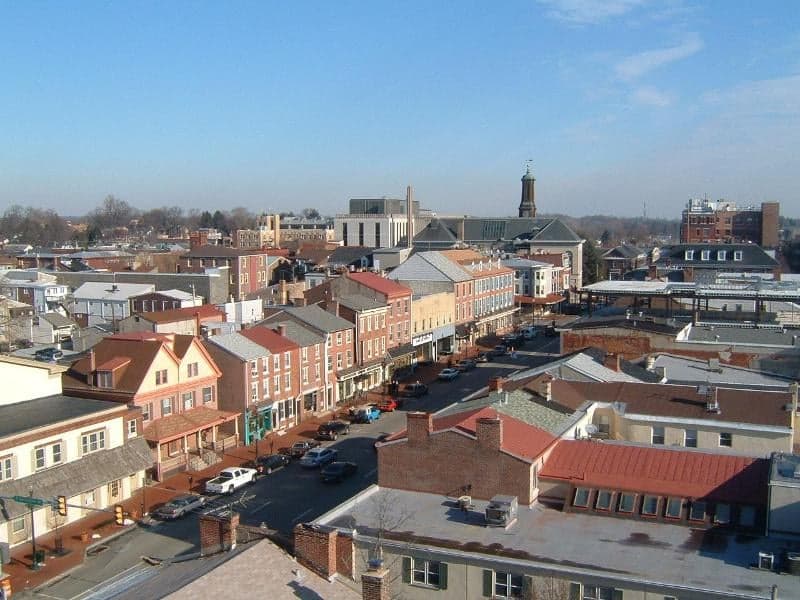
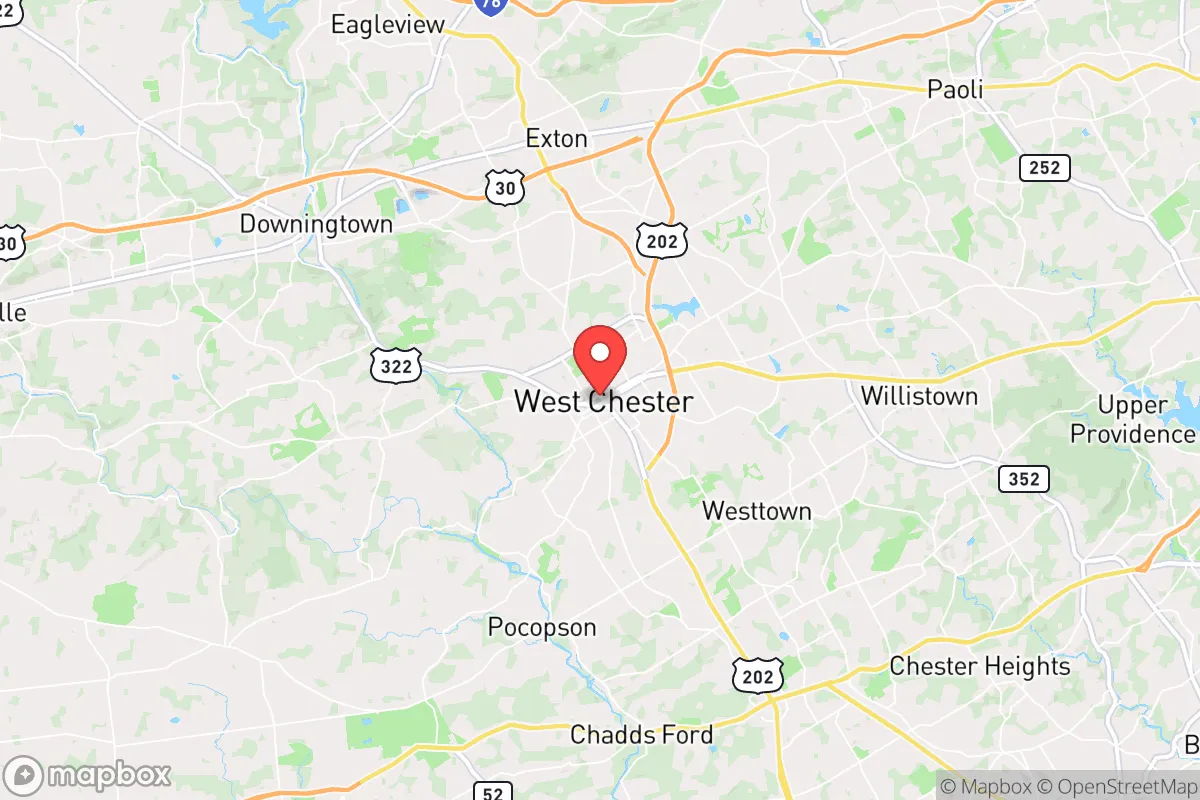
Photo: Wikipedia
Strategic Assessment of West Chester, PA
Multiple tactical vulnerabilities. Population density, target proximity, or disaster risk are likely compounding. A retreat property and exit planning is required.
What does the Strategic Assessment tell us?
Our Strategic Assessment grades tactical survivability of an area. Major population centers, military targets, fallout zones, natural disasters, and border exposure all drive risk — lower exposure means a more defensible position in a crisis.
This is heavily inspired by Joel Skousen's Strategic Relocation book. Highly recommended you checkout the book ($)What does this tell us?
Our Strategic Assessment grades tactical survivability of an area. Major population centers, military targets, fallout zones, natural disasters, and border exposure all drive risk — lower exposure means a more defensible position in a crisis.
This is heavily inspired by Joel Skousen's Strategic Relocation book. Highly recommended you checkout the book ($)Strategic Pillars

Key Distances
Regional Safe Places
Below is our recommended "safe zones" in Pennsylvania and the surrounding area based on our strategic heuristics. For most people, it's unrealistic to live in a “safe zone” full-time due to work, family or other personal reasons. They tend to be more rural. However, many of these areas are perfect for second homes and retreat properties that double as a vacation home or even a short-term rental.
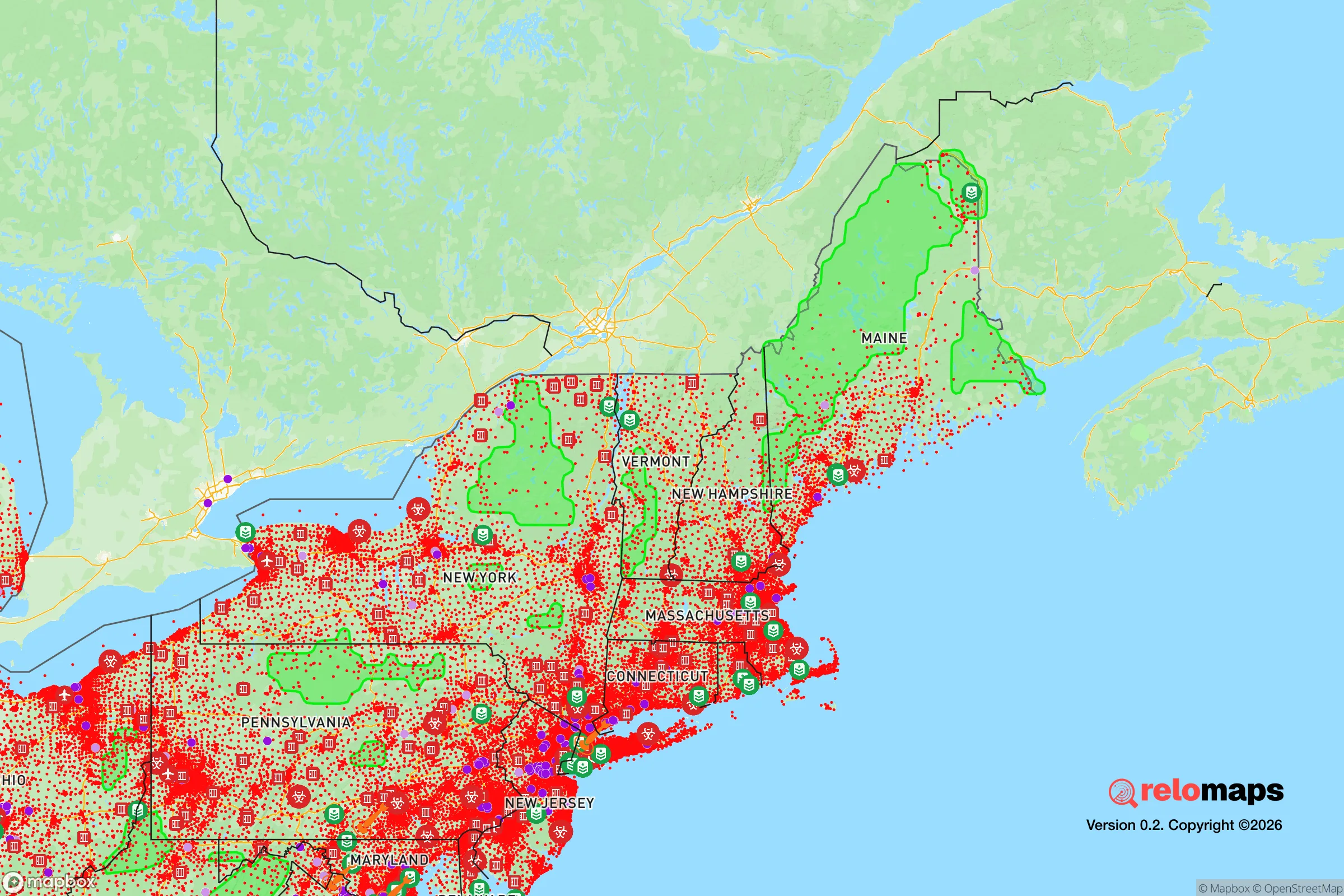
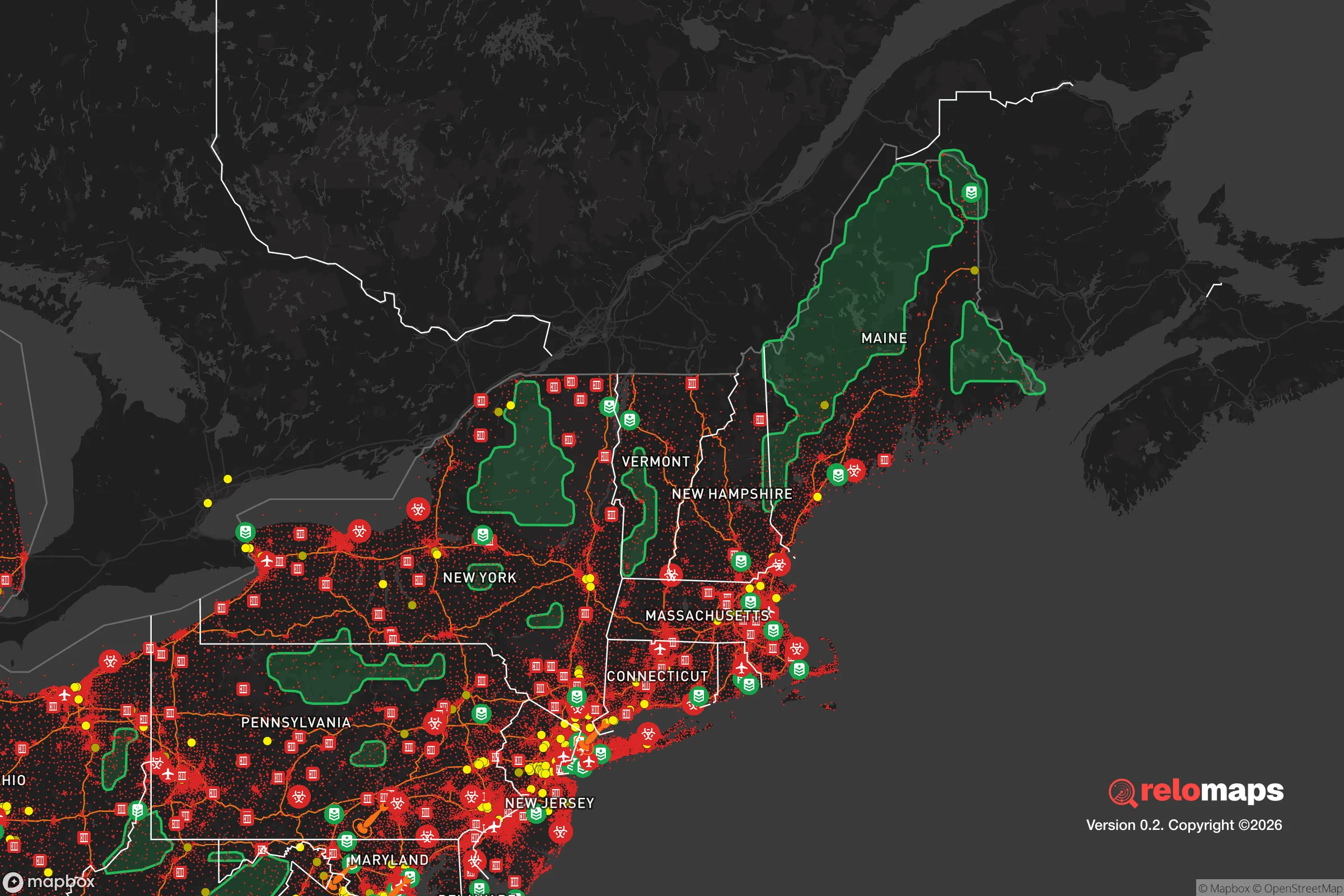


Important Note: For informational purposes only. This does not mean nothing bad ever happens in the green zones. Please use common sense. This is based on public data and modeled with AI. We tried to take a conservative approach but mistakes happen. We update this regularly as new information becomes available.
Solar Generator Recommendations
Backup power matters more here than in safer locations. We've picked three solar generators across budgets and capacity tiers — start with the budget unit if you only need a few essentials, or step up if you want to run a fridge and HVAC for days at a time.

Jackery Portable Power Station Explorer 300
Budget OptionPower on the Go: Weighing only 11 lbs, it's convenient to set up and store with book-sized foldable solar panels

BLUETTI Portable Power Station AC180
Designed for both indoor and outdoor scenarios, AC180 is highly capable as it has a robost capacity and continuous output power.

EF ECOFLOW DELTA Pro Ultra Power Station
Upgraded PickEcoFlow DELTA Pro Ultra is a whole-home energy system designed to grow with your family. Integrated with the Smart Home Panel 2, it scales to meet your evolving energy needs — keeping your home powered, intelligent, and secure through every stage of life.
We earn a commission, at no additional cost to you.
Strategic Assessment Analysis
West Chester, Pennsylvania, presents a mixed strategic picture for the conservative prepper or survivalist. Its location in the affluent, suburban heart of Chester County offers genuine advantages in terms of local governance and community stability, but its proximity to the Philadelphia metroplex and major East Coast infrastructure introduces significant vulnerabilities. For a relocator prioritizing resilience against civic unrest, mass casualty events, and large-scale disasters, West Chester is best understood as a location with strong local buffers but serious regional exposure—a place where preparation is not optional, but mandatory.
Geographic position and natural advantages for long-term stability
West Chester sits in a sweet spot of the Mid-Atlantic that many overlook. It is roughly 30 miles west of Philadelphia, placing it outside the immediate blast radius of any urban-targeted event, yet close enough to monitor and react to regional developments. The area is part of the Piedmont Plateau, characterized by rolling hills, decent soil, and a temperate climate with four distinct seasons. This is not a floodplain; the Brandywine Creek and its tributaries provide water sources without the catastrophic flood risk of coastal or river-delta zones. The local topography offers natural defensibility—the hills and winding roads of Chester County create chokepoints and observation positions that a flat, open landscape would not. For a relocator, the key natural advantage is the region's agricultural capacity. Chester County still has working farms, and the soil is productive. In a long-term grid-down scenario, this area could support local food production better than most suburban counties on the Eastern Seaboard. The climate is forgiving enough for year-round gardening with simple season extension techniques, and the local water table is generally accessible via wells, though drilling depths vary.
Risks, exposures, and proximity to fallout-relevant landmarks
The single greatest strategic liability for West Chester is its proximity to Philadelphia and the I-95 corridor. In a mass casualty event, civil unrest, or a major terrorist strike targeting the Northeast, West Chester sits squarely in the potential fallout zone—both literal and figurative. Philadelphia is a Tier 1 target for any adversary, and the city's population density and history of civil unrest mean that a collapse there would send waves of refugees westward along Routes 30, 202, and the Pennsylvania Turnpike. West Chester's downtown, while charming, is a natural funnel point for displaced populations. Additionally, the area is within 50 miles of the Limerick Generating Station (nuclear power plant) and within 100 miles of Peach Bottom and Three Mile Island. A nuclear incident at any of these facilities would place West Chester in a downwind risk zone depending on weather patterns. The area also sits near major rail lines carrying hazardous materials, including crude oil and chemicals, through Chester County. For the prepper, the proximity to these risks is not a dealbreaker, but it demands a layered defense-in-depth plan: a well-stocked bug-out location further west (toward the Appalachians) is not a luxury but a necessity. The local government in Chester County is generally competent and conservative-leaning, which can be a double-edged sword—it may mean better initial response, but also more scrutiny on private preparations.
Practical resilience for a relocator: food, water, energy, and defensibility
For a relocator serious about self-sufficiency, West Chester offers a workable baseline but requires deliberate investment. Water is the first concern. Municipal water comes from the Brandywine and is treated, but in a prolonged grid failure, that system will fail. Homes with private wells are the gold standard here, and properties on the outskirts of the borough or in surrounding townships like East Bradford or West Goshen should be prioritized. Drilling a new well is expensive ($5,000–$15,000) but doable. Food is more promising. The West Chester Growers Market and local CSAs are not just lifestyle amenities—they represent a local food network that could be leveraged in a crisis. The Amish and Mennonite communities in neighboring Lancaster County are a strategic asset; they operate outside the industrial food system and have maintained traditional skills. Building relationships with these communities before a crisis is a high-value move. Energy is a weak point. The grid in Chester County is above-ground and vulnerable to storms, ice, and sabotage. Solar with battery backup is feasible, but the tree canopy in many neighborhoods limits production. A generator and a supply of propane or diesel are the minimum. Defensibility is mixed. The borough itself is dense and walkable, which is good for community cohesion but bad for perimeter security. The surrounding townships offer more rural parcels with setback, tree lines, and natural barriers. A property with a long driveway, a creek on one side, and a hill behind is the ideal. The local gun culture is present but not overt; Chester County is not open-carry territory, but concealed carry permits are routinely issued to law-abiding residents. The sheriff's office is professional and generally supportive of Second Amendment rights.
The overall strategic picture for West Chester is one of calculated risk. It is not a survivalist paradise—it is too close to too many people and too many targets. But for the relocator who wants to maintain a professional career or family ties in the Philadelphia region while building a resilient base, it is one of the better options in the Mid-Atlantic. The key is to treat West Chester as a forward operating base, not a final redoubt. Your primary residence should be hardened, stocked, and part of a local network of like-minded individuals. Your secondary plan—a bug-out location in the Pennsylvania Wilds or West Virginia—should be ready to go at a moment's notice. The area's strengths are its local governance, agricultural potential, and community stability. Its weaknesses are its proximity to urban chaos and critical infrastructure. If you understand that and prepare accordingly, West Chester can serve as a viable home base in an increasingly uncertain world. If you ignore those risks, you are just another suburbanite hoping the storm passes. And in the current climate, hoping is not a strategy.

* Values derived from national, state, county, city and local statistics and may differ in a specific area. Last updated: 2026-04-24T15:46:51.000Z
Narrative content on this page is AI-generated and may contain mistakes. Verify any details that matter before acting on them.
ReloMaps may earn a commission from affiliate links at no extra cost to you.

