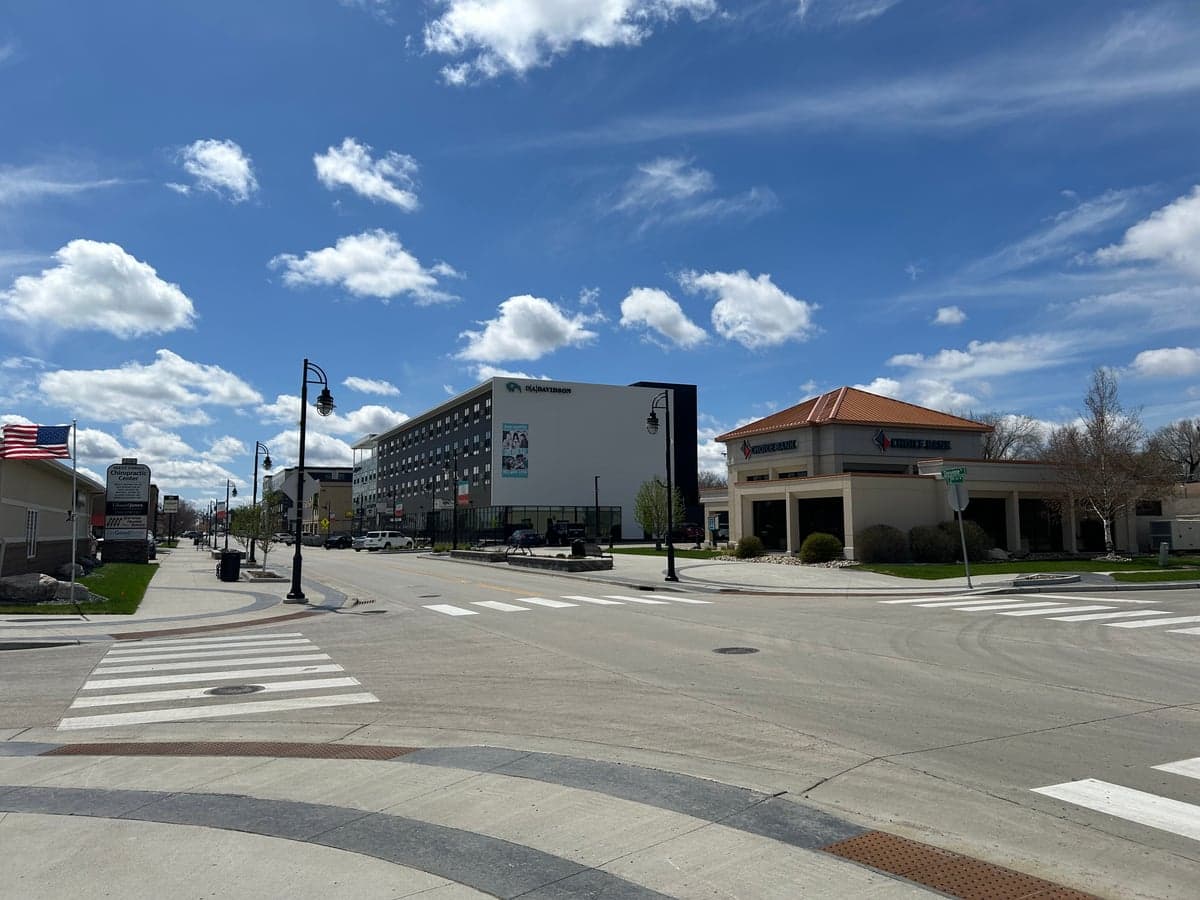
Photo: Wikipedia
Strategic Assessment of West Fargo, ND
Workable tactical position. Some exposure to population density or targets, but generally defensible in a crisis.
What does the Strategic Assessment tell us?
Our Strategic Assessment grades tactical survivability of an area. Major population centers, military targets, fallout zones, natural disasters, and border exposure all drive risk — lower exposure means a more defensible position in a crisis.
This is heavily inspired by Joel Skousen's Strategic Relocation book. Highly recommended you checkout the book ($)What does this tell us?
Our Strategic Assessment grades tactical survivability of an area. Major population centers, military targets, fallout zones, natural disasters, and border exposure all drive risk — lower exposure means a more defensible position in a crisis.
This is heavily inspired by Joel Skousen's Strategic Relocation book. Highly recommended you checkout the book ($)Strategic Pillars

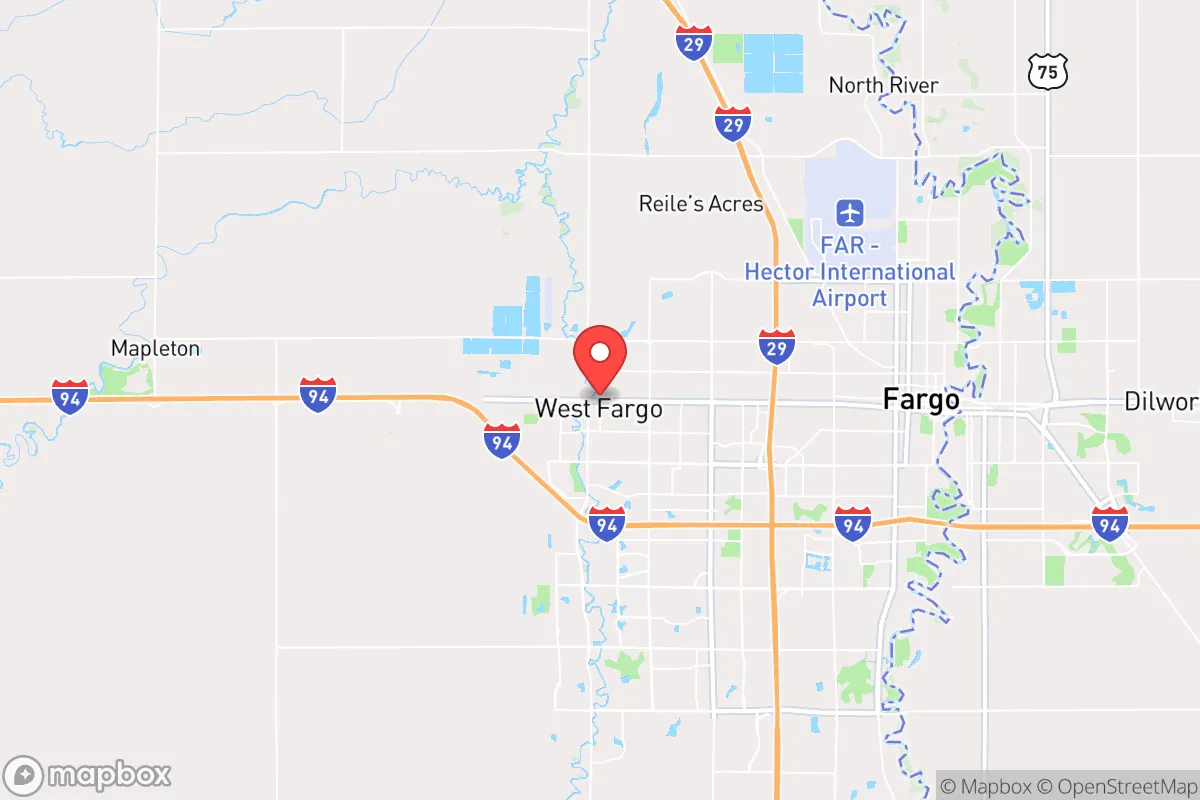
Key Distances
Regional Safe Places
Below is our recommended "safe zones" in North Dakota and the surrounding area based on our strategic heuristics. For most people, it's unrealistic to live in a “safe zone” full-time due to work, family or other personal reasons. They tend to be more rural. However, many of these areas are perfect for second homes and retreat properties that double as a vacation home or even a short-term rental.
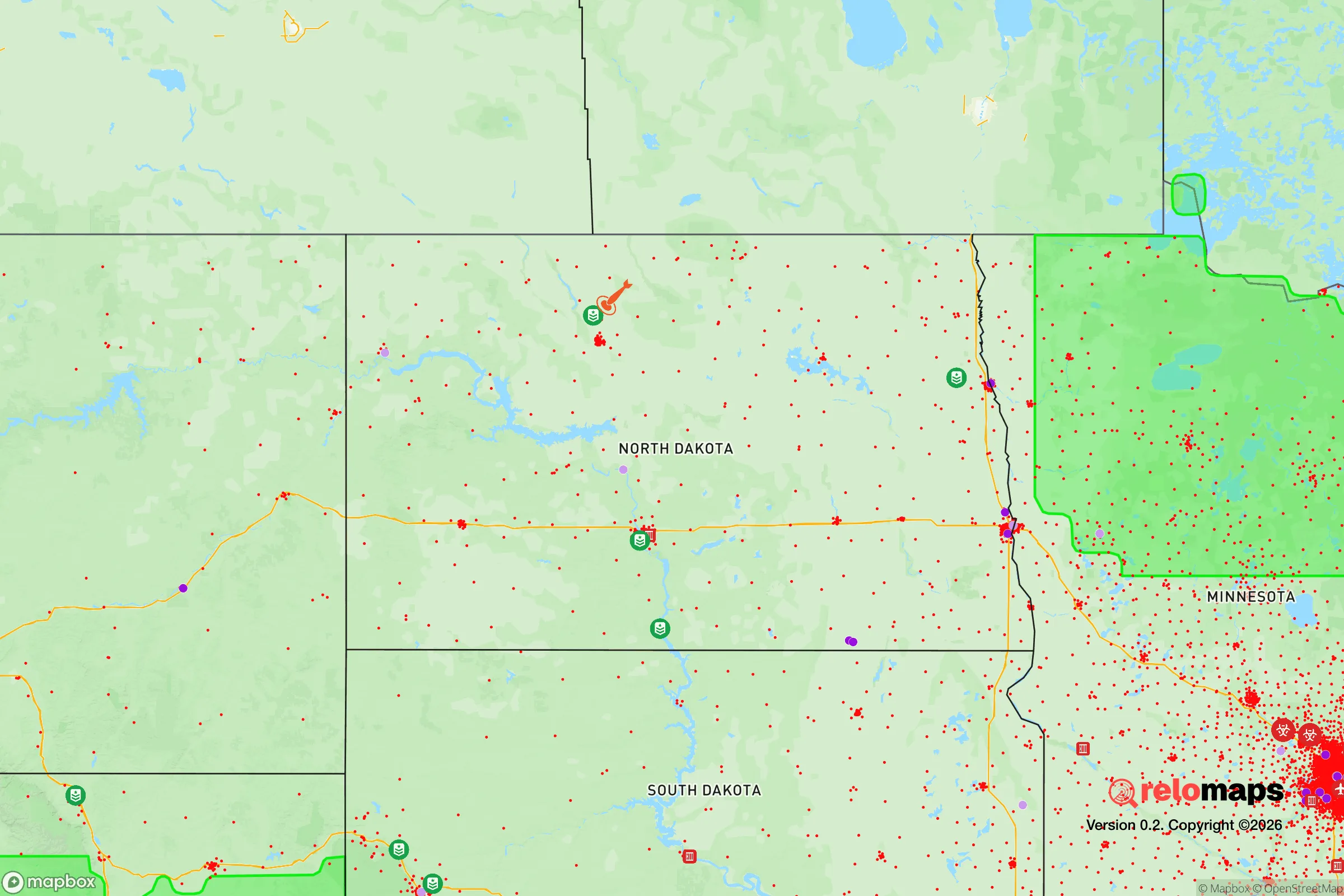
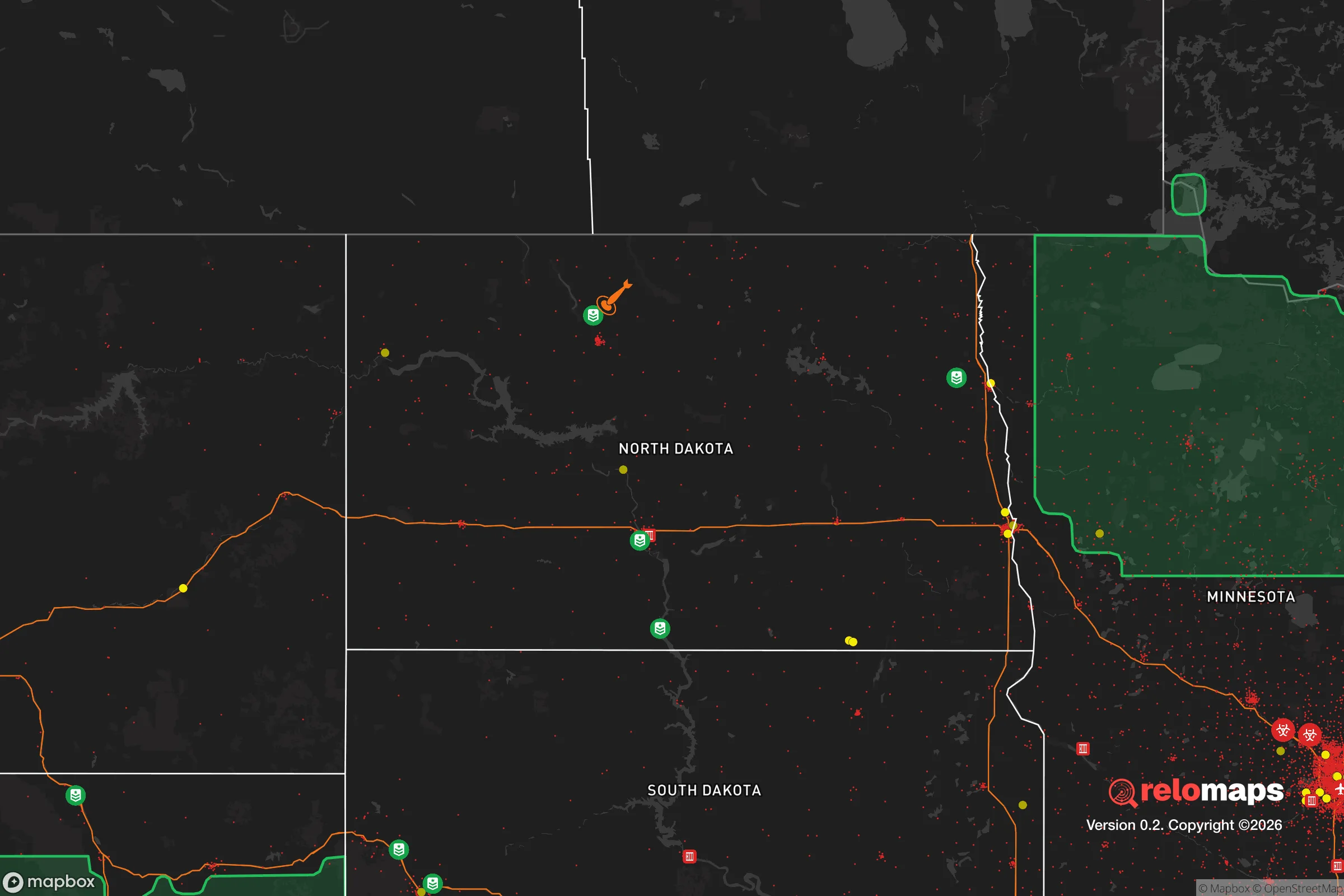


Important Note: For informational purposes only. This does not mean nothing bad ever happens in the green zones. Please use common sense. This is based on public data and modeled with AI. We tried to take a conservative approach but mistakes happen. We update this regularly as new information becomes available.
Solar Generator Recommendations
Backup power matters more here than in safer locations. We've picked three solar generators across budgets and capacity tiers — start with the budget unit if you only need a few essentials, or step up if you want to run a fridge and HVAC for days at a time.

Jackery Portable Power Station Explorer 300
Budget OptionPower on the Go: Weighing only 11 lbs, it's convenient to set up and store with book-sized foldable solar panels

BLUETTI Portable Power Station AC180
Designed for both indoor and outdoor scenarios, AC180 is highly capable as it has a robost capacity and continuous output power.

EF ECOFLOW DELTA Pro Ultra Power Station
Upgraded PickEcoFlow DELTA Pro Ultra is a whole-home energy system designed to grow with your family. Integrated with the Smart Home Panel 2, it scales to meet your evolving energy needs — keeping your home powered, intelligent, and secure through every stage of life.
We earn a commission, at no additional cost to you.
Strategic Assessment Analysis
West Fargo, North Dakota, presents a compelling strategic relocation option for those prioritizing resilience, geographic isolation, and long-term stability. Its position in the Red River Valley offers a unique blend of agricultural self-sufficiency, low population density, and distance from major coastal and metropolitan targets, making it a strong candidate for those preparing for civic unrest, supply chain disruptions, or large-scale disasters. While no location is without risk, West Fargo’s combination of a robust local economy, access to fresh water, and a politically and culturally conservative community creates a foundation for sustainable preparedness.
Geographic isolation and natural buffer zones: why West Fargo sits apart
West Fargo’s primary strategic advantage is its location in the northern Great Plains, far from the high-risk corridors of the East and West Coasts. The city sits roughly 200 miles from the nearest major metropolitan area (Minneapolis-St. Paul), which itself is a potential target for civil unrest or infrastructure collapse. This distance provides a critical buffer: fallout from a nuclear event, whether accidental or intentional, would be significantly diluted by the time it reached the Red River Valley, and the region’s prevailing westerly winds often carry airborne contaminants away from the area. The surrounding landscape is flat, open farmland, offering few natural choke points for large-scale movement, but also providing clear lines of sight and limited cover for any organized threat. The Red River itself, while prone to flooding, is a reliable freshwater source, and the region’s aquifer system supports deep wells for off-grid water security. The nearest major military installation is Grand Forks Air Force Base (about 70 miles north), which could be a target in a conflict, but its distance and the lack of other high-value infrastructure (major ports, nuclear plants, or federal government hubs) make West Fargo a low-priority zone for any adversary.
Risk exposure and proximity to fallout-relevant landmarks: what to watch for
The most significant risk to West Fargo is its location within the Red River Valley floodplain. The river has a history of catastrophic spring floods, with the 1997 and 2009 events causing widespread damage. For a prepper, this means elevated homes, sandbag supplies, and a flood-mitigation plan are non-negotiable. The city has invested heavily in dikes and diversion channels, but a 100-year flood could still overwhelm defenses. Beyond hydrology, the region is seismically stable, with no earthquake or tsunami risk. Tornadoes are a seasonal threat, but the area’s flat terrain makes them easier to spot and avoid than in more wooded regions. The nearest nuclear power plant is the Monticello plant in Minnesota (about 200 miles southeast), which is far enough to pose no direct fallout risk unless a catastrophic meltdown occurs under specific wind patterns. More concerning is the proximity to the Minot Air Force Base (about 150 miles northwest), which houses nuclear-capable B-52 bombers and is a high-value target in any major conflict. While West Fargo is outside the immediate blast zone, a strike on Minot could produce significant fallout if winds are unfavorable. The city’s distance from major interstate highways (I-94 and I-29 run through the area) is a double-edged sword: it provides easy evacuation routes but also makes the area a potential corridor for refugees fleeing coastal chaos. The local population is small (roughly 40,000), which limits the scale of any civil unrest but also means a sudden influx of outsiders could strain resources.
Practical resilience for a relocator: food, water, energy, and defensibility
West Fargo’s agricultural base is its strongest asset for long-term survival. The surrounding Red River Valley is some of the most fertile soil in the world, producing wheat, soybeans, corn, and sunflowers. For a relocator, this means local food production is abundant and accessible, with farmers’ markets, CSAs, and direct-from-farm purchasing options available. The region also has a strong hunting and fishing culture, with deer, waterfowl, and walleye providing additional protein sources. Water security is straightforward: the Red River and its tributaries are perennial, and the shallow aquifer beneath the valley allows for private wells at reasonable depths (typically 50-150 feet). The city’s municipal water supply is treated and reliable, but a prepper should plan for a well or rainwater catchment system. Energy infrastructure is robust, with natural gas and electricity supplied by Xcel Energy and local cooperatives. The cold winters (average January highs around 18°F) mean heating fuel is a critical consideration; wood-burning stoves are common, and the surrounding farmland provides ample biomass. Solar panels are viable but require winter maintenance due to snow cover. Defensibility is moderate: the flat terrain offers no natural fortifications, but the city’s layout—with a mix of suburban neighborhoods and rural acreages—allows for both community-based security and isolated homesteading. The local law enforcement (Cass County Sheriff’s Office and West Fargo Police) is professional and well-funded, and the community’s conservative ethos means a high rate of firearm ownership and a general willingness to defend property. The nearest National Guard armory is in Fargo (10 miles east), which could be a stabilizing force or a point of contention depending on the scenario.
The overall strategic picture for West Fargo is one of calculated trade-offs. It offers exceptional natural resources, low population density, and a culture of self-reliance that aligns with a prepper mindset. The primary vulnerabilities—flooding, extreme cold, and proximity to a nuclear-capable air base—are manageable with proper planning and infrastructure investment. For a relocator seeking a location that balances isolation with access to essential services, West Fargo is a strong candidate. It is not a fortress, but it is a place where a prepared individual or family can build a sustainable, resilient life while staying clear of the chaos that will likely engulf the coasts and major urban centers in the years ahead. The key is to act before the next crisis drives prices up and availability down.

* Values derived from national, state, county, city and local statistics and may differ in a specific area. Last updated: 2026-04-19T05:31:29.000Z
Narrative content on this page is AI-generated and may contain mistakes. Verify any details that matter before acting on them.
ReloMaps may earn a commission from affiliate links at no extra cost to you.

