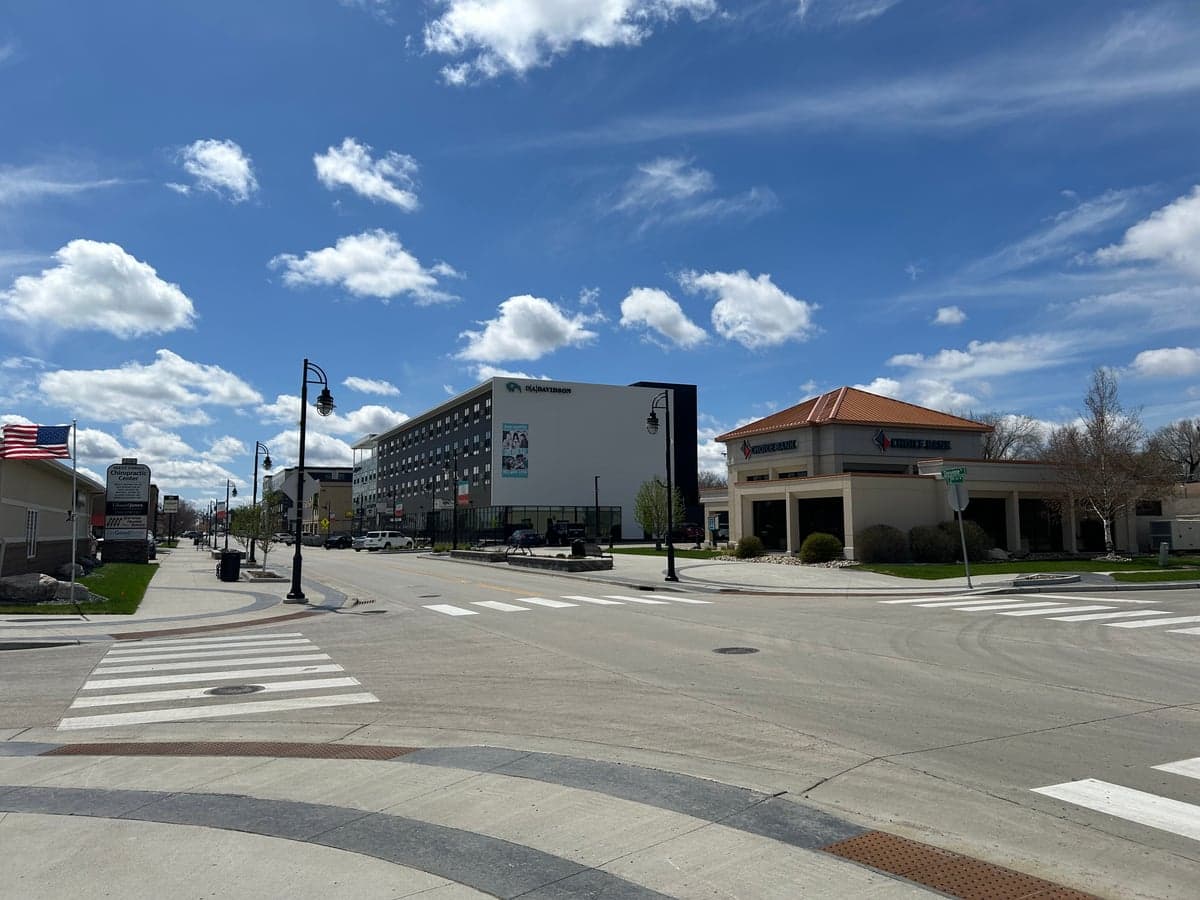
Photo: Wikipedia
Quality of Life in West Fargo, ND
A high quality of life with strong walkability, manageable living costs, healthy neighborhood signals, and solid amenity access.
What does Quality of Life tell us?
Quality of Life blends cost of living, nearby amenities, socioeconomic signals, and neighborhood character. City-level scores represent the whole municipality; individual neighborhoods can differ.
What does this tell us?
Quality of Life blends cost of living, nearby amenities, socioeconomic signals, and neighborhood character. City-level scores represent the whole municipality; individual neighborhoods can differ.
Cost of Living
2% below national average
The Real Cost of Living in West Fargo, ND for 2026
| Tier | Individual | Family (4) |
|---|---|---|
| Survival | $17k | $32k |
| Comfortable | $59k | $86k |
| Luxury | $158k+ | $245k+ |
| Elite (Top 5%) | $186k+ | $289k+ |
112%
The Area Signal
A metric tracking the socioeconomic signals of the area.


Hobbies
Explore the areaGroceries
5 within 10 miles
Gas
0 within 10 miles
Hospital
3 within 20 miles
Airport
JFK — John F. Kennedy Memorial
Post Office
USPS — Fargo, ND
Critical Amenities
Quality-of-Life Analysis
West Fargo, North Dakota, presents a quality-of-life profile that blends suburban affluence with practical Midwestern values, attracting a demographic of young families, professionals, and long-term residents seeking stability and space. With a cost-of-living index of 98 (just below the national average of 100), the city offers a tangible financial advantage over many peer suburbs, particularly in housing and daily expenses, while maintaining a median household income that supports a comfortable, family-oriented lifestyle. The population skews younger and more educated than the state average, driven by proximity to Fargo’s job market and a reputation for safe, well-maintained neighborhoods.
Cost of living, housing affordability, and how West Fargo compares to Fargo and Moorhead
West Fargo’s housing market is a primary draw, with a median home value of $302,200 and a median rent of $1,075—both notably lower than the national medians and competitive even within the Fargo-Moorhead metro. Compared to Fargo proper, where median home values often exceed $320,000, West Fargo offers slightly more square footage per dollar, especially in newer developments south of I-94. Renters also benefit: the $1,075 median rent is roughly $150–$200 less per month than comparable units in downtown Fargo or Moorhead, Minnesota. The cost-of-living index of 98 reflects savings across utilities, transportation, and groceries, though property taxes in Cass County are moderate (around 1.1% of assessed value), slightly higher than in rural areas but lower than in neighboring Clay County, Minnesota. The average commute of 18.2 minutes is a standout advantage—well below the national average of 26 minutes—meaning residents spend less on fuel and vehicle wear, and gain back nearly an hour of daily personal time compared to metro-area peers.
What daily life is like for families: schools, parks, and local amenities
Daily life in West Fargo revolves around its highly rated public school system, West Fargo Public Schools, which serves over 11,000 students across 15 elementary schools, three middle schools, and two high schools (West Fargo High School and Sheyenne High School). The district consistently earns above-average state test scores, particularly in math and reading, and offers robust extracurricular programs in athletics and the arts. For recreation, the city maintains over 30 parks, the sprawling Veterans Memorial Park (with a splash pad, sports fields, and walking trails), and the West Fargo Sports Arena, a hub for youth hockey and skating. The West Fargo Public Library and the Bonanzaville pioneer village museum provide cultural anchors, while the West Acres Mall and nearby Fargo’s Broadway Square offer shopping and dining within a 10-minute drive. The rhythm is distinctly suburban: quiet evenings, active weekends at parks or the Red River Valley Fairgrounds, and a calendar of community events like the West Fargo Street Fair and holiday parades.
West Fargo is best suited for those who prioritize affordable homeownership, short commutes, and a safe, family-centric environment over urban nightlife or dense cultural amenities. Young professionals working in Fargo’s healthcare, tech, or education sectors will find the commute and housing costs especially favorable, while retirees on fixed incomes benefit from the low cost of living and accessible healthcare via Sanford Health and Essentia Health facilities within the metro. The city’s growth—population has doubled since 2010 to over 40,000—means ongoing infrastructure expansion, but its core appeal remains rooted in predictability, space, and a strong sense of community that rewards long-term residency.

Crime in West Fargo, ND
Lower crime rates than 82% of comparable U.S. locations.
Violent CrimeViolent Crime Analysis
Property CrimeProperty Crime Analysis
Crime Analysis
West Fargo, North Dakota, presents a mixed safety profile for prospective residents. While the city's violent crime rate of 182.8 incidents per 100,000 residents is notably lower than the national average, its property crime rate of 950 per 100,000 is a more significant concern, particularly given the city's rapid growth and proximity to the larger Fargo-Moorhead metro area. The overall safety picture is shaped by a combination of low violent crime, elevated property theft, and the broader regional justice system's approach to prosecution and sentencing.
Crime in context
West Fargo's violent crime rate is approximately half the national average, making it a relatively safe city for violent offenses like assault, robbery, and homicide. However, the property crime rate of 950 per 100,000 is about 15% higher than the national average and significantly above the North Dakota state average. This disparity is common in growing suburbs near larger metro areas, where property crime—particularly theft from vehicles and burglary—tends to rise with population density and transient traffic. It is important to note that Cass County, which includes West Fargo, is part of a larger metro area where progressive judicial philosophies have been observed. Readers should be aware that a justice system focused on rehabilitation over accountability can lead to higher recidivism and more criminals on the street, directly impacting public safety and victim justice.
What residents experience
For daily life, the most common safety issue in West Fargo is non-violent property crime. Residents frequently report theft from unlocked cars, package theft from porches, and occasional garage break-ins. Violent crime is rare and typically confined to isolated incidents rather than random attacks. The city's police department maintains a visible presence, and neighborhood watch programs are active in many subdivisions. However, the broader metro area's approach to criminal justice—where progressive district attorneys may prioritize diversion programs over incarceration—means that repeat property offenders often cycle back into the community quickly. This creates a persistent, low-level crime problem that can frustrate residents who expect stricter consequences for theft and vandalism.
Neighborhood-level variation in West Fargo is moderate. Older, established neighborhoods near the city's core and along the Sheyenne River tend to have slightly lower crime rates, while newer developments on the city's eastern and southern edges, which are closer to major retail corridors and the interstate, see more property crime. The area around the West Acres Shopping Center and the 13th Avenue corridor is a known hotspot for vehicle break-ins and shoplifting. Overall, West Fargo is a safe place to live by national standards, but the combination of rising property crime and a metro-area justice system that may not prioritize public safety warrants caution, especially for residents who value strong law enforcement and accountability for offenders.
* Values derived from national, state, county, city and local statistics and may differ in a specific area. Last updated: 2026-04-19T05:31:29.000Z
Narrative content on this page is AI-generated and may contain mistakes. Verify any details that matter before acting on them.
ReloMaps may earn a commission from affiliate links at no extra cost to you.

