Photo: Wikipedia
Demographics of West Jordan, UT
Affluence Level in West Jordan, UT
An upper-middle-class area. Household wealth, education levels, and homeownership run ahead of national benchmarks.
People of West Jordan, UT
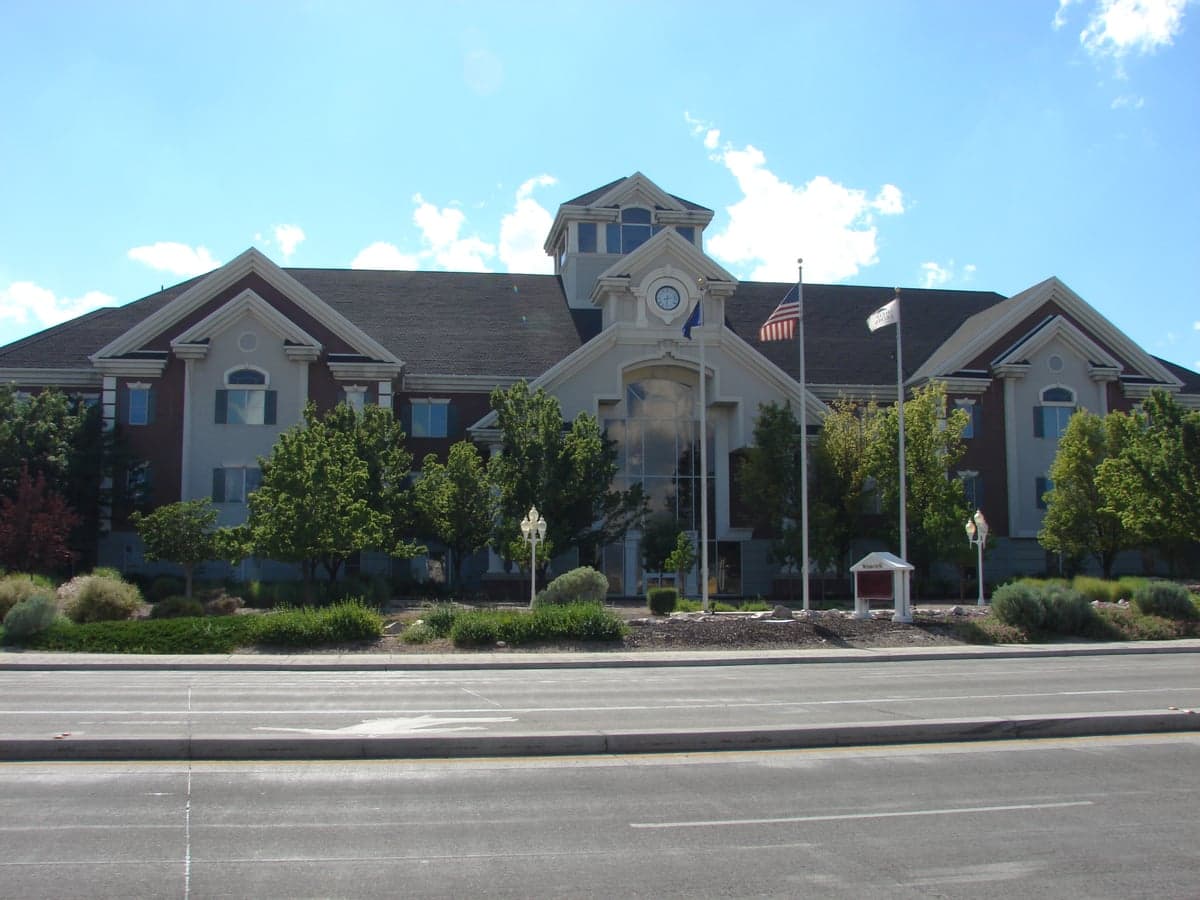
West Jordan, Utah, is a rapidly growing suburb of Salt Lake City with a population of 116,277 that remains predominantly white (65.2%) but has become notably more diverse in the last two decades, driven largely by a Hispanic community now comprising 24.1% of residents. The city is characterized by a strong family-oriented culture, a high rate of homeownership, and a lower college attainment rate (28.6%) than the national average, reflecting a workforce concentrated in trades, logistics, and service industries. Distinctive identity markers include a deep-rooted Latter-day Saint (LDS) influence, a growing number of multi-generational Hispanic households, and a political tilt that leans conservative, though less uniformly so than neighboring rural areas.
How the city was settled and grew
West Jordan’s original population was drawn by the promise of irrigated farmland in the mid-19th century, when Mormon pioneers under Brigham Young settled the Jordan River valley in 1849. The area was divided into agricultural plots, with early settlers—mostly converts from England, Scandinavia, and the eastern United States—building homesteads along what is now 7800 South and 2700 West. The historic Jordan Landing neighborhood, near the Jordan River, was the original hub, where families farmed sugar beets, alfalfa, and grain. A second wave arrived in the early 1900s, spurred by the expansion of the Denver and Rio Grande Western Railroad, which established a depot at Welby (a now-absorbed hamlet near 7000 South and 4800 West). These newcomers were largely Midwestern transplants and Italian immigrants who worked as railroad laborers and in the region’s smelters. By 1950, West Jordan remained a small farming town of roughly 4,000 residents, with a population that was nearly 100% white and overwhelmingly LDS.
Modern era (post-1965)
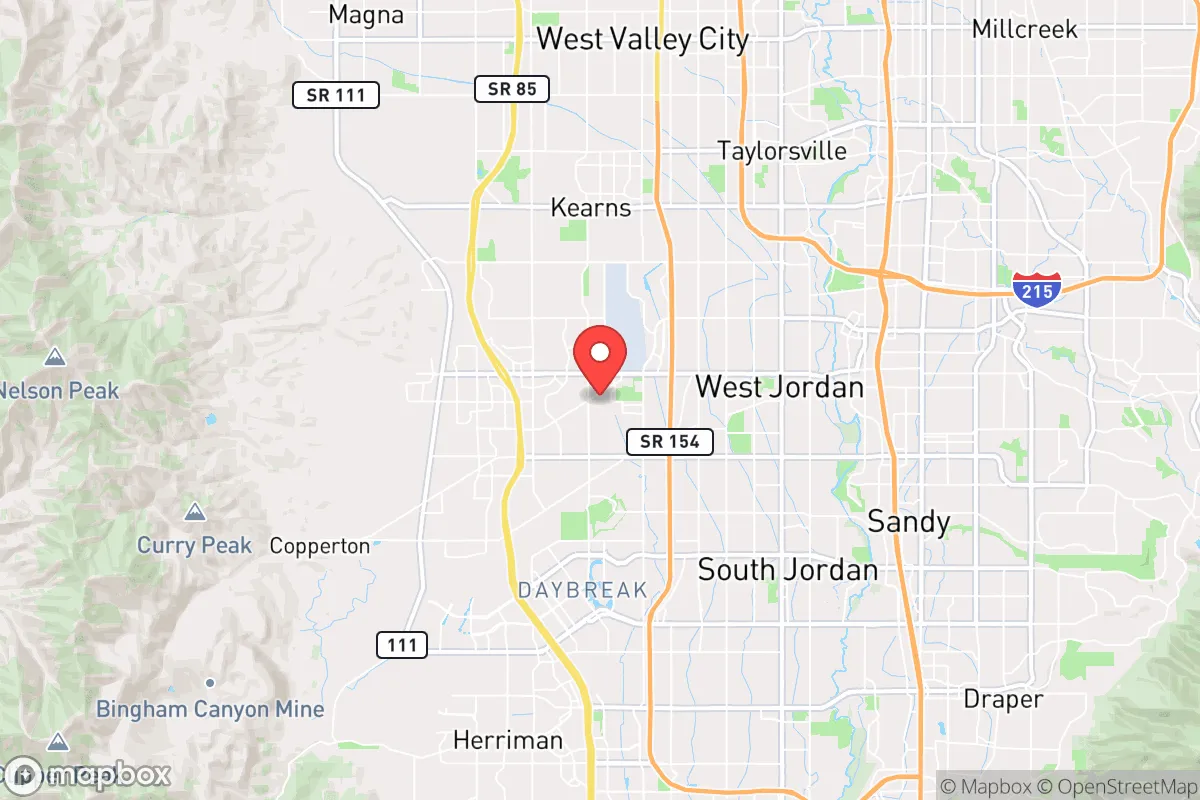
The post-1965 era transformed West Jordan from a rural outpost into a sprawling suburb. The 1965 Immigration and Nationality Act opened the door for new immigrant groups, but the city’s major demographic shift came later, through domestic migration and Hispanic in-migration. From the 1970s through the 1990s, white middle-class families—many moving from Salt Lake City proper and California—flocked to new subdivisions like Copper Hills (near 7800 South and 5600 West) and Midas Creek (around 9800 South and 4000 West), drawn by affordable housing and proximity to the booming tech and aerospace sectors along the I-15 corridor. During the same period, a growing Hispanic population—initially Mexican and Central American laborers—settled in older, more affordable areas such as West Jordan City Center (around 7800 South and 2200 West) and the Jordan River corridor, where rental duplexes and older single-family homes offered entry points. By 2000, the Hispanic share had risen to roughly 12%, and it has since doubled to 24.1%. The East/Southeast Asian community (2.5%) is smaller and more dispersed, with clusters of Vietnamese and Filipino families in the South Jordan Gateway area near 10400 South. The Black (1.2%) and Indian subcontinent (0.2%) populations remain very small, concentrated in newer apartment complexes near the Bangerter Highway corridor.
The future
West Jordan’s population is heading toward greater ethnic diversity, but the trajectory is one of gradual integration rather than tribalization into distinct enclaves. The Hispanic community is growing steadily through both immigration and natural increase, and second- and third-generation families are increasingly moving into newer subdivisions like Copper Hills and Midas Creek, blending with the white majority. The white share (65.2%) is declining slowly, while the Asian and Black shares are expected to rise modestly as the city’s affordable housing stock attracts service-sector and tech workers priced out of Salt Lake City. The foreign-born share (7.1%) is below the national average and likely to plateau, as most growth will come from U.S.-born children of immigrants. Over the next 10–20 years, West Jordan will likely become a more mixed-income, multi-ethnic suburb, but it will retain a conservative, family-centric character—the LDS influence will remain strong, and the city’s political leanings will shift only slightly leftward as Hispanic voters become a larger share of the electorate.
For someone moving in now, West Jordan offers a stable, growing community where the dominant culture is still white and LDS, but where Hispanic families are an increasingly visible and integrated presence. The city is not a melting pot in the classic sense—it is a place where distinct groups live side by side in largely harmonious, if separate, social spheres, with shared priorities around schools, safety, and affordable living. New residents should expect a conservative, family-oriented environment with a growing multicultural texture, especially in the city’s older neighborhoods and newer apartment districts.

* Values derived from national, state, county, city and local statistics and may differ in a specific area. Last updated: 2026-05-03T04:50:43.000Z
Narrative content on this page is AI-generated and may contain mistakes. Verify any details that matter before acting on them.
ReloMaps may earn a commission from affiliate links at no extra cost to you.

