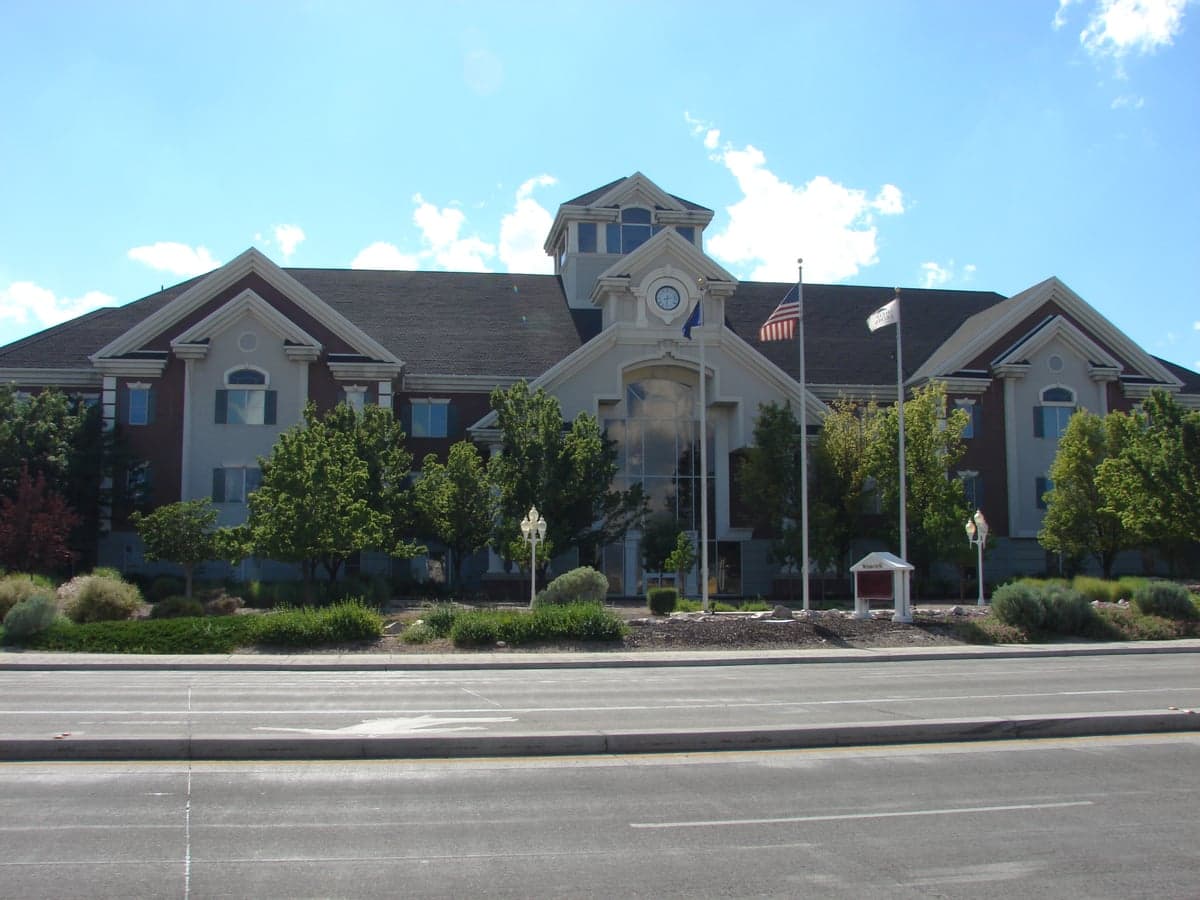
Photo: Wikipedia
Political ClimatePolitical Climate in West Jordan, UT
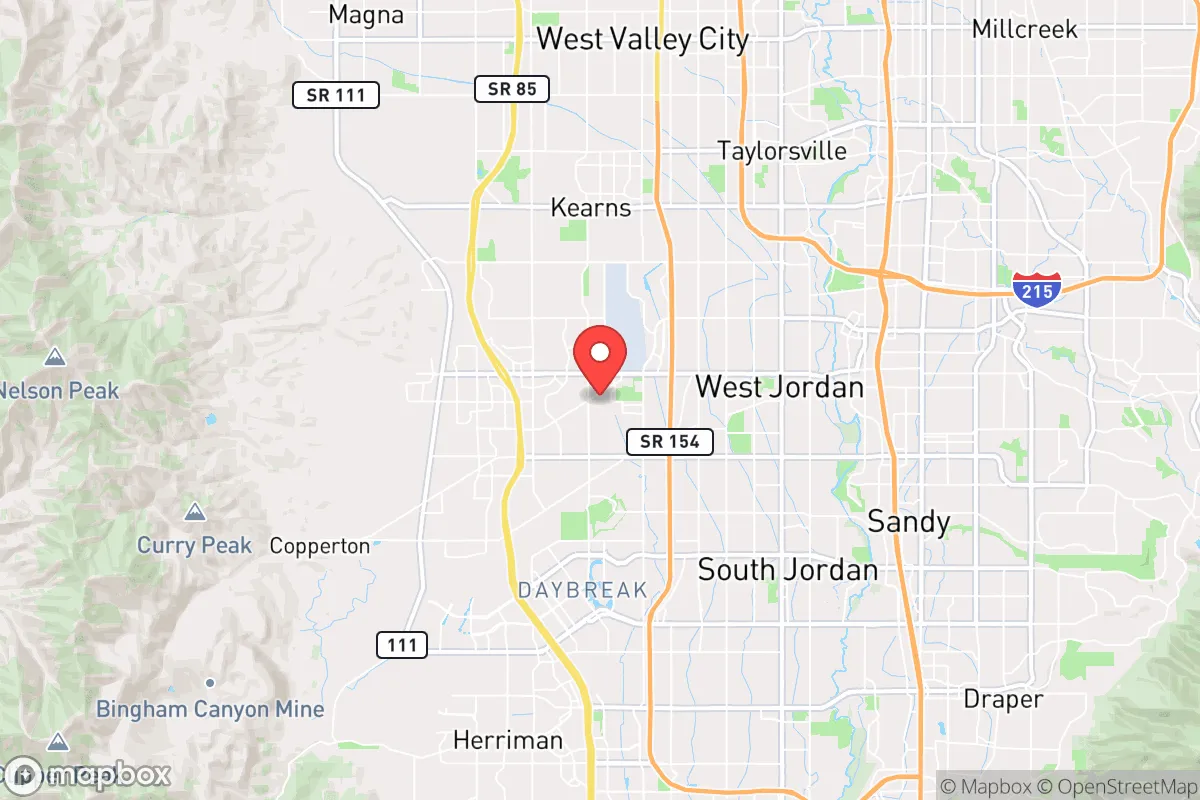
District shown is the primary district for this city’s centroid. Cities may span multiple districts.
Local Political AnalysisPolitical Analysis of West Jordan, UT
West Jordan has long been a solidly conservative community, and that hasn't changed much. The Cook PVI rating of R+14 tells you the real story—this is a place where Republican candidates routinely win by comfortable margins, and the local culture reflects that. But if you've been around here for a while, you've noticed the political winds shifting, and not necessarily in a way that sits well with folks who value limited government and personal freedom. The city's rapid growth has brought in new residents from all over, and with them, some of the progressive ideas that are creeping into Salt Lake County as a whole.
How it compares
To really understand West Jordan's politics, you have to look at the map. Drive ten miles north to Salt Lake City proper, and you're in a completely different world—a deep blue urban core where progressive policies on taxes, zoning, and public spending are the norm. Head west to Tooele County, and you'll find communities like Tooele City that are even more conservative, with a stronger libertarian streak and less tolerance for government overreach. West Jordan sits right in the middle, politically speaking. It's not as red as the rural areas to the south and west, but it's far more grounded than the increasingly progressive Salt Lake City metro. The concern for many longtime residents is that as the city grows, it might start mirroring the policies of its northern neighbor—more regulations, higher taxes, and a general attitude that the government knows best.
What this means for residents
For now, West Jordan still feels like a place where your personal freedoms are respected. You don't see the kind of heavy-handed local ordinances that pop up in more progressive cities—no strict mask mandates that last forever, no overreaching business regulations, and property taxes that, while not low, are kept in check by a city council that generally understands the value of letting people keep their own money. But there are warning signs. The school board and city council elections are getting more competitive, with candidates who talk about "equity" and "sustainability" in ways that often translate to more government control. If you're the kind of person who believes that your home, your business, and your family's decisions are yours to make, you need to stay engaged. The political trajectory here is still conservative, but it's not guaranteed to stay that way.
One thing that sets West Jordan apart from some of its neighbors is the strong sense of local identity. People here aren't just looking for a place to live—they're invested in keeping the community's character intact. That means pushing back against state-level overreach, whether it's from the left or the right. For example, there's a healthy skepticism of any government program that tries to dictate how you use your property or what you teach your kids. The cultural vibe is still very much "live and let live," as long as you're not hurting anyone. But the long-term concern is real: as the city gets bigger and more diverse, the political pressure to conform to the progressive agenda coming out of the state capital will only increase. If you value your freedoms, West Jordan is still a good bet—but keep your eyes open and your voice heard.

State Political ClimatePolitical Climate in Utah
State Political AnalysisPolitical Environment in the State
Utah is a deeply red state, with Republicans holding every statewide office and supermajorities in both legislative chambers, but the political climate is far more complex than a simple partisan label suggests. The state’s dominant coalition is a blend of conservative Latter-day Saint (LDS) cultural values and a growing libertarian-leaning, non-Mormon population, creating a unique tension between traditional social conservatism and a fierce embrace of individual autonomy. Over the last 10-20 years, the state has shifted from a reliably Republican monolith to a place where the GOP’s internal factions—establishment, populist, and liberty-minded—are increasingly at odds, while Democratic strength has consolidated almost entirely in Salt Lake City and a few college towns.
Urban vs. rural divide
The political map of Utah is a study in stark contrasts. The Wasatch Front—the urban corridor stretching from Ogden through Salt Lake City to Provo—contains roughly 80% of the state’s population and is the engine of both Republican dominance and the state’s small but vocal progressive movement. Salt Lake City itself is a deep blue island, voting for Joe Biden by over 60% in 2020, driven by a mix of young professionals, university students, and a growing LGBTQ+ community. In contrast, Provo and Orem in Utah County are among the most conservative metros in the nation, anchored by Brigham Young University and a dense LDS population that reliably delivers 70-80% Republican margins. Rural Utah—places like Moab, Cedar City, and Vernal—is even more conservative, often voting 80%+ Republican, but these areas are losing population and political influence to the booming Wasatch Front. The real political battleground is the suburban ring of Sandy, Draper, and Lehi, where moderate Republicans and independent voters are increasingly skeptical of both party establishments, favoring candidates who prioritize fiscal restraint and local control over social issues.
Policy environment
Utah’s policy environment is a mixed bag for conservatives. On the plus side, the state has a flat income tax rate of 4.65% (recently cut from 4.95%), no state-level property tax on vehicles, and a constitutional requirement for a balanced budget. The regulatory posture is generally business-friendly, with right-to-work laws and a tort reform system that limits lawsuit abuse. However, the state’s education policy is a growing concern: Utah spends the lowest per-pupil in the nation, and while school choice options like charter schools and the Carson Smith Scholarship program exist, the public school system is underfunded and overcrowded, especially in fast-growing suburbs like St. George. Healthcare policy is relatively free-market, with a robust telehealth industry and no state-run insurance exchange, but Medicaid expansion was passed via ballot initiative in 2018, overriding legislative resistance. Election laws are solid: voter ID is required, same-day registration is not allowed, and the state uses a top-two primary system for non-presidential races, which has helped moderate Republicans fend off far-right challengers. The biggest red flag for liberty-minded residents is the state’s heavy-handed alcohol regulation—Utah still controls liquor sales through state-run stores and enforces strict DUI laws, a legacy of LDS influence that many newcomers find intrusive.
Trajectory & freedom
Utah is becoming more free in several key areas, but the trajectory is uneven. On gun rights, the state passed constitutional carry in 2021, allowing permitless concealed carry for adults 21 and older, and has a strong preemption law that prevents local governments from enacting their own restrictions. Parental rights were bolstered in 2023 with the passage of HB 261, which requires schools to notify parents of any curriculum involving human sexuality and allows them to opt their children out. Medical autonomy took a hit with the 2024 passage of a strict abortion ban (triggered by the Dobbs decision), but the law includes exceptions for rape, incest, and the life of the mother—a compromise that reflects the state’s cautious approach. Property rights are generally strong, with no state-level rent control and a low property tax rate, but the rapid growth in St. George and Park City has led to local zoning battles that threaten the “build whatever you want” ethos. The biggest expansion of personal liberty came in 2022 with the passage of the “Utah Privacy Act,” which gives residents control over how companies collect and sell their data—a rare bipartisan win. However, the state’s heavy-handed approach to social media regulation (requiring age verification for minors) and its continued state monopoly on liquor sales show that government overreach is still a live concern.
Civil unrest & political movements
Utah is not a hotbed of civil unrest, but there are visible flashpoints. The most organized activist movements are on the right: the “Utah Rising” group (a libertarian-leaning coalition) has successfully fought against property tax hikes and pushed for school choice, while the “Utah Parents United” movement has mobilized thousands against critical race theory and gender ideology in schools. On the left, the “Utah Democratic Socialists” have a small but vocal presence in Salt Lake City, organizing around housing affordability and police reform, but they have little influence outside the capital. Immigration politics are relatively calm—Utah is not a sanctuary state, and local law enforcement cooperates with ICE, but the agricultural sector in Cache Valley and Sanpete County relies heavily on immigrant labor, creating a pragmatic tension. Election integrity controversies have been minimal; Utah uses paper ballots with mandatory audits, and the 2020 election saw no major disputes. The most visible flashpoint for a new resident would be the annual “Utah Pride” parade in Salt Lake City, which draws both large crowds and counter-protests, but these are generally peaceful. The real political energy is in the internal GOP battles—the 2024 primary saw a sitting state senator ousted by a more conservative challenger over school funding, signaling that the party’s base is restless.
Projection
Over the next 5-10 years, Utah will likely become more politically fragmented as demographic shifts accelerate. The state is growing at nearly 2% annually, driven by in-migration from California and other blue states, and these newcomers tend to be more moderate or libertarian than the native LDS population. The Wasatch Front will continue to blue-ify, with Salt Lake County potentially flipping to Democratic in presidential races by 2032, while rural areas will become even redder. The key battleground will be the suburbs of Lehi and Eagle Mountain, where tech workers (from companies like Adobe and Qualtrics) are pushing for lower taxes and less regulation, but also for more investment in infrastructure and schools. The state’s conservative supermajority is likely to hold, but internal splits over education funding, water rights, and housing policy will intensify. A new resident moving in now should expect a state that remains broadly conservative but is increasingly defined by a tug-of-war between traditional social conservatism and a more individualistic, “leave me alone” libertarianism. The biggest risk is that the state’s rapid growth will outpace its infrastructure, leading to more government intervention in land use and transportation—a classic case of freedom being eroded by success.
For a conservative-leaning individual or family, Utah offers a strong baseline of personal freedom—low taxes, constitutional carry, and parental rights—but it’s not a libertarian paradise. The state’s LDS cultural influence still shapes policy in ways that can feel intrusive (alcohol laws, Sunday closures), and the rapid growth is straining the very institutions that made the state attractive in the first place. If you’re looking for a place where your rights are respected and your voice matters, Utah is a solid bet—just keep an eye on the legislature, because the fight over how free this state will be is far from over.
* Values derived from national, state, county, city and local statistics and may differ in a specific area. Last updated: 2026-05-03T04:50:43.000Z
Narrative content on this page is AI-generated and may contain mistakes. Verify any details that matter before acting on them.
ReloMaps may earn a commission from affiliate links at no extra cost to you.

