 Popular
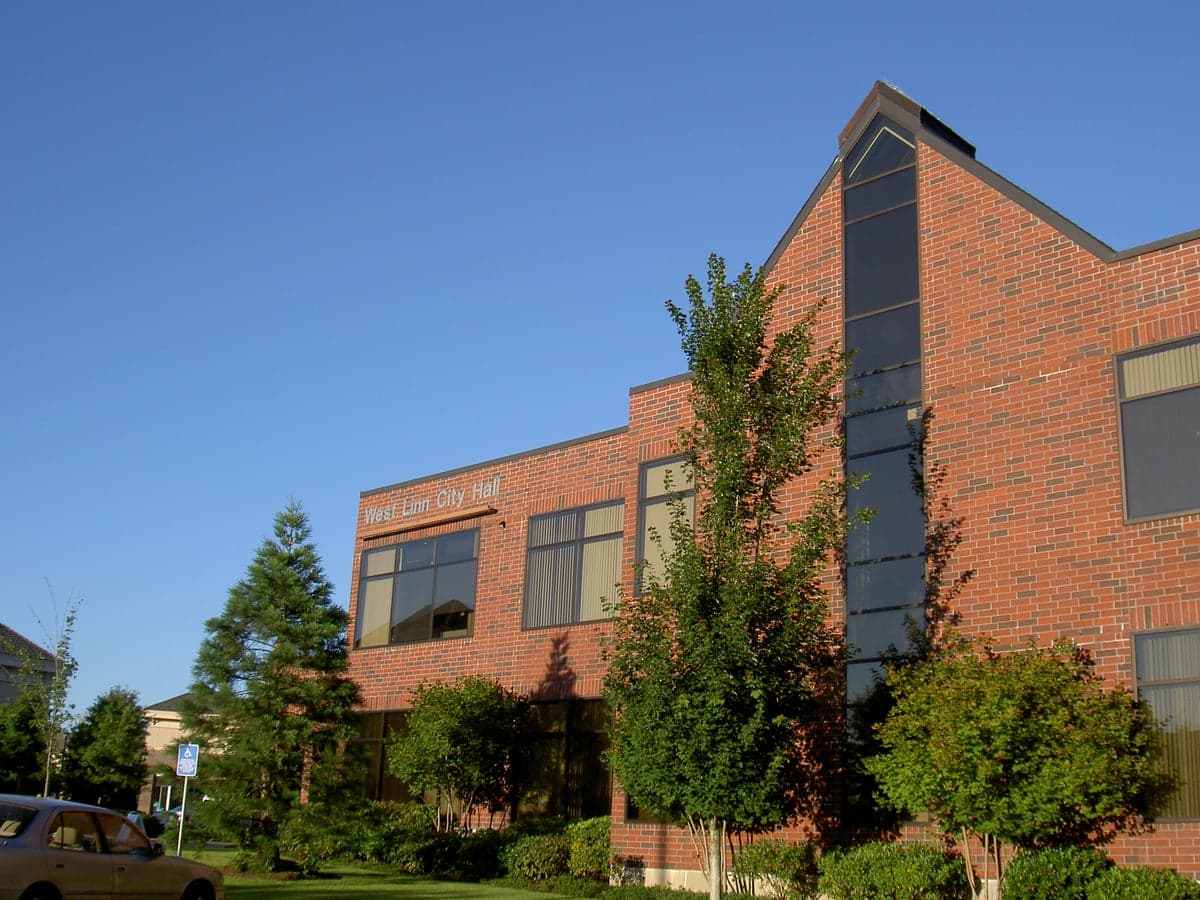
Photo: Wikipedia
Demographics of West Linn, OR
Affluence Level in West Linn, OR
An upper-middle-class area. Household wealth, education levels, and homeownership run ahead of national benchmarks.
People of West Linn, OR
The people of West Linn, Oregon, today number 27,065 and form one of the Portland metro area’s most educated and homogenous suburbs, with 62.5% holding a college degree and 80.7% identifying as white. The city’s character is defined by its historic riverfront neighborhoods, high property values, and a family-oriented, politically moderate-to-conservative tilt that sets it apart from more progressive Portland proper. Foreign-born residents make up just 3.3% of the population, well below the national average, while Hispanic (7.8%) and East/Southeast Asian (4.6%) communities represent the largest minority groups. This is a place where stability and tradition are prized, and the population story is one of gradual, selective growth rather than rapid transformation.
How the city was settled and grew
West Linn’s human history begins with the Clackamas people, who lived along the Willamette River for millennia before European contact. The first permanent white settlers arrived via the Oregon Trail in the 1840s and 1850s, drawn by the Donation Land Claim Act of 1850, which granted 320 acres to married couples. Robert Moore, a former Hudson’s Bay Company employee, claimed land at the falls of the Willamette in 1843 and platted the town of Linn City in 1845, naming it after Missouri Senator Lewis Linn. This original settlement, now part of the Historic Willamette neighborhood, was a milling and trading hub until a flood destroyed it in 1861. The town rebuilt as West Linn, incorporated in 1913, and the Bolton neighborhood grew around the Oregon Iron & Steel Company mill, drawing Scandinavian and German immigrant laborers in the early 1900s. The Sunset neighborhood developed later, with middle-class families moving in during the 1920s and 1930s as streetcar lines connected the city to Portland. By 1950, West Linn’s population was nearly all white, with small pockets of Italian and Irish families in the Hidden Springs area.
Modern era (post-1965)
The post-1965 era transformed West Linn from a small industrial town into a sought-after bedroom suburb. The Immigration and Nationality Act of 1965 had little immediate effect here—the foreign-born share remains low at 3.3%—but domestic in-migration surged as Portland’s urban core expanded. The Meadowbrook neighborhood, developed in the 1970s and 1980s, attracted white-collar professionals from Intel and other tech firms in nearby Hillsboro and Beaverton. The Robinwood neighborhood, with its newer subdivisions and views of the Willamette, became a magnet for families seeking top-rated schools and low crime rates. The Hispanic population grew from under 2% in 1990 to 7.8% today, concentrated in the Bolton area and along Highway 43, where service-industry workers found affordable older homes. East/Southeast Asian residents (4.6%)—primarily Chinese, Korean, and Vietnamese families—settled in Meadowbrook and Robinwood, drawn by the same school quality and safety that attracted white professionals. The Indian subcontinent population (0.7%) remains small but visible in tech-adjacent roles. Black residents (1.2%) are a tiny presence, reflecting Oregon’s historic exclusionary housing practices and West Linn’s high home prices, which have limited diversity. The city’s racial composition has shifted only modestly since 2000, when it was 90% white; the white share has declined to 80.7%, but the city remains far more homogenous than Portland (66% white) or the state as a whole.
The future
West Linn’s population is heading toward slow, incremental diversification rather than rapid change. The city’s housing stock—dominated by single-family homes with median values above $700,000—limits in-migration to higher-income households, which nationally tend to be whiter and more educated. The Hispanic and East/Southeast Asian shares are likely to grow gradually, as second-generation families from nearby Portland suburbs move outward, but the foreign-born rate will probably remain below 5% due to the lack of rental housing and entry-level jobs. The Willamette neighborhood, with its older, smaller homes, may see the most demographic turnover as younger families replace retirees. The city is not tribalizing into distinct ethnic enclaves; rather, it is homogenizing by income, with all groups sharing the same neighborhoods and schools. The next 10-20 years will likely see West Linn become slightly less white—perhaps 75% white by 2040—but it will remain a predominantly white, highly educated, and politically moderate suburb where stability, not diversity, is the defining demographic trend.
For someone moving in now, West Linn offers a predictable, safe, and well-resourced environment where the population is stable and the schools are excellent. The trade-off is limited racial and economic diversity, and a social fabric that values tradition over change. This is a place for those who prioritize order, community continuity, and low crime over urban energy or cultural variety.

* Values derived from national, state, county, city and local statistics and may differ in a specific area. Last updated: 2026-04-24T14:03:16.000Z
Narrative content on this page is AI-generated and may contain mistakes. Verify any details that matter before acting on them.
ReloMaps may earn a commission from affiliate links at no extra cost to you.

