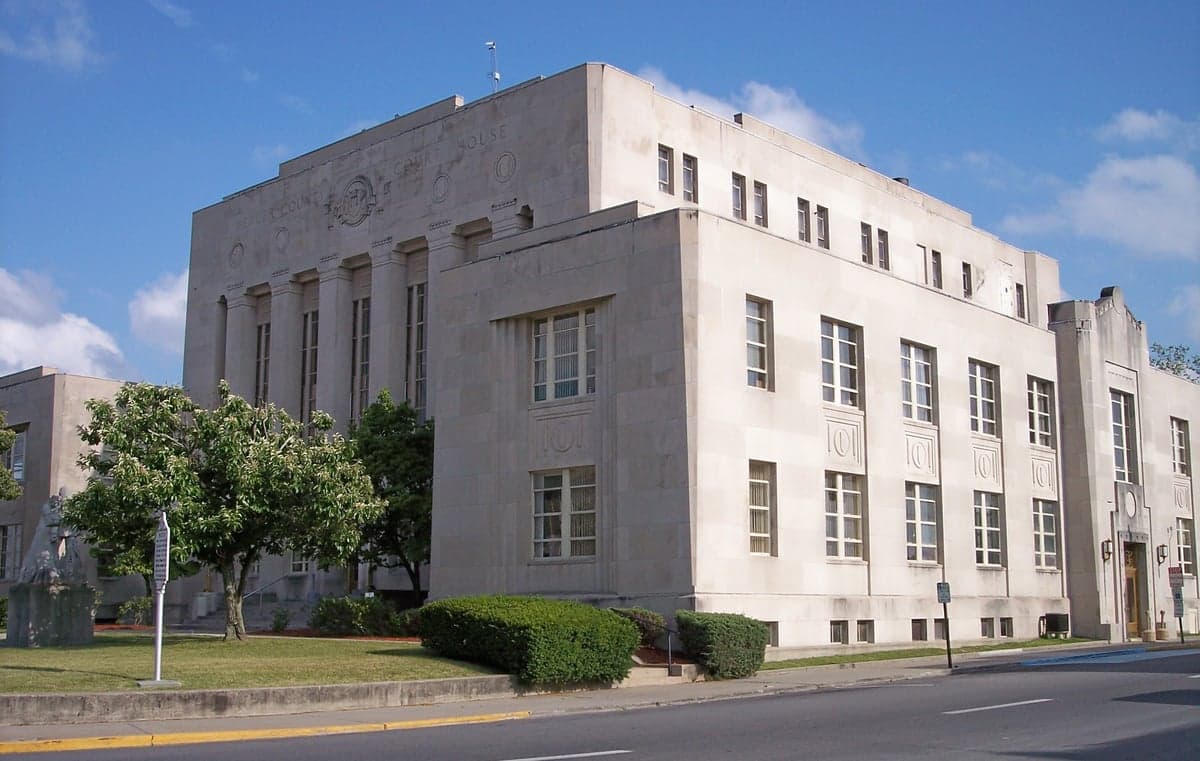
Photo: Wikipedia
Political ClimatePolitical Climate in Mercer County
Showing district-level results — no local-only data available.
Local Political AnalysisPolitical Analysis of Mercer County
Mercer County, West Virginia, is a deeply conservative stronghold with a Cook Partisan Voting Index of R+22, making it one of the most reliably Republican counties in the state. This isn't a recent shift—it's been a steady, decades-long trend that has only accelerated as the national Democratic Party moved further left on energy, gun rights, and cultural issues. The county has voted for the Republican presidential candidate by wide margins in every election since 2000, and local offices are overwhelmingly held by conservatives who prioritize limited government and personal liberty.
How it compares
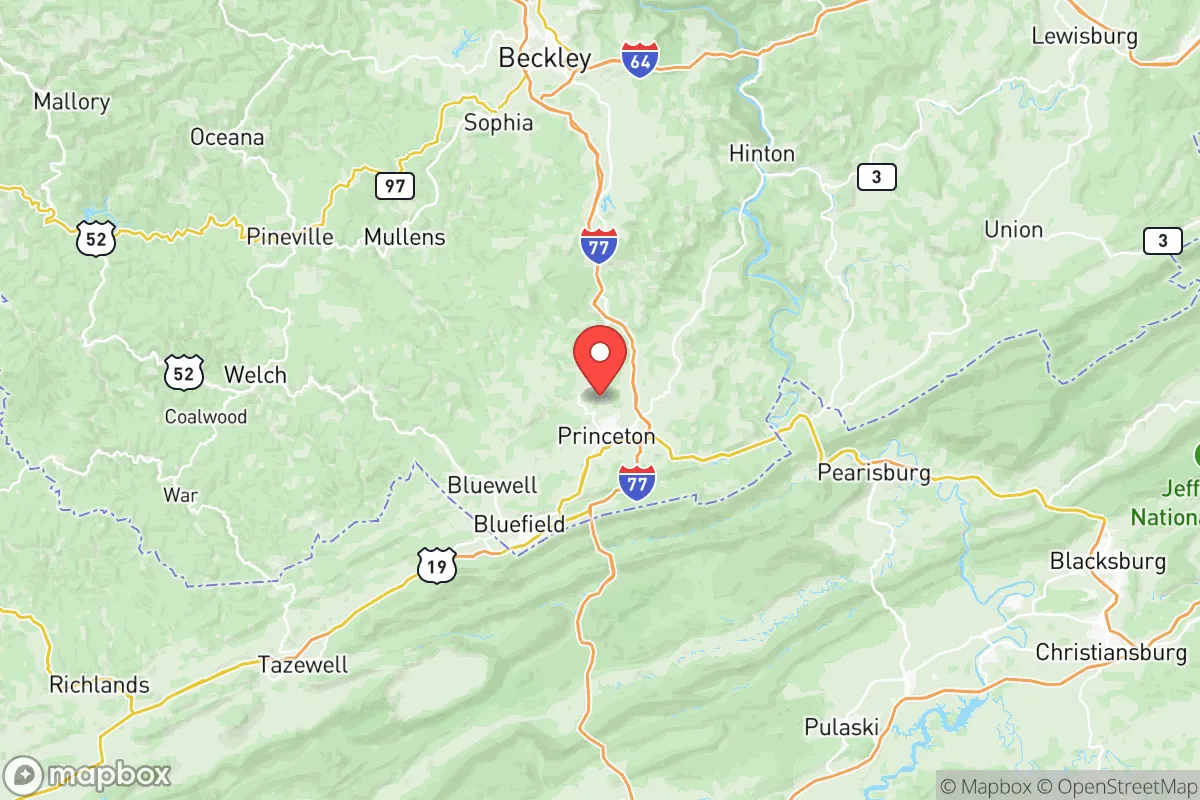
Mercer County's R+22 rating is essentially a mirror of West Virginia's statewide R+21, but with a slightly sharper edge. The difference is that Mercer County is more uniformly conservative than the state as a whole. In West Virginia, you still have pockets of blue in places like Morgantown (home to WVU) and parts of the Eastern Panhandle that lean more moderate. In Mercer County, the conservative vote is more concentrated and consistent. The city of Princeton, the county seat, is reliably red, with its precincts routinely delivering 65-70% of the vote for Republican candidates. Bluefield, the other major town, is even more conservative, often pushing 75% Republican in federal races. The only real variation is in a few precincts around the county's southern edge, near the Virginia line, where a handful of precincts in the town of Bramwell and the unincorporated community of Lashmeet can swing slightly more moderate—but still never break for Democrats. The rural areas, like the communities of Athens and Oakvale, are rock-ribbed Republican territory. So while West Virginia as a whole has a few blue dots, Mercer County is almost entirely a red canvas.
What this means for residents
For someone living here, the political climate means a government that largely stays out of your personal life. There's no push for strict mask mandates, vaccine passports, or heavy-handed business closures—the county commission and local health board have consistently pushed back against state-level overreach. The Second Amendment is treated as a fundamental right, not a privilege, and you'll find no local ordinances restricting firearm ownership or carry. Property taxes are low, and there's a strong cultural resistance to any new taxes or fees that would fund programs residents see as wasteful or intrusive. The downside is that this hands-off approach can mean fewer public services—roads aren't always in great shape, and the county's economic development efforts are modest. But for most folks, that's a trade-off they're willing to make to keep the government out of their business.
One cultural distinction worth noting is the county's strong sense of local identity. People here are proud of their Appalachian roots, and there's a deep skepticism of outside influence—whether it's from Charleston, D.C., or coastal media. You'll see "Don't Tread on Me" flags flying alongside American flags, and the local talk radio and Facebook groups are full of folks who are quick to call out what they see as government overreach. The long-term trajectory is toward even deeper conservatism, as younger residents who leave for college often return with the same values, and the county's population is aging in place. If you're looking for a place where personal freedom is still the default, Mercer County is about as good as it gets in West Virginia.

State Political ClimatePolitical Climate in West Virginia
State Political AnalysisPolitical Environment in the State
West Virginia is one of the most reliably Republican states in the nation, carrying a Cook PVI of R+21, meaning it votes about 21 points more Republican than the national average. The state has undergone a dramatic political transformation over the past 20 years, shifting from a Democratic stronghold where registered Democrats outnumbered Republicans 2-to-1 in 2000 to a GOP fortress where Republicans now hold supermajorities in both legislative chambers and all three congressional seats. This shift was driven primarily by cultural and economic realignment—working-class voters who once voted for union-friendly Democrats like Robert Byrd and Jay Rockefeller began voting Republican in presidential races starting in 2000, and the trend accelerated sharply after 2012 as the national Democratic Party moved left on energy, guns, and social issues.
Urban vs. rural divide
The political map of West Virginia is less about urban-rural tension and more about a near-total Republican dominance across nearly every county. The only real exceptions are Morgantown, home to West Virginia University, and Charleston, the state capital, which lean slightly more Democratic than the rest of the state but still vote Republican in statewide races. Morgantown's Monongalia County voted for Joe Biden in 2020 by about 5 points, making it one of just two counties (along with Jefferson County in the Eastern Panhandle) that went blue. Huntington and Wheeling are reliably red, though they retain some residual union-Democrat sentiment among older voters. The real story is the rural and small-town vote: counties like Mingo, Logan, and McDowell in the southern coalfields, which voted Democratic by 30-40 points as recently as 1996, now vote Republican by similar margins. The Eastern Panhandle—including Martinsburg and Charles Town—is a fast-growing area with some in-migration from the DC suburbs, and it votes Republican but with a slightly more moderate, suburban flavor compared to the deep-red southern counties.
Policy environment
West Virginia's policy environment is among the most conservative in the country, and it has become markedly more so over the past decade. The state has no personal income tax on Social Security benefits, and in 2023, Governor Jim Justice signed a bill that will phase out the state's personal income tax entirely over several years, contingent on revenue triggers—a major win for fiscal conservatives. The corporate tax rate is a flat 6.5%, and the state has a right-to-work law (passed in 2016) that prohibits mandatory union dues. On education, West Virginia has one of the most robust school choice programs in the nation: the Hope Scholarship, enacted in 2021, provides state funding for private school tuition, homeschooling expenses, and other educational alternatives, with no income cap. The state also passed a near-total ban on abortion in 2022, with exceptions only for medical emergencies, and it has some of the most permissive gun laws in the country, including permitless carry (passed in 2016) and no red flag law. Election integrity is a priority: the state requires voter ID, has no same-day registration, and in 2023 passed a law banning ballot drop boxes and limiting absentee voting. Healthcare is a mixed bag—the state expanded Medicaid under the Affordable Care Act in 2013, which was a conservative compromise at the time, but there is ongoing debate about work requirements for able-bodied adults.
Trajectory & freedom
West Virginia is moving decisively in the direction of greater personal freedom, particularly on economic and Second Amendment issues. The permitless carry law (2016) and the Hope Scholarship (2021) are the two most significant expansions of individual liberty in recent memory. The state also passed a parental bill of rights in 2023 that requires schools to notify parents of any changes to a student's health or well-being and prohibits instruction on gender identity and sexual orientation in K-12 classrooms—a clear win for parental authority. On the economic front, the income tax phase-down is a major freedom-expanding move, as it leaves more money in the hands of individuals rather than the state. However, there are areas where government overreach persists: the state's alcohol control laws remain restrictive (state-run liquor stores, limited Sunday sales), and property taxes are relatively high compared to neighboring states like Virginia and Ohio, though there is no state property tax—only county-level levies. The biggest concern for liberty-minded residents is the opioid epidemic, which has led to aggressive government intervention in healthcare and housing, including forced treatment programs and property seizure in some cases. Overall, the trajectory is positive for conservatives, but the state's legacy of heavy regulation in certain sectors (energy, alcohol, healthcare) means there is still work to be done.
Civil unrest & political movements
West Virginia has a history of labor activism that predates its current conservative alignment, and that legacy occasionally flares up. The 2018 teachers' strike shut down schools across the state for nine days and was one of the largest labor actions in the country that year, driven by frustration over low pay and rising healthcare costs. While the strike was led by union Democrats, it also drew support from many conservative parents who were angry about school funding. More recently, the state has seen organized opposition to vaccine mandates and COVID-19 restrictions, with large protests at the state capitol in 2021 and 2022. The West Virginia Citizens Defense League is an active gun-rights group that has successfully lobbied for permitless carry and against any form of red flag law. There is also a growing school choice movement that has been energized by the Hope Scholarship, with parents and advocacy groups pushing for even more options. On the left, the West Virginia Working Families Party and the Mountain State Justice nonprofit are active but have little electoral success. Immigration politics are largely a non-issue—the state has one of the smallest foreign-born populations in the country (about 1.5%), and there are no sanctuary cities. Election integrity controversies have been minimal, though there was some debate in 2020 about the use of Dominion voting machines in certain counties. Overall, the state is politically stable, with most activism coming from the right on issues of gun rights, school choice, and medical freedom.
Projection
Over the next 5-10 years, West Virginia is likely to become even more conservative, but with some important caveats. The in-migration from the DC suburbs into the Eastern Panhandle (Jefferson, Berkeley, and Morgan counties) is bringing a slightly more moderate, suburban Republicanism that may soften the state's hard-right edge on some issues, particularly environmental regulation and land use. However, the state's population is aging and shrinking—West Virginia is one of the few states that lost population in the 2020 census—and the voters who remain are overwhelmingly white, rural, and culturally conservative. The income tax phase-down will likely be completed by 2030, making the state even more attractive to retirees and remote workers from high-tax states like New York and California, which could accelerate the in-migration of fiscally conservative but socially moderate newcomers. The Hope Scholarship will continue to expand, potentially leading to a significant shift in the education landscape as more families opt out of public schools. The biggest wildcard is the energy transition: as coal continues to decline, the state will need to diversify its economy, and how it handles that transition—whether through embracing natural gas, renewable energy, or other industries—will shape its political future. Expect the state to remain a Republican stronghold, but with a growing tension between the old-guard coal-country conservatives and the newer, more tech-oriented and suburban conservatives in the Eastern Panhandle and around Morgantown.
For a conservative moving to West Virginia, the bottom line is this: you will find a state that is deeply aligned with your values on guns, taxes, education, and family policy, and that is actively moving in the direction of greater personal freedom. The trade-offs are real—the economy is struggling, the population is aging, and the infrastructure in many rural areas is poor—but the political climate is about as favorable as it gets for someone who wants to be left alone by the government. If you're looking for a place where your rights are respected, your taxes are low, and your children can be educated according to your values, West Virginia is one of the best bets in the country. Just be prepared for a slower pace of life, limited job opportunities outside of healthcare and energy, and a climate that is beautiful but rugged. It's not for everyone, but for the right person, it's home.
* Values derived from national, state, county, city and local statistics and may differ in a specific area. Last updated: 2026-05-12T12:12:40.000Z
Narrative content on this page is AI-generated and may contain mistakes. Verify any details that matter before acting on them.
ReloMaps may earn a commission from affiliate links at no extra cost to you.

