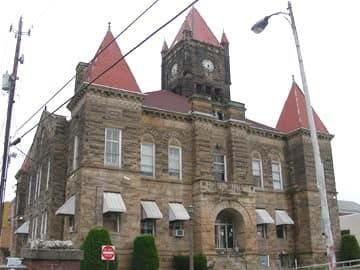
Photo: Wikipedia
Personal Sovereignty in Wetzel County
Viable for self-reliance. Generally workable, though some barriers may limit total independence.
What does Personal Sovereignty tell us?
Personal Sovereignty measures your capacity for self-reliance and independence with minimal government friction. Higher scores mean fewer barriers between you and the way you want to live... but it assumes you have the space you need and good neighbors.
What does this tell us?
Personal Sovereignty measures your capacity for self-reliance and independence with minimal government friction. Higher scores mean fewer barriers between you and the way you want to live... but it assumes you have the space you need and good neighbors.
State Policy
Energy independence: Net exporter (200% of energy produced in-state)
Personal Liberty
Homesteading

Personal Liberty Analysis
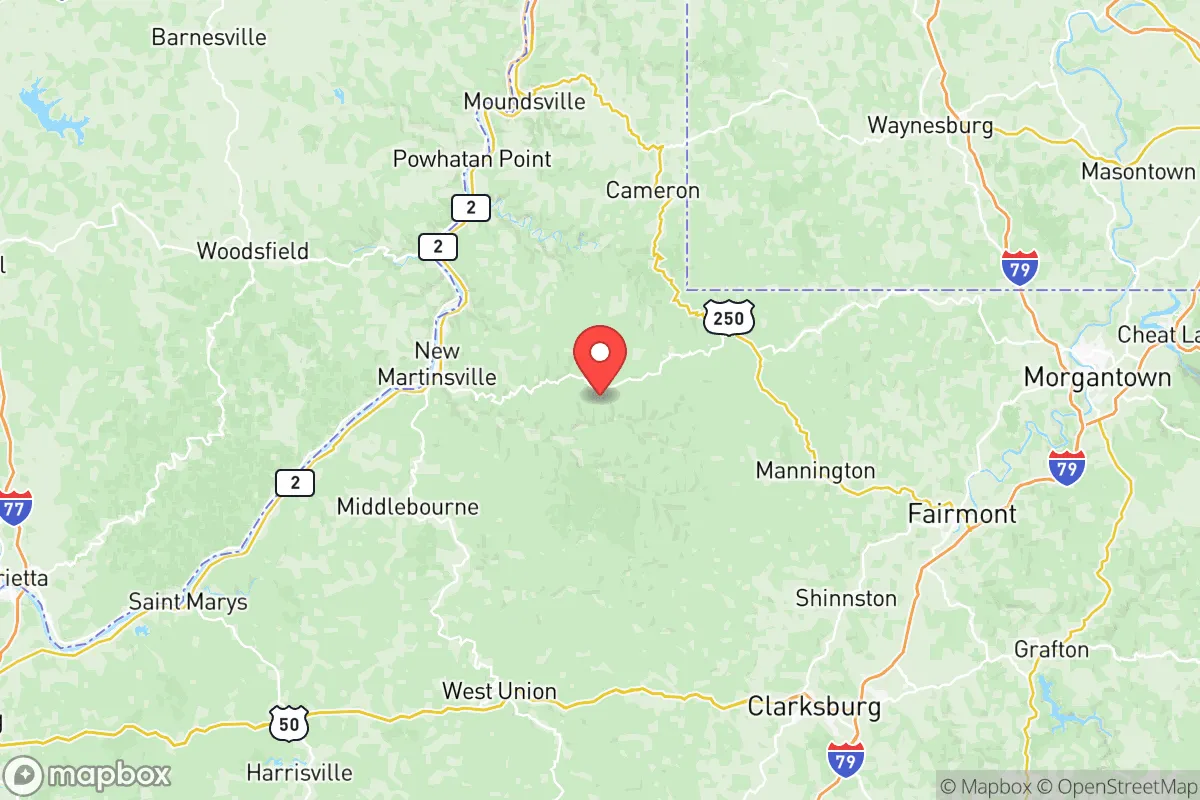
For the individual or family prioritizing maximum personal sovereignty, Wetzel County, West Virginia, offers a rare pocket of genuine autonomy in the modern United States. Nestled in the Northern Panhandle along the Ohio River, this county of roughly 15,000 residents operates with a distinct "live and let live" ethos that has been largely eroded in more urbanized and coastal regions. Unlike the encroaching regulatory regimes found in states like New York, California, or even parts of Virginia, Wetzel County’s governance structure and cultural DNA are built around the presumption of liberty—where the default answer from local officials is "yes" unless there is a clear and compelling reason to say "no." This is not a place where the state apparatus intrudes into daily life; rather, it is a landscape where personal responsibility is expected, and government overreach is met with deep skepticism. For those looking to escape the tightening grip of federal and state mandates, particularly in the realms of property use, self-defense, and family decisions, Wetzel County represents a strategic relocation target that still flies under the radar of the mass migration trends.
Tax burden and regulatory posture: How Wetzel County compares to surrounding areas
West Virginia’s state-level tax structure is already favorable for those seeking to keep more of their own earnings, and Wetzel County amplifies this advantage through its local fiscal restraint. The state has no personal property tax on vehicles or business inventory, and the income tax is a progressive structure capped at 6.5%—though recent legislative pushes aim to reduce it further. Property taxes in Wetzel County are among the lowest in the nation, with effective rates often below 0.5% of assessed value, a stark contrast to the 1.5-2.5% rates common in the Northeast or Midwest. The county’s regulatory posture is equally lean. Unlike the sprawling zoning codes of places like Morgantown or Charleston, Wetzel County operates with minimal county-wide zoning. Towns like New Martinsville, the county seat, and Paden City have basic municipal ordinances, but the unincorporated areas—which constitute the vast majority of the county’s landmass—are largely free from use restrictions. This means a landowner in Hundred or Littleton can build a workshop, park an RV, or keep livestock without navigating a labyrinth of permits. The county commission and local magistrates are known for a common-sense approach that prioritizes property rights over bureaucratic process, a stark departure from the regulatory hostility found in states like Colorado or Oregon.
Self-defense and gun law specifics: Constitutional carry and castle doctrine in practice
For the survivalist or prepper, Wetzel County sits in one of the most firearm-friendly legal environments in the country. West Virginia is a constitutional carry state, meaning no permit is required to carry a concealed firearm for anyone legally allowed to possess one. This is not a recent concession but a deeply embedded cultural norm. The state’s castle doctrine is unambiguous: there is no duty to retreat in one’s home, vehicle, or place of business, and the use of deadly force is presumed justified against unlawful intruders. Wetzel County’s sheriff’s department and local prosecutors have a track record of respecting these rights, not prosecuting defensive gun uses that would be second-guessed in more progressive jurisdictions. The county has no local ordinances that restrict magazine capacity, firearm types, or storage requirements—unlike the patchwork of bans found in places like Illinois or Washington state. For those who want to stockpile ammunition, maintain a defensive rifle, or train on private land, Wetzel County offers a legal sanctuary. The gun culture here is not performative; it is practical. Neighbors in Smithfield or Jacksonburg are more likely to discuss reloading techniques or range construction than to question why someone owns multiple firearms. This is a community where the Second Amendment is treated as a pre-existing natural right, not a government-granted privilege.
Self-reliance and homesteading viability: Lot sizes, zoning, and off-grid feasibility
Wetzel County is a homesteader’s paradise, largely because the regulatory infrastructure for preventing self-sufficiency simply does not exist here. Minimum lot sizes in unincorporated areas are effectively whatever the market dictates, with parcels as small as one acre available for purchase, though most homesteaders target 5-20 acre plots to allow for gardens, orchards, and livestock. The county has no building codes for most rural structures—a fact that shocks those coming from states where even a shed requires a permit and inspection. Off-grid living is entirely feasible: there are no county mandates requiring connection to municipal water or sewer, and many residents rely on private wells and septic systems. Solar panels, rainwater catchment, and wood stoves are common sights, not fringe experiments. The county’s topography—rolling hills and river valleys—offers ample opportunities for spring-fed water sources and passive solar orientation. Towns like Proctor and Wileyville are particularly attractive for those seeking true isolation, with gravel roads and minimal traffic. The local agricultural extension office is supportive of small-scale farming, and the county’s livestock ordinances are minimal—no restrictive "right-to-farm" battles here, because the right to farm is assumed. For the prepper looking to build a retreat with a root cellar, a greenhouse, and a backup generator, Wetzel County presents almost no bureaucratic hurdles. The only real constraint is the availability of broadband internet, which remains spotty in the more remote hollows—though Starlink has mitigated this for many.
Personal liberties: Parental rights, medical autonomy, speech, and property protections
In an era where federal agencies and state governments increasingly assert authority over family and medical decisions, Wetzel County remains a stronghold of personal liberty. Parental rights are robust: West Virginia law does not mandate vaccine passports for school attendance, and the state’s homeschool regulations are among the most lenient in the nation, requiring only a simple notice of intent and no standardized testing or curriculum approval. This allows families in New Martinsville or Hundred to educate their children according to their own values without state interference. Medical autonomy is similarly respected; the state has no forced treatment laws that would override a competent adult’s refusal of care, and the county’s healthcare providers—primarily at Wetzel County Hospital—operate with a patient-centered ethos that respects informed consent. Free speech is protected not just by the First Amendment but by a local culture that values blunt honesty over political correctness. Property protections are the bedrock of the county’s appeal: eminent domain is rarely used, and the county assessor’s office is known for fair valuations rather than aggressive tax hikes. Unlike states that have adopted "public trust" doctrines to restrict private land use, West Virginia’s courts have consistently upheld the right of landowners to exclude others and use their property as they see fit. For those who feel the creeping erosion of these rights elsewhere, Wetzel County offers a legal and cultural buffer.
Overall, Wetzel County ranks among the top-tier destinations in the Appalachian region for those prioritizing personal sovereignty. While it lacks the dramatic tax advantages of a no-income-tax state like Texas or Florida, its combination of constitutional carry, minimal zoning, off-grid feasibility, and strong parental rights creates a holistic environment where government overreach is the exception, not the rule. Compared to the regulatory saturation of the Pacific Northwest or the Northeast corridor, Wetzel County feels like a time capsule of American liberty—a place where a person can still live by their own rules, raise their family without state interference, and prepare for uncertain times without asking permission. For the strategic relocator with a survivalist mindset, this is not just a safe haven; it is a launch point for building a truly autonomous life.

* Values derived from national, state, county, city and local statistics and may differ in a specific area. Last updated: 2026-05-19T17:34:38.000Z
Narrative content on this page is AI-generated and may contain mistakes. Verify any details that matter before acting on them.
ReloMaps may earn a commission from affiliate links at no extra cost to you.

