Demographics of Westlake, TX
Affluence Level in Westlake, TX
An elite concentration of wealth — high incomes, strong home values, advanced degrees, and minimal poverty signal a top-tier socioeconomic profile.
Census doesn't track above $250K
People of Westlake, TX
Westlake, Texas, is a small, affluent city of 1,543 residents with a strikingly high concentration of Indian-subcontinent professionals, who make up 15.7% of the population—a share nearly 20 times the national average. The city is overwhelmingly white (74.1%) and highly educated (76.0% hold a bachelor’s degree or higher), with a very low foreign-born rate of 3.2% that suggests most residents are U.S.-born or naturalized long ago. Westlake’s character is defined by its master-planned luxury subdivisions, corporate headquarters, and a population that is both economically homogeneous and ethnically distinct, with Indian-subcontinent families forming a visible and growing enclave within an otherwise white-majority landscape.
How the city was settled and grew
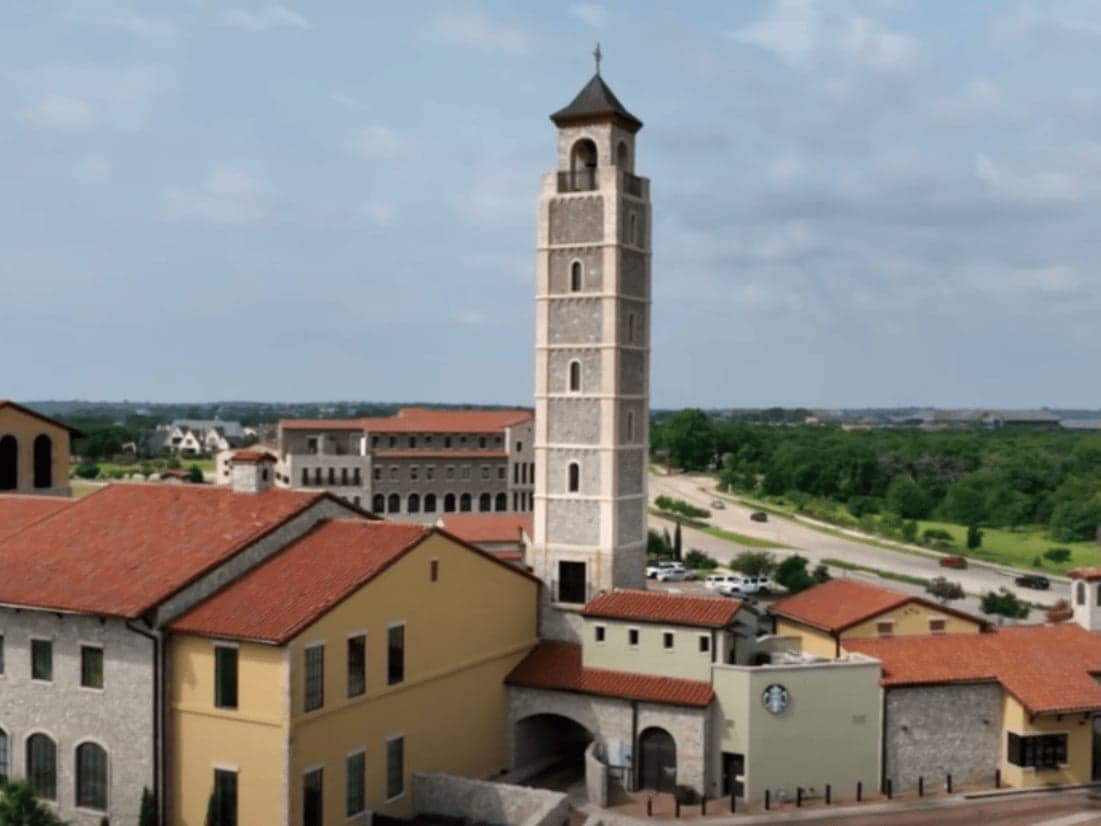
Westlake was not settled by waves of immigrants or homesteaders; it is a product of late-20th-century suburban planning. The land was originally part of the Peters Colony land grant in the 1840s, attracting Anglo-American farmers who established scattered homesteads. For over a century, the area remained rural, with no incorporated town. The first significant population shift came in the 1970s and 1980s, when Dallas-Fort Worth developers began assembling large tracts for master-planned communities. The Solana business park, built in the 1980s, anchored the city’s modern identity by attracting corporate campuses for firms like Fidelity Investments and Verizon. The first residential neighborhoods—Westlake Highlands and Westlake Estates—were built in the 1990s, drawing upper-middle-class white families from Dallas and Fort Worth who sought large lots, low taxes, and top-rated schools in the Carroll Independent School District. No historic ethnic neighborhoods exist because the city had no pre-1960s population of note.
Modern era (post-1965)
Westlake’s modern demographic story is one of corporate-driven in-migration, not immigration. The 1990s and 2000s saw the development of Vaquero, a gated golf-course community of multimillion-dollar homes, which solidified the city’s reputation as an enclave for executives and professionals. The Indian-subcontinent population began growing in the 2000s, driven by tech and finance professionals working at Solana’s corporate tenants. Today, Indian-subcontinent families are concentrated in Westlake Estates and the newer Westlake North section, where homes range from $800,000 to $2 million. East/Southeast Asian residents (0.6%) and Hispanic residents (2.7%) are present in very small numbers, mostly in service roles or as professionals in the broader DFW economy. The Black population (0.8%) is negligible. The city’s racial composition is thus bifurcated: a white majority (74.1%) and a significant Indian-subcontinent minority (15.7%), with almost no other non-white groups. This pattern reflects selective migration: Westlake’s high housing costs and lack of rental housing filter for high-income buyers, and the Indian-subcontinent professionals who arrive tend to be U.S.-educated and English-fluent, assimilating quickly into the city’s corporate culture.
The future
Westlake’s population is likely to continue growing slowly, with the Indian-subcontinent share rising toward 20-25% over the next decade. The city is not tribalizing into distinct enclaves; rather, Indian-subcontinent families are dispersing across the same neighborhoods as white residents, attending the same schools and using the same amenities. The foreign-born rate (3.2%) is so low that future growth will come almost entirely from domestic in-migration—specifically, from professionals transferring to Solana’s corporate offices or buying into Vaquero and Westlake Highlands. The white share will decline gradually as the Indian-subcontinent cohort grows, but the city will remain overwhelmingly high-income and college-educated. No new immigrant communities (Hispanic, East/Southeast Asian, or Arab) are likely to emerge, given the lack of rental housing, public transit, or entry-level jobs. The city is homogenizing by income and education while diversifying modestly by ethnicity—a pattern typical of elite Sun Belt suburbs.
For a relocating professional or family, Westlake offers a stable, low-crime, high-amenity environment where the population is united by affluence and educational attainment rather than ethnic background. The Indian-subcontinent community is well-integrated and growing, but the city’s social fabric remains dominated by white corporate culture. New arrivals should expect a place where diversity is real but narrow—limited to one well-off ethnic group—and where the next decade will bring more of the same: slow growth, high property values, and a population that looks increasingly South Asian but behaves uniformly upper-middle-class.

* Values derived from national, state, county, city and local statistics and may differ in a specific area. Last updated: 2026-04-24T04:37:22.000Z
Narrative content on this page is AI-generated and may contain mistakes. Verify any details that matter before acting on them.
ReloMaps may earn a commission from affiliate links at no extra cost to you.

