Photo: Wikipedia
Political ClimatePolitical Climate in Wheatland, WY
District shown is the primary district for this city’s centroid. Cities may span multiple districts.
Inherited from parent state — no local data available.
Local Political AnalysisPolitical Analysis of Wheatland, WY
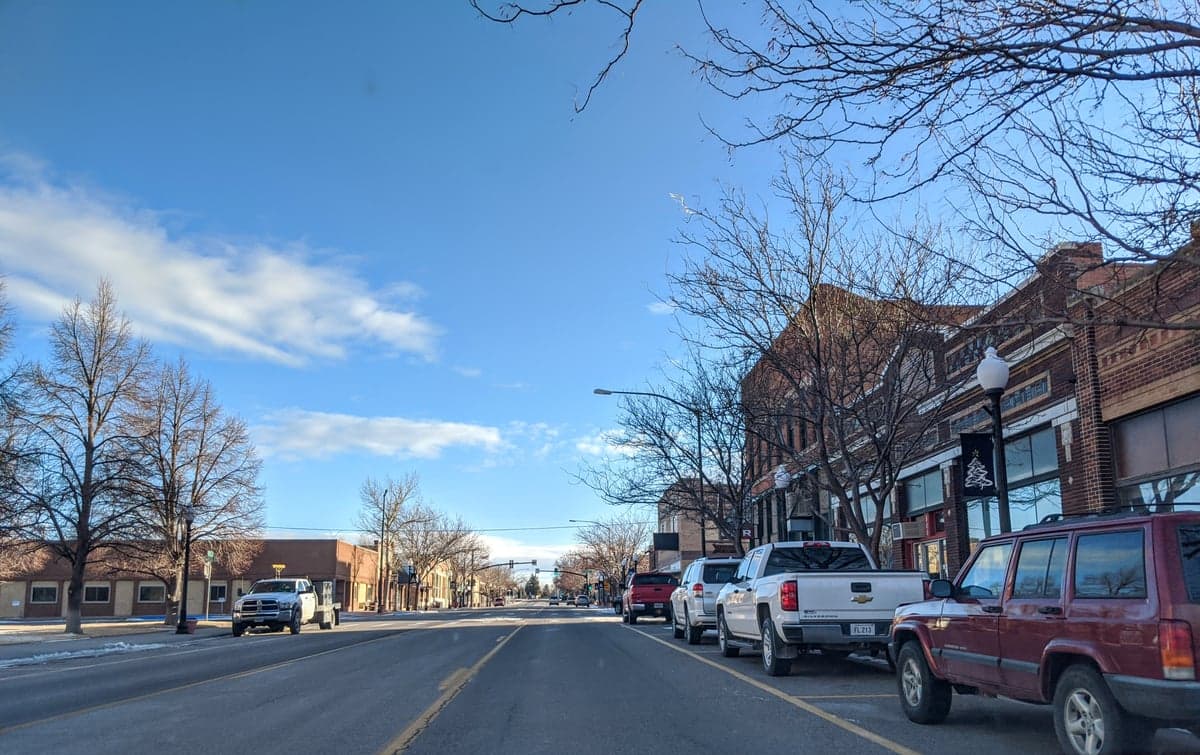
Wheatland, Wyoming, is about as solidly conservative as it gets, with a Cook PVI of R+23 that puts it deep in the red column. This isn't a purple area that flips back and forth—it's a place where Republican candidates routinely win by 20 points or more, and the local culture reflects that. If you're looking at the political trajectory, it's been steady for decades, but there are some subtle shifts happening that long-time residents are keeping an eye on, especially as folks from more progressive states start moving in.
How it compares
Compared to nearby towns like Laramie, which is home to the University of Wyoming and leans more moderate-to-liberal, Wheatland is a different world. Laramie's politics can feel like a different state entirely, with more visible progressive activism and a younger, transient population. Even Cheyenne, the state capital about 70 miles south, has a more mixed political vibe—still conservative overall, but with pockets of left-leaning influence in government and education circles. Wheatland, by contrast, is a ranching and agricultural hub where the Second Amendment is a given, not a debate, and where local government tends to keep its hands off personal business. The contrast is stark: drive 45 minutes west to Laramie and you'll see yard signs for candidates who wouldn't get a second look here.
What this means for residents
For folks living in Wheatland, the political climate means a lot of things are just simpler. You don't have to worry about overreaching local ordinances on things like property use, business regulations, or personal freedoms. The county commission and town council are generally hands-off, trusting residents to make their own choices. That said, there's a growing concern among locals about outside influence—people moving in from places like California or Colorado who bring different ideas about taxes, land use, and government involvement. The worry is that as Wheatland grows, it could start to see the same kind of bureaucratic creep that's made life more complicated in other parts of the country. For now, though, the community still values self-reliance and keeps government small.
One cultural distinction that stands out is the strong sense of local identity tied to agriculture and outdoor life. Wheatland isn't a place where you'll find a lot of political activism or protests—it's more about getting together for the county fair, supporting the local high school rodeo team, and keeping an eye on federal land management policies that affect grazing and hunting rights. The biggest political debates here tend to be about water rights, federal land use, and energy development, not social issues. That's a big part of why the area has stayed so consistently conservative: the practical concerns of daily life in a rural, resource-dependent economy naturally align with limited government and personal responsibility. If you're looking for a place where you can live your life without a lot of political noise or government overreach, Wheatland still delivers on that promise—but it's worth keeping an eye on the newcomers and the long-term trends.

State Political ClimatePolitical Climate in Wyoming
State Political AnalysisPolitical Environment in the State
Wyoming is one of the most reliably conservative states in the Union, with a Republican trifecta that has held power for decades and a partisan lean that has only deepened over the last 20 years. The state voted for Donald Trump by a massive 43-point margin in 2024, and every statewide elected office is held by a Republican. However, beneath that solid red surface, there’s a growing tension between the traditional, libertarian-leaning Western conservatism of the ranching and energy communities and a newer, more populist strain that’s taken root in the state’s few population centers. If you’re looking for a place where the government generally stays out of your business, Wyoming still delivers—but the political landscape is shifting in ways that matter for anyone considering a move here.
Urban vs. rural divide
The political map of Wyoming is stark. The state’s only real metro area, Cheyenne (Laramie County), is the most moderate part of the state, but it still votes Republican by a comfortable margin—Trump won it by about 20 points in 2024. Casper (Natrona County) and Laramie (Albany County) are the other notable population centers, with Laramie being the only reliably blue county in the state thanks to the University of Wyoming. Albany County went for Biden in 2020 and Harris in 2024, but it’s an island of blue in a sea of red. The rest of the state—places like Gillette (Campbell County), Rock Springs (Sweetwater County), and Jackson (Teton County)—are overwhelmingly conservative, though Jackson’s Teton County is a notable exception: it’s the wealthiest county in the state and votes blue, driven by the ski resort and second-home crowd. The rural counties, like Sublette, Lincoln, and Fremont, are deep red, often voting 80%+ Republican. The urban-rural divide here isn’t about big cities vs. small towns—it’s about the handful of college towns and resort enclaves vs. the vast, resource-dependent hinterlands.
Policy environment
Wyoming’s policy environment is a dream for those who want low taxes and minimal regulation. There is no state income tax, and the sales tax is a low 4% (with local options pushing it to around 6%). Property taxes are among the lowest in the nation, and the state has a strong right-to-work law. The regulatory posture is aggressively pro-energy and pro-agriculture, with the state actively fighting federal overreach on public lands and environmental rules. On education, Wyoming has a school choice program that includes charter schools and a robust homeschool community, though the state’s rural nature means options can be limited. Healthcare policy is mixed: the state did not expand Medicaid under the ACA, and there’s a strong push for medical freedom, including a 2024 law that protects doctors from being forced to perform procedures against their conscience. Election laws are solid—voter ID is required, and the state has no mail-in voting without an excuse. The legislature has also passed laws to restrict ballot harvesting and tighten absentee ballot rules. For a conservative, the policy environment is about as friendly as it gets, but the state’s heavy reliance on federal mineral royalties and BLM land means it’s not as independent as it looks on paper.
Trajectory & freedom
Wyoming is becoming more free in several key areas, but there are warning signs. The state passed a constitutional carry law in 2021, allowing permitless concealed carry, and has a strong castle doctrine and stand-your-ground law. In 2023, the legislature passed the “Firearm Protection Act,” which prohibits state and local enforcement of any future federal gun bans—a direct nullification move. On parental rights, Wyoming has a Parents’ Bill of Rights that requires schools to notify parents of any changes to a child’s health or well-being, and it bans transgender procedures for minors. Medical freedom got a boost with a 2024 law that prohibits vaccine mandates by private employers and protects doctors who refuse to perform gender transition procedures. However, the state’s freedom is threatened by its dependence on federal land—nearly half of Wyoming is owned by the federal government, which means BLM and Forest Service policies can override state law on land use, grazing, and energy development. The state has fought back with lawsuits and the “Transfer of Public Lands” movement, but it’s an ongoing battle. On the taxation front, the state has not introduced an income tax, but there’s been talk of a sales tax expansion to cover services, which would be a step backward.
Civil unrest & political movements
Wyoming is not a hotbed of civil unrest, but there have been notable flashpoints. The most visible is the ongoing conflict over federal land management, particularly around the Bridger-Teton National Forest and the Red Desert. In 2022, there were protests in Kemmerer over a proposed wind farm that locals said would ruin the view and harm wildlife—a rare instance of conservatives protesting “green energy” development. The state also saw a significant push for election integrity after the 2020 election, with the legislature forming a special committee that led to the tighter voting laws mentioned earlier. There’s a small but vocal secessionist movement, the “Wyoming First” group, that advocates for the state to take over federal lands and even consider leaving the Union, though it’s fringe. Immigration politics are quiet—Wyoming has a very small foreign-born population, so it’s not a flashpoint. The most visible political movement is the “Sagebrush Rebellion,” which is alive and well, with local officials in Sublette County and Lincoln County regularly passing resolutions demanding the feds hand over land. A new resident would notice the “Keep Wyoming Free” bumper stickers and the general distrust of federal authority, but actual protests are rare and usually small.
Projection
Over the next 5-10 years, Wyoming will likely stay deeply conservative, but the nature of that conservatism is shifting. The state is seeing an influx of remote workers and retirees from blue states, particularly to Jackson and Teton County, which is driving up housing costs and creating a cultural divide between the old ranching families and the new arrivals. This could push Teton County even further left, but it won’t flip the state. The bigger trend is the rise of a populist, anti-establishment wing of the GOP that is challenging the old energy-and-ranching establishment. This faction is pushing for even more aggressive nullification of federal laws, a state-backed cryptocurrency, and a complete takeover of federal lands. The state’s population is aging and shrinking in rural areas, which could lead to a consolidation of political power in Cheyenne and Casper. The biggest wildcard is the energy transition: if coal and oil decline, the state’s budget will take a hit, forcing either tax increases or deep cuts. A new resident moving in now should expect a state that remains a bastion of conservative values, but with increasing internal friction between the libertarian old guard and the populist newcomers, and a constant battle with the federal government over land and resources.
For a new resident, the bottom line is this: Wyoming offers a level of personal freedom and low taxation that is increasingly rare in the United States. You can carry a gun without a permit, homeschool your kids without heavy oversight, and keep more of your money. But you’ll also have to accept that the state is heavily dependent on federal dollars and federal land, which creates a constant tension between the desire for independence and the reality of reliance. If you’re moving here for the freedom, you’ll find it—but you’ll also find a political scene that is more complex and internally divided than the red-state label suggests. The key is to pick your county wisely: stick to the rural areas or the smaller cities like Gillette or Rock Springs if you want the full conservative experience, and avoid Laramie and Jackson if you want to escape progressive politics entirely.
* Values derived from national, state, county, city and local statistics and may differ in a specific area. Last updated: 2026-10-10T16:29:22.000Z
Narrative content on this page is AI-generated and may contain mistakes. Verify any details that matter before acting on them.
ReloMaps may earn a commission from affiliate links at no extra cost to you.

