Photo: Wikipedia
Demographics of Wheaton, IL
Affluence Level in Wheaton, IL
An upper-middle-class area. Household wealth, education levels, and homeownership run ahead of national benchmarks.
People of Wheaton, IL
The people of Wheaton, Illinois, today form a predominantly white, highly educated community of 53,453 residents, with a notably low foreign-born share of 4.2% that reflects its historic character as a conservative, religiously influenced suburb. The city’s identity is shaped by its role as the home of Wheaton College, a flagship evangelical institution, and by a population that is 78.1% white, 7.9% Hispanic, 4.5% East/Southeast Asian, 3.6% Black, and 1.4% Indian. With 64.1% of adults holding a college degree, Wheaton is a knowledge-worker hub that blends small-town feel with proximity to Chicago, but its demographic profile is markedly less diverse than neighboring DuPage County suburbs like Naperville or Aurora.
How the city was settled and grew
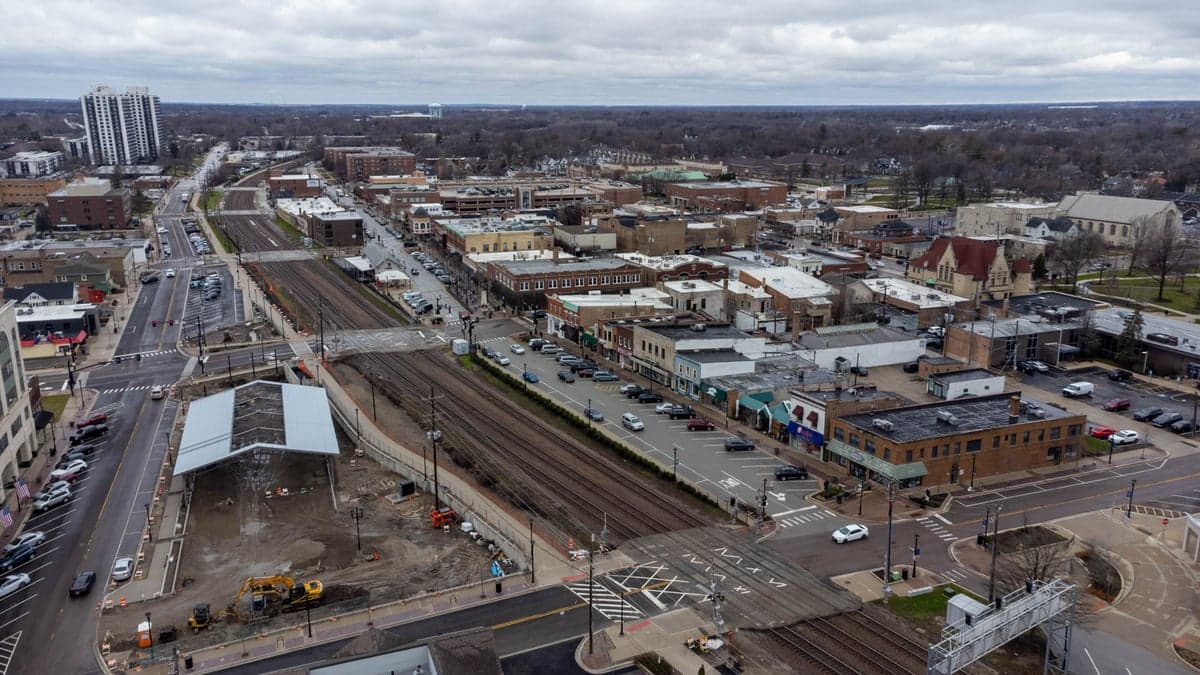
Wheaton’s original population was drawn by the Galena & Chicago Union Railroad in the 1850s, which turned a rural crossroads into a commuter stop for Chicago-bound farmers and merchants. The city was named after Erastus and Warren Wheaton, who donated land for the railroad depot and platted the original grid. The first wave of settlers were Yankee Protestants from New England and upstate New York, who established Wheaton as a dry, Sabbatarian town—a character reinforced by the founding of Wheaton College in 1860 as an abolitionist, evangelical institution. These early families built the Downtown Wheaton historic district around the train station, with Victorian homes and brick storefronts that still anchor the commercial core. A second wave came with the post-Civil War expansion of the college, drawing faculty and students from across the Midwest, who settled in the College Hill neighborhood east of campus, where large Queen Anne and Craftsman homes remain. By 1900, Wheaton’s population was nearly entirely native-born white, with a small Black community centered around the Lincoln School area on the south side, serving domestic workers and railroad laborers. The city remained a quiet, religiously conservative enclave through the mid-20th century, growing slowly from 7,000 in 1920 to 24,000 in 1960, as families were drawn by its reputation for low crime, strong schools, and a ban on alcohol sales that lasted until 1985.
Modern era (post-1965)
After the 1965 Immigration and Nationality Act, Wheaton saw only modest demographic change compared to other Chicago suburbs, due to its high housing costs and lack of industrial employment. The city’s foreign-born share peaked at just 5.1% in 2010 and has since declined to 4.2%, as many immigrant families have gravitated toward more affordable and diverse suburbs like Carol Stream or Glendale Heights. The largest post-1965 influx has been of East/Southeast Asian families, particularly Chinese and Korean professionals, who moved into the Danada Farms area in the 1990s and 2000s—a master-planned subdivision of large single-family homes near the Danada Forest Preserve. These households were drawn by Wheaton’s top-rated public schools, especially Wheaton North and Wheaton Warrenville South high schools, and now make up 4.5% of the population. The Hispanic population, at 7.9%, is concentrated in the West Wheaton neighborhood near the DuPage County Fairgrounds, where older, smaller homes and rental apartments provide more affordable entry points. The Black population has remained stable at 3.6%, with a historic cluster around Hawthorne Elementary on the south side, though many Black families have moved to more diverse suburbs like Bolingbrook or Plainfield. The Indian subcontinent community, at 1.4%, is a recent arrival, primarily professionals in tech and healthcare who settled in the Muirhead subdivision near the county line, drawn by the same school reputation that attracted East Asian families. Notably, Wheaton has not experienced the rapid diversification seen in Naperville or Schaumburg; its white share has only declined from 88% in 1990 to 78.1% today, reflecting a slower pace of change.
The future
Wheaton’s population is likely to remain predominantly white and highly educated over the next 10–20 years, with gradual increases in East/Southeast Asian and Hispanic shares but no dramatic shift. The city’s housing stock—dominated by single-family homes with a median value of $420,000—limits affordability for younger families and immigrants, reinforcing a demographic plateau. The East/Southeast Asian population, concentrated in Danada Farms, is expected to grow modestly as second-generation children remain in the area for its schools, but the community is assimilating into the broader professional class. The Hispanic population in West Wheaton may increase slightly as families move from nearby Aurora, but the area’s lack of rental housing and transit access constrains growth. The Indian community, while small, is likely to expand as tech workers seek Wheaton’s schools over more expensive suburbs like Hinsdale. The city’s low foreign-born share (4.2%) and high college attainment (64.1%) suggest it will remain a relatively homogeneous, conservative-leaning enclave—not tribalizing into distinct ethnic enclaves, but slowly diversifying at the margins. The biggest wildcard is the future of Wheaton College, which has faced enrollment pressures and could shift the city’s character if it attracts more international students or secular faculty.
For a conservative-leaning mover today, Wheaton is becoming a stable, high-amenity suburb that is slowly diversifying without losing its core identity as a religiously influenced, family-oriented community. The city offers strong schools, low crime, and a walkable downtown, but its demographic trajectory is one of gradual, managed change rather than rapid transformation. New residents should expect a place where the population is aging slightly (median age 37.5) and where the dominant culture remains white, evangelical, and college-educated, with small but growing pockets of East Asian and Hispanic families in specific neighborhoods like Danada Farms and West Wheaton.

* Values derived from national, state, county, city and local statistics and may differ in a specific area. Last updated: 2026-04-29T19:18:21.000Z
Narrative content on this page is AI-generated and may contain mistakes. Verify any details that matter before acting on them.
ReloMaps may earn a commission from affiliate links at no extra cost to you.

