Demographics of Williamsburg, WV
Affluence Level in Williamsburg, WV
A low-income area with significant economic hardship. Household wealth and educational attainment are well below national averages.
People of Williamsburg, WV
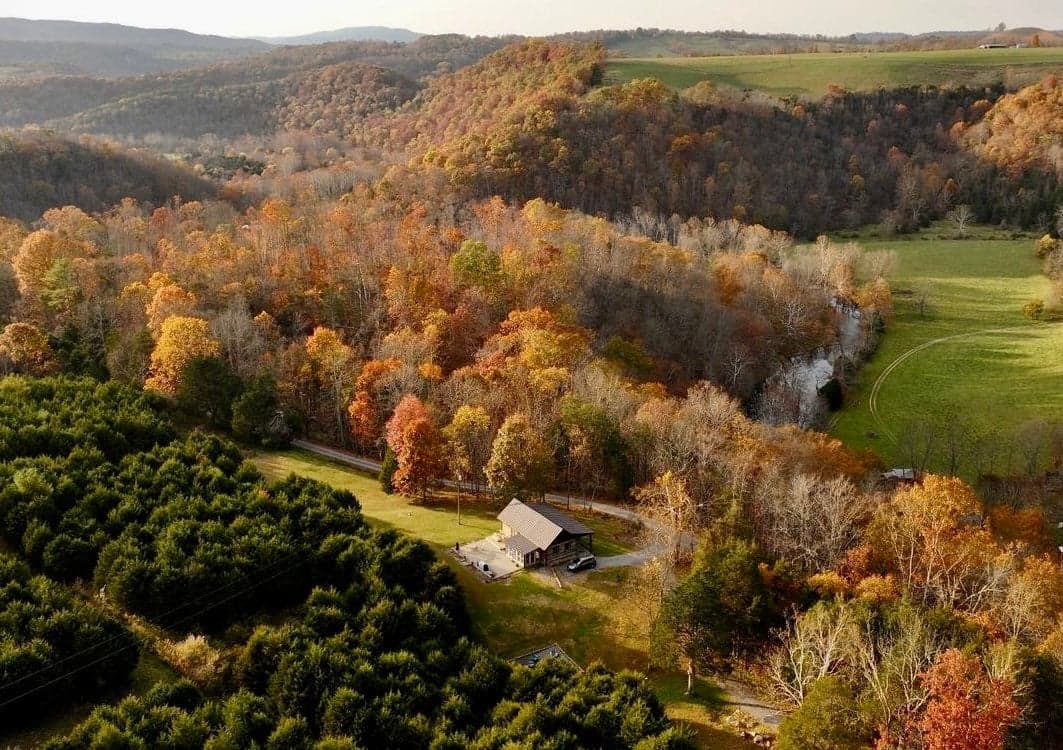
Williamsburg, West Virginia, is a small, overwhelmingly white Appalachian community of 3,449 residents, where 87.4% of the population identifies as White alone. The city is characterized by a deeply rooted, locally born population with very little ethnic or racial diversity — the foreign-born share is just 0.1%, and the Hispanic and Black populations stand at 0.7% and 3.5%, respectively. With only 10.4% of adults holding a college degree, Williamsburg’s identity is working-class, rural, and socially conservative, shaped by generations of families tied to the coal and railroad industries that built the region. For a conservative-leaning newcomer, this is a place where community ties are strong, change is slow, and the population is both aging and shrinking.
How the city was settled and grew
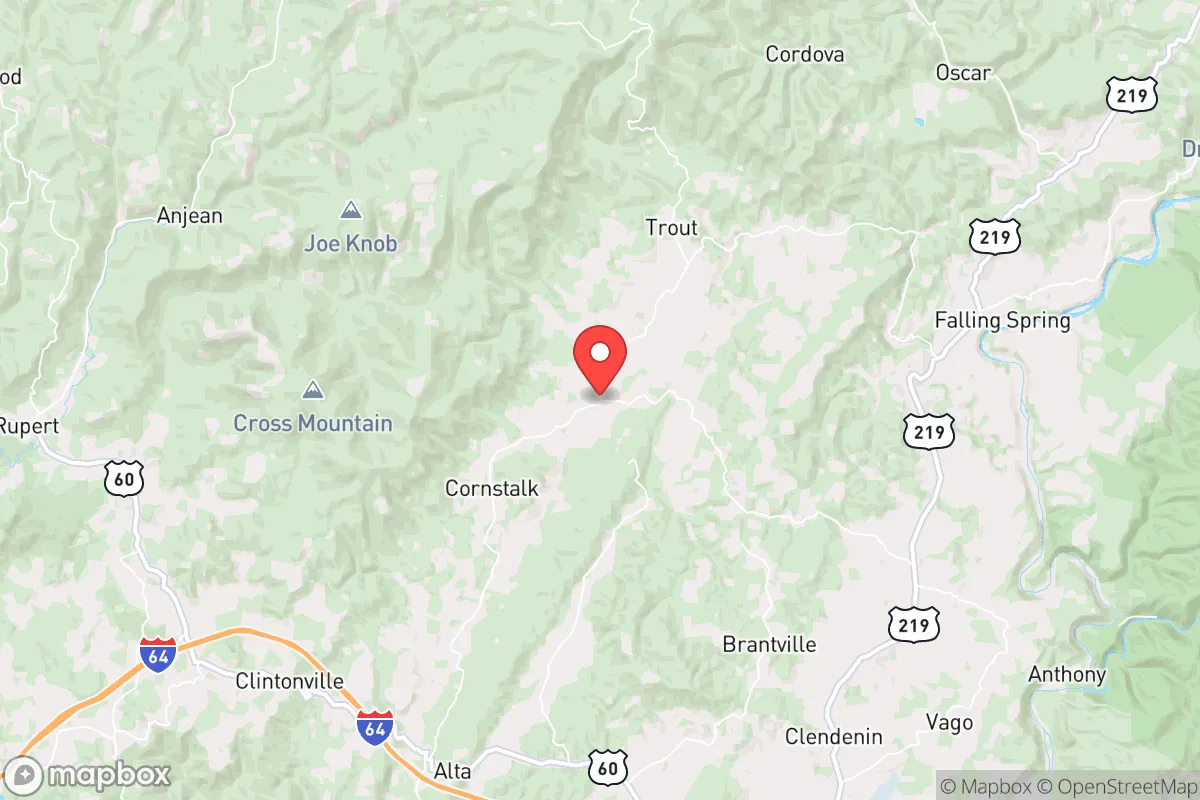
Williamsburg’s human history begins in the late 19th century, when the Chesapeake and Ohio Railway pushed through the Greenbrier River valley, opening the area to coal extraction and timber. The first permanent settlers were Scotch-Irish and English migrants from the Virginia Piedmont and eastern Kentucky, drawn by land grants and jobs in the region’s burgeoning coal camps. The original town plat, laid out in the 1890s, centered on the railroad depot and the main commercial strip along what is now West Virginia Route 12. The Old Town neighborhood, clustered around the historic depot and the Greenbrier River bridge, was built by these early railroad and timber workers, many of whom lived in company-owned row houses. A second wave arrived between 1910 and 1930, when deeper coal seams were opened in the surrounding hills. These miners and their families settled in the East End district, a grid of modest frame houses east of the downtown core, and in the River Bottom area along the Greenbrier, where flood-prone land was cheap and close to the mines. The city’s population peaked near 4,500 in the 1950s, sustained by steady coal employment and a small but stable manufacturing base in nearby Ronceverte and Lewisburg.
Modern era (post-1965)
After the 1965 Hart-Cellar Act, Williamsburg saw virtually no immigration — the foreign-born population remains below 0.2% — because the local economy offered few opportunities for newcomers. Instead, the post-1965 story is one of domestic out-migration. The mechanization of coal mining and the collapse of deep-shaft operations in the 1980s and 1990s drove thousands of working-age residents to seek jobs in Charlotte, Raleigh, and other Southern cities. Those who stayed were largely older, retired miners and their descendants, along with a small number of families employed in healthcare, education, and local government. The West Side neighborhood, built in the 1970s as a subdivision for mine supervisors and small business owners, became the most stable middle-class enclave, while the Hillcrest area, developed in the 1980s, attracted a mix of retirees and younger families who could afford newer homes. The Black population, which had been concentrated in the Depot District near the railroad yards during the segregation era, declined sharply after the 1970s as railroad jobs disappeared; today, Black residents make up just 3.5% of the city, scattered across all neighborhoods. The Hispanic and Asian populations are negligible — 0.7% and 0.0%, respectively — and the Indian-subcontinent share is also 0.0%, reflecting the city’s lack of economic pull for immigrant communities.
The future
Williamsburg’s population is heading toward further homogenization and decline. The city lost roughly 12% of its residents between 2000 and 2020, and the trend is expected to continue as the remaining elderly population passes away and few young families move in. The college-educated share (10.4%) is well below the state average, limiting the city’s ability to attract remote workers or knowledge-economy transplants. There is no sign of growing immigrant or minority communities — the foreign-born and Hispanic shares are essentially static — and the city is not becoming more diverse. Instead, the population is tribalizing along generational lines: older, long-term residents in Old Town and River Bottom versus a slightly younger cohort in Hillcrest and West Side. The next 10–20 years will likely see further contraction, with the city’s character remaining overwhelmingly White, working-class, and conservative. Newcomers will find a tight-knit, insular community where roots run deep and outsiders are accepted slowly.
For someone moving in now, Williamsburg is a place of stability and tradition, not growth or change. The population is aging, shrinking, and culturally homogeneous — a deliberate choice for those seeking a quiet, low-cost, rural lifestyle, but a dead end for anyone looking for demographic diversity or economic dynamism. The city’s future is one of managed decline, not revival, and newcomers should expect to integrate into a community that values continuity over change.

* Values derived from national, state, county, city and local statistics and may differ in a specific area. Last updated: 2026-04-23T05:58:53.000Z
Narrative content on this page is AI-generated and may contain mistakes. Verify any details that matter before acting on them.
ReloMaps may earn a commission from affiliate links at no extra cost to you.

