Political ClimatePolitical Climate in Williamsburg, WV
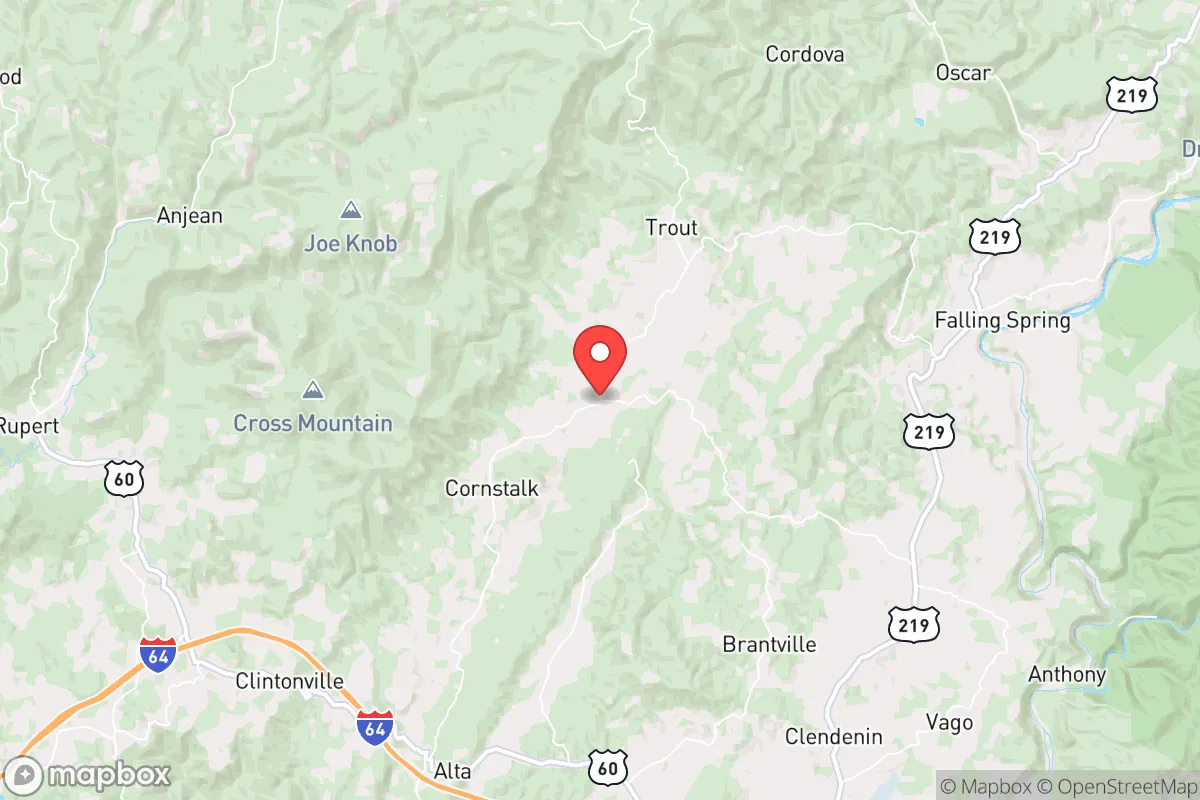
District shown is the primary district for this city’s centroid. Cities may span multiple districts.
Local Political AnalysisPolitical Analysis of Williamsburg, WV
Williamsburg, West Virginia, is about as solidly conservative as it gets, with a Cook PVI of R+22 that tells you pretty much everything you need to know about the local voting habits. This isn't a place that's been trending blue or even purple—it's been reliably red for as long as anyone can remember, and the political climate here reflects a deep-seated belief in limited government, personal responsibility, and traditional values. The surrounding Greenbrier County leans the same way, though you'll find a bit more of a mixed bag in places like Lewisburg, which has a small but vocal progressive crowd that tends to cluster around the college and arts scene. But out here in Williamsburg, it's a different story—folks are wary of any government overreach, whether it's from Charleston or Washington, and they vote accordingly.
How it compares
Compared to the rest of West Virginia, Williamsburg is actually a bit more conservative than the state average, which itself is already one of the most Republican-leaning states in the country. The R+22 rating puts it in the same ballpark as deep-red rural counties like Mingo or Wyoming, where Democratic candidates rarely crack 30% of the vote. Drive 30 minutes north to Lewisburg, and you'll see a different picture—that town has a noticeable progressive undercurrent, with local elections sometimes hinging on environmental issues and social policies that would never fly here. In Williamsburg, the political conversation is still dominated by gun rights, energy independence, and keeping taxes low. The contrast is stark: Lewisburg might have a farmers market with a "Black Lives Matter" sign, while Williamsburg's main street still flies the Gadsden flag without irony.
What this means for residents
For the people who live here, the conservative tilt means a government that mostly stays out of your business—at least at the local level. Property taxes are low, zoning is minimal, and there's no real appetite for the kind of progressive social engineering you see in bigger cities. That said, there's been a creeping concern in recent years about state-level mandates, especially around COVID-era restrictions and school curriculum changes that some see as federal overreach. The long-term worry is that as West Virginia gets more attention from out-of-state transplants and remote workers, the political culture could shift. But for now, Williamsburg remains a place where you can still own a firearm without a permission slip, where the Second Amendment isn't up for debate, and where the local school board isn't pushing critical race theory or gender ideology. The trajectory is stable, but it requires vigilance—every election cycle brings new attempts to chip away at local control and personal freedoms.
One cultural distinction worth noting is the strong influence of the coal and natural gas industries here, which shapes not just the economy but the entire political worldview. People in Williamsburg see energy production as a matter of national security and personal liberty, not just a job. Any talk of a "green transition" or carbon taxes is met with deep skepticism, because it feels like an attack on their way of life. There's also a strong church presence—mostly independent Baptist and Methodist congregations—that reinforces the conservative social fabric. If you're looking for a place where the government respects your rights and doesn't try to micromanage your life, Williamsburg is still that place. But keep an eye on the statehouse; the fight over local control versus federal mandates is never really over.

State Political ClimatePolitical Climate in West Virginia
State Political AnalysisPolitical Environment in the State
West Virginia has long been one of the most reliably Republican states in the nation, but that wasn’t always the case. As recently as the 1990s, it was a Democratic stronghold at the state and local level, with registered Democrats outnumbering Republicans by a 2-to-1 margin. That flipped hard and fast. By 2024, Donald Trump carried the state by nearly 40 points, and Republicans now hold supermajorities in both chambers of the legislature, every statewide office, and all three U.S. House seats. The shift is driven by a working-class exodus from the national Democratic Party over cultural issues, energy policy, and Second Amendment rights. For a conservative-leaning relocator, the state offers a deeply red political environment, but with some important local nuances worth understanding.
Urban vs. rural divide
The political map of West Virginia is not a simple city-versus-country story. The state’s largest metro, Charleston, still leans Democratic, but not by much. Kanawha County, home to Charleston, voted for Trump by a 54-44 margin in 2024 — a far cry from the 60-40 Democratic margins it delivered in the 1990s. The real Democratic holdouts are in the northern panhandle and the Monongahela Valley. Morgantown, home to West Virginia University, is the state’s most liberal enclave, with Monongalia County voting for Joe Biden in 2020 and only narrowly going for Trump in 2024. Huntington and Wheeling are more purple than red, with Huntington’s Cabell County flipping from Obama to Trump to Biden and back to Trump over the last four cycles. The rural counties — Mingo, Logan, McDowell, Wyoming — are the deepest red, often delivering 80-85% for Trump. The eastern panhandle, including Berkeley County and Jefferson County, is a fast-growing area with an influx of former D.C. metro residents; it’s reliably Republican but more moderate on social issues than the rest of the state. If you’re looking for a deep-red community with low taxes and minimal government interference, the southern coalfields or the Ohio River counties are your best bet.
Policy environment
West Virginia’s policy environment is aggressively conservative by national standards, but with a populist streak that sometimes surprises outsiders. There is no state income tax on Social Security benefits, and the state has been phasing down its personal income tax — the rate was cut from 6.5% to 3.99% in 2023, with a goal of full elimination by 2030. Sales tax is 6%, with no local add-ons. Property taxes are among the lowest in the nation, capped by the state constitution at 1.5% of assessed value for most classes. The state is a constitutional carry state — no permit needed to carry a concealed firearm — and has a strong preemption law that prevents local governments from enacting their own gun restrictions. Education policy has been a flashpoint: the state passed a robust school choice law in 2021, including Education Savings Accounts (ESAs) worth roughly $4,700 per student, usable for private school tuition, homeschooling expenses, or tutoring. The state also has a near-total ban on abortion, with no exceptions for rape or incest, and a 14-day waiting period for the procedure. Election laws are relatively strict: voter ID is required, same-day registration is not allowed, and absentee voting requires an excuse. There are no sanctuary city policies anywhere in the state — in fact, a 2020 law prohibits any local government from adopting such policies. For a conservative relocator, the policy environment is about as friendly as it gets in the lower 48.
Trajectory & freedom
West Virginia is becoming more free in several key dimensions, but not uniformly. The 2021 ESA law was a landmark expansion of educational freedom, and the 2023 income tax cut was the largest in state history. On Second Amendment rights, the state has moved from a shall-issue permit system to constitutional carry in 2016, and in 2023 it passed a law prohibiting state enforcement of any future federal gun bans. Medical autonomy took a hit in 2023 when the legislature overrode the governor’s veto to ban gender-affirming care for minors — a move that conservatives cheered but that some libertarians saw as government overreach. Property rights are strong: the state has a right-to-farm law that protects agricultural operations from nuisance lawsuits, and it does not have a statewide zoning mandate. However, the state’s eminent domain record is mixed — the Mountain Valley Pipeline controversy saw the state government use eminent domain to seize private land for a private corporation, which angered many property-rights advocates. On the whole, the trajectory is toward less government interference in daily life, but the pipeline fight shows that the state’s populist streak can sometimes override libertarian principles when big industry is involved.
Civil unrest & political movements
West Virginia has a history of labor militancy that predates its current conservative alignment. The 2018 statewide teachers’ strike shut down every school in the state for nine days and won a 5% pay raise — a rare example of a successful left-wing protest in a deeply red state. More recently, the Mountain Valley Pipeline protests have been a recurring flashpoint, with environmental activists and some property-rights advocates clashing with law enforcement in Wetzel County and Greenbrier County. On the right, the state has seen a surge in Second Amendment sanctuary resolutions — over 40 counties have passed them, declaring they will not enforce any future federal gun restrictions. Election integrity has been a live issue: the 2020 election saw no major controversies in West Virginia, but the legislature has tightened voting laws anyway, including a 2021 law that requires all absentee ballots to be notarized. Immigration politics are largely absent — the state has one of the smallest foreign-born populations in the country, and there are no sanctuary policies. The most visible political movement a new resident would notice is the MAGA-aligned grassroots that dominates county-level Republican committees, especially in the southern coalfields. If you’re moving to Beckley or Bluefield, you’ll find a deeply conservative, churchgoing culture with little tolerance for progressive activism.
Projection
Over the next 5-10 years, West Virginia is likely to become even more Republican, but with a growing tension between its populist and libertarian wings. The state’s population is aging and shrinking — it lost 3.2% of its population between 2020 and 2024, the second-highest rate in the nation. The people leaving tend to be younger and more moderate, while those moving in are often retirees or remote workers from blue states seeking lower taxes and fewer regulations. This demographic shift will likely push the state further right on cultural issues, but it could also create a new constituency for tax cuts and deregulation. The income tax phase-out, if completed, would make West Virginia one of nine states with no income tax, which could accelerate in-migration from high-tax states like New York and California. The wild card is the energy transition: if coal continues to decline, the southern coalfields could become even more economically depressed, potentially fueling more populist anger. But if natural gas and renewable energy (the state has significant wind potential in the eastern panhandle) take up the slack, the economic base could diversify. For someone moving in now, expect a state that is deeply red, increasingly free-market, and culturally traditional — but with a populist edge that can sometimes surprise you.
For a conservative relocator, West Virginia offers a rare combination: low taxes, strong gun rights, school choice, and a culture that values self-reliance. The trade-offs are a shrinking economy in many areas, limited healthcare access in rural counties, and a state government that is sometimes more interested in picking winners (like the pipeline) than in pure free-market principles. If you’re looking for a place where your values are the norm and the government mostly leaves you alone, West Virginia is one of the best bets in the country — just be prepared for the occasional populist twist.
* Values derived from national, state, county, city and local statistics and may differ in a specific area. Last updated: 2026-04-23T05:58:53.000Z
Narrative content on this page is AI-generated and may contain mistakes. Verify any details that matter before acting on them.
ReloMaps may earn a commission from affiliate links at no extra cost to you.

