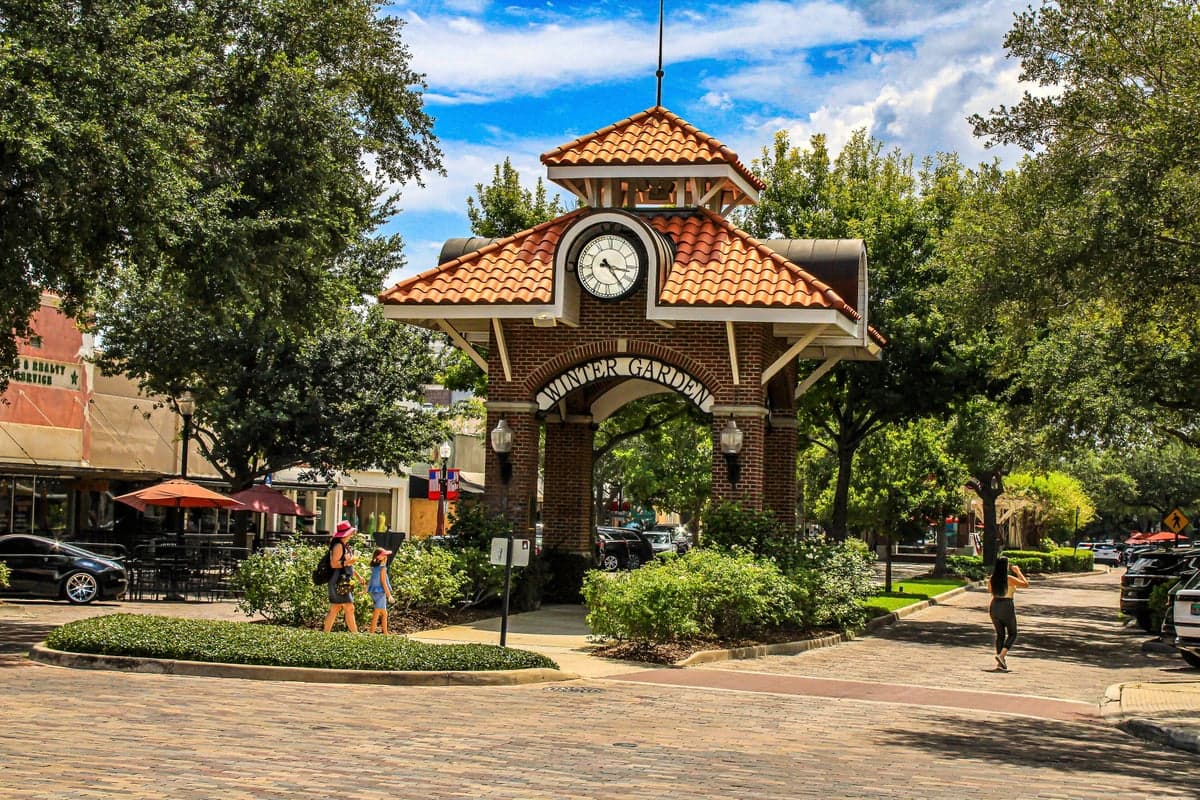
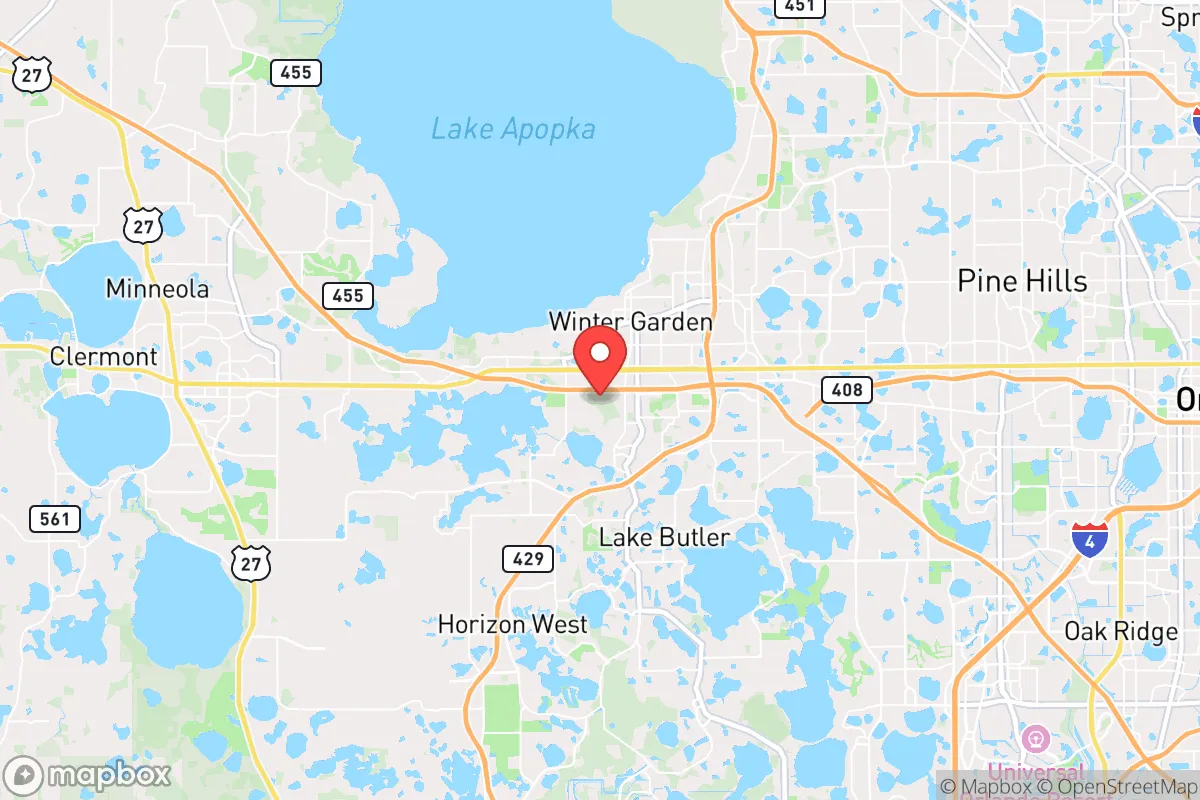
Photo: Wikipedia
Demographics of Winter Garden, FL
Affluence Level in Winter Garden, FL
A middle-class area roughly in line with national averages across income, home values, education, and employment.
People of Winter Garden, FL
Winter Garden, Florida, today is a rapidly growing city of 47,182 residents that blends historic small-town character with modern suburban expansion. Its population is notably diverse: 50.9% White, 23.8% Hispanic, 11.4% Black, 4.7% East/Southeast Asian, and 2.5% Indian (subcontinent), with 11.3% foreign-born and 43.6% college-educated. The city retains a distinct identity as a former citrus and railroad hub that has transformed into a sought-after Orlando-adjacent community, attracting families and professionals seeking newer housing, good schools, and a walkable historic downtown.
How the city was settled and grew
Winter Garden was founded in the 1880s as a railroad and citrus center, drawing its first permanent residents from the rural South and Midwest. The Lake Apopka region's fertile muck soils attracted farmers, and the arrival of the Tavares and Gulf Railroad in 1885 spurred the town's incorporation in 1908. The original population was overwhelmingly White and native-born, with a small number of Black families who worked in the citrus groves and settled in the Lakeview neighborhood south of downtown. The city's historic core, now known as the Historic Downtown Winter Garden district, was built by these early Anglo-American settlers and remains the city's commercial and social heart. Through the mid-20th century, Winter Garden remained a relatively small, homogeneous farming community, with citrus as the dominant employer and the population hovering under 5,000 until the 1960s.
Modern era (post-1965)
Winter Garden's modern demographic transformation began in earnest after the 1965 Immigration and Nationality Act and accelerated with Orlando's suburban boom. The city's population more than doubled between 2000 and 2020, driven by domestic in-migration from the Northeast and Midwest, as well as international arrivals. Hispanic residents, primarily of Puerto Rican and Mexican origin, began settling in the Stoneybrook West and Lake Avalon subdivisions in the 1990s and 2000s, drawn by affordable new construction and proximity to Orlando's service and construction jobs. Black families, many relocating from other parts of Florida and the South, concentrated in the Oakland Avenue corridor and the Winter Garden Village area, where newer townhomes and apartments offered entry points. East/Southeast Asian communities, including Vietnamese and Filipino families, arrived through professional and family reunification channels, settling in Lake Apopka Natural Gas District neighborhoods and the West Orange Trail area. Indian (subcontinent) residents, a smaller but growing group, are concentrated in the Waterleigh and Hamlin master-planned communities, drawn by tech and healthcare jobs in nearby Lake Nona and downtown Orlando. The foreign-born share of 11.3% reflects this steady but not explosive international inflow, with most growth still coming from domestic migration.
The future
Winter Garden's population is heading toward continued diversification, but not toward homogenization. The city is developing distinct enclaves: Waterleigh and Hamlin are becoming majority-White and Indian-subcontinent professional hubs, while Stoneybrook West remains heavily Hispanic and Lakeview retains its Black and working-class character. Hispanic growth is plateauing slightly as the community matures and second-generation residents assimilate into broader suburban patterns. East/Southeast Asian and Indian populations are growing steadily, driven by professional migration to Orlando's expanding medical and tech sectors, but remain smaller shares. The White share, while still a plurality at 50.9%, is declining as new housing attracts more diverse buyers. The college-educated share of 43.6% is rising, reflecting the city's appeal to knowledge workers. Over the next 10-20 years, Winter Garden will likely become more racially and economically stratified by neighborhood, with the historic core and newer master-planned communities pulling in opposite demographic directions.
For someone moving in now, Winter Garden is a city in transition: still anchored by its historic downtown and family-friendly reputation, but increasingly fragmented into distinct demographic zones. The city offers strong schools, low crime relative to Orlando, and a walkable core, but newcomers should expect neighborhood character to vary significantly by subdivision. The long-term trajectory points toward a more diverse, more educated, and more economically stratified community, with the historic citrus-town identity fading into a modern Sun Belt suburb.

* Values derived from national, state, county, city and local statistics and may differ in a specific area. Last updated: 2026-05-12T15:49:31.000Z
Narrative content on this page is AI-generated and may contain mistakes. Verify any details that matter before acting on them.
ReloMaps may earn a commission from affiliate links at no extra cost to you.

