Photo: Wikipedia
Find The Best Places To Live
in Winter Garden
PRO TIP! You can paste a Zillow or Redfin link to get info on that property.
What It's Like Living in Winter Garden, FL
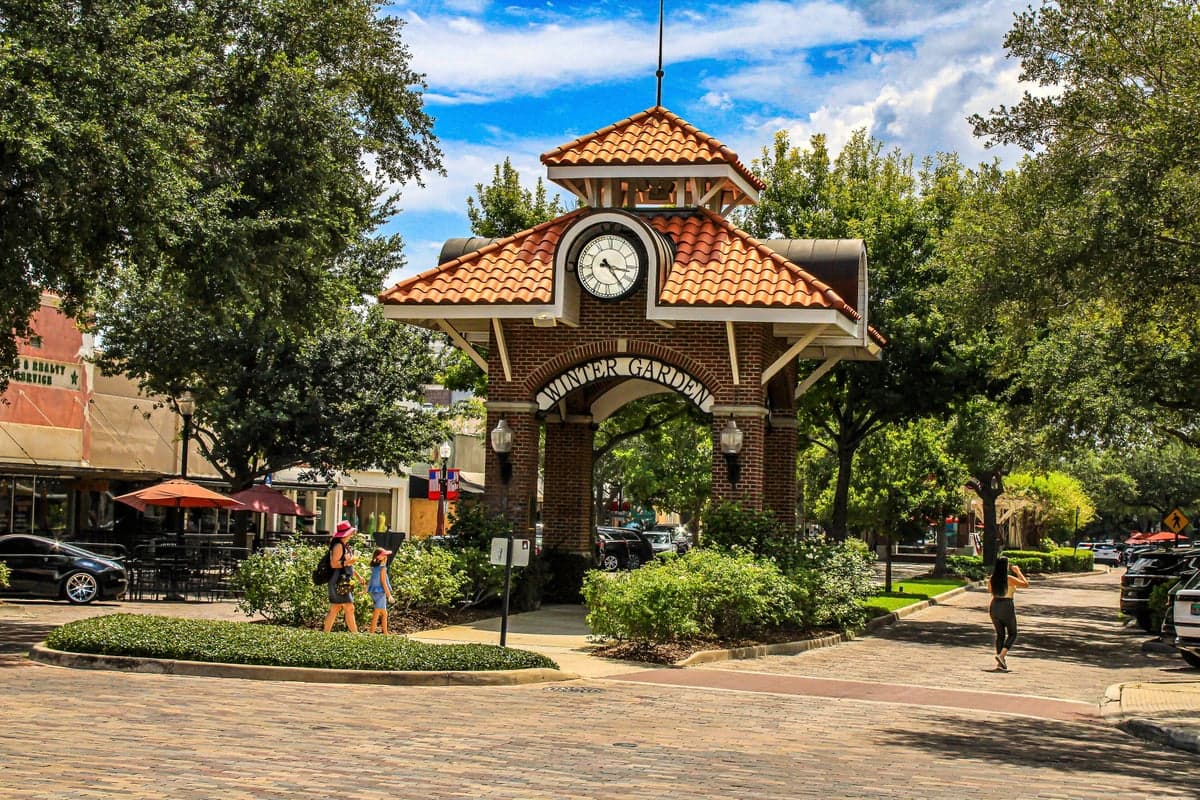
Winter Garden feels like a small town that got hit with a growth spurt and mostly handled it well. You’ll find a historic downtown with brick-paved streets and a weekly farmers market that actually draws a crowd, but five minutes away you’re staring at new subdivisions and a Costco that’s always busy. The people who live here tend to be families in their late 30s and early 40s—the median age is 39.2—who work in Orlando or its western suburbs and want a front porch and a decent school system without the sprawl of the far exurbs. It’s not cheap, but it’s not trying to be; the cost of living index sits at 150, well above the national average, and the median home value is $428,200. You’re paying for proximity to downtown Winter Garden’s charm and for a school district that people actually talk about at dinner parties.
The Daily Rhythm: What People Actually Do
Most mornings, you’ll see people walking dogs or pushing strollers along the West Orange Trail, a paved rail-trail that cuts right through the heart of town. It’s the unofficial town square—on weekends it’s packed with cyclists, runners, and families heading to the farmers market at the historic train depot. Errands happen at the Publix on Daniels Road or the newer shopping centers along State Road 429, but the real social life is downtown. Plant Street is the spine: you’ve got the Crooked Can Brewing Company in an old citrus packing house, a handful of farm-to-table restaurants like The Chef’s Table at the Edgewater Hotel, and a pie shop (Winter Garden Pie Company) that’s a legitimate destination. The median household income is $106,371, which shows in the kind of places that survive here—boutique fitness studios, a wine bar, a bookstore that hosts author events. People spend weekends on the trail, at a youth soccer game, or grabbing brunch before the line gets long. The average commute is about 28.5 minutes, and most of that is heading east toward Orlando or south toward the theme parks; traffic on 429 and the Turnpike is a daily reality, especially during school pickup hours.
Sports, Schools, and the Community Glue
High school football is a big deal here. West Orange High School draws serious crowds on Friday nights, and the rivalry with nearby Ocoee and Apopka is real—people plan their weekends around it. Youth sports are equally intense; the West Orange Little League and the local soccer clubs are where a lot of social connections form. There’s no pro team in Winter Garden itself, but you’re 20 minutes from Orlando City SC (MLS) and the Magic (NBA), and about 30 minutes from the Orlando Pride (NWSL) and the Solar Bears (ECHL). The schools themselves are a major reason families move here—the Orange County school system has a few highly rated elementary schools in the area, and the high school’s IB program is well-regarded. That said, school overcrowding is a real frustration; some elementary schools are at or near capacity, and rezoning conversations pop up every few years. The community identity is wrapped up in the idea that Winter Garden is “still small-town,” even as it’s grown from about 15,000 people in 2000 to over 47,000 today. That tension—between the historic downtown and the new subdivisions—is the defining local quirk.
What’s There to Do (and What’s Missing)
The outdoor scene is the main draw. Lake Apopka is right there, and the Lake Apopka Loop Trail offers 20 miles of flat, open riding through restored wetlands—it’s a favorite for serious cyclists and birdwatchers. The city runs a full calendar of events: the Winter Garden Art Festival in March, the Plant Street Market every Saturday, and a Christmas parade that shuts down downtown. There’s a movie theater (the Garden Theatre, a restored 1930s venue that shows indie films and live performances) and a handful of bars that stay busy, like the Winter Garden Ale House and the rooftop bar at the Edgewater. What’s missing? Nightlife beyond a few spots—if you want clubs or late-night music, you’re driving to downtown Orlando or the Milk District. The violent crime rate is 166.8 per 100,000, which is below the national average but not zero; most of the property crime is car break-ins near the trailheads and in apartment complexes. The weather is classic Central Florida: hot and humid from May through October, with afternoon thunderstorms that clear the streets, and a genuinely pleasant winter from December through February where you’ll need a jacket at night.
Pros and Cons of Living Here
- Pro: The downtown is walkable, historic, and genuinely pleasant—it’s not a fake Main Street. The farmers market and the trail make it easy to run into neighbors.
- Pro: The schools are a clear draw for families, and the community is oriented around kids and outdoor activities. If you want a place where your children can ride bikes to a friend’s house, this is it.
- Pro: You’re close to Orlando’s jobs and entertainment without living in the city. The 429 toll road gets you to the airport in about 30 minutes on a good day.
- Con: Traffic on 429 and the Turnpike is a daily grind during rush hour, and the local roads (especially Plant Street and Daniels Road) get clogged on weekends. The commute time is real.
- Con: The cost of living is high for Central Florida—you’re paying a premium for the school district and the downtown vibe. Rentals are scarce and expensive.
- Con: Summer heat and humidity limit outdoor activity to early mornings or late evenings for about five months. The afternoon thunderstorms are predictable but can cancel plans.
The kind of person who fits in Winter Garden is someone who wants a strong sense of place without being isolated—a parent who values a good school and a safe street, or a single professional who prefers a brewery patio over a nightclub. It’s not a place for people who want urban energy or cheap rent. But for those who can afford it and value the trade-off, it delivers exactly what it promises: a small town that grew up without losing its center.

Similar towns to Winter Garden

* Values derived from national, state, county, city and local statistics and may differ in a specific area. Last updated: 2026-05-12T15:49:31.000Z
Narrative content on this page is AI-generated and may contain mistakes. Verify any details that matter before acting on them.
ReloMaps may earn a commission from affiliate links at no extra cost to you.

