Photo: Wikipedia
Demographics of Woodstock, NY
Affluence Level in Woodstock, NY
A middle-class area roughly in line with national averages across income, home values, education, and employment.
People of Woodstock, NY
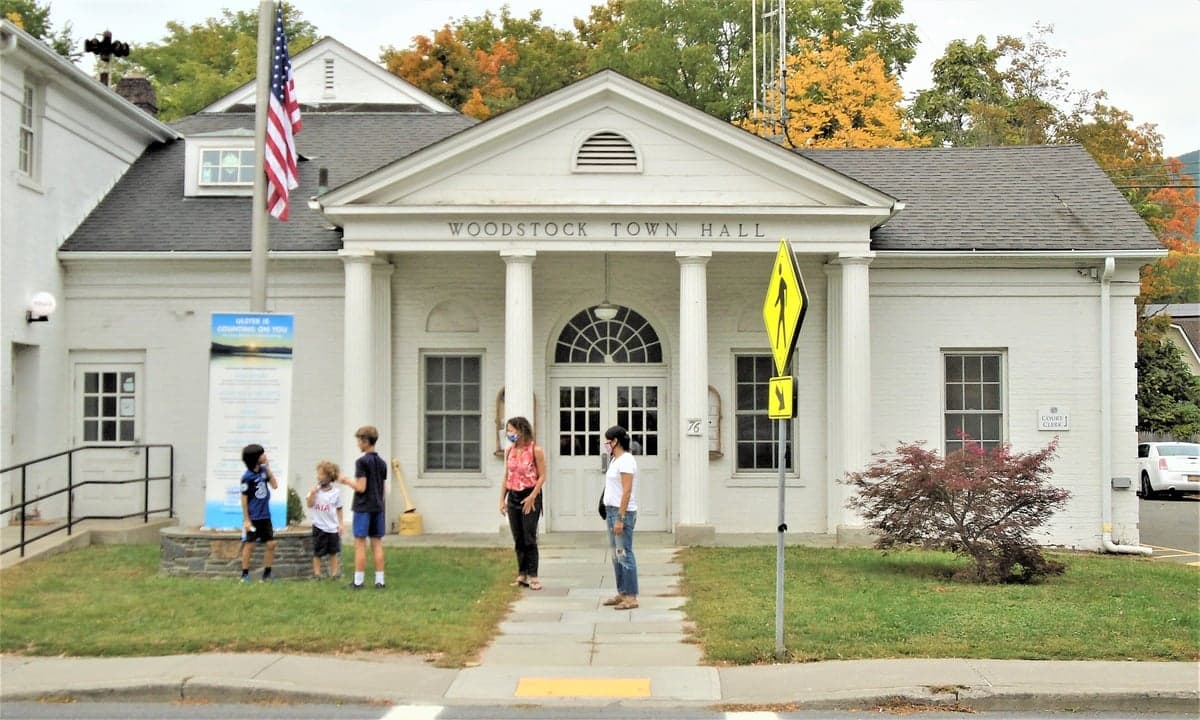
Woodstock, New York, is a small, culturally distinct village of 2,562 residents, known globally for the 1969 music festival that never actually took place there. Today, its population is overwhelmingly white (84.5%) and highly educated, with 61.2% holding a college degree, a figure that far exceeds national averages. The village maintains a bohemian, artist-driven identity, but its demographic character is notably less diverse than the surrounding Ulster County, with a foreign-born population of just 4.1% and a Hispanic share of 5.8%. This is a place where the legacy of mid-century counterculture has been preserved and gentrified, attracting a steady stream of affluent, creative professionals and retirees.
How the city was settled and grew
Woodstock’s original population was drawn not by industry, but by land speculation and the promise of a rural artistic utopia. The area was first settled by European colonists in the late 18th century, primarily of English and Dutch descent, who established small farms and mills along the Sawkill Creek. The village’s first major demographic shift came in the early 20th century, when the Byrdcliffe Arts Colony was founded in 1902 on the western slope of the village. This colony, centered around the Byrdcliffe neighborhood, attracted painters, writers, and craftspeople from New York City, establishing Woodstock as a summer retreat for the urban intelligentsia. A second wave of artists and musicians settled in the Bearsville area during the 1930s and 1940s, drawn by the cheap land and the presence of the Maverick Concert Hall, which hosted avant-garde performances. These early waves were almost entirely white and middle-to-upper class, setting a demographic template that would persist for decades.
Modern era (post-1965)
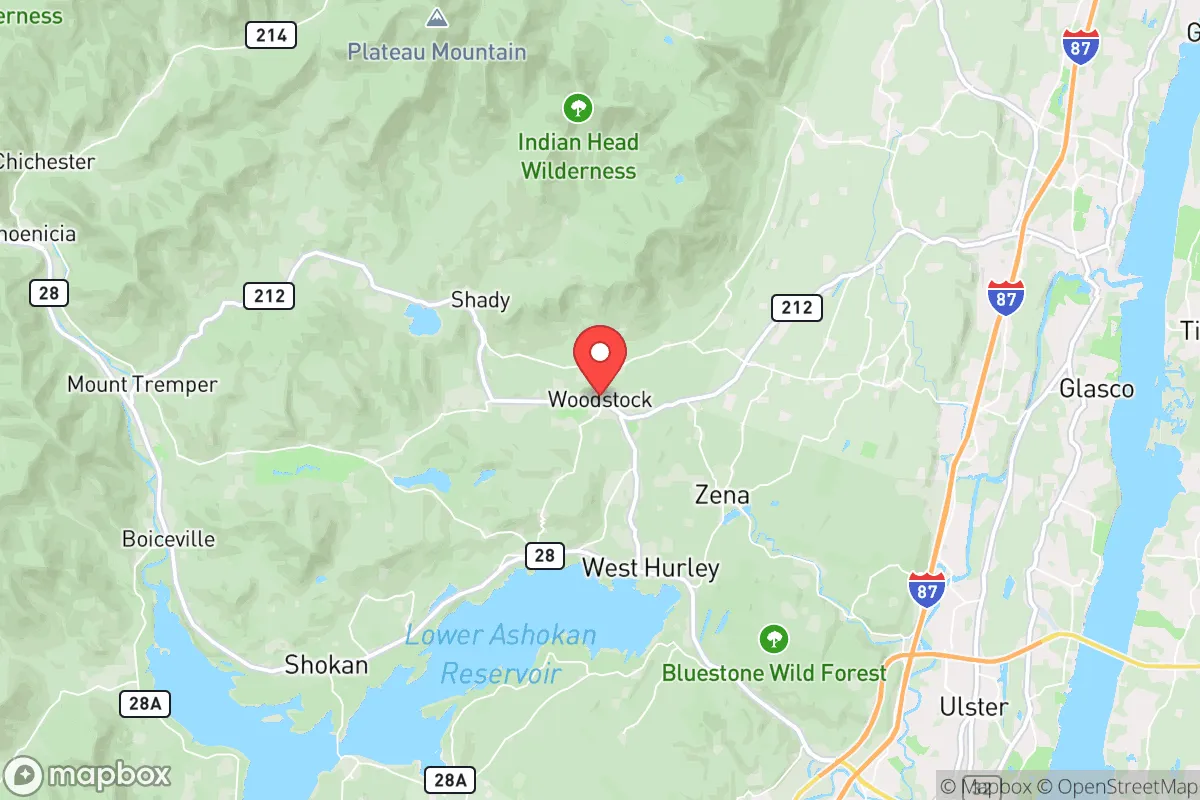
The post-1965 era transformed Woodstock from a seasonal artist colony into a year-round, high-demand destination. The 1969 festival, held 40 miles away in Bethel, cemented the village’s name as a global symbol of counterculture, triggering a sustained wave of domestic in-migration. Throughout the 1970s and 1980s, young people, musicians, and back-to-the-land homesteaders moved into the Zena and Shady hamlets, seeking affordable housing and a rural lifestyle. This influx was overwhelmingly white, and it reinforced the village’s existing cultural identity. The 1990s and 2000s saw a new wave of affluent professionals and second-home owners, many from New York City, who purchased properties in the Rock City and Lake Hill neighborhoods. This group drove up real estate prices and accelerated the displacement of lower-income, long-term residents. The village’s racial composition has remained remarkably stable: the white share has only declined from roughly 90% in 2000 to 84.5% today, while the Hispanic population has grown modestly from 3.2% to 5.8% in the same period. The Black population (2.3%) and East/Southeast Asian population (0.6%) remain very small, and the Indian subcontinent population (0.5%) is negligible. The foreign-born share (4.1%) is less than half the national average, indicating that Woodstock has not been a destination for recent international immigration.
The future
Woodstock’s population is likely to become slightly older, wealthier, and less diverse in the coming decade. The village’s high housing costs—median home values exceed $500,000—and limited rental stock are pricing out younger families and working-class residents, a trend that has been accelerating since the COVID-19 pandemic. The small Hispanic population, concentrated in the Bearsville and Zena areas, may grow incrementally as service-sector workers seek housing in the region, but it is unlikely to reach double digits without a significant increase in affordable housing. The white, college-educated majority will likely remain dominant, as the village’s cultural identity and economic base—tourism, the arts, and remote work—continue to attract a similar demographic. The most notable demographic shift may be internal: a gradual dispersal of younger, less affluent residents to neighboring towns like Kingston and Saugerties, where housing is more affordable, while Woodstock itself becomes a more exclusive enclave for the affluent and retired.
For someone moving to Woodstock now, the village offers a stable, culturally rich, and highly educated community with a strong sense of place. However, it is also a place where demographic change is slow and where the cost of entry is high. New residents should expect a predominantly white, liberal-leaning, and artistically inclined population, with limited racial or ethnic diversity. The village’s future is one of managed preservation rather than transformation, making it an ideal fit for those seeking a curated, historic, and relatively homogeneous small-town experience.

* Values derived from national, state, county, city and local statistics and may differ in a specific area. Last updated: 2026-08-03T15:47:55.000Z
Narrative content on this page is AI-generated and may contain mistakes. Verify any details that matter before acting on them.
ReloMaps may earn a commission from affiliate links at no extra cost to you.

