Photo: Wikipedia
Demographics of Albany County
Affluence Level in Albany County
A middle-class area roughly in line with national averages across income, home values, education, and employment.
People of Albany County
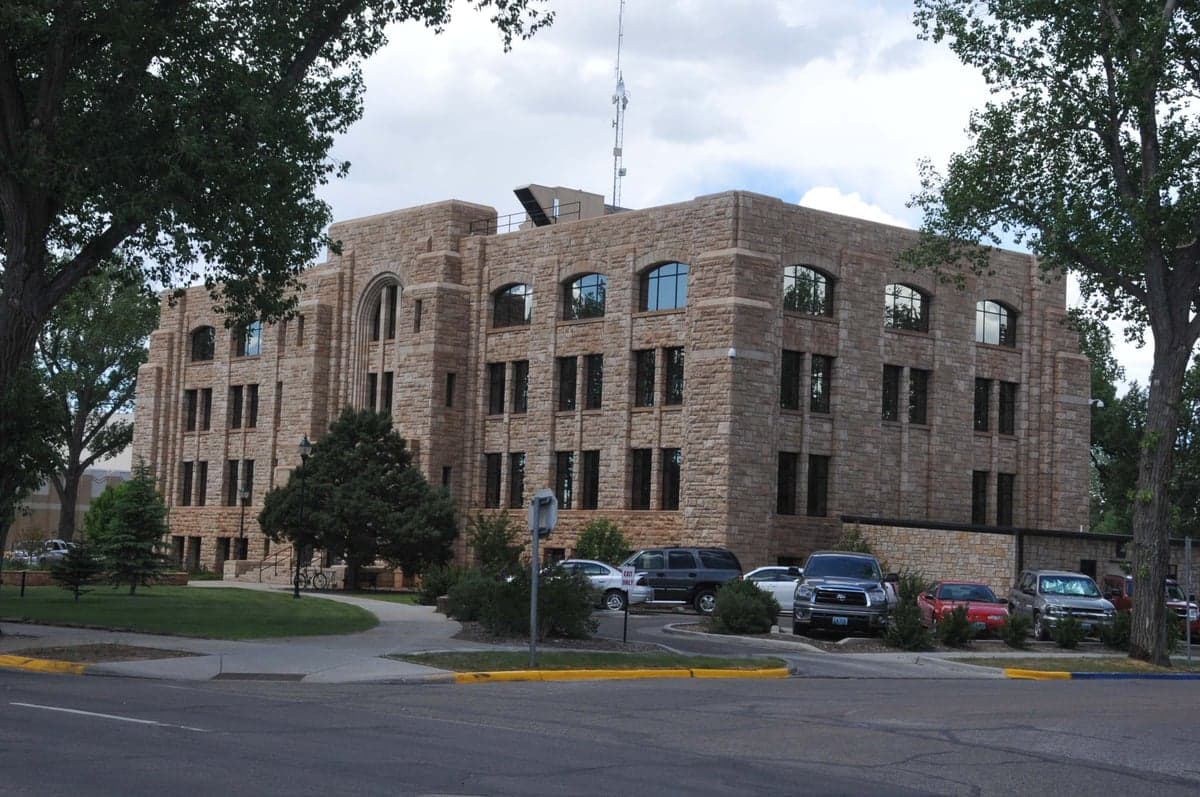
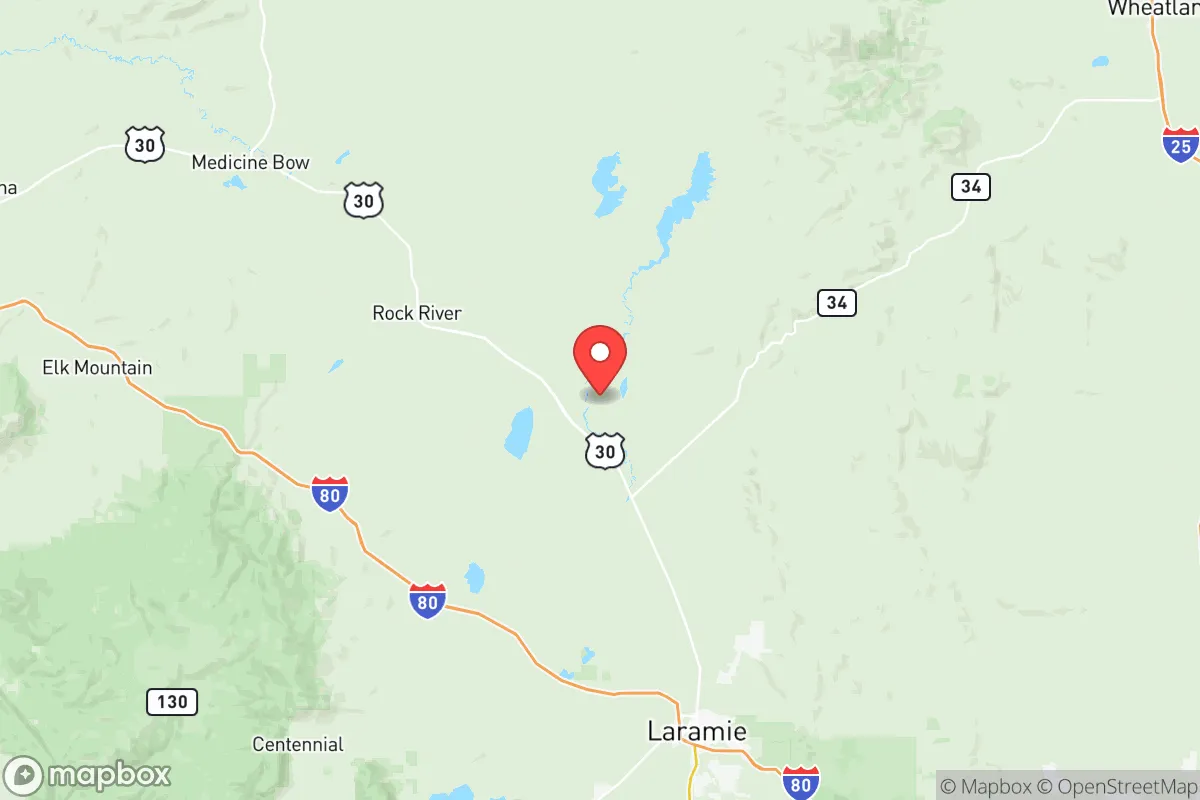
Albany County, Wyoming, is home to roughly 37,700 people, a population that is notably younger and more educated than the state average, with over half of adults holding a college degree. The county’s character is defined by the sharp contrast between the university town of Laramie, which concentrates most of the population and its liberal-leaning, transient student body, and the surrounding rural expanse of ranches, small towns like Rock River, and the Medicine Bow National Forest. This creates a distinctive identity: a place where a high-tech, research-oriented workforce coexists with a deep-rooted Western ranching culture, all set against the high plains at 7,200 feet of elevation.
Settlement & growth (pre-1960)
The original inhabitants of the region were bands of the Shoshone, Arapaho, and Cheyenne nations, who followed bison herds across the Laramie Plains. The area was largely bypassed by early European-American exploration until the 1850s, when the Overland Trail and the Union Pacific Railroad carved a path through the future county. The railroad’s arrival in 1868 was the single most important event in the county’s settlement history, creating the town of Laramie as a division point and a rough-and-tumble rail town. The railroad brought a wave of Irish and German laborers, many of whom stayed after the tracks were laid, forming the first permanent white settlements.
The federal government’s passage of the Homestead Act and later the Enlarged Homestead Act of 1909 drew a second wave of settlers—primarily of Northern European stock, including Scandinavians, Germans, and English—who filed claims on the dry, windswept plains. Towns like Rock River, Bosler, and Centennial sprang up as agricultural service centers for sheep and cattle ranching. The discovery of copper and other minerals in the Medicine Bow Mountains briefly boomed the town of Jelm in the early 1900s, but the real economic anchor became the University of Wyoming, established in Laramie in 1886. By the mid-20th century, the university had transformed Laramie from a railroad and ranching hub into a college town, drawing faculty and students from across the nation, though the county’s population remained overwhelmingly white and native-born.
Modern era (post-1965)
The post-1965 era, shaped by the Hart-Cellar Act, brought only modest changes to Albany County’s demographic makeup compared to coastal or urban areas. The foreign-born population today stands at just 5.2%, a figure that reflects the county’s limited industrial draw and remote location. The most visible shift has been the growth of the Hispanic population, now at 10.5% of the total. This community began expanding in the 1990s and 2000s, driven by domestic migration from the Southwest and Mexico, with many working in construction, agriculture, and the service industry in Laramie and the surrounding ranch country.
The university has been the primary engine for the county’s modest diversity. The Asian (East and Southeast Asian) population, at 2.2%, and the Indian (subcontinent) population, at 1.5%, are almost entirely concentrated in Laramie, drawn by graduate programs and faculty positions in engineering, the sciences, and the university’s research institutes. The Black population remains very small at 1.0%, largely composed of university-affiliated individuals and families. Domestic migration has been the dominant force: the county has seen a slow but steady influx of out-of-state retirees, remote workers, and outdoor enthusiasts settling in Laramie and the foothills near Centennial and Woods Landing, attracted by the low cost of living and access to public lands. Suburbanization has been minimal, limited to the expansion of subdivisions on the outskirts of Laramie, such as the areas around Grand Avenue and Harney Street.
The future
Albany County’s population is projected to grow slowly, likely reaching 40,000–42,000 by 2040, driven primarily by university enrollment and the continued in-migration of remote workers and retirees. The county is becoming slightly more diverse, with the Hispanic share expected to rise to 12–14% and the Asian and Indian populations to grow incrementally as the university expands its international recruitment. However, the county will remain predominantly white (around 75–78%) and native-born, with diversity concentrated almost entirely in Laramie. The rural towns like Rock River and Bosler are likely to continue their slow population decline as agricultural consolidation reduces the need for labor.
The cultural identity is evolving into a hybrid: a university town with a progressive, educated core surrounded by a conservative, ranching-oriented hinterland. New residents are dispersing into the Laramie Valley and the foothills, but the county lacks the suburban sprawl seen in Colorado’s Front Range. The biggest demographic challenge will be housing affordability in Laramie, as demand from newcomers outpaces supply, potentially slowing future in-migration.
For someone moving in now, Albany County offers a rare combination: a small city with a vibrant intellectual and cultural scene, immediate access to world-class outdoor recreation, and a cost of living that remains lower than comparable mountain towns. The trade-off is a population that is still largely homogeneous and a social landscape that can feel divided between the university community and the ranching families who have been here for generations. It is a place where the future is being written by newcomers, but the past—rooted in the railroad, the open range, and the high plains—still holds firm.

* Values derived from national, state, county, city and local statistics and may differ in a specific area. Last updated: 2026-08-08T14:57:37.000Z
Narrative content on this page is AI-generated and may contain mistakes. Verify any details that matter before acting on them.
ReloMaps may earn a commission from affiliate links at no extra cost to you.

