Photo: Wikipedia
Political ClimatePolitical Climate in Albany County
Showing state-level results — no local-only data available.
Local Political AnalysisPolitical Analysis of Albany County
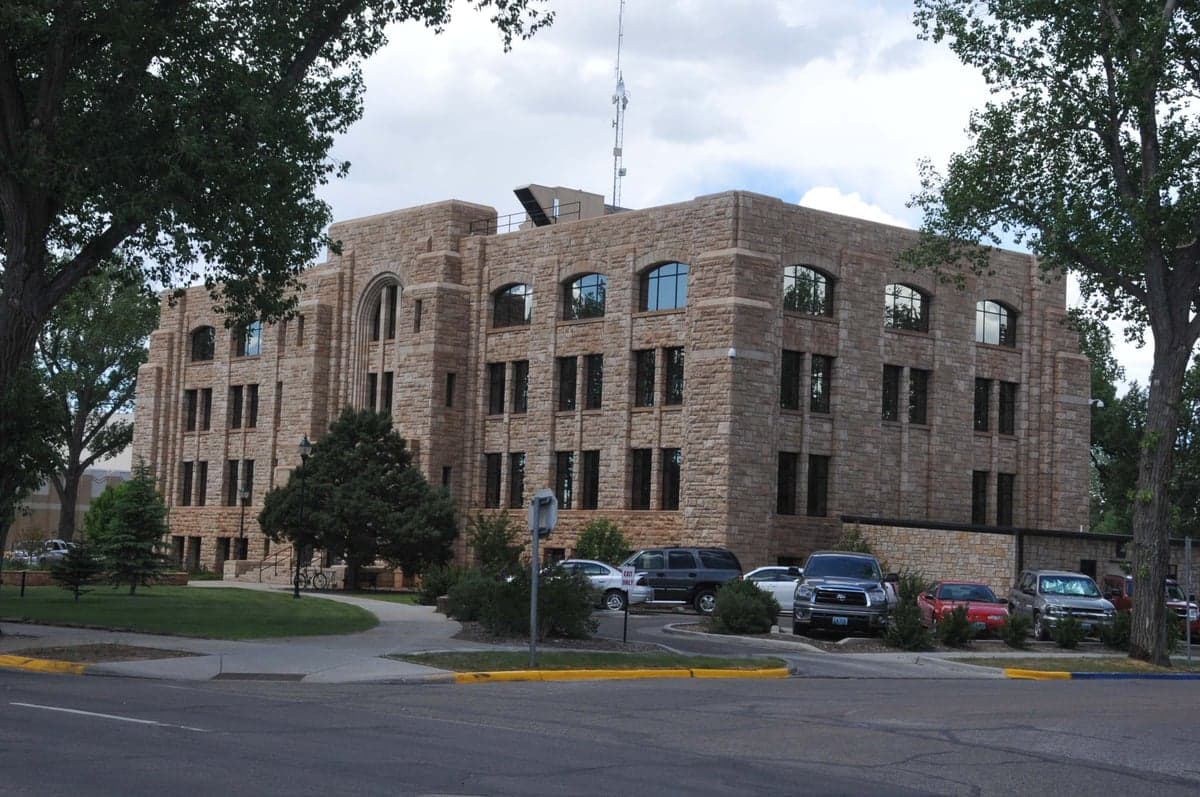
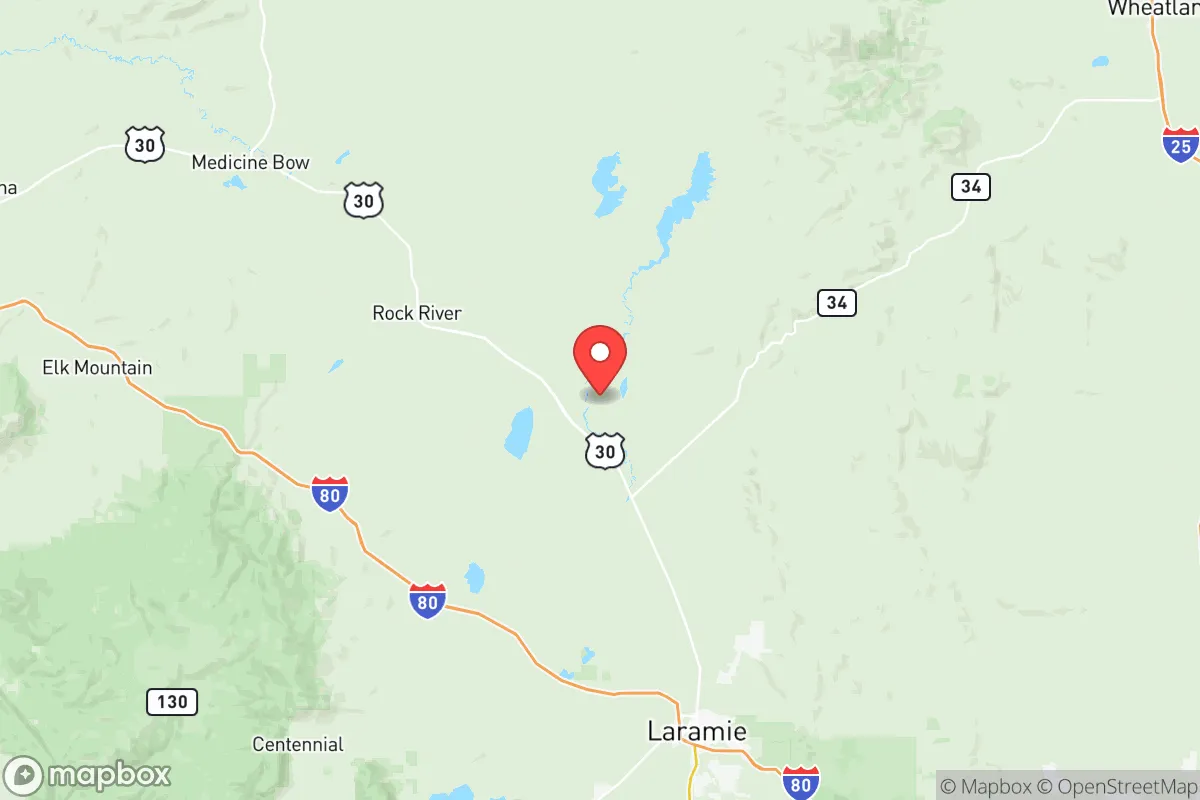
Albany County, Wyoming, is a political outlier in a deeply red state, leaning Republican with a Cook PVI of R+23 but containing a significant blue island in the city of Laramie. The county's overall Republican tilt is driven by the rural, ranching, and energy-extraction communities outside the city limits, while Laramie itself—home to the University of Wyoming—votes reliably Democratic in most elections. This urban-rural split has been stable for decades, though the margin in Laramie has narrowed slightly since 2020 as national polarization intensifies. The surrounding state of Wyoming, WY, lacks a comparable Cook PVI, but statewide results consistently show a Republican advantage of 40-50 points in presidential races, making Albany County one of the few places where Democrats can win local offices.
How it compares
Albany County stands apart from the rest of Wyoming because of Laramie's liberal lean, which is unusual in a state where every other county voted for Donald Trump by at least 30 points in 2020. In the 2022 gubernatorial race, Republican Mark Gordon won Albany County with 62% of the vote, but that was his weakest performance in any county—he took over 80% in most others. The contrast is even sharper at the local level: Laramie's city council and school board often have Democratic or progressive majorities, while the county commission remains Republican-controlled. Towns like Centennial and Rock River, both small and rural, vote heavily Republican, mirroring the state's dominant political culture. The swing precincts are in the suburban fringe of Laramie, particularly around the airport and along the I-80 corridor, where voters split more evenly between parties.
What this means for residents
For conservative residents, Albany County offers a familiar Wyoming experience outside Laramie: low taxes, limited regulation, and a culture of self-reliance. The county's Republican majority ensures that state-level conservative priorities—like energy development and property rights—are reflected in local governance. For liberal residents, Laramie provides a rare progressive enclave in a red state, with active Democratic clubs, a visible LGBTQ+ community, and city-level policies on sustainability and affordable housing that would be unthinkable in most of Wyoming. The practical effect is that political conversations in Albany County are more nuanced than elsewhere in the state, with both sides accustomed to coexisting and occasionally collaborating on issues like education funding and infrastructure. The university acts as a moderating force, drawing in faculty and students from across the political spectrum and keeping local politics from becoming as polarized as the national scene.
Culturally, Albany County's political divide manifests in distinct ways: Laramie hosts the state's only Pride parade and a thriving arts scene, while the rural towns prioritize hunting, rodeo, and church life. Policy-wise, the county has resisted some of the more aggressive state-level moves on abortion and land use, with Laramie's city council passing symbolic resolutions in opposition to state laws. The long-term trajectory points toward a slow but steady growth of Laramie's population—and its Democratic influence—as the university expands and remote workers move in, but the rural areas are likely to remain deeply Republican for the foreseeable future. This makes Albany County one of the most politically interesting places in Wyoming, where the national urban-rural divide plays out in miniature, with real consequences for how residents experience daily life.

State Political ClimatePolitical Climate in Wyoming
State Political AnalysisPolitical Environment in the State
Wyoming is one of the most reliably Republican states in the nation, with a partisan lean that has only deepened over the past two decades. In the 2024 presidential election, Donald Trump carried the state by roughly 46 points, a margin that has grown steadily since 2008. The dominant political coalition is a blend of libertarian-leaning ranchers, conservative energy workers, and evangelical Christians, all united by a deep skepticism of federal authority. Over the last 10-20 years, the state has shifted further right as its small Democratic base, once concentrated in unionized mining towns and the university community in Laramie, has eroded. Today, no statewide elected Democrat holds office, and the legislature is a supermajority of Republicans.
Urban vs. rural divide
The political map of Wyoming is defined by a stark urban-rural split, though even the "urban" areas are small by national standards. The two population centers—Cheyenne in the southeast and Casper in central Wyoming—tend to be more moderate but still vote reliably Republican. Cheyenne, home to state government and F.E. Warren Air Force Base, has a slightly more pragmatic conservative streak, while Casper, built around energy extraction, leans harder right. The most liberal pocket in the state is Laramie, home to the University of Wyoming, which occasionally votes Democratic in local races but is too small to shift statewide outcomes. Meanwhile, rural counties like Sublette, Campbell, and Lincoln routinely deliver 80-90% Republican margins. The only county that has trended even slightly blue in recent cycles is Teton County, which includes Jackson Hole, where wealthy second-home owners and service workers have created a small but visible Democratic enclave. In 2020, Teton was the only county to vote for Joe Biden, but its population is too small to affect statewide results.
Policy environment
Wyoming’s policy environment is shaped by a deep commitment to low taxation and limited government. The state has no personal or corporate income tax, relying instead on a severance tax on mineral extraction (coal, oil, natural gas) and a 4% state sales tax, which local counties can supplement. Property taxes are among the lowest in the nation, with no tax on intangible property. The regulatory posture is strongly pro-business, particularly for energy and agriculture, with minimal land-use planning outside of Teton County. Education policy is locally controlled, though the state has seen recent battles over school funding and curriculum transparency. In 2023, the legislature passed a law requiring schools to post instructional materials online for parental review. Healthcare policy is limited; Wyoming did not expand Medicaid under the Affordable Care Act, leaving a coverage gap for low-income adults. Election laws have tightened in recent cycles: the state now requires a photo ID to vote, and in 2024, it passed a law restricting ballot drop boxes and mail-in voting procedures.
Recent policy direction
Wyoming’s recent legislative sessions have pushed the state further into culturally conservative territory while maintaining its libertarian economic stance. On gun and self-defense law, Wyoming is a constitutional carry state—no permit needed to carry a concealed firearm—and in 2024, it passed a law prohibiting state enforcement of any future federal firearms restrictions. On parental and education rights, the state enacted a Parents’ Bill of Rights in 2023, requiring parental consent for any health care or counseling services provided in schools, and banned instruction on gender identity and sexual orientation through the 8th grade. On speech and privacy, Wyoming has no broad surveillance law, but it passed a data privacy act in 2024 giving residents control over how companies use their personal information. On medical and bodily autonomy, the state banned nearly all abortions in 2022 under a trigger law, with no exceptions for rape or incest, only to protect the mother’s life. On property rights, Wyoming remains strongly pro-landowner, with no statewide zoning and a long tradition of resisting federal land management—the state has sued the federal government multiple times over control of public lands. On taxation, the trajectory is toward further cuts: in 2023, the legislature reduced the sales tax on groceries and passed a property tax rebate for seniors. On voting and ballot access, the trend is toward restriction: the 2024 election law tightened voter ID requirements and limited absentee ballot drop-off locations to one per county.
Civil unrest & political movements
Wyoming is not known for large-scale civil unrest, but it has a long history of organized political movements centered on federal land control and energy policy. The sagebrush rebellion of the 1970s and 80s, which demanded the transfer of federal lands to state control, remains a live issue; in 2024, the legislature passed a resolution calling for the federal government to turn over 30 million acres of public land. Immigration politics are less visible here than in border states, but the legislature passed a law in 2024 requiring local law enforcement to cooperate with federal immigration authorities. There are no sanctuary cities in Wyoming. Election integrity controversies have been muted compared to other states, though a 2022 audit of voting machines in Natrona County (Casper) found no irregularities. The most visible flashpoint for a new resident would likely be the tension between the energy industry and environmental activists, particularly around the Powder River Basin coal mines and the Green River Basin natural gas fields. Protests have been small and sporadic, but the cultural divide between the extractive economy and the growing tourism and recreation sector in places like Jackson Hole and Sheridan is real and growing.
Projection
Over the next 5-10 years, Wyoming is likely to remain deeply Republican, but the nature of that conservatism may shift. In-migration from blue states, particularly to Teton County and the Sheridan area, is bringing a new wave of residents who are fiscally conservative but socially moderate—or at least less focused on cultural battles. This could create a tension between the old-guard libertarian ranchers and the new arrivals who want to preserve the state’s natural beauty but also bring more liberal social attitudes. At the same time, the decline of coal production is forcing the state to diversify its economy, which could slowly moderate its politics as the energy sector’s political dominance fades. However, the state’s rural nature and low population density mean that any shift will be gradual. A new resident moving in now should expect to find a state that is overwhelmingly conservative in its politics, with a government that is skeptical of federal power, protective of gun rights, and resistant to social change. The most likely scenario is that Wyoming becomes slightly more culturally diverse in its urban pockets but remains one of the most reliably Republican states in the country for the foreseeable future.
For a new resident, the bottom line is straightforward: Wyoming offers a political environment that is stable, predictable, and deeply conservative. If you value low taxes, minimal regulation, strong gun rights, and local control, you will find the state welcoming. If you lean left, you will find limited political community outside of Laramie and Jackson Hole, and you will need to accept that your vote will rarely affect statewide outcomes. Either way, the state’s small population and strong sense of local identity mean that politics is less in-your-face than in larger states—most people just want to be left alone to live their lives.
* Values derived from national, state, county, city and local statistics and may differ in a specific area. Last updated: 2026-08-08T14:57:37.000Z
Narrative content on this page is AI-generated and may contain mistakes. Verify any details that matter before acting on them.
ReloMaps may earn a commission from affiliate links at no extra cost to you.

