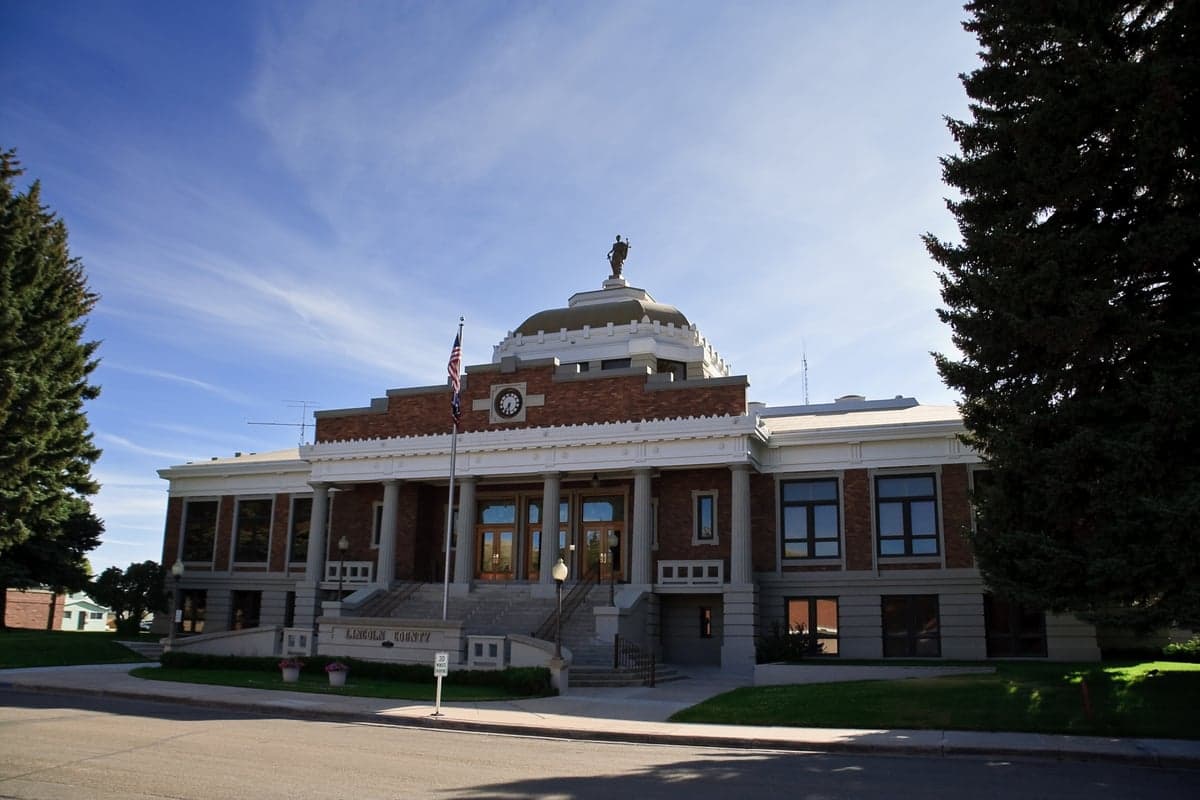
Photo: Wikipedia
Strategic Assessment of Lincoln County
Strong survivability profile. Good buffer from population centers, with manageable environmental and tactical risks.
What does the Strategic Assessment tell us?
Our Strategic Assessment grades tactical survivability of an area. Major population centers, military targets, fallout zones, natural disasters, and border exposure all drive risk — lower exposure means a more defensible position in a crisis.
This is heavily inspired by Joel Skousen's Strategic Relocation book. Highly recommended you checkout the book ($)What does this tell us?
Our Strategic Assessment grades tactical survivability of an area. Major population centers, military targets, fallout zones, natural disasters, and border exposure all drive risk — lower exposure means a more defensible position in a crisis.
This is heavily inspired by Joel Skousen's Strategic Relocation book. Highly recommended you checkout the book ($)Strategic Pillars

Key Distances
Strategic Assessment Analysis
Lincoln County, Wyoming offers a strategic relocation option for those prioritizing resilience and distance from major population centers and industrial targets. Situated in the western part of the state, the county provides a buffer from the vulnerabilities of the Wasatch Front and the Denver metro area, while maintaining access to critical resources and transportation corridors. For a conservative-leaning individual or family concerned with civic unrest, mass casualty events, or large-scale disasters, this area presents a compelling mix of geographic isolation and practical self-sufficiency potential.
Geographic position and natural advantages for long-term security
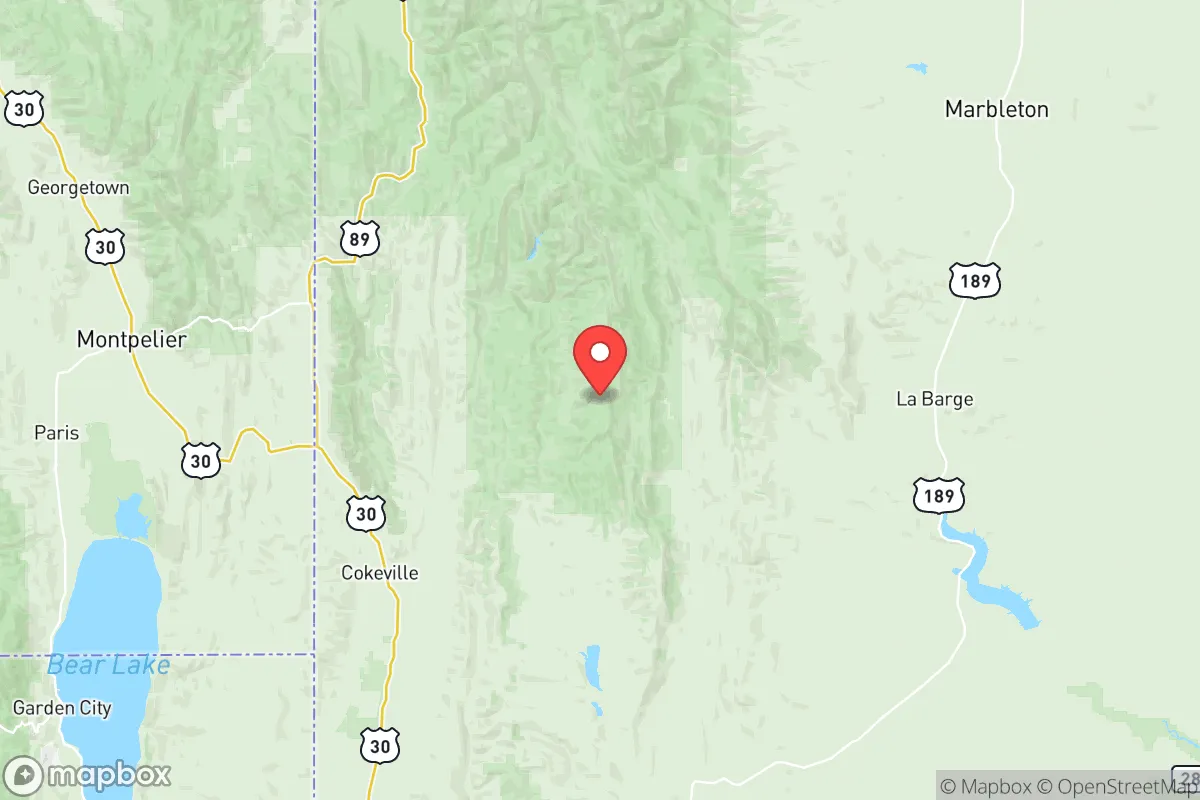
Lincoln County’s location is its primary strategic asset. The county seat, Kemmerer, sits roughly 100 miles from the Idaho Falls metro area and over 200 miles from Salt Lake City, placing it well outside the immediate fallout and unrest zones of those population centers. The county is bisected by the Green River and the Bear River, providing reliable water sources—a non-negotiable for any serious prepper. The surrounding landscape includes the Wyoming Range and the Salt River Range, offering natural defensibility through rugged terrain that limits easy access for large groups. The area’s high elevation (averaging 6,500–7,500 feet) means cooler summers and harsh winters, which naturally discourages transient populations and forces residents to develop cold-weather survival skills. The Bridger-Teton National Forest borders the county to the east, providing a vast, sparsely populated buffer zone and potential hunting grounds. For those looking to avoid the "blue city" collapse scenarios, Lincoln County’s distance from Portland, Seattle, and Denver is a clear advantage.
Risks, exposures, and proximity to fallout-relevant landmarks
No location is without risk, and Lincoln County has specific exposures that a strategic relocator must weigh. The most significant is the Kemmerer coal-fired power plant and the adjacent Naughton Power Plant, both of which are industrial targets in a grid-down scenario. While not a nuclear reactor, these facilities could be points of interest for sabotage or collateral damage. The county also lies within 150 miles of the Idaho National Laboratory (INL) near Idaho Falls, a major nuclear research and waste storage site. A catastrophic event at INL could produce fallout patterns that, depending on wind direction, might affect eastern portions of Lincoln County. Additionally, the Jim Bridger Power Plant in neighboring Sweetwater County is another industrial landmark. On the positive side, there are no major military bases, refineries, or ports within the county, which dramatically reduces the likelihood of being a primary target in a conflict. The nearest major military installation is Hill Air Force Base near Ogden, Utah, over 150 miles to the southwest—far enough to avoid direct blast effects but close enough to be aware of potential evacuation flows. The county’s low population density (roughly 20,000 residents spread across 4,000 square miles) means that in a pandemic or civil unrest scenario, social distancing is the default, not a policy.
Practical resilience for a relocator: food, water, energy, and defensibility
For a family or individual serious about self-reliance, Lincoln County offers a workable baseline. Water is abundant from the Green and Bear rivers, as well as numerous smaller creeks and springs, but testing and treatment are essential due to agricultural runoff and natural mineral content. The county’s agricultural sector is modest but present—cattle ranching and hay production dominate, meaning local food sources exist if you can network with ranchers. The growing season is short (roughly 90–110 days), so serious gardening requires a greenhouse or cold-frame setup. Energy resilience is a mixed bag: the area has excellent solar potential due to high elevation and clear skies, but winter snow cover can limit panel output. Wood heating is viable given the surrounding national forest, but securing a reliable firewood supply requires planning and a chainsaw. Defensibility is strong due to the terrain—many properties are accessed via long, single-lane gravel roads that are easily monitored and defended. The county’s gun culture is robust, with local gun shops and a population that largely supports the Second Amendment, which means neighbors are likely to be armed and capable. The Kemmerer Municipal Airport and the US Highway 30 corridor provide egress routes if needed, but the lack of major interstate highways (I-80 runs just south of the county line) means that large-scale refugee flows are less likely to pass through. For those concerned about supply chain disruptions, the county’s small towns—Afton, Cokeville, and Diamondville—have basic hardware stores, feed stores, and grocery outlets, but serious preppers should stockpile critical supplies well in advance.
The overall strategic picture for Lincoln County is one of calculated trade-offs. It offers genuine isolation from the most likely targets of civil unrest or state-level collapse, reliable water, and defensible terrain. The downsides are real: harsh winters, limited growing season, and proximity to industrial and nuclear sites that, while not primary targets, are not zero-risk. For a conservative-leaning relocator who values community self-reliance, low population density, and a culture that doesn’t require explaining why you own a rifle, Lincoln County is a strong contender. It’s not a bug-out location for a weekend—it’s a place to build a life that can withstand the shocks of a deteriorating world, provided you come prepared for the cold and the quiet.

* Values derived from national, state, county, city and local statistics and may differ in a specific area. Last updated: 2026-05-12T14:18:43.000Z
Narrative content on this page is AI-generated and may contain mistakes. Verify any details that matter before acting on them.
ReloMaps may earn a commission from affiliate links at no extra cost to you.

