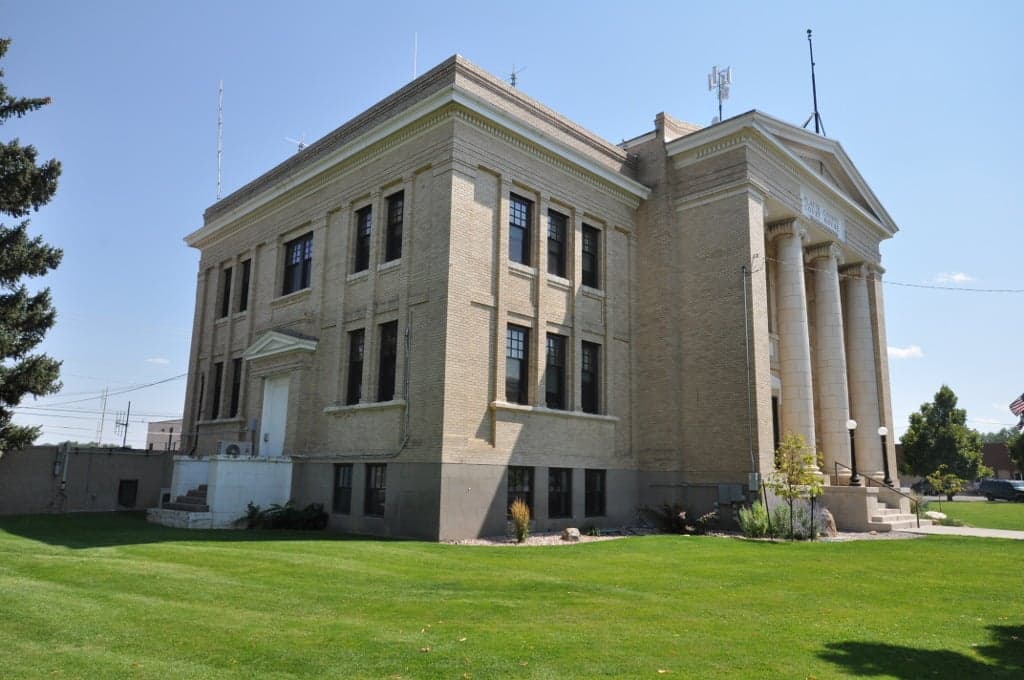
Photo: Wikipedia
Personal Sovereignty in Platte County
Viable for self-reliance. Generally workable, though some barriers may limit total independence.
What does Personal Sovereignty tell us?
Personal Sovereignty measures your capacity for self-reliance and independence with minimal government friction. Higher scores mean fewer barriers between you and the way you want to live... but it assumes you have the space you need and good neighbors.
What does this tell us?
Personal Sovereignty measures your capacity for self-reliance and independence with minimal government friction. Higher scores mean fewer barriers between you and the way you want to live... but it assumes you have the space you need and good neighbors.
State Policy
Energy independence: Net exporter (800% of energy produced in-state)
Personal Liberty
Homesteading

Personal Liberty Analysis
Platte County, Wyoming offers one of the most robust personal sovereignty environments in the Mountain West, combining Wyoming’s famously light-touch state governance with a local culture that prizes self-reliance and minimal interference. For individuals and families who prioritize autonomy over convenience, the county presents a compelling package: no state income tax, some of the nation’s most permissive self-defense laws, and a regulatory posture that actively encourages independent living. The trade-off is a sparse population and limited services, but for those who value freedom over amenities, Platte County delivers a level of personal latitude that is increasingly rare in the lower 48.
Tax burden and regulatory posture in Platte County
Wyoming’s tax structure is among the most favorable in the United States for those seeking to maximize personal financial sovereignty. Platte County residents pay no state personal or corporate income tax, and the state’s sales tax rate is a low 4%, with the county adding a modest 1% for a total of 5% on most goods. Property taxes are assessed at a relatively low effective rate — roughly 0.6% of market value — and Wyoming offers a generous property tax refund program for qualifying homeowners. The regulatory environment in towns like Wheatland, the county seat, and Chugwater is notably hands-off. Business licensing requirements are minimal, and there are no county-level zoning codes in unincorporated areas, meaning landowners in places like Slater or Hartville can use their property for a wide range of activities — from small-scale manufacturing to livestock operations — without navigating layers of bureaucratic approval. This stands in stark contrast to neighboring Colorado, where even rural counties impose more stringent land-use and business regulations.
Self-defense and gun law specifics in Wyoming
Wyoming is a constitutional carry state, and Platte County fully reflects that posture. No permit is required to carry a concealed firearm for any law-abiding adult 21 or older, and open carry is legal without a license. The state preempts local firearm ordinances, meaning towns like Wheatland and Guernsey cannot enact their own restrictions on possession or carry. Wyoming’s Castle Doctrine is unambiguous: there is no duty to retreat in any place where a person has a legal right to be, and the use of deadly force is presumed reasonable against unlawful forcible entry into a residence or occupied vehicle. Stand Your Ground protections extend to public spaces. For those who prioritize the right to self-defense, Platte County offers one of the most legally secure environments in the nation. The local sheriff’s office in Platte County is known for a pro-Second Amendment culture, and firearm-related legal friction is virtually nonexistent for law-abiding residents.
Self-reliance and homesteading viability in Platte County
Platte County is a strong candidate for those seeking a self-reliant, off-grid lifestyle. Unincorporated areas — which constitute the vast majority of the county’s land — have no county-wide zoning or building codes, allowing residents to construct alternative housing such as earthships, yurts, or tiny homes without permit delays. Well and septic installation is regulated by the state health department, but the process is straightforward and inexpensive compared to states like Oregon or Colorado. Lot sizes in rural subdivisions commonly range from 5 to 40 acres, with larger tracts available in areas like the Laramie River Valley and near Veteran. Agricultural exemptions for property tax are generous: land used for farming or ranching — including hobby-scale operations — qualifies for reduced assessment. Solar and wind energy systems face no permitting hurdles at the county level, and net metering is available through the local electric cooperative. Water rights are a critical consideration; buyers should verify water availability on any parcel, as some areas rely on wells with varying yields. Overall, Platte County offers one of the most permissive environments in the region for independent homesteading, particularly when compared to the increasingly restrictive Front Range counties in Colorado.
Personal liberties in Platte County: parental rights, medical autonomy, speech, and property
Wyoming law provides strong protections for parental rights in education and healthcare decisions. The state does not mandate controversial curricula, and parents retain the right to opt their children out of any instructional materials they find objectionable. Homeschooling is straightforward: parents need only file a simple annual registration with the local school district, with no standardized testing requirements or curriculum approval. Medical autonomy is similarly broad — Wyoming has no state-level vaccine mandate for adults or children, and there are no emergency use authorization mandates. The state passed legislation in 2023 prohibiting discrimination based on vaccination status, effectively barring public entities from requiring COVID-19 shots. Free speech protections are robust, with no hate speech laws or social media content moderation mandates at the state level. Property rights are constitutionally protected, and Wyoming’s eminent domain laws are among the most restrictive in the country, limiting takings primarily to traditional public uses like roads and utilities. In towns like Wheatland and Chugwater, local governance is minimal, and residents generally expect to be left alone to manage their own affairs.
Relative to other areas of the country, Platte County stands out as a high-sovereignty jurisdiction. The combination of no income tax, constitutional carry, minimal land-use regulation, and strong protections for parental and medical autonomy places it in the top tier of American counties for personal freedom. For those coming from high-regulation states like California, Oregon, or Colorado, the adjustment is significant — and for many, welcome. The trade-off is real: fewer services, longer drives, and a climate that demands self-sufficiency. But for the reader who prioritizes independence over convenience, Platte County, Wyoming offers a legal and cultural environment where personal sovereignty is not just tolerated, but expected.

* Values derived from national, state, county, city and local statistics and may differ in a specific area. Last updated: 2026-08-08T12:04:02.000Z
Narrative content on this page is AI-generated and may contain mistakes. Verify any details that matter before acting on them.
ReloMaps may earn a commission from affiliate links at no extra cost to you.

