 Popular
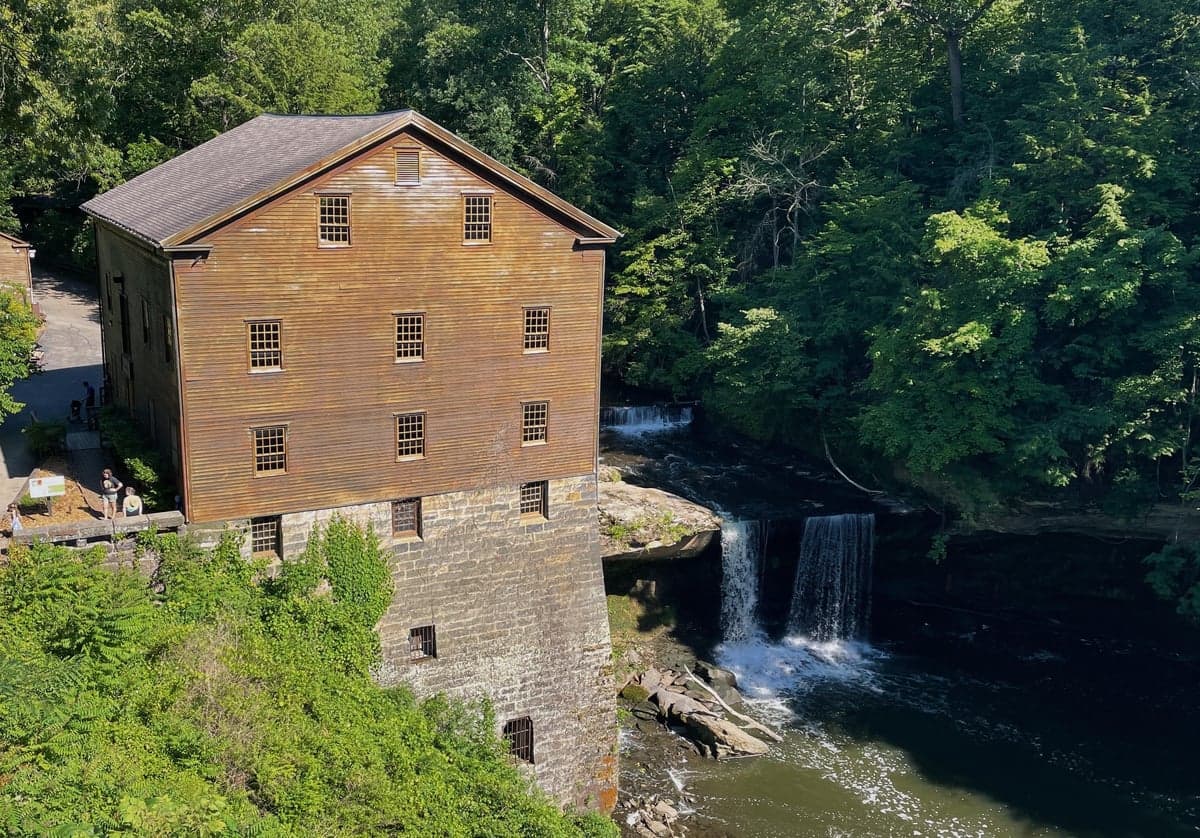
Photo: Wikipedia
Personal Sovereignty in Youngstown, OH
Viable for self-reliance. Generally workable, though some barriers may limit total independence.
What does Personal Sovereignty tell us?
Personal Sovereignty measures your capacity for self-reliance and independence with minimal government friction. Higher scores mean fewer barriers between you and the way you want to live... but it assumes you have the space you need and good neighbors.
What does this tell us?
Personal Sovereignty measures your capacity for self-reliance and independence with minimal government friction. Higher scores mean fewer barriers between you and the way you want to live... but it assumes you have the space you need and good neighbors.
State Policy
Energy independence: Importer (40% of energy produced in-state)
Personal Liberty
Homesteading

Personal Liberty Analysis
Youngstown, Ohio, offers a surprisingly robust environment for personal sovereignty when measured against the national trend of expanding government overreach, though it is not a libertarian paradise. The city’s long industrial decline has left a legacy of low property values and a population that values self-reliance out of necessity, creating a de facto zone where residents are often left alone by authorities. For the survivalist or prepper, the key trade-off is between a very low cost of entry and a local government that, while not aggressively hostile, still operates under Ohio’s state-level regulatory framework. The real autonomy here is found in the city’s cracks and margins, not in any official policy of freedom.
Tax burden and regulatory posture: How much the state takes and how much it interferes
Ohio’s tax burden is moderate compared to high-tax states like New York or California, but it is not negligible. The state income tax is a flat rate of roughly 2.75% on most income, with a top marginal rate of 3.5% for high earners—a structure that penalizes success less than progressive systems. Property taxes in Mahoning County, where Youngstown sits, average around 1.5% of assessed value, but because home values are among the lowest in the state (median home price around $70,000), the actual dollar amount is trivial. A $70,000 home might carry an annual tax bill of roughly $1,050. This low carrying cost is a major advantage for someone seeking to minimize monthly obligations and maximize savings for supplies or land. On the regulatory side, Ohio is not a free-for-all. The state has building codes, business licensing requirements, and environmental regulations that apply uniformly. However, Youngstown’s municipal government is chronically underfunded and understaffed, meaning enforcement of many codes is lax or complaint-driven. For a prepper looking to modify a property—adding a shed, digging a root cellar, or installing a backup generator—the practical reality is that you can often proceed without permits as long as you don’t draw attention. The city’s zoning code is standard for a Rust Belt town, but the lack of active code enforcement creates a gray area that a savvy individual can exploit.
Self-defense and gun law specifics: What you can carry, own, and do without permission
Ohio is a constitutional carry state, meaning no permit is required to carry a concealed handgun for anyone 21 or older who is legally allowed to possess a firearm. This is a bedrock of personal sovereignty. You can keep a loaded firearm in your vehicle without a license, and there is no state-level registry for long guns or handguns. The state does have a "duty to inform" law if you are carrying concealed and are stopped by law enforcement, but this is a minor inconvenience. Magazine capacity is not restricted, and there is no state-level ban on common semi-automatic rifles like the AR-15. For the prepper, this means you can build a serious armory without bureaucratic hurdles. Stand-your-ground laws are in effect, with no duty to retreat in any place you are lawfully present. Castle doctrine applies to your home and vehicle. The only notable restriction is that Youngstown itself has a local ordinance prohibiting the discharge of firearms within city limits, which limits backyard target practice or hunting. However, the surrounding rural areas of Mahoning and Trumbull counties have far fewer restrictions. For a survivalist, the legal environment for self-defense is strong, but you will need to drive 15-20 minutes outside the city to train or zero optics without hassle.
Self-reliance and homesteading viability: Lot sizes, zoning, and off-grid feasibility
Youngstown’s urban decay has created a unique opportunity for self-reliance. The city is dotted with vacant lots, many of which can be purchased from the Mahoning County Land Bank for as little as $100 to $500. Standard residential lots in the city are typically 40x100 feet or larger, but many parcels are now overgrown and unmaintained. Zoning is residential, which generally allows for vegetable gardens, small livestock like chickens (check local ordinances for roosters), and non-commercial food production. The city does not actively prohibit rain barrels or composting, though there are no explicit protections for them either. Off-grid feasibility is mixed. The city provides municipal water and sewer, and disconnecting from them is not straightforward—you would need to prove a private well and septic system, which is expensive and subject to health department approval. Solar panels are legal, but net metering rules with Ohio’s utilities can be bureaucratic. A more realistic path is a grid-tied home with battery backup and a wood stove for heat, which is common in the area. The real homesteading potential lies in the surrounding townships like Canfield, Boardman, or Poland, where 1-5 acre parcels are affordable ($10,000-$30,000) and zoning is more permissive for livestock, orchards, and even small-scale aquaculture. For a prepper, the city offers cheap base property, but the suburbs and exurbs offer genuine self-sufficiency.
Personal liberties: Parental rights, medical autonomy, speech, and property rights
Ohio has strong parental rights on paper. The state’s law allows parents to opt their children out of any school curriculum or activity they find objectionable, and there is no state-level mandate for comprehensive sex education that overrides parental consent. School choice is robust, with charter schools and vouchers available, giving parents control over their child’s education. Medical autonomy is more contested. Ohio does not have a state-level religious exemption for vaccines in all contexts, but it does allow philosophical exemptions for school attendance. During the COVID-19 pandemic, the state imposed mask mandates and business closures, but these were temporary and have since been repealed. Currently, there are no vaccine mandates for adults, and the state does not have a health data tracking system that would alarm privacy advocates. Free speech is protected under the First Amendment, and Youngstown has no local ordinances that restrict political speech or assembly beyond standard time-place-manner rules. Property rights are generally respected, but eminent domain has been used in the past for redevelopment projects, most notably the Youngstown Business Incubator. The city has a land bank that can seize tax-delinquent properties, so staying current on taxes is critical. For the prepper, the biggest threat to property rights is not the government taking your land, but the city’s nuisance abatement ordinances, which can force you to clean up debris or face fines. Keeping a low profile is the best strategy.
Overall, Youngstown offers a level of personal sovereignty that is rare in the Northeast and Midwest, primarily because the local government lacks the resources and will to micromanage. The low cost of land and housing, combined with constitutional carry and lax code enforcement, creates a niche where a determined individual can live largely unbothered. Compared to states like New York, California, or Illinois, Youngstown is a haven. Compared to Idaho or Montana, it is still burdened by state-level taxes and regulations. For the strategic relocator with a survivalist mindset, Youngstown is a pragmatic choice: cheap, permissive in practice, and close to the resources of the Rust Belt, but requiring a willingness to navigate the gray areas of a declining city. It is not a fortress of liberty, but it is a place where you can build one on a budget.

* Values derived from national, state, county, city and local statistics and may differ in a specific area. Last updated: 2026-04-21T19:48:35.000Z
Narrative content on this page is AI-generated and may contain mistakes. Verify any details that matter before acting on them.
ReloMaps may earn a commission from affiliate links at no extra cost to you.

