Photo: Wikipedia
Demographics of Zephyr Cove, NV
Affluence Level in Zephyr Cove, NV
A wealthy area with high-earning, well-educated households. Incomes, home values, and educational attainment meaningfully outpace national averages.
People of Zephyr Cove, NV
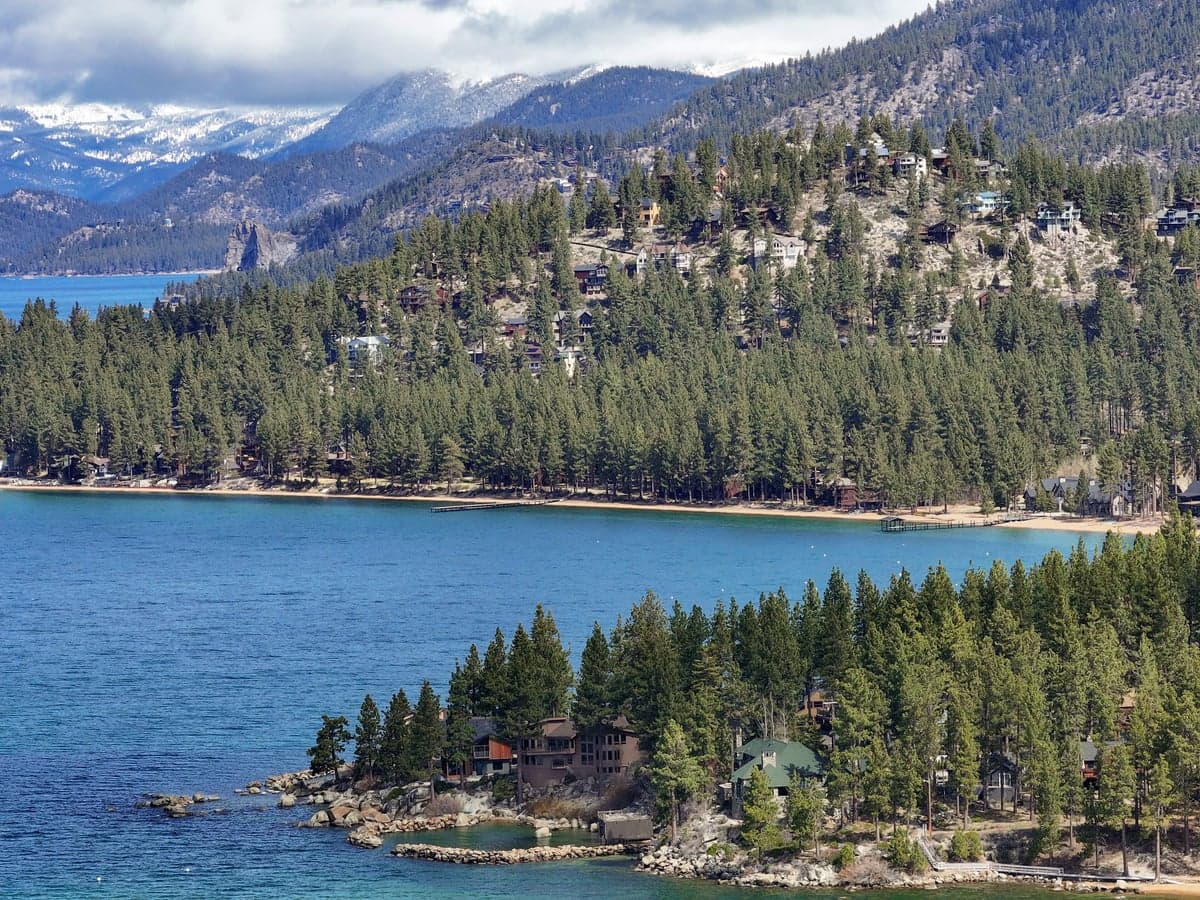
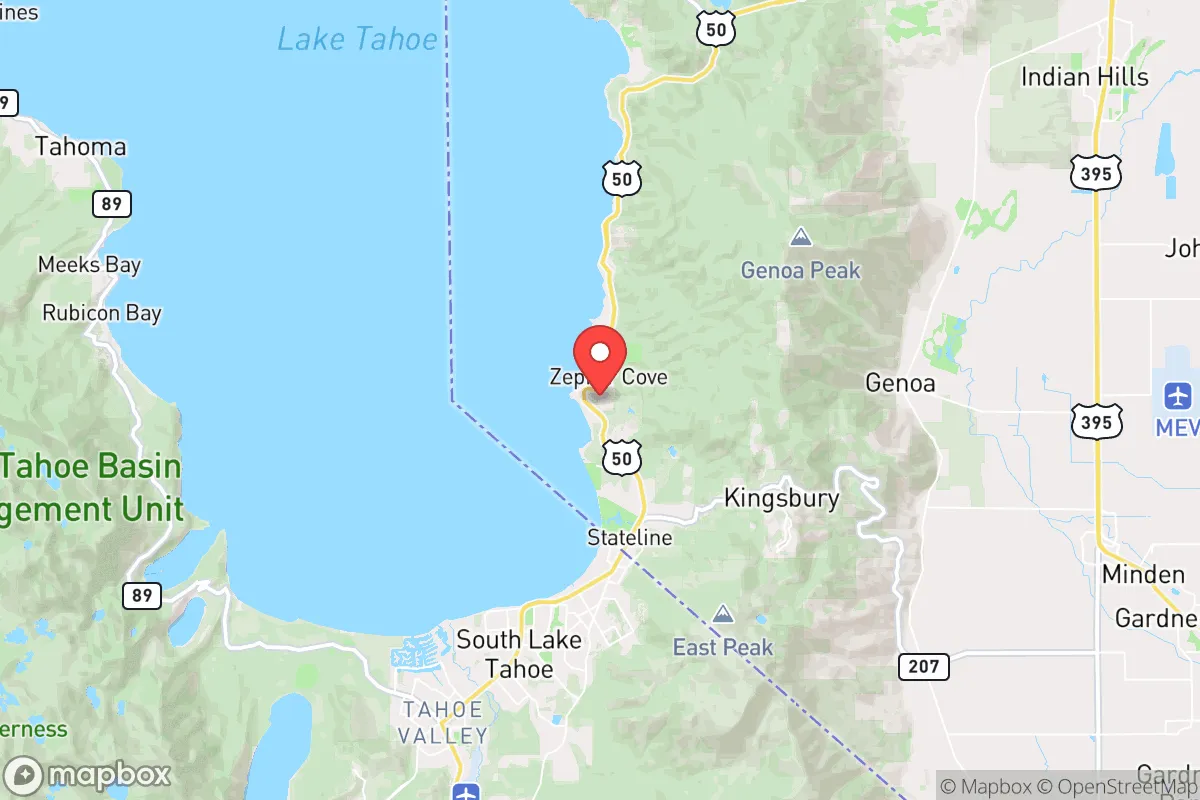
Today, Zephyr Cove is a small, tight-knit lakeside community of 574 residents on the eastern shore of Lake Tahoe, defined by its overwhelmingly White (76.0%) population and a significant Hispanic minority (24.0%) that has grown in recent decades. With a foreign-born rate of just 1.9%, the population is overwhelmingly native-born, and the 37.4% college-educated share reflects a mix of service-industry workers and remote professionals drawn to the area’s natural amenities. The community’s character is distinctly rural-resort: quiet, family-oriented, and politically conservative, with a strong sense of place rooted in outdoor recreation and seasonal tourism.
How the city was settled and grew
Zephyr Cove’s human history begins with the Washoe people, who used the lake’s eastern shore for summer camps and fishing grounds for centuries before Euro-American contact. The first permanent non-Native settlers arrived in the 1860s, drawn by the Comstock Lode silver boom in nearby Virginia City. These early residents—mostly Cornish and Irish miners—established homesteads along the lakefront in what is now the Zephyr Cove Heights district, building small cabins and boarding houses to serve the mining traffic. The completion of the Lake Tahoe Railway in 1900 opened the area to tourists from San Francisco and Sacramento, and by the 1920s, the Lakeshore Boulevard corridor had become a cluster of summer cottages and fishing lodges. The population remained tiny—under 200—through the 1940s, with most families working in timber, tourism, or small-scale ranching on the surrounding slopes.
Modern era (post-1965)
The post-1965 period brought two major shifts. First, the construction of U.S. Route 50 along the lake’s eastern shore made Zephyr Cove more accessible to year-round commuters and second-home buyers from the Reno-Carson City corridor. This spurred suburban-style development in the Zephyr Knolls subdivision, where middle-class White families built permanent homes in the 1970s and 1980s. Second, the expansion of the Lake Tahoe resort economy—particularly at the nearby Zephyr Cove Resort and the casinos at Stateline—drew a wave of Hispanic workers from California’s Central Valley and rural Nevada. These families settled primarily in the North Benjamin Drive area and the older rental stock along Elks Point Road, forming the core of the 24.0% Hispanic population recorded today. The Black and Asian populations remain at 0.0%, reflecting the area’s limited housing stock, high property values, and lack of the diverse employment base found in larger Nevada cities. The Indian-subcontinent population is also 0.0%, consistent with the broader Tahoe Basin’s low immigrant density.
The future
Zephyr Cove’s population is projected to remain small and stable, with modest growth driven by remote-work migration from California and the Reno metro area. The White majority is likely to hold steady or increase slightly as affluent telecommuters buy up lakefront and hillside properties, particularly in the Zephyr Cove Ridge area, where new custom homes are replacing older cabins. The Hispanic community, concentrated in the more affordable rental zones near Elks Point Road, is expected to plateau as housing costs rise and service-sector employment faces pressure from automation and seasonal fluctuations. No significant influx of Asian, Indian, or Black residents is anticipated, given the area’s high cost of living and limited rental inventory. The community is not tribalizing into distinct ethnic enclaves but rather homogenizing around a shared outdoor lifestyle, with the main division being between long-term locals and newer, wealthier arrivals.
For a conservative-leaning individual or family considering a move, Zephyr Cove offers a stable, low-crime, and politically conservative environment where the population is overwhelmingly native-born and English-speaking. The community is becoming more affluent and more White, with a small but established Hispanic minority that is largely integrated into the local workforce. Newcomers should expect a quiet, nature-focused life with limited ethnic diversity and a strong sense of local identity rooted in the lake’s recreational economy.

* Values derived from national, state, county, city and local statistics and may differ in a specific area. Last updated: 2026-04-23T04:13:43.000Z
Narrative content on this page is AI-generated and may contain mistakes. Verify any details that matter before acting on them.
ReloMaps may earn a commission from affiliate links at no extra cost to you.

